
The complete guide
How to Choose a Kitchen Sink Strainer That Actually Stops Blockages
The problem nobody notices until it is too late
Kitchen drains do not block overnight. They block slowly, over months, from the small things. A spoonful of rice that missed the bin. Coffee grounds tipped out of a cafetiere. The tail end of a pot of tea. Bits of onion skin, pasta, herb stalks. Each one is too small to think about, and all of them end up in the same pipe.
Then one evening the water sits in the bowl instead of going down, and you are under the sink with a bucket and a torch.
A strainer is the boring fix that stops all of it. It costs less than a takeaway and it sits in your plug hole doing one job. The trouble is that most sink strainers are cheaply made, with holes so big they catch almost nothing, or a thin rim that bends the first week. Which is the whole reason for a slightly better one.
What the wide rim actually does
The rim is the part that separates a strainer that works from one that annoys you. On a cheap unit the rim is a single thin layer of metal. It flexes. It tips. It slides across the sink base when you run the tap at full pressure, and then you have a strainer sitting at an angle with half the drain exposed.
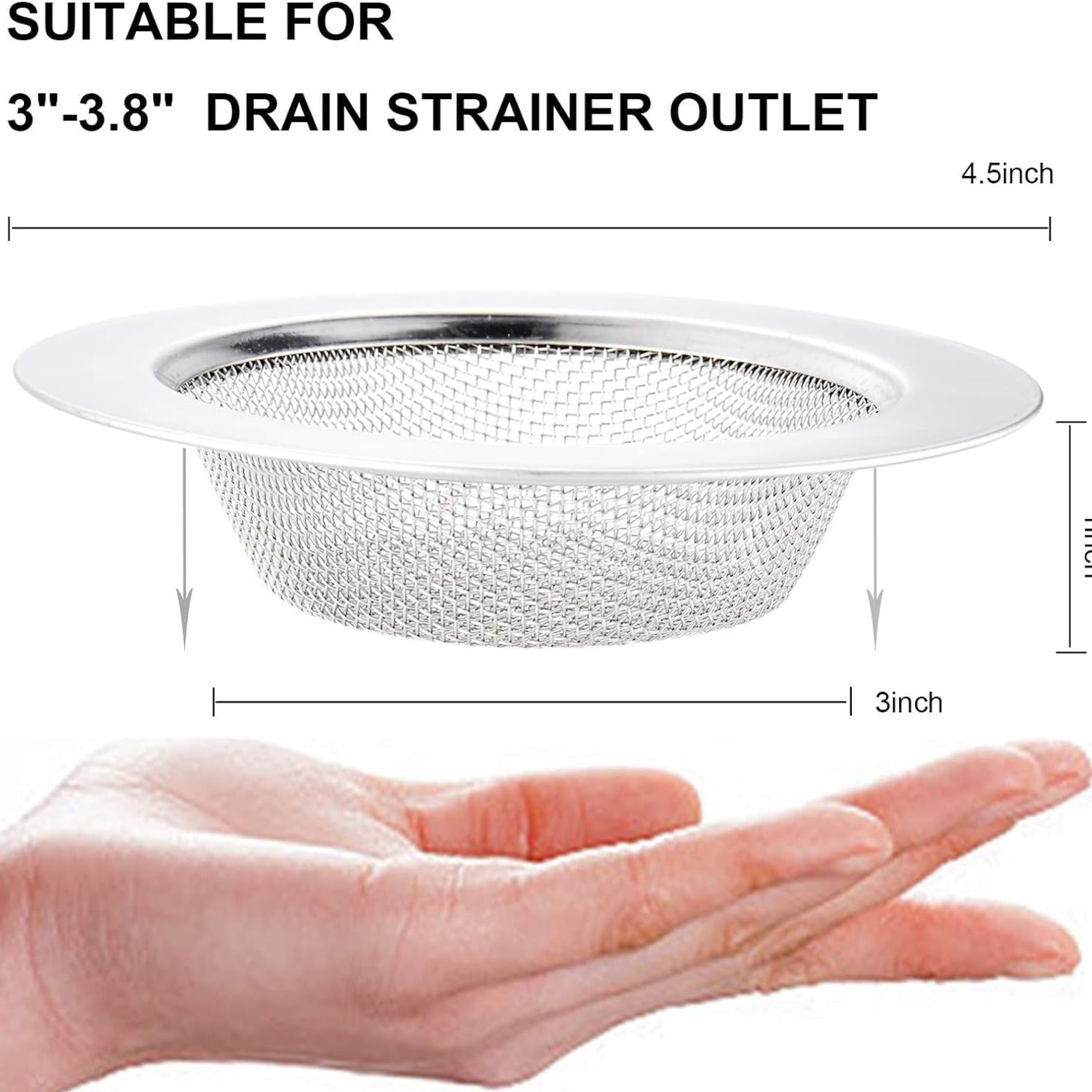
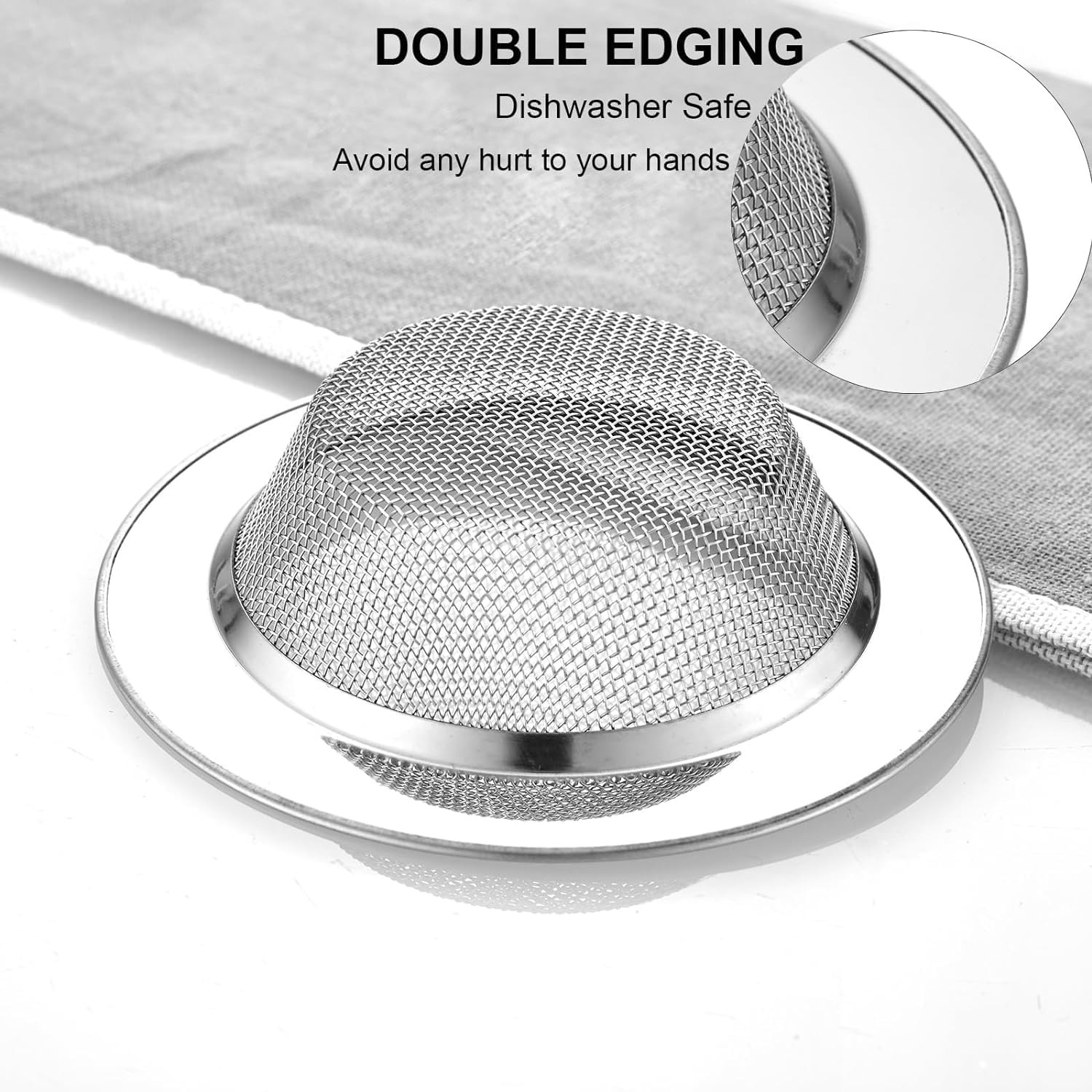
This one uses a thickened two-ply sheet for the flat rim. Two layers of metal pressed together means it holds its shape and stays flat against the sink floor. The outer rim is wider than the drain opening, 4.5 inches across a 3 inch inner filter, so it covers the groove generously and resists getting knocked off centre.
The edge is hemmed as well. That is a manufacturing term for folding the raw cut edge back on itself and rolling it smooth. You will appreciate it the first time you reach into a sink full of grey water looking for a teaspoon.
Hole size matters more than you think
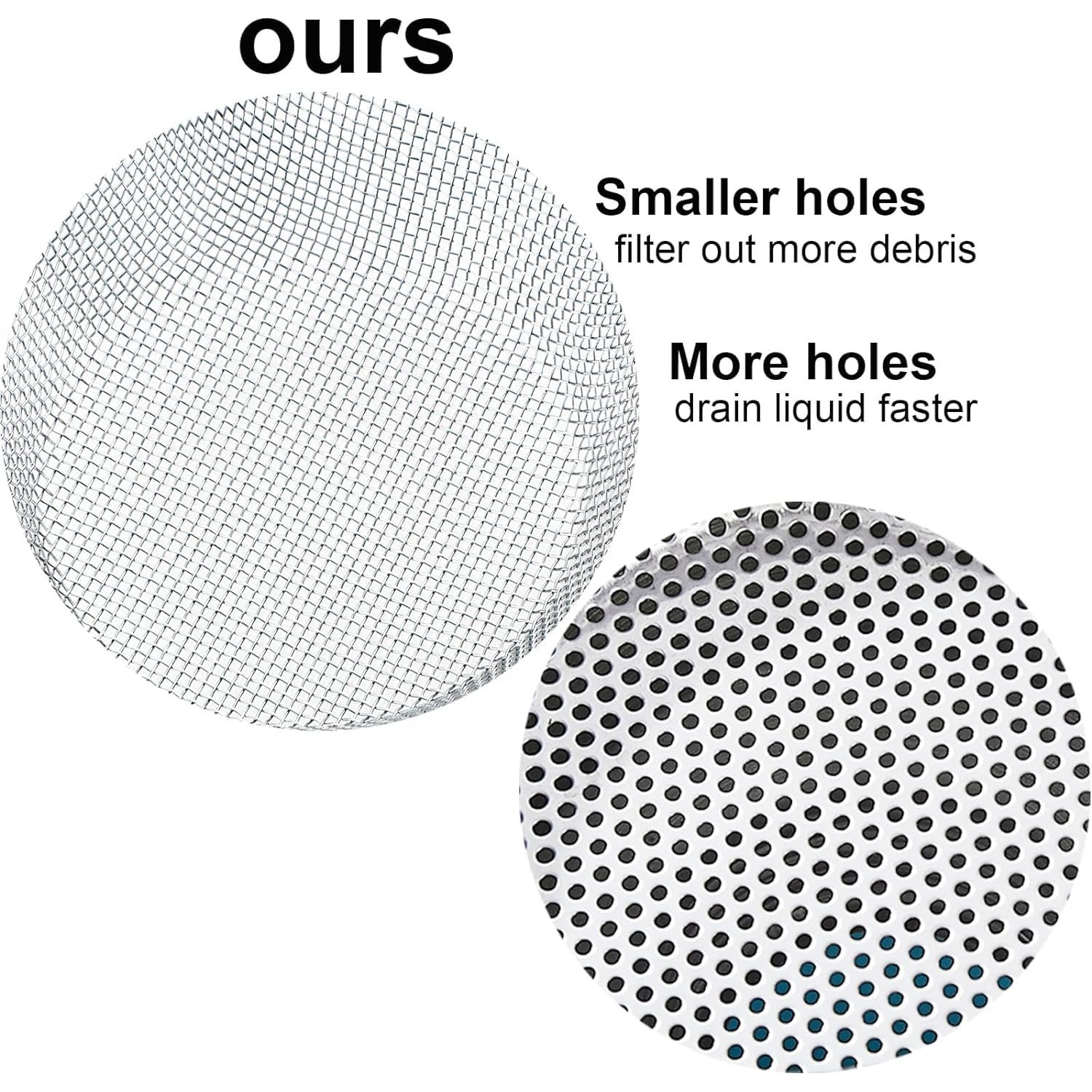
Here is where most strainers fall down. Look at a basic one and you will see wide slots or big round punched holes. They stop a potato peel. They do absolutely nothing for rice, coffee grounds, tea leaves or the fine stuff that comes off a chopping board.
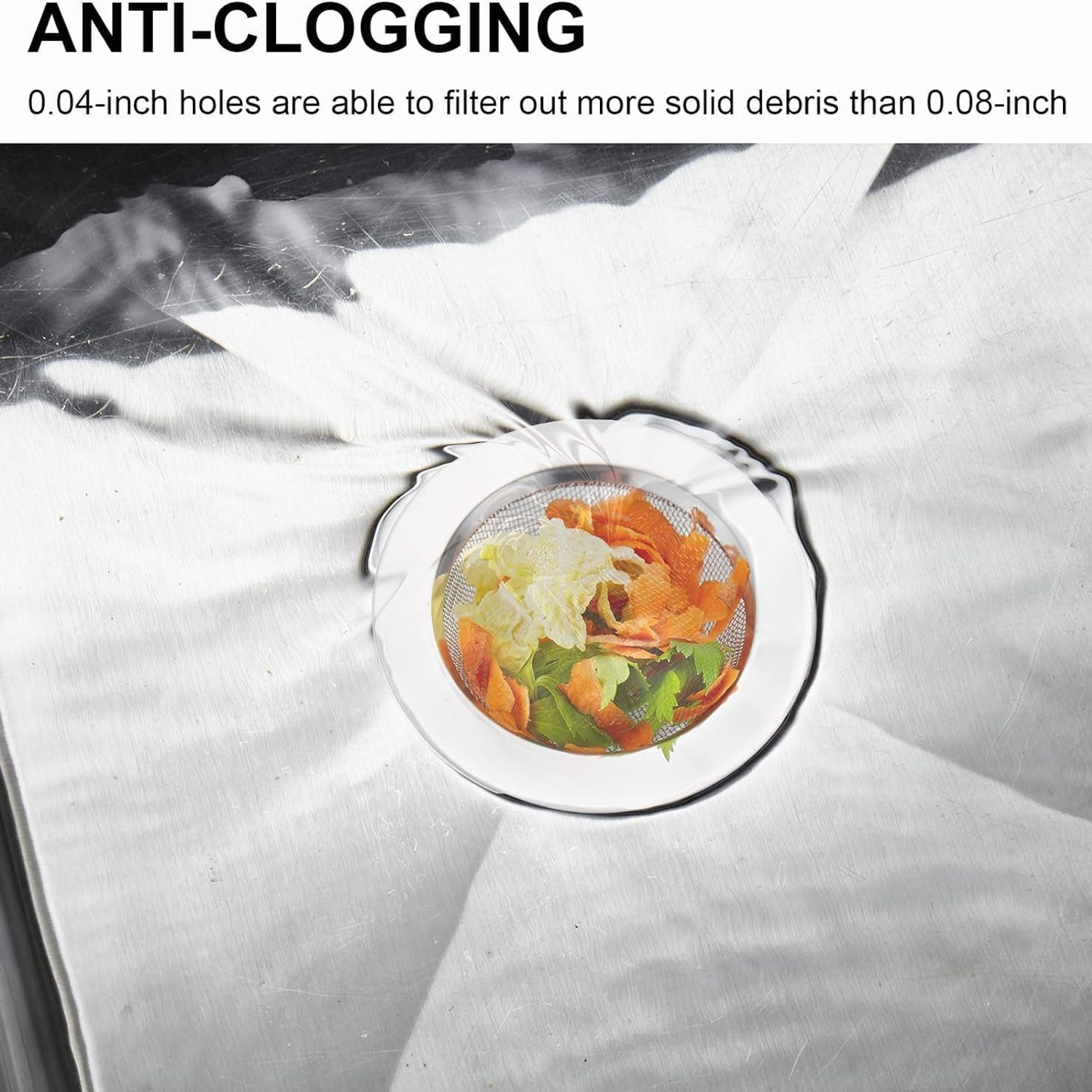
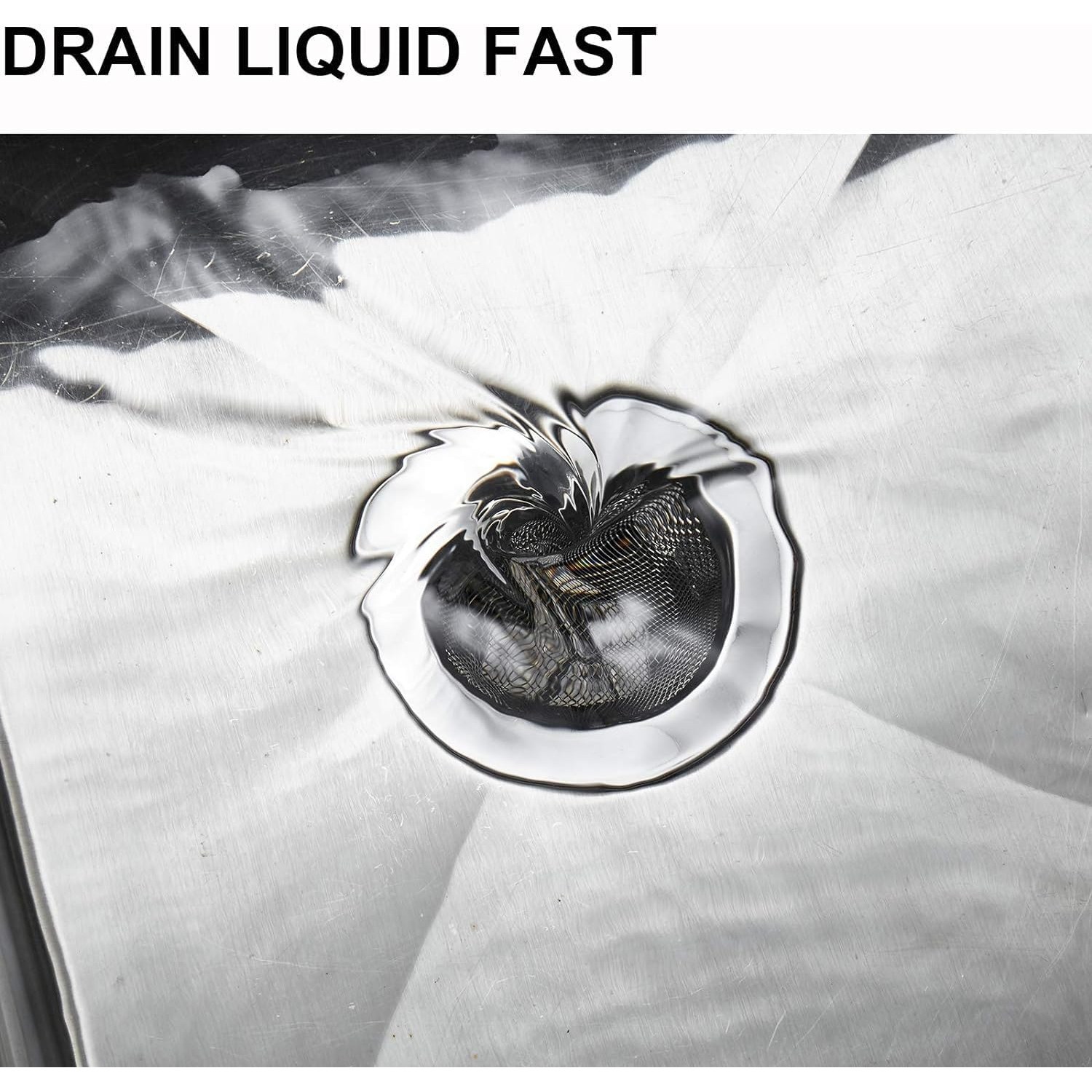
The perforations on this strainer measure 0.04 inches. That is small enough to hold back the fine debris that normally slips through and starts building up in the trap. Because the holes cover the entire base of the basket rather than just a few spots, you still get plenty of open area for water to pass through quickly.
The trade-off with any fine mesh is that it needs emptying more often. That is not really a downside. It just means it is doing its job and holding material that would otherwise be in your pipe. A rinse and a tip into the bin takes seconds.
Who this suits
If you cook from scratch, you need a strainer with fine holes. Rice, lentils, couscous, chopped herbs, all of it heads for the drain when you rinse a pan.
If you are renting, a drop-in strainer makes a lot of sense because nothing is fixed in place. No tools, no plumbing, no landlord permission. You lift it out and take it with you.
If you have a double-bowl sink, a two pack covers both sides. Most people with a double sink end up carrying one strainer between bowls, and inevitably the unprotected side is the one that gets the scraps.
If you drink a lot of coffee or loose-leaf tea, fine perforations are close to essential. Grounds are one of the worst things for a trap because they settle and compact.
How to choose the right one
Start with the measurement. Lift out whatever is currently in your plug hole and measure straight across the widest point of the opening. This strainer has a 3 inch compatible groove diameter, which is the common standard for kitchen sinks and sink waste disposal units. If your measurement is around that figure, you are fine. If it is noticeably smaller or larger, look for a different size.
Next, look at the material. Stainless steel is the sensible choice for anything that sits in water every day. Plastic baskets stain, go brittle and warp near hot water. The listed material here is metal stainless steel with a mirror finish in silver.
Then check depth. One inch gives you a reasonable holding capacity without the basket sticking up so far that it gets in the way of a pan. Deeper is not always better, because a deep basket is easier to forget about and harder to rinse out properly.
Finally, think about whether you want one or two. A spare is genuinely useful. When one is in the dishwasher, the other is on duty. It is the difference between a habit that sticks and one you abandon after a fortnight.
Living with it day to day
The routine is simple. Finish washing up, lift the strainer out, tip the contents into the bin or compost caddy, rinse under the tap, put it back. Ten seconds at most.
Every week or so, give it a proper clean. Warm soapy water and a washing-up brush worked over the perforations will clear any grease that has started to build up around the holes. An old toothbrush is ideal for this. If you would rather not think about it, it is dishwasher safe, so put it on the top rack with the small items.
What to avoid: steel wool and gritty scouring powders. They will take the shine off the mirror finish and leave fine scratches that hold residue. A soft cloth or a plastic brush is all it needs.
Drying it after a wash is optional but worth doing now and then. Stainless steel resists rust, but water left standing on any metal eventually leaves marks, particularly in hard water areas.
The thing a strainer cannot do
Be clear about this, because it saves disappointment. A strainer catches solids. It does not catch grease.
Hot fat and oil go down the drain as a liquid, then cool in the pipe and set. Over time that layer builds and narrows the pipe until something solid gets stuck in it. If you are pouring fat from a roasting tin into the sink, no strainer in the world will save you.
Let fat cool in the pan, scrape it into a jar or straight into the bin, then wipe the pan with kitchen paper before washing. That habit plus a decent strainer covers almost every common kitchen blockage.
The short version
A kitchen sink strainer is one of those small purchases that quietly saves you a bigger problem. The ones worth buying have three things in common, fine holes, stainless steel, and a rim stiff enough to stay flat.
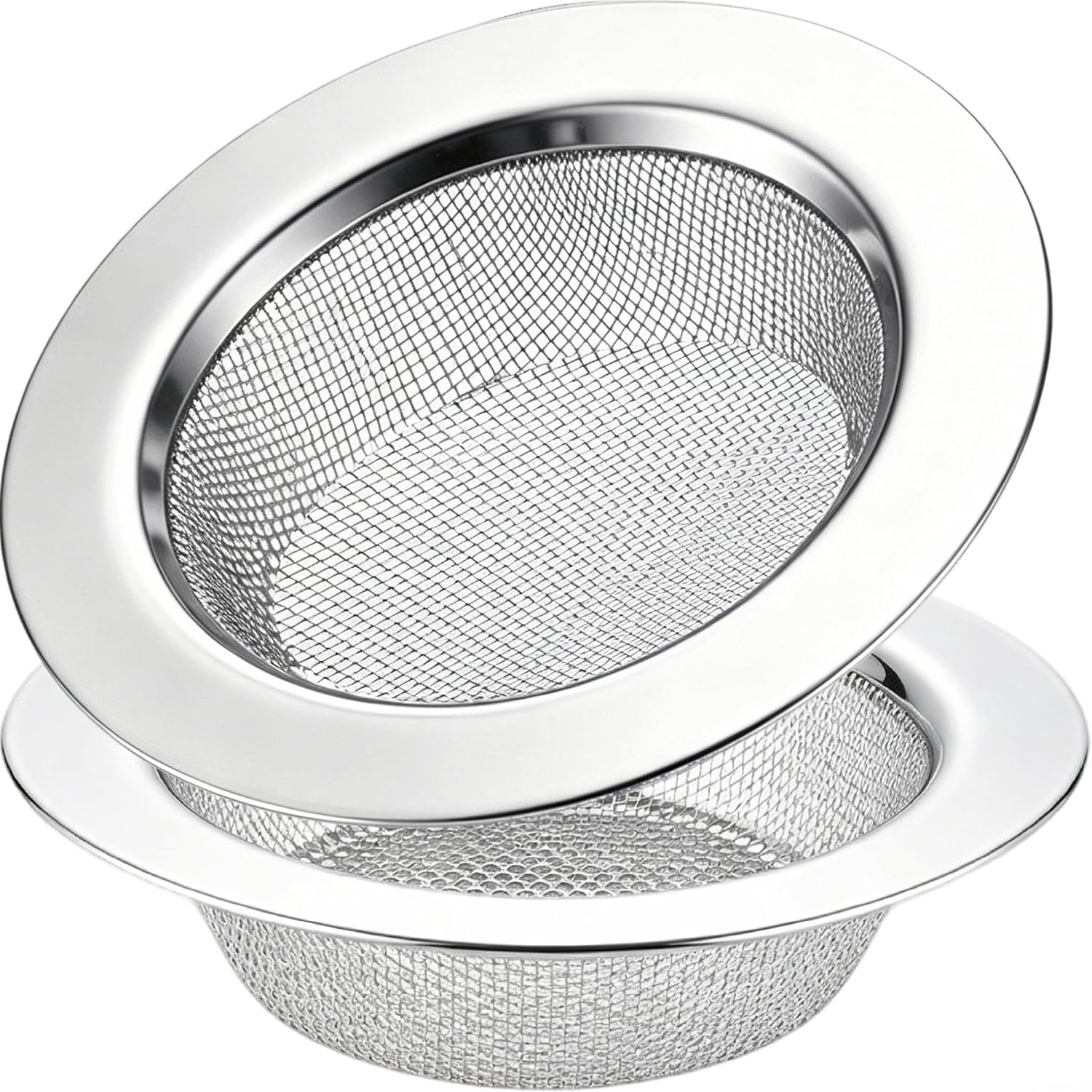
This two pack covers all three. The 3 inch inner filter fits standard kitchen drains and disposals, the 0.04 inch perforations catch the fine debris that usually gets through, and the thickened two-ply rim with its smooth hemmed edge is built to stay in shape. At 91 grams each they feel solid without being awkward to handle, and both are dishwasher safe.
Measure your drain opening first. If it is around 3 inches, drop one in each bowl and forget about it, apart from the few seconds it takes to empty.