
The complete guide
How to Choose a Sink Strainer That Actually Keeps Your Drain Clear
The problem starts smaller than you think
Nobody blocks a drain in one go. It happens in grams. A teaspoon of rice that missed the bin. The last of the coffee from the plunger. A few threads of onion skin that slid off the chopping board while you rinsed it. Each of those seems harmless, and on its own it is. The trouble is that under the sink there is a bend in the pipe called the trap, and the trap is designed to hold a little water at all times so sewer gas cannot come back up. That standing water is where small solids settle.
Over weeks, the settled bits bind together with grease from pans and soap residue from washing up. The result is a soft grey plug that water can still get through, slowly. You notice the sink draining a bit lazily. Then one evening it stops draining at all, usually when you have a sink full of dishes and guests in the next room.
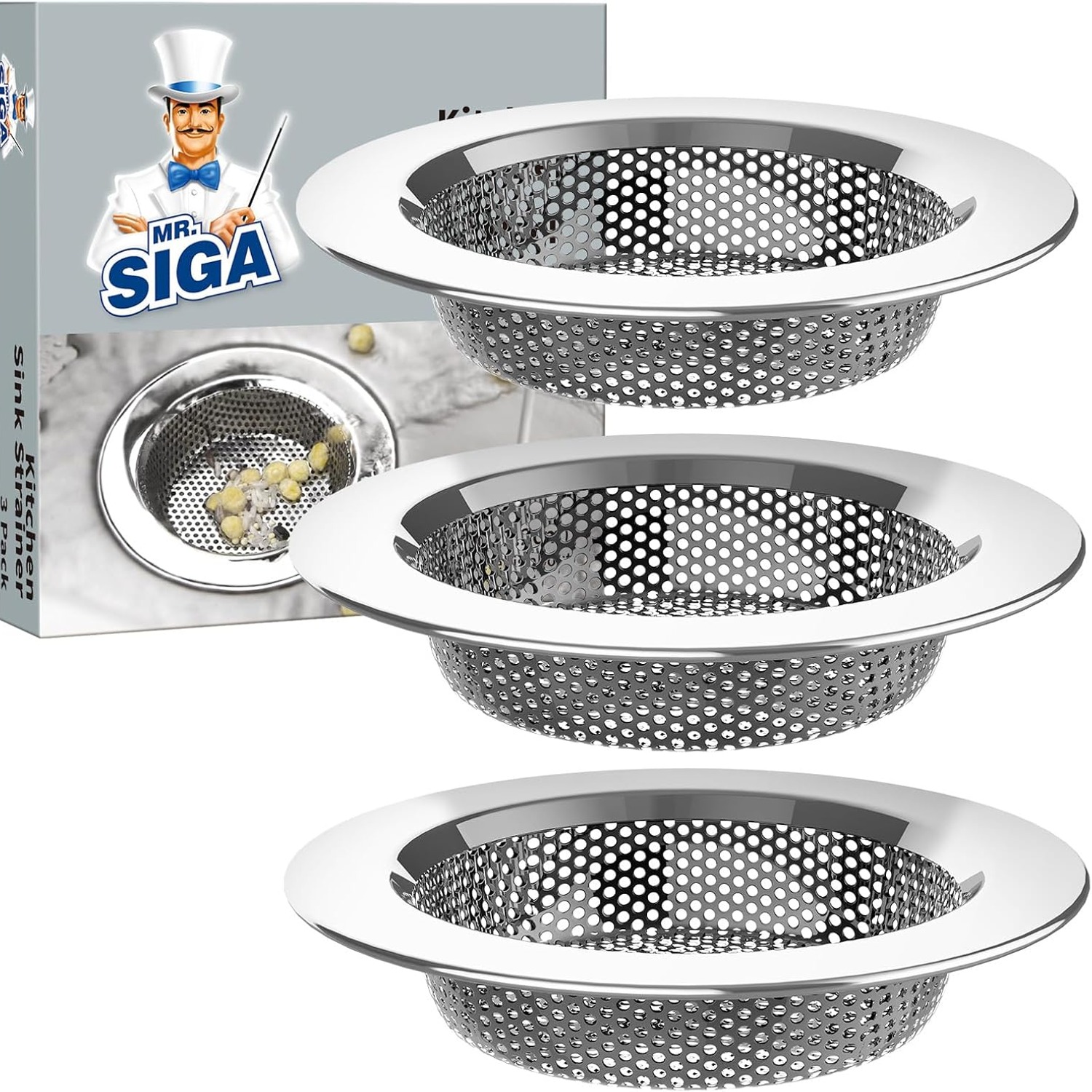
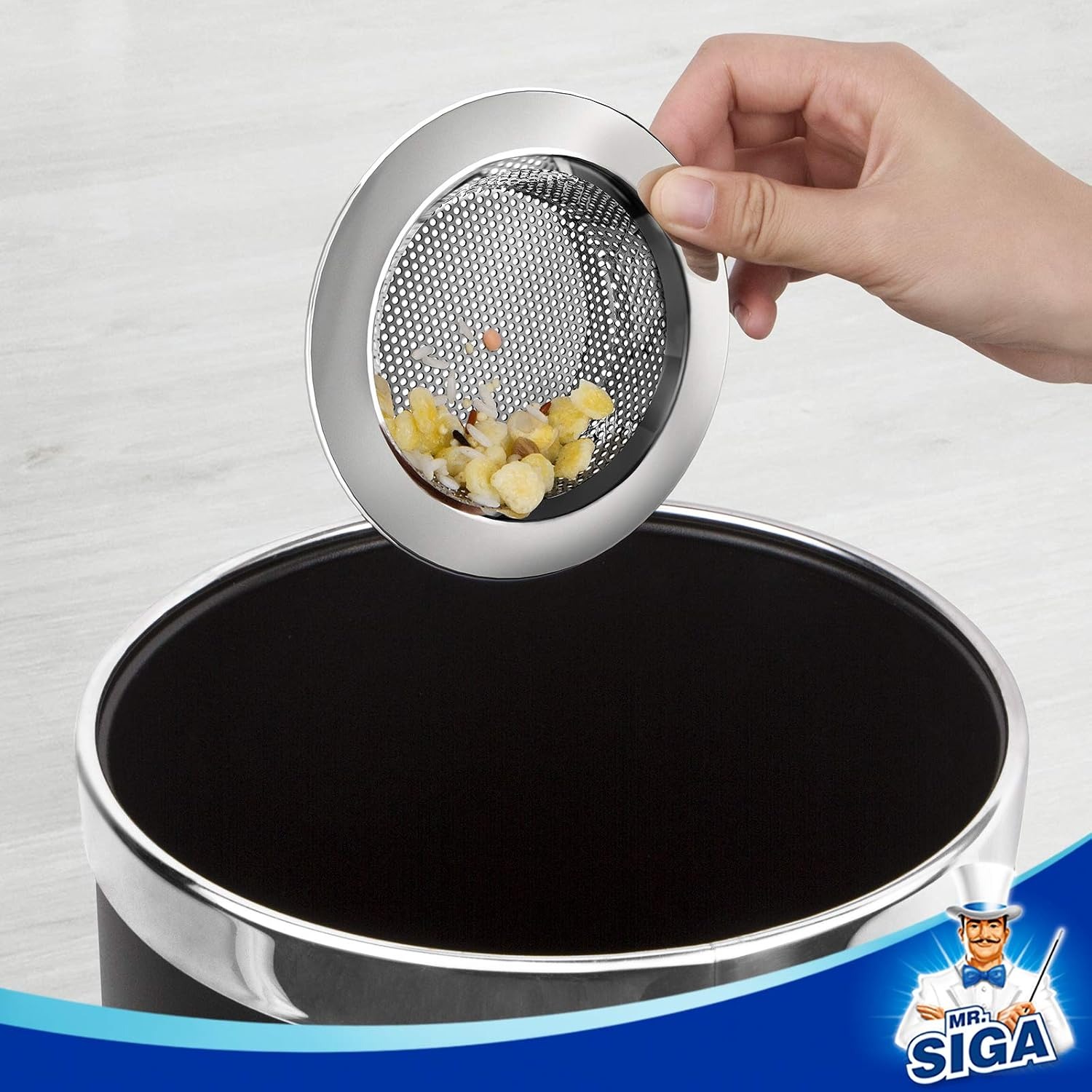
A kitchen sink drain strainer solves this at the only point where it is easy to solve: the top. Instead of fishing things out of a pipe, you tip a basket into the bin.
How a mesh strainer differs from a plate with holes
Plenty of sinks already come with something in the drain. Usually it is a flat metal plate with a dozen punched holes, or a plastic cup with wide slots. These stop a fork going down the plughole, and not much else.
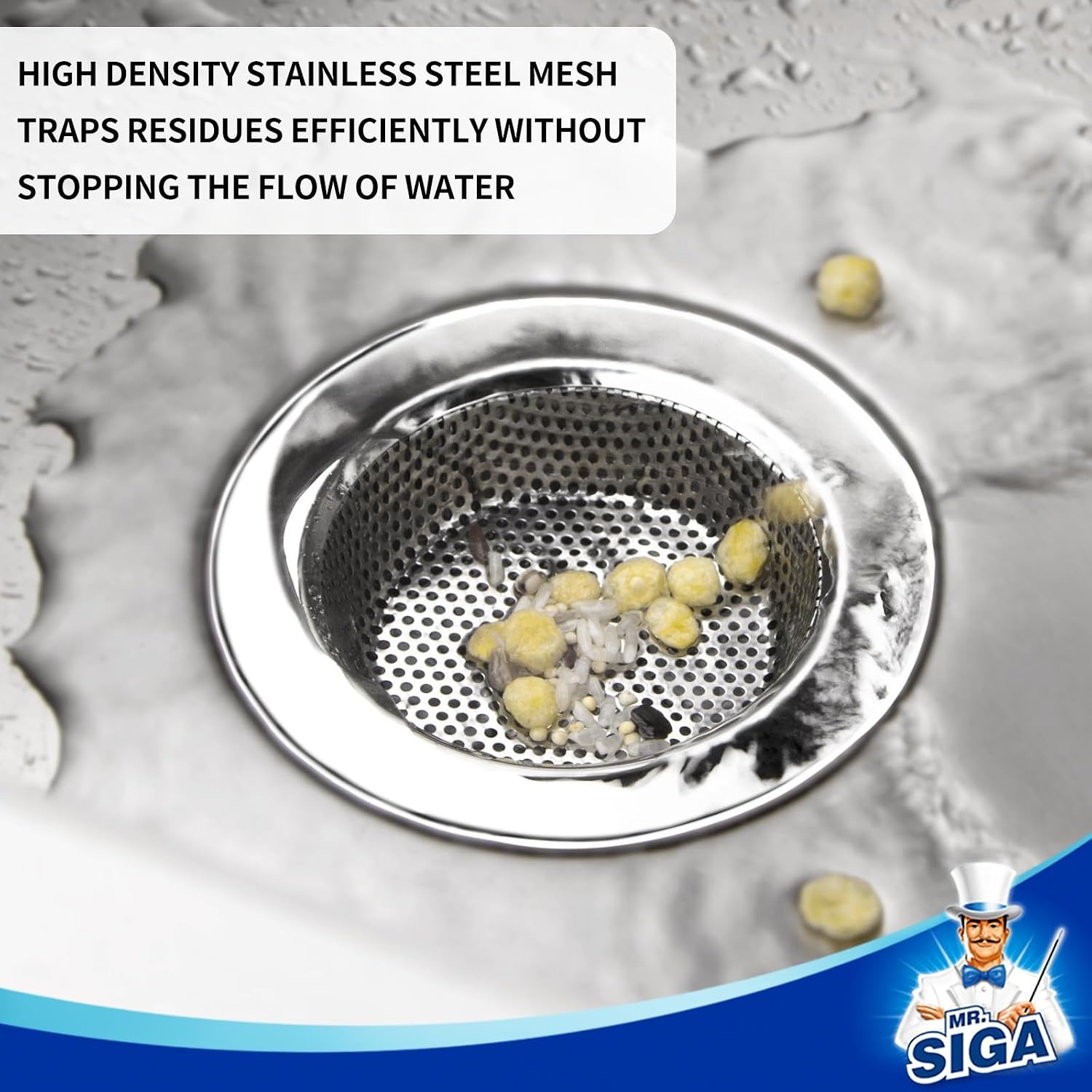
The gap between a punched hole and a mesh weave is the whole story. Punched holes have to be big enough not to clog, which means they are big enough for rice grains, tea leaves, coffee grounds and fine vegetable scraps to drop straight through. Those are the exact materials most likely to compact in your trap.
A fine mesh drain basket uses a woven screen with openings small enough to hold those particles on the surface, while the total open area across the whole mesh keeps water moving. You get filtration without a bottleneck. That is why a mesh sink strainer is worth the small extra cost over the plate that came with the sink.
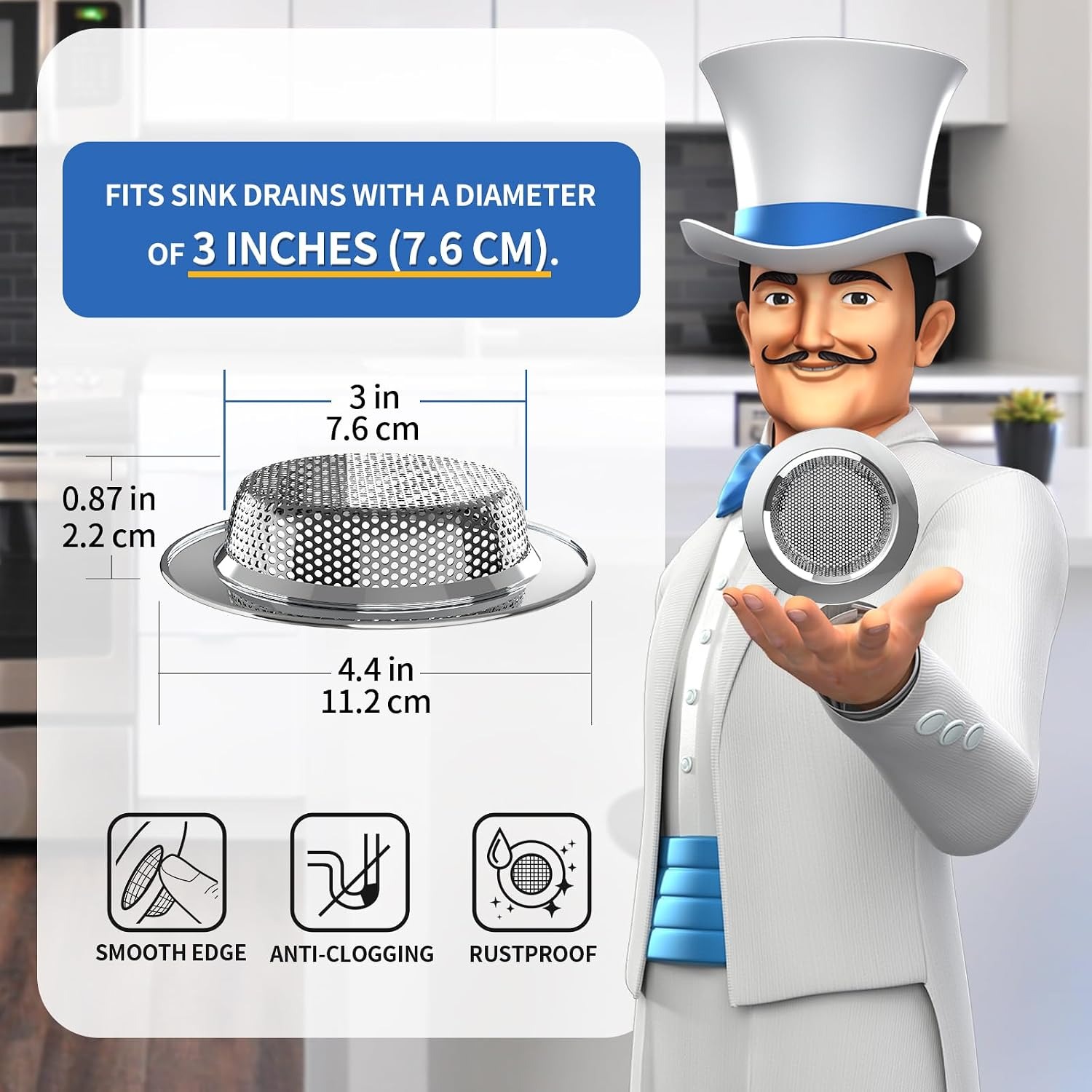
This set uses a high density mesh in a stainless steel basket, with an outer rim measuring 11.2cm, an inner diameter of 7.6cm and a depth of 2.2cm.
Getting the size right
This is where most people go wrong, and it is easily avoided. Sink drain openings are not all the same. The common domestic size is around 3 inches across the groove, which is what these strainers are built for, but larger sinks and some older fittings use a different measurement.
Take a tape measure and measure straight across the inside of the drain opening, through the centre. If you land near 7.6cm or 3 inches, this strainer will seat properly. The outer rim then sits on the sink surface around the hole, holding the basket at the right height.
Depth matters too, though less than diameter. At 2.2cm this basket holds a reasonable amount of scraps but still sits low. A deeper basket holds more between emptyings but stands higher in the bowl, where it can get bumped by pans and plates.
Why stainless steel over plastic
You can buy a plastic strainer for very little money. Here is what tends to happen with them. Hot water from a pot of pasta softens and warps the rim, so the basket stops sitting flat and starts tipping. Tomato, turmeric and coffee stain the plastic permanently within a few weeks. And after a year of being flexed, the plastic goes chalky and cracks around the edge.
Stainless steel does none of that. It takes boiling water without changing shape, it does not stain from food pigments, and it does not hold smells. A rust resistant sink strainer also looks better in a stainless sink, because it blends in rather than sitting there as a discoloured plastic cup.
The one thing to be aware of with any steel item in a kitchen is standing moisture and salt. Rinse the strainer after a salty job like draining brine, and let it dry out occasionally rather than leaving it permanently submerged in a sink of grey water. That simple habit keeps the finish bright for years.
Who this suits
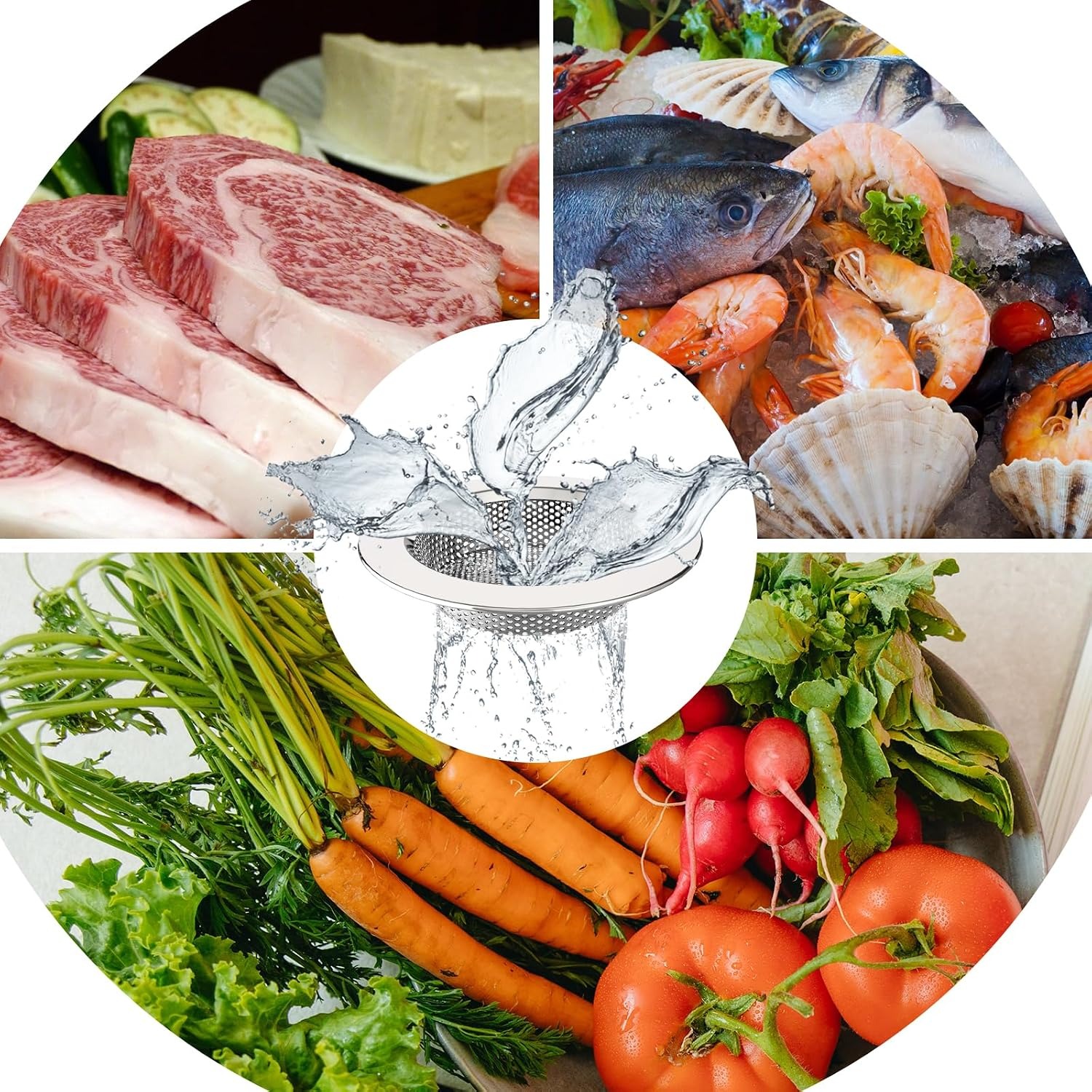
If you cook from scratch, you need one. Chopping, peeling and draining all send solids towards the drain, and a strainer intercepts them without you thinking about it.
Renters get a second benefit. Blocked drains in a rental can turn into an argument about who caused them and who pays for the plumber. Keeping a strainer in place is cheap insurance and takes ten seconds to fit and remove when you move out.
Households with long hair should put one in the bathroom basin. Hair is the single most common cause of basin blockages, and it does not break down. A sink hair catcher means you pull a small wad off the mesh once a week instead of calling someone out.
People on septic systems or with older cast iron waste pipes benefit most of all, because those systems are the least tolerant of food solids going down.
Making three strainers useful
A three pack is not just about having spares, though that helps. Think about where water leaves your home.
A double bowl kitchen sink needs two straight away, one in each drain. The third can go to the laundry tub, where a utility sink strainer catches lint, grit and the residue from rinsing paint brushes or mop heads. Or put it in the bathroom. Or keep it in the drawer so there is always one in the sink while the other is going through the dishwasher.
At 0.08 kilograms each they take up no real space, and because they are identical they are interchangeable.
Keeping it clean without making it a chore
The whole system falls apart if emptying the strainer feels like work, so build it into something you already do. The moment you finish washing up, lift the basket, tip it into the bin or compost caddy, and run the tap over it for two seconds. Put it back. That is the routine.
Once a week, or whenever food starts sticking in the weave, give it more attention. A soft dish brush worked across the mesh from the underside pushes trapped bits out rather than driving them further in. If you would rather not bother, it is dishwasher safe, so it can go on the top rack with everything else.
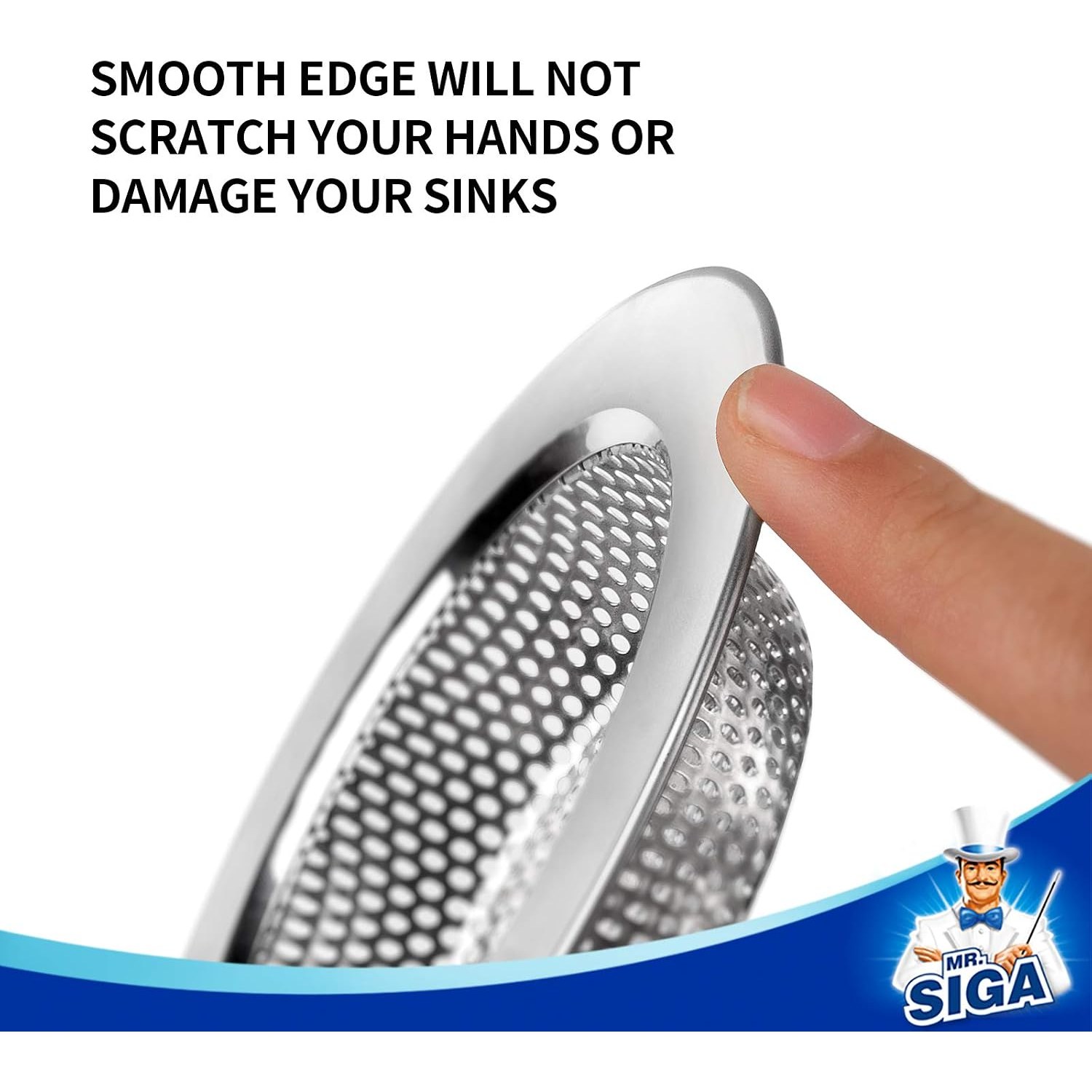
Keep steel wool and scouring powder away from it. They will scratch the finish and give food something to catch on in future.
A few things it does not do
It is worth being clear. This is a strainer, not a plug, so it will not hold water in your sink. You still need a stopper for that.
It also does not replace sensible habits with fat and oil. Grease poured hot goes down as liquid and solidifies further along the pipe where no strainer can reach. Wipe greasy pans with kitchen paper and bin that before washing.
And it will not fix an existing blockage. If your sink is already draining slowly, clear that first, then fit the strainer to keep it clear.
The short version
Food scraps and hair cause almost every household sink blockage, and they are far easier to catch at the drain opening than to remove from a pipe. A stainless steel mesh basket does that job for a few seconds of effort after each wash up.
Check that your drain opening measures around 3 inches before you order, since fit is the one thing that matters. Choose steel over plastic because it will not warp, stain or crack. And having three means your kitchen, laundry and bathroom are all covered, with one left over for the days the others are in the dishwasher.