

The complete guide
How To Choose The Right Rubber Sink Plug
The small thing that ruins a morning
Nobody thinks about the sink plug until it stops working. Then it becomes the most annoying object in the house. You cannot soak a pan. You cannot fill a basin to hand-wash a jumper. You cannot run a shallow bath for a toddler. The whole fixture is reduced to a hole in the ground that water falls through.
It is a cheap problem with a cheap fix, which is exactly why people put it off. A new plug costs very little and takes no installation, but it sits on the mental list behind everything else until the day you actually need the sink to hold water.
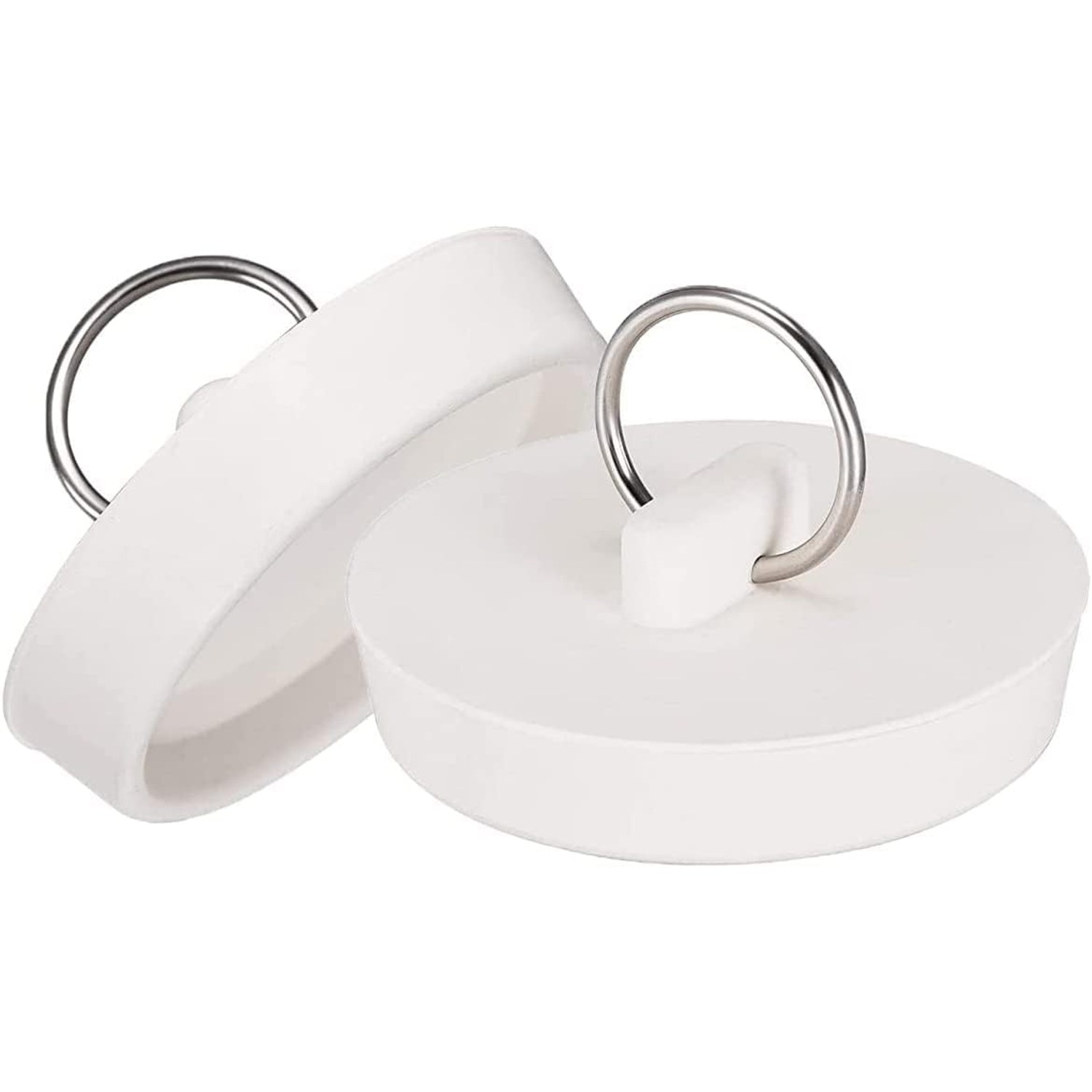
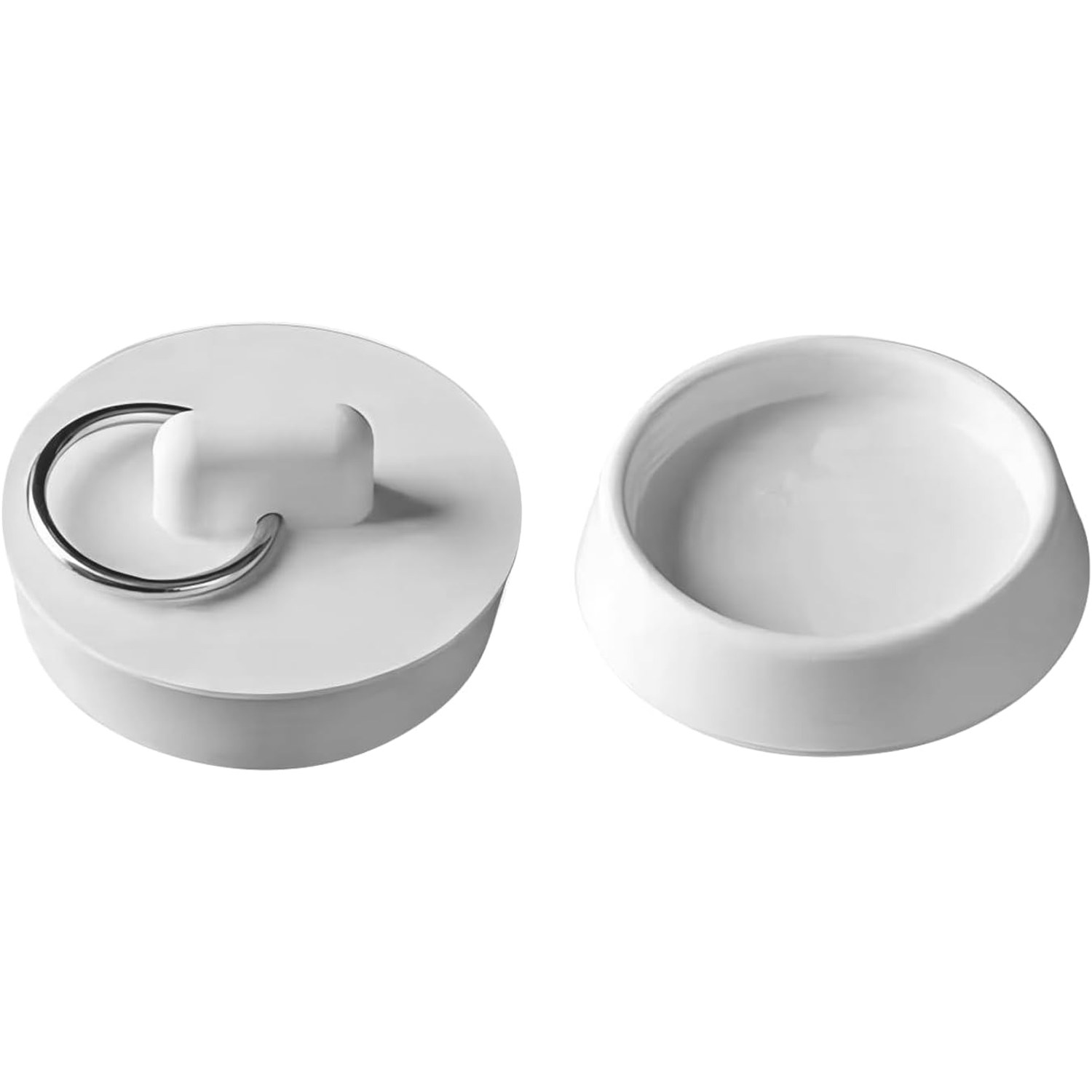
A plain rubber plug is the oldest answer to this and still one of the best. There is no mechanism, no spring, no linkage rod under the basin, and nothing that gets gummed up with toothpaste. It is a disc of rubber with a ring on top. That simplicity is the feature.
How a rubber plug actually seals
The seal happens at the rim, not across the whole face. When you press the plug into the drain, the rubber squashes slightly against the metal seat inside the opening. Rubber deforms under pressure, so it fills small imperfections in that seat: tiny scratches, casting marks, the faint ridge left by years of use. A hard plastic disc cannot do that, which is why rigid stoppers so often weep.
Water pressure helps. As the basin fills, the weight of the water above pushes the plug down harder and tightens the seal. This is also why pulling a plug out of a full sink can be a fight. The ring on top of this one exists for exactly that moment. You hook a finger, pull straight up, and the seal breaks cleanly instead of you clawing at a flush rubber edge with wet hands.
If a rubber plug ever leaks, debris is the usual culprit. A hair, a fleck of food, a ring of dried soap on the seat. Lift it, wipe both surfaces, drop it back in. That fixes most slow drains.
Getting the size right
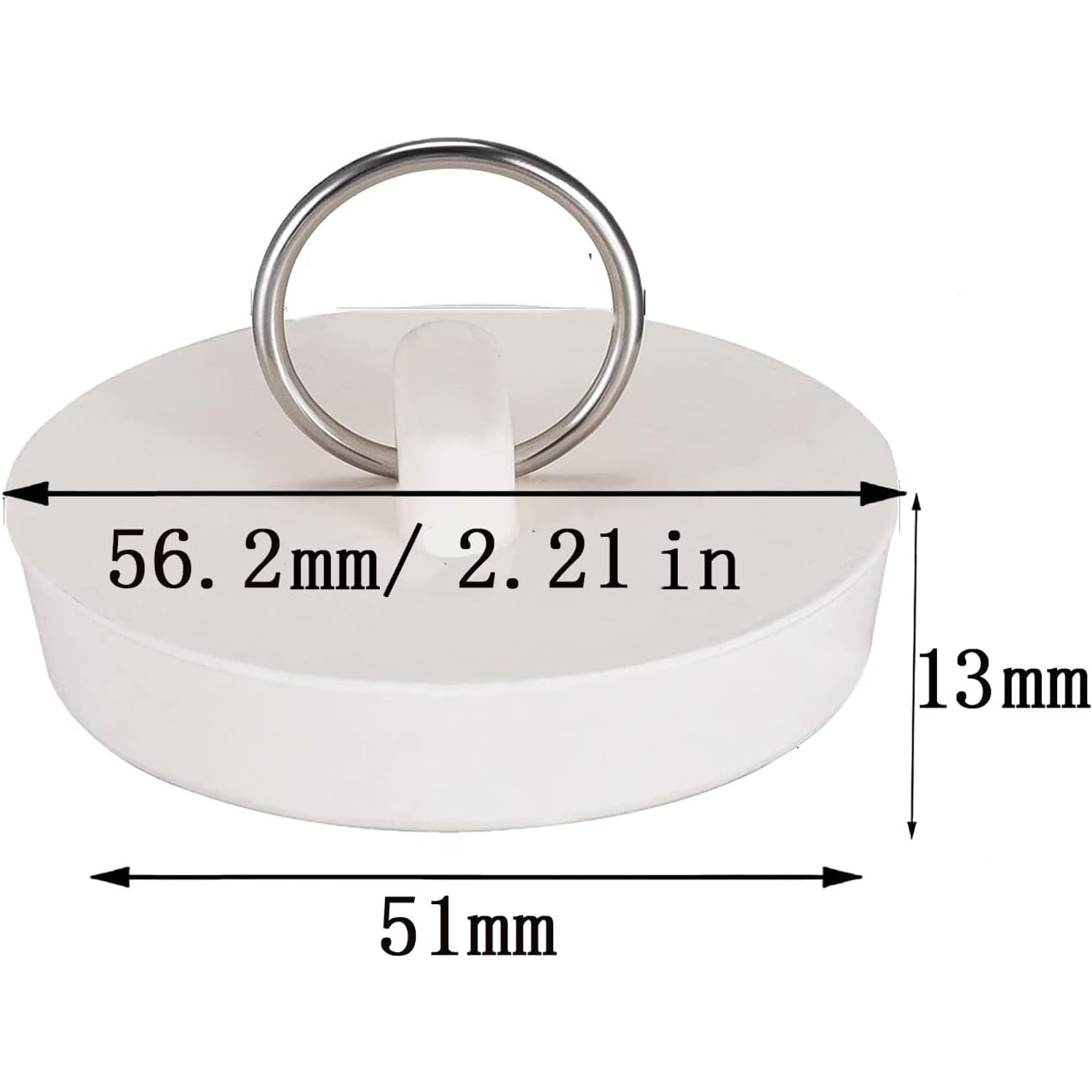
This is where people go wrong, so it is worth being careful. These plugs are made for drain holes measuring 53 to 55mm across. That is a measurement of the opening itself, not the outer flange of the metal waste fitting.
Take a tape measure or a steel ruler and lay it flat across the drain, passing through the centre of the hole. Read the inside edge to inside edge figure. If you get something between 53 and 55mm, you are in range. If you measure 50mm or 60mm, this is not your plug and no amount of pushing will change that.
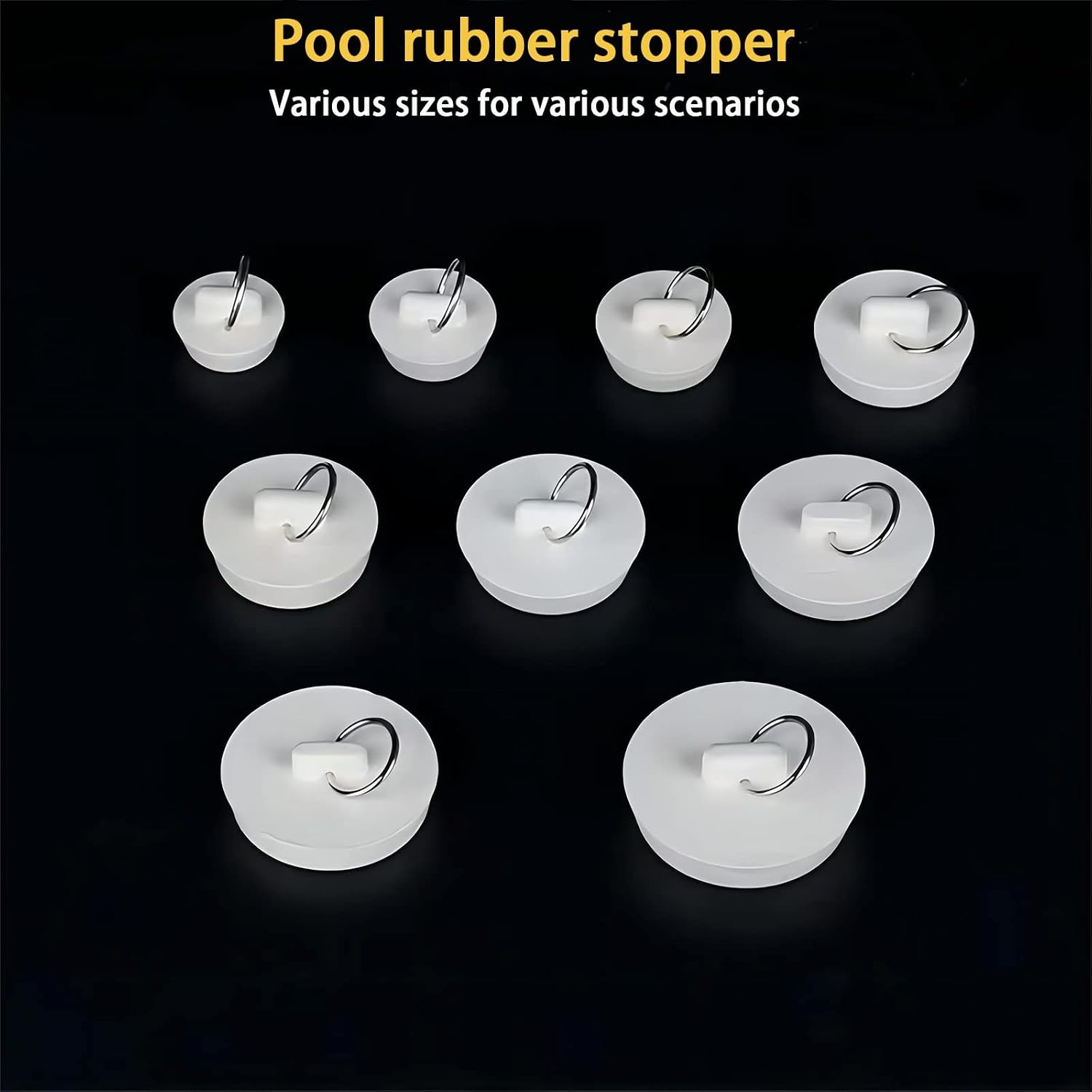
Worth knowing: basin drains, kitchen sinks and laundry tubs are not standardised across every manufacturer or every decade. A house with three different ages of plumbing can easily have three different drain sizes. Measure each one rather than assuming the whole place matches.
Also check what sort of waste you have. If there is a built-in stopper that pops up when you push it, or a lever behind the tap that raises and lowers a plug inside the drain, there is no open hole for a rubber plug to sit in. This product suits plain, open drain holes only.
Where these plugs earn their keep
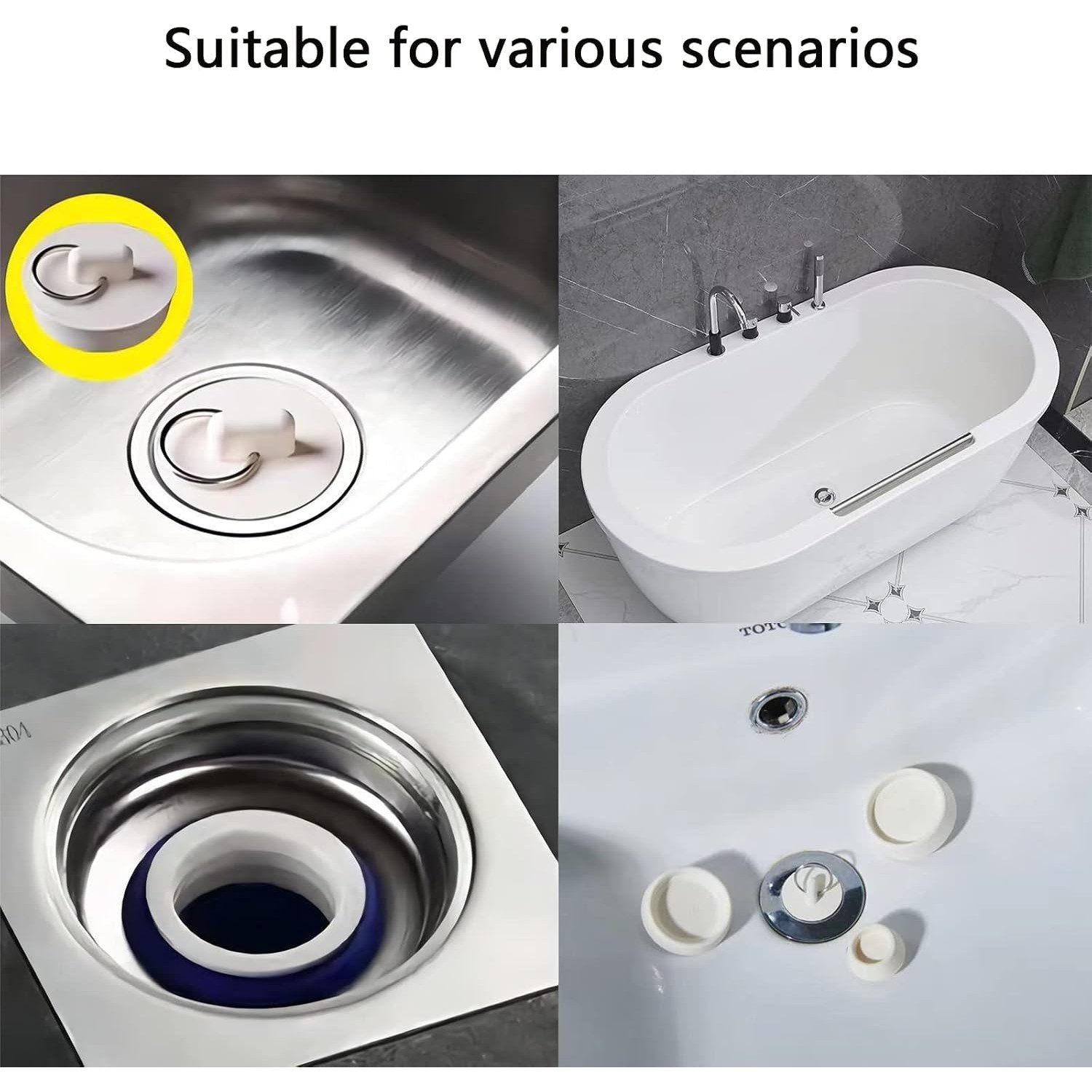
Bathroom basins. The classic use. Filling a basin to wash your face, shave, rinse hand-washing or soak a stained collar. A good basin plug makes the sink properly useful again.
Kitchen sinks. Worth checking the size here, because many kitchen sinks use a larger basket waste. If yours is in range, a plug lets you soak baked-on trays instead of scrubbing them dry.
Laundry troughs. Utility sinks take a beating and the original plug is often the first casualty. A rubber one handles cold water, detergent and the odd bucket of paint water without complaint.
Bathtubs with plain wastes. Older tubs and simpler modern ones often have a straightforward hole rather than a mechanism. If your tub drain falls in the right range, a bath plug with hanging ring is the whole solution.
Caravans, holiday places and rentals. Anywhere the original plug has gone walkabout and nobody is keen to call a plumber over it.
Rubber versus the alternatives
Silicone stoppers are the main competitor. They tend to be the wide, flat, flexible sort that sit over the drain rather than in it, and they cover a range of sizes. That flexibility is genuinely handy if you do not know your drain size, but they sit higher and some people find them fiddly to position.
Hard plastic plugs are cheap and often come free with a new waste fitting. They are also the most likely to leak, because they cannot deform into the seat.
Metal plugs with rubber O-rings look smart and last a long time. They cost more, and the O-ring is the part that eventually needs replacing anyway.
A plain rubber plug sits in the sensible middle. It seals well, costs very little, sits flat in the drain, and will not scratch enamel, acrylic or stainless steel if you knock it around. There is a reason this design has barely changed in a hundred years.
Keeping it in good condition
Rubber is tough but it does not love being baked, bleached or left wet in a dark corner. A reasonable routine:
Rinse the plug after it has been sitting in soapy or greasy water. Wipe it with a cloth. If a film builds up around the rim, a soft brush and a little dish soap will clear it in seconds.
Let it dry rather than storing it damp against metal, which encourages mineral marks on white rubber.
Skip the bleach soaks and the scouring pads. Strong oxidisers and solvents dry rubber out and make it harden and crack sooner than it should. Mild soap handles everything a sink throws at it.
White rubber can pick up stains from tea, coffee, hair dye or hard water over time. A gentle scrub usually lifts the worst of it. Since there are two plugs in the pack, you can rotate them and keep one looking fresh.
Why two plugs is the right number
A single plug is one bin-knock away from a problem. Plugs get swept off the edge of the sink, dropped behind the washing machine, taken to the holiday house and left there. Having a spare rubber drain stopper in the drawer turns that from an errand into a shrug.
It also means you can put one in the bathroom and one in the laundry if both drains happen to be the same size, which is common enough in homes plumbed at the same time.
If it does not fit
The honest answer is that a plug either matches the hole or it does not. If you measure after it arrives and find your drain is outside the 53 to 55mm range, contact us with the measurement and we will sort out a return or point you to the right size. That measurement is the single most useful piece of information you can give us, because it tells us immediately what will work.
The short version
Measure your drain opening across the inside, edge to edge. If it lands between 53 and 55mm and the drain is a plain open hole rather than a pop-up mechanism, this plug will do the job. The rubber seals against the seat, the ring gets it back out of a full basin without a struggle, and the second plug in the pack means you are covered when the first one disappears. Clean it now and then, keep it away from bleach, and it will quietly do its one job for a long time.