
The complete guide
Toilet Plunger and Brush Combo Buyer's Guide
The two-tool problem every bathroom has
There is a predictable sequence in most homes. You buy a toilet brush because the bathroom clearly needs one. The plunger comes later, usually bought in a hurry during an actual blockage, from whatever shop was still open. The brush ends up behind the toilet in a holder that is slowly going green at the bottom. The plunger ends up in the laundry, propped against a wall, drying onto the floor.
Then a year passes and nobody can find the plunger.
A toilet plunger and brush combo fixes this by refusing to let the two tools drift apart. They live in the same holder, in the same corner, and because the holder has two compartments they do not sit in each other's drips. It is a small bit of organisation, but it is the difference between handling a blocked toilet in two minutes and spending ten minutes hunting through the shed.
How a plunger actually clears a blockage
Worth understanding, because most people plunge wrong.
A plunger does not push a clog down the pipe with brute force. It moves water back and forth through the trap. Water does not compress, so when you drive the cup down, the water underneath has nowhere to go except at the blockage. When you pull up, you create suction in the other direction. That push-pull cycle loosens whatever is wedged in there until it breaks up and flows away.
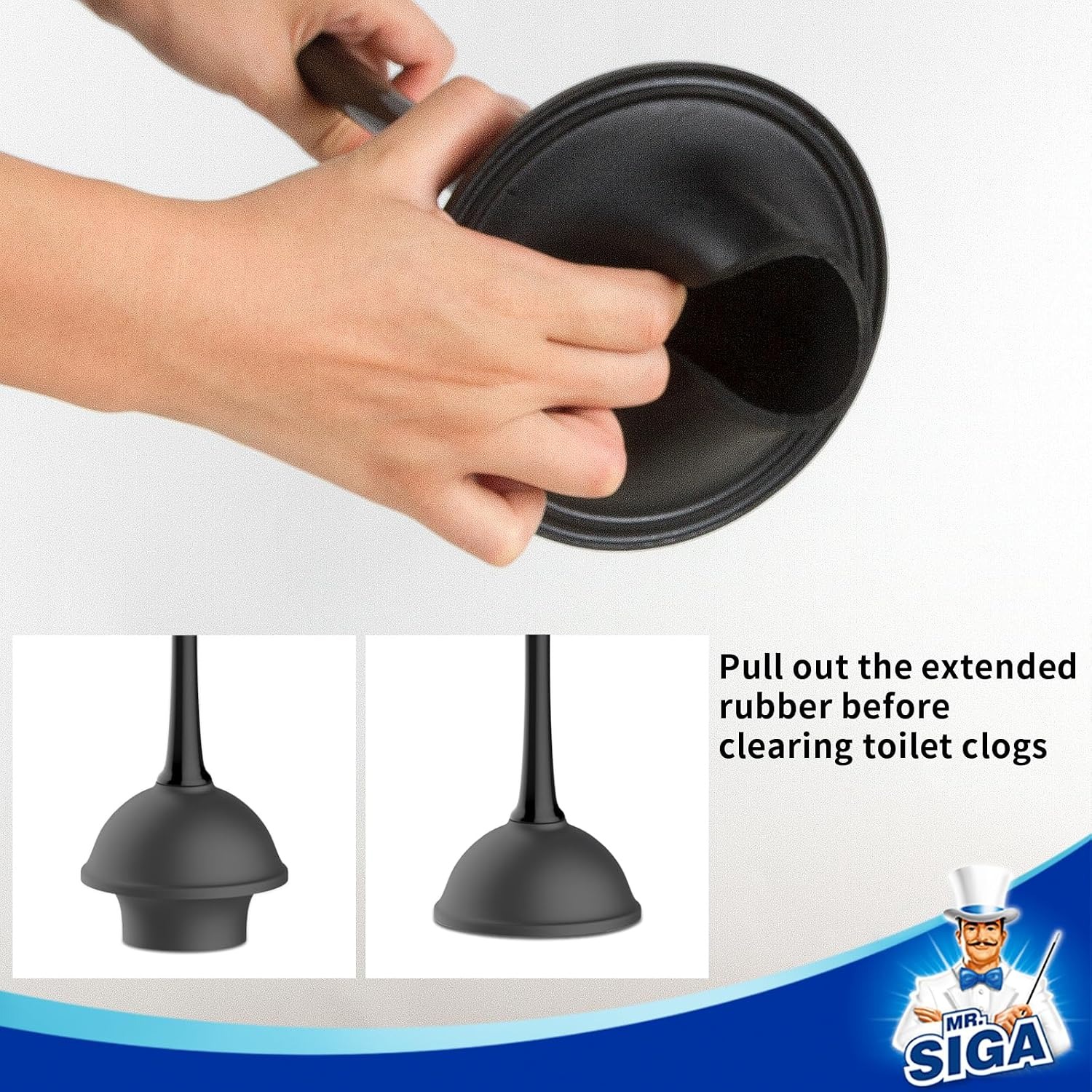
All of that depends on one thing: the seal. If the rubber cup is not sealed against the ceramic around the bowl outlet, you are just making noise and splashing. This is why a rubber suction cup plunger works better than a stiff plastic one. Rubber flexes and conforms to the curve of the bowl.
Three practical rules follow from that. Keep enough water in the bowl so the cup is fully covered, because plunging air does nothing. Seat the cup gently first to squeeze the air out, then start pumping. And keep your strokes straight up and down, not at an angle, because angling breaks the seal.
The grip handle matters more than it sounds. A proper plunging session is maybe twenty firm strokes, and a smooth round handle gets slippery when it is wet. Something your palm can actually hold lets you put real force into it.
What makes a bowl brush worth owning
Toilet brushes are one of those items where the cheap version genuinely costs more over time. Soft bristles flatten after a month, and a flattened brush just smears water around. Dense nylon bristles hold their shape, which is what gives you scrubbing action instead of wiping action.
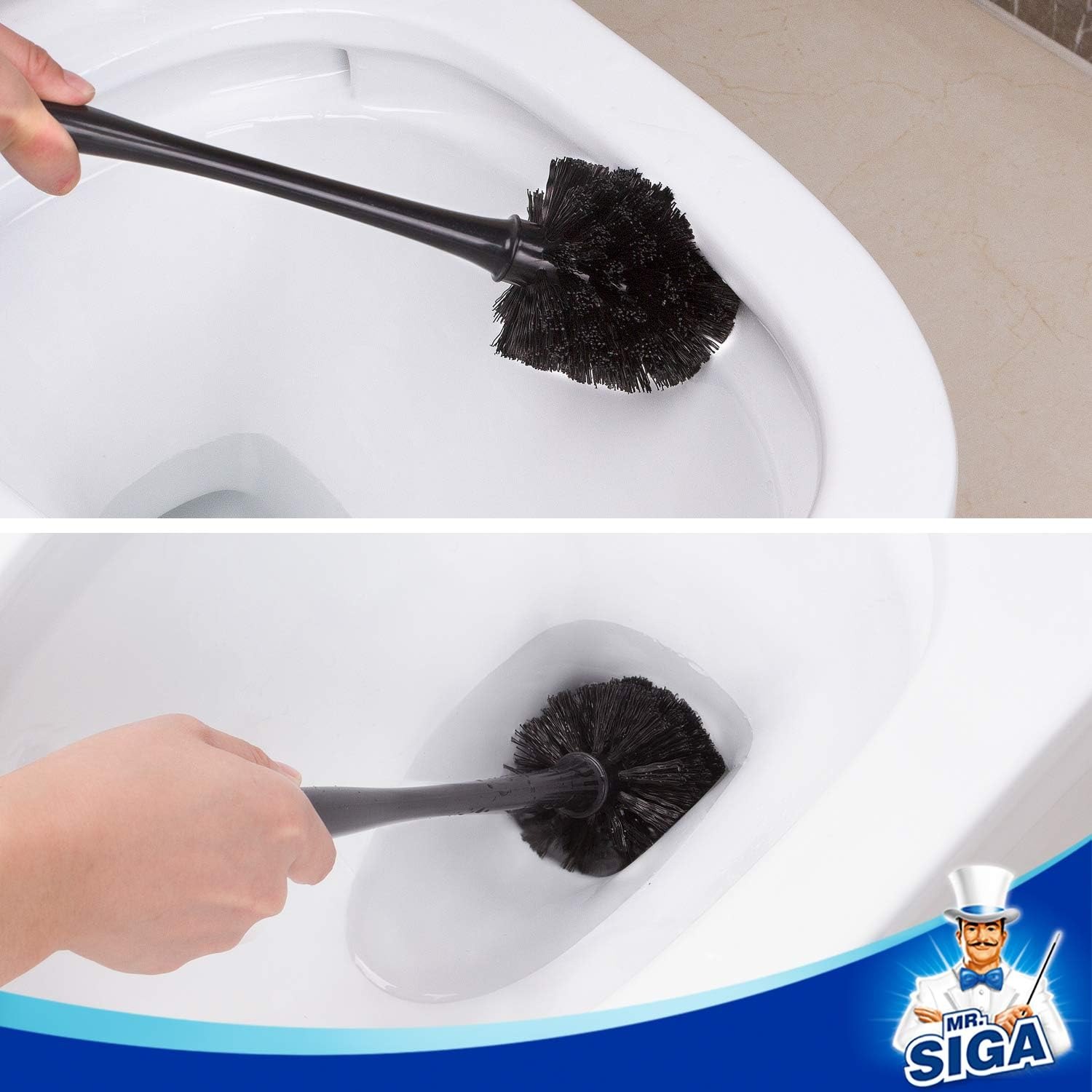
The area that matters most is the underside of the rim. That is where water sits after every flush, where mineral deposits build, and where staining shows first. You cannot see it without crouching, so it tends to go unscrubbed. A brush head with enough bristle density and a long enough handle lets you angle up into that space without putting your hand near the water.
The second spot is the outlet passage at the bottom of the bowl, the dark bend where everything drains. Working the brush into that opening weekly keeps buildup from narrowing the passage, which is one of the quiet causes of a toilet that drains sluggishly before it blocks properly.
Why the caddy earns its place
Storage is the part people underestimate until they have lived with a bad version.
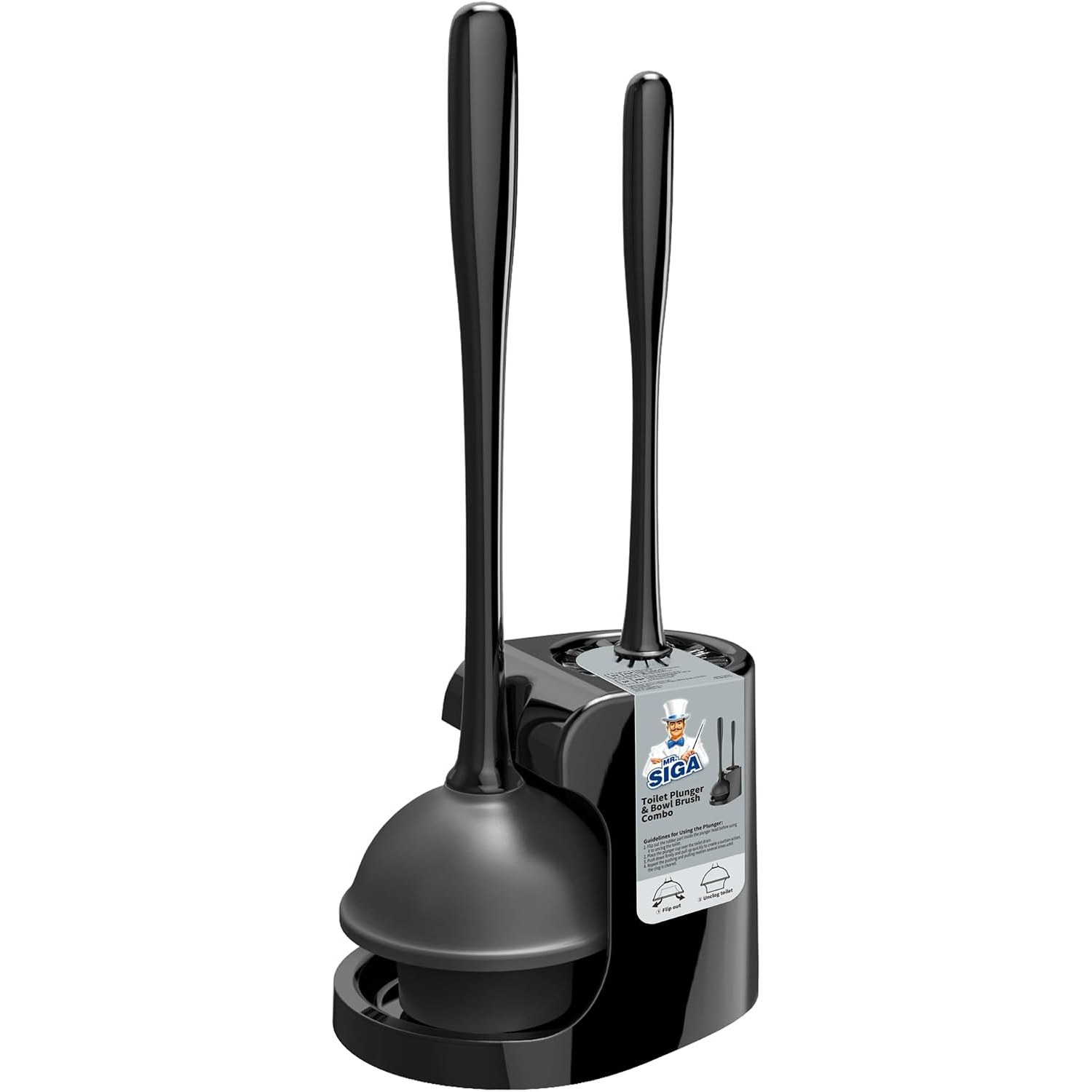
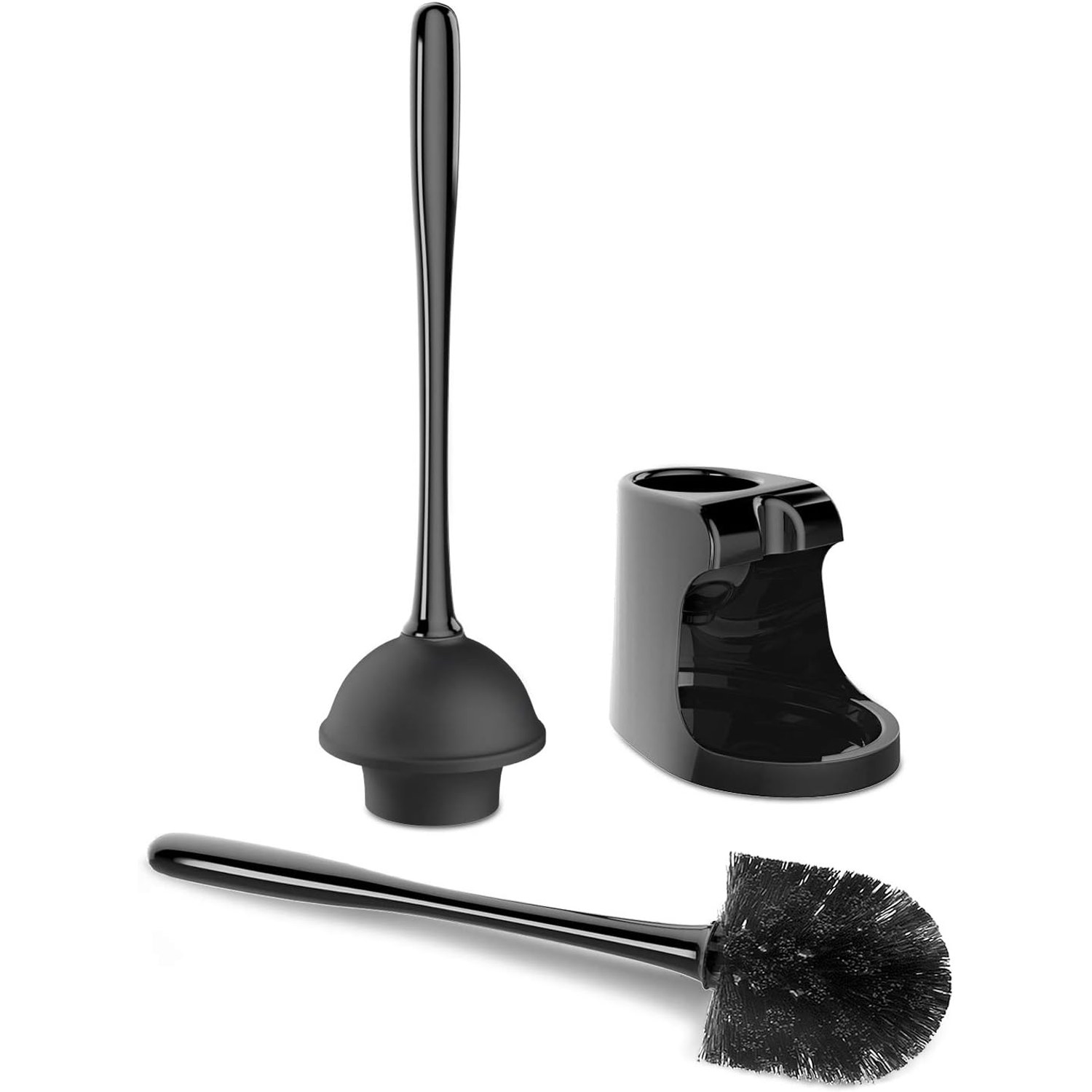
A single-chamber holder means the brush bristles sit in a pool of whatever dripped off them last time. A toilet brush and plunger set sharing one chamber is worse again, because the plunger cup, which has just been in the bowl, rests against the bristles. Two separate compartments keep that from happening. Each tool drips into its own space and each space can be emptied and rinsed.
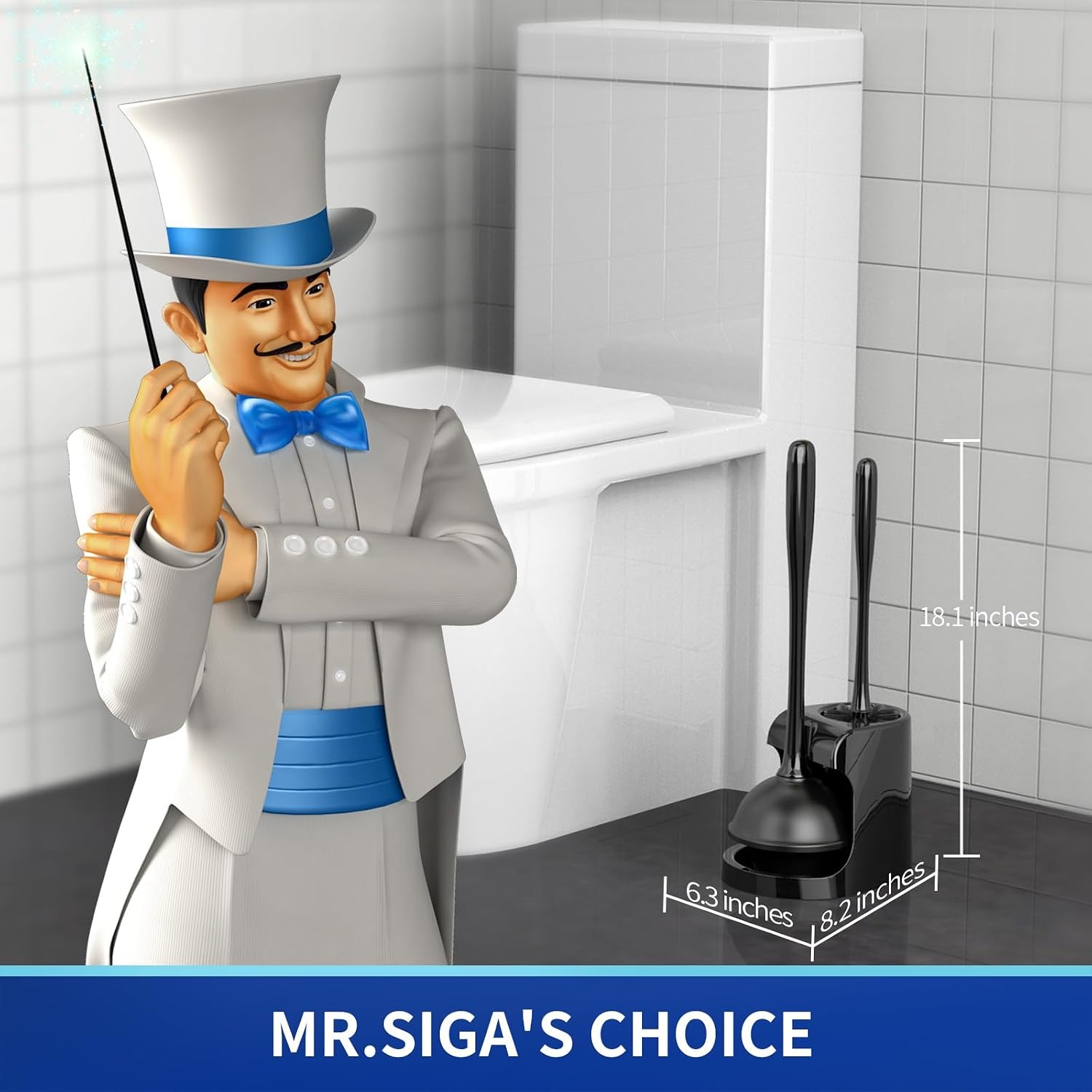
The footprint here is 21 by 16 cm, with the whole set standing 46 cm tall. That is a narrow, upright shape rather than a wide tray, which is deliberate. Bathrooms rarely have spare floor area, but almost all of them have a gap beside the cistern, a corner behind the door, or a space next to the vanity leg. Measure yours before ordering. It takes ten seconds and saves a return.
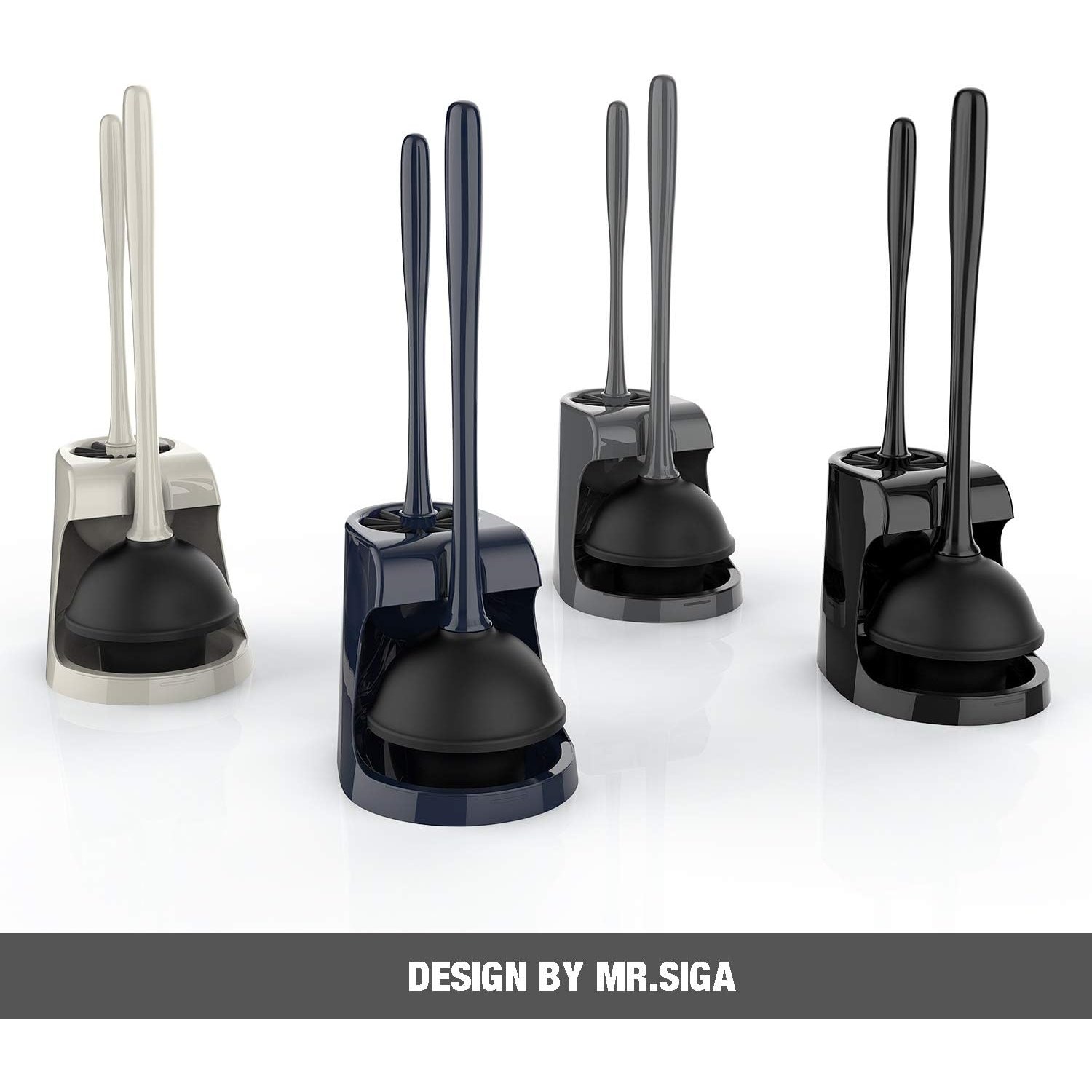
The black finish is a practical choice as much as a styling one. Dark plastic hides water spots and the inevitable dust that settles on a bathroom floor, which means it looks acceptable longer between cleans than a white version.
Who this suits
Families get the most from a set like this, simply because busy bathrooms block more often and need scrubbing more often. Having the tools in one place means a teenager can deal with a problem without announcing it to the household.
Renters and share houses benefit for a different reason. The set is one object to buy, one object to store, and one object to take with you. No scattered tools to argue about.
It also makes sense for small commercial washrooms. A cafe, a clinic waiting room, or an office floor needs both a brush and a plunger, and a caretaker is far more likely to use the right tool if both are standing in one caddy in the cleaning cupboard.
If you have a guest ensuite you barely use, it is still worth having a bathroom plunger set in there. Blockages never happen in the bathroom you are standing in.
How to choose between options
A few things separate a decent set from a disposable one.
Look at the cup material first. Rubber over rigid plastic, every time, because rubber seals. Then look at the handle. You want something with a textured or shaped grip rather than a plain smooth tube, because wet hands and force do not mix well.
For the brush, bristle density is the thing to assess. Sparse bristles look fine in a photo and disappoint in use. Handle length matters too, enough that your hand clears the water comfortably.
For the caddy, check two things. Does it separate the tools, and does it stand steady on its own? A caddy that tips when you pull the brush out is a daily small annoyance.
Last, think about the footprint against your actual bathroom. The best toilet brush and plunger set is the one that fits where you will keep it.
Keeping it clean
Simple routine. Rinse the brush head under the flush or under running water after each use, shake it off over the bowl, and return it to its compartment. Do the same with the plunger after a job, rinsing the cup thoroughly.
Every week or two, lift both tools out, tip the collected water from the caddy base, and wash it with warm water and a bit of household detergent. Dry it, put the tools back. If you want to use diluted bleach or toilet cleaner on the brush head, rinse it off afterwards rather than leaving it sitting.
Keep the set out of direct sunlight if your bathroom has a sunny window, since prolonged UV is hard on plastic and rubber over years.
Replace the brush when the bristles stay splayed after rinsing, or when they no longer spring back. The plunger and the caddy will normally outlast several brushes.
The short version
This is a three-piece set: a rubber cup plunger, a nylon bristle bowl brush, and a two-compartment holder, all in black. The assembled unit is 21 by 16 cm on the floor, 46 cm tall, and weighs 677 grams. It is made for ceramic toilet bowls and covers both routine cleaning and clearing blockages.
If you currently own a brush and no plunger, or a plunger you cannot find, this puts both in one spot where you will actually look for them. Measure your gap, check it fits, and then forget about it until the day you need it.