
The complete guide
Choosing and Fitting a Washing Machine Drain Hose
The problem nobody plans for
Appliance drain hoses are the last thing anyone thinks about until they become the only thing anyone can think about. You buy a washing machine, you get it into the laundry, and then you discover the drain hose is about forty centimetres short of the standpipe. Or you move house, and the new laundry has the drain on the opposite wall. Or the old hose has gone stiff, split at the elbow and quietly dripped behind the machine for a month.
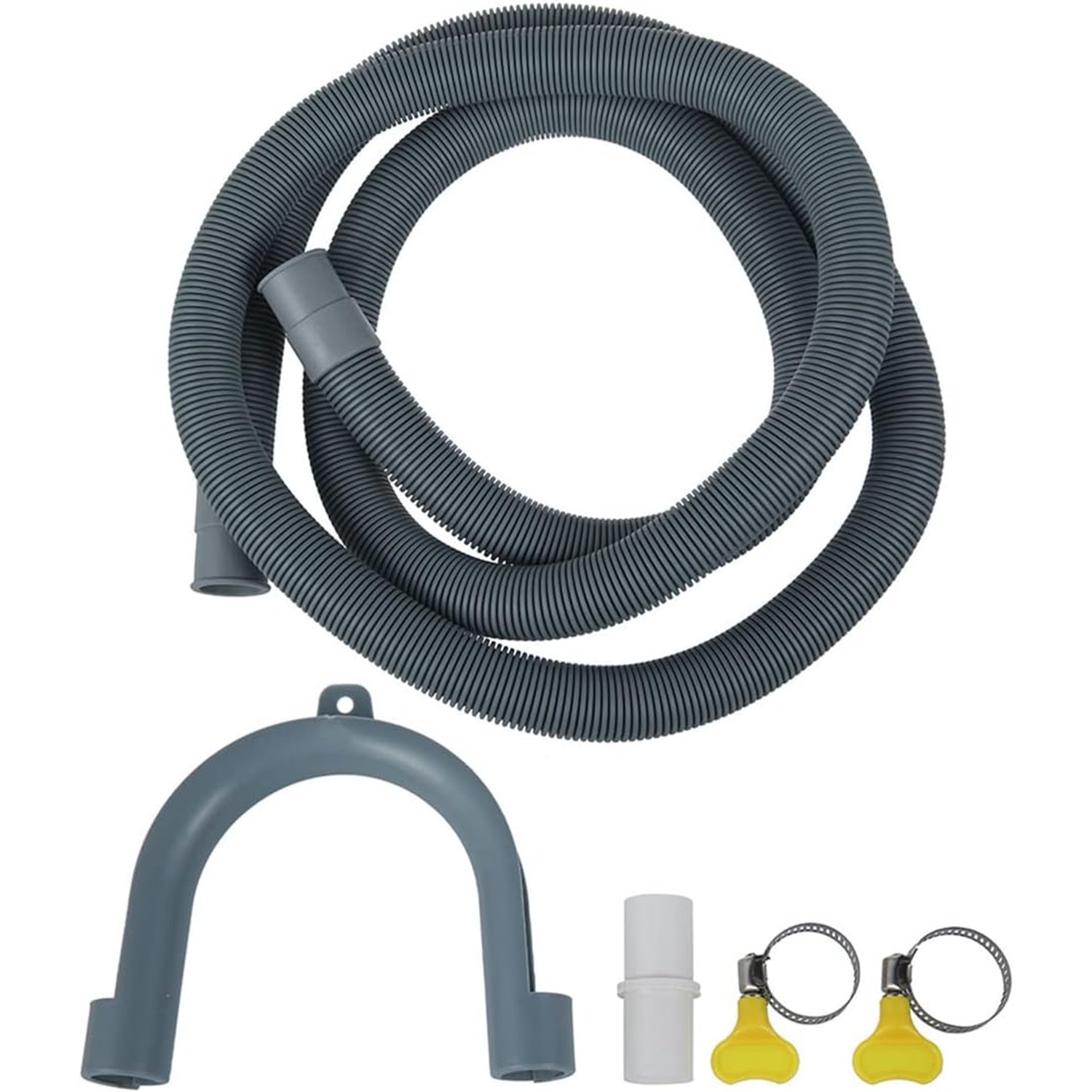
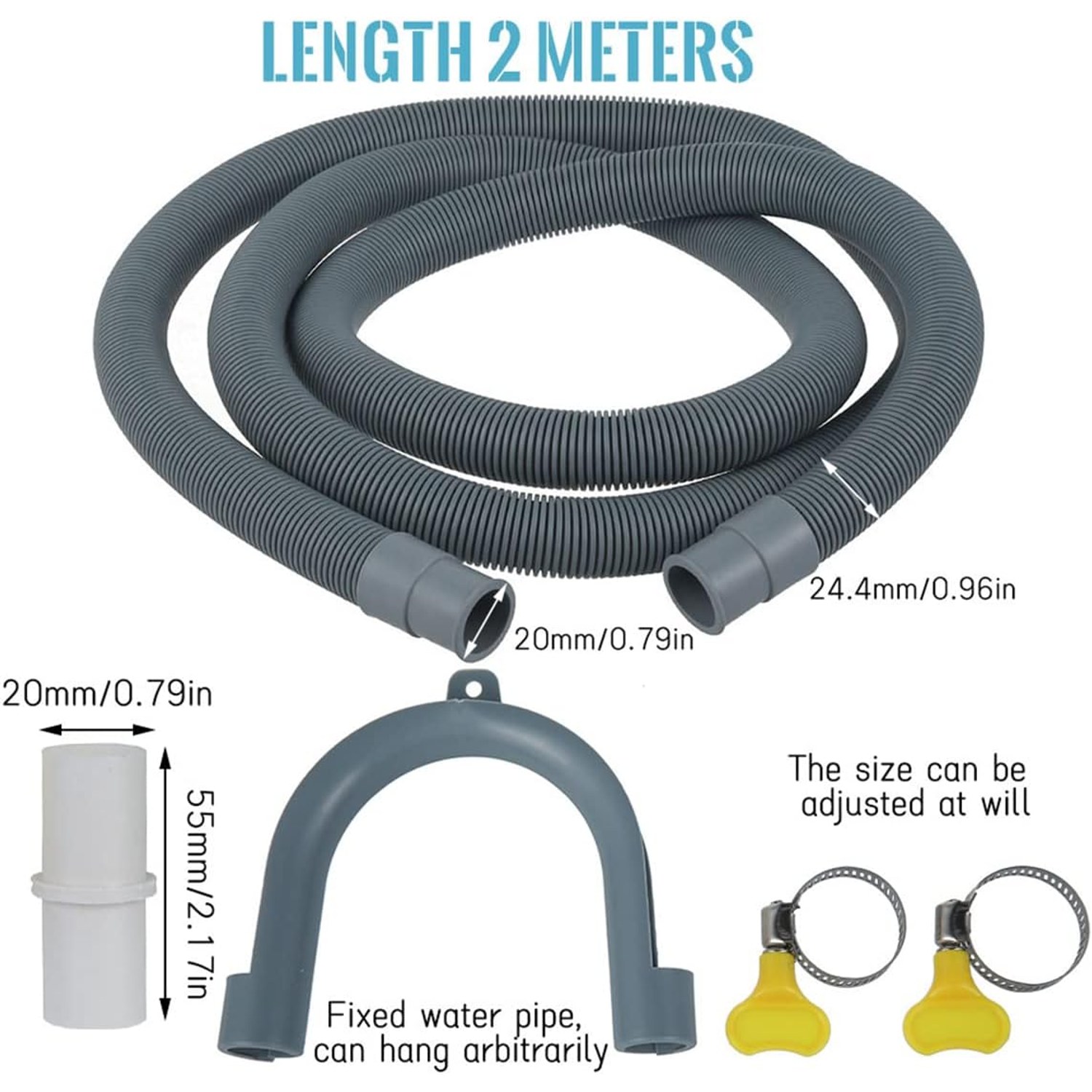
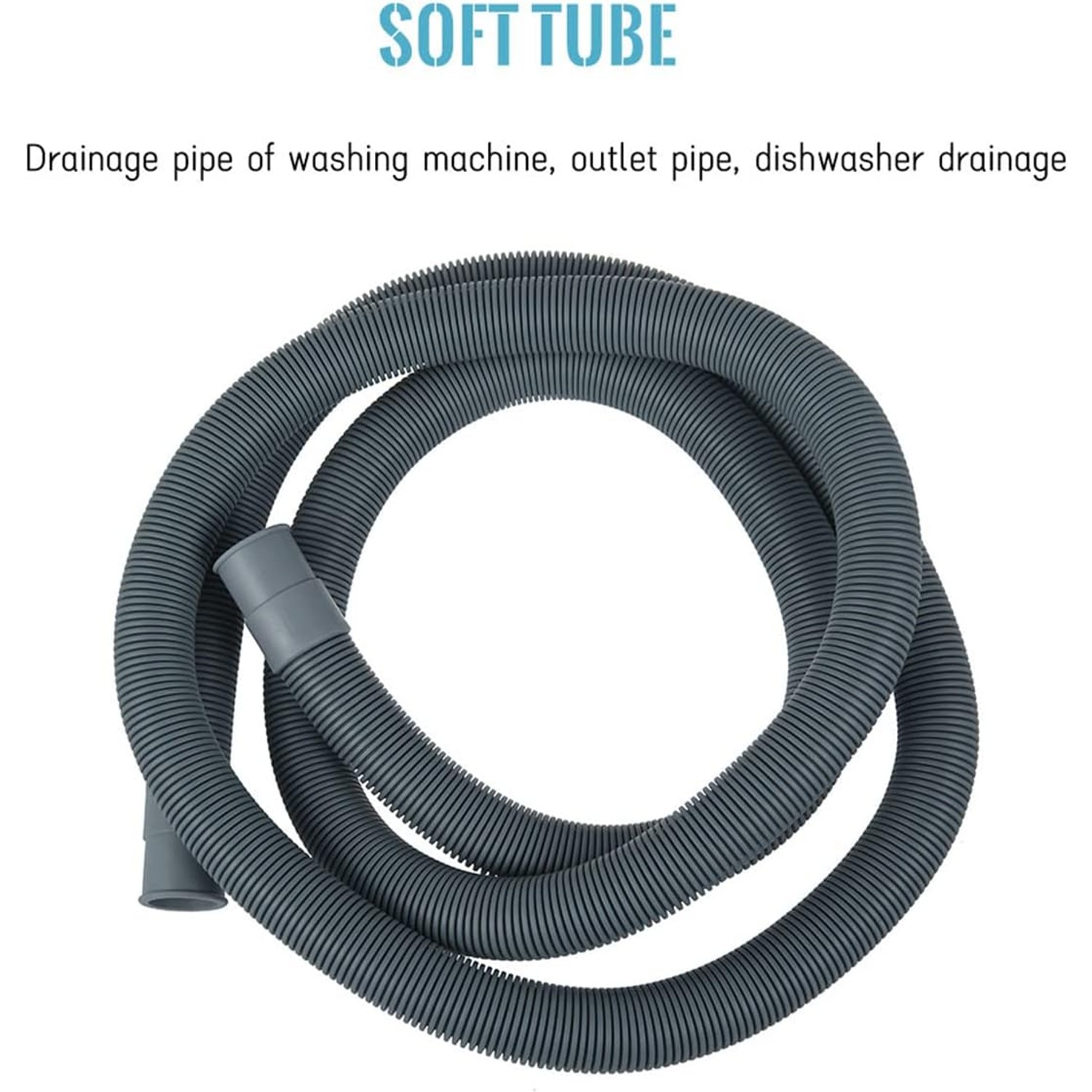
The fix is almost always a longer or newer hose, plus the small bits of hardware that hold it where it should be. That is what this 2 metre kit covers. Two metres of flexible polypropylene hose, a U-shaped bracket for the outlet end, two clamps and a white connector for joining onto an existing line.
It is a cheap part that does an important job. Get it right and you will forget it exists. Get it wrong and you get water on the floor.
How a drain hose actually works
A washing machine does not rely on gravity to empty. It has a pump that pushes the waste water out, up and over a loop, and into whatever drain you have connected it to. That loop matters. It stops dirty water from siphoning straight back into the drum when the machine is sitting idle.
The hose has three jobs. It has to carry the flow without collapsing, it has to hold the shape of that loop, and it has to stay attached at both ends while the pump is running. A pump under load creates real pressure, and a hose that is not clamped properly will work itself loose over a few dozen cycles.
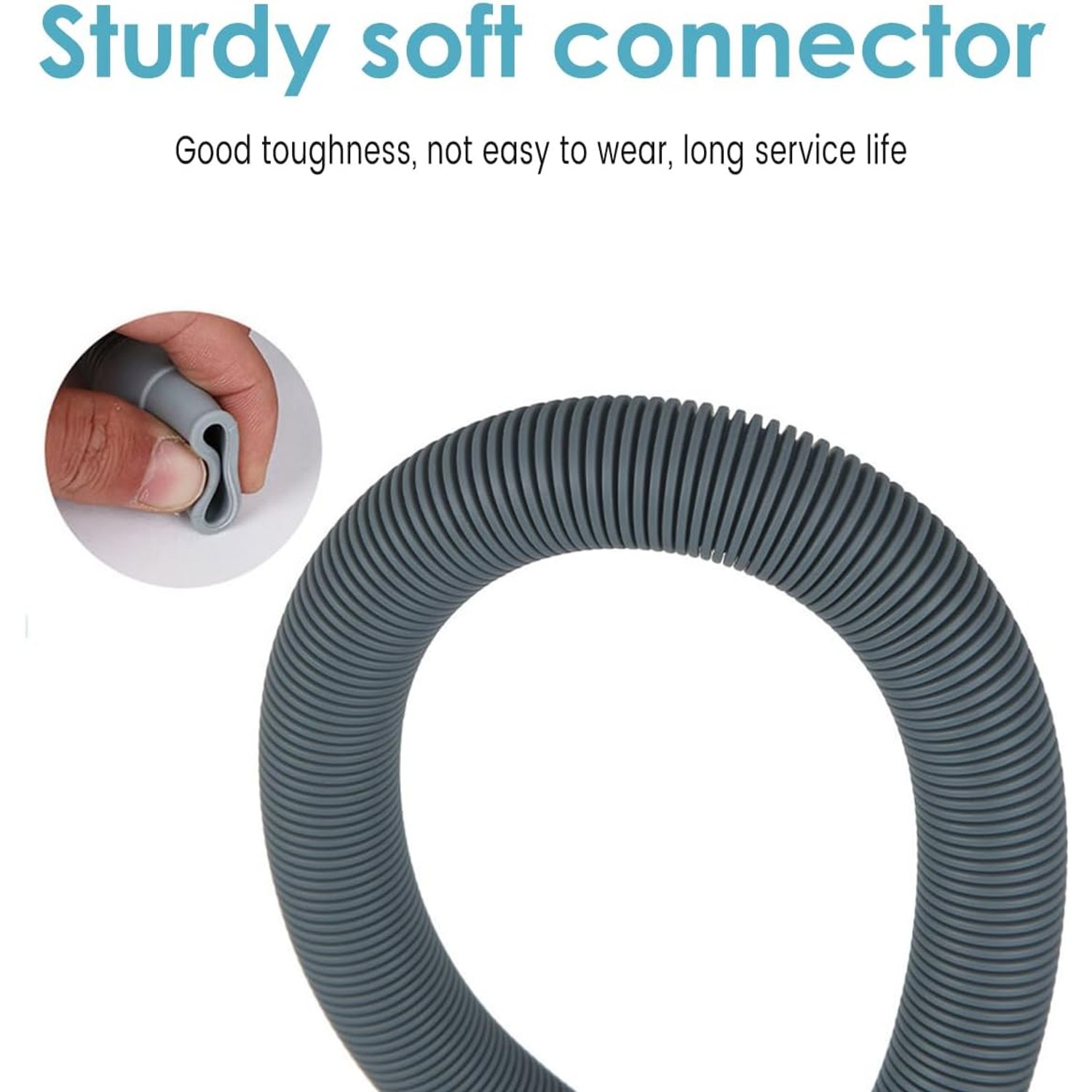
Polypropylene is used for this because it bends without going flat. The listed nominal wall thickness here is 2.2mm, which is the part of the spec that determines whether the hose holds its shape when you curve it behind a cabinet. Too thin and it crushes. Too thick and you cannot route it at all.
The U-shaped bracket is the quiet hero of the kit. It clips the end of the hose into a fixed hook shape so it sits over the standpipe or laundry tub rim and cannot flick out during the spin. Plenty of flood stories start with a hose end that was simply dropped into a tub and bounced out at 1200 rpm.
Who this suits
If your machine sits more than a metre from the drain, you need extra hose. That is the obvious case. The less obvious cases are just as common.
People renovating a laundry often move the plumbing but keep the appliances, and the original hoses never reach the new positions. People putting a washer under a bench need to route the hose around cabinetry, which eats length fast. People with a dishwasher in a kitchen island are in the same boat, which is why this item is also described as a dishwasher extension pipe.
Then there is straightforward replacement. Hoses age. They get brittle near the clamps, they develop hairline splits where they have been bent the same way for years, and they fill with lint until the machine takes twice as long to drain. If you have cleaned the filter and the machine still drains slowly, the hose is the next thing to check.
This kit is less suited to anyone needing a very long run. Pumps have limits on both distance and lift height, and stretching past them means slow draining and a pump working harder than it should. If your drain is a long way off, talk to a plumber about relocating the outlet rather than chaining hoses together.
Getting the size right
Two numbers matter. Length and diameter.
For length, pull the machine out and measure from the outlet spigot on the back to the point where the hose will terminate. Then add slack. The machine needs to move for cleaning, and a hose pulled tight is a hose under constant tension at the clamp. Twenty or thirty centimetres of slack is not wasted, it is insurance.
For diameter, look at the spigot on the appliance. This hose is listed at a 20mm outside diameter. Many drum washing machines and dishwashers use fittings in that range, but it is not universal, and brands differ. A quick measurement with a tape or a ruler takes thirty seconds and saves a return.
Also check your drain height. Your appliance manual will give a maximum discharge height, usually somewhere around a metre. The hose does not change that figure. If your standpipe is higher than the pump can manage, a longer hose will not help.
Fitting it without drama
Turn the machine off at the wall and pull it out far enough to work behind comfortably. Put a towel down. There will be water left in the old hose and it will find your socks.
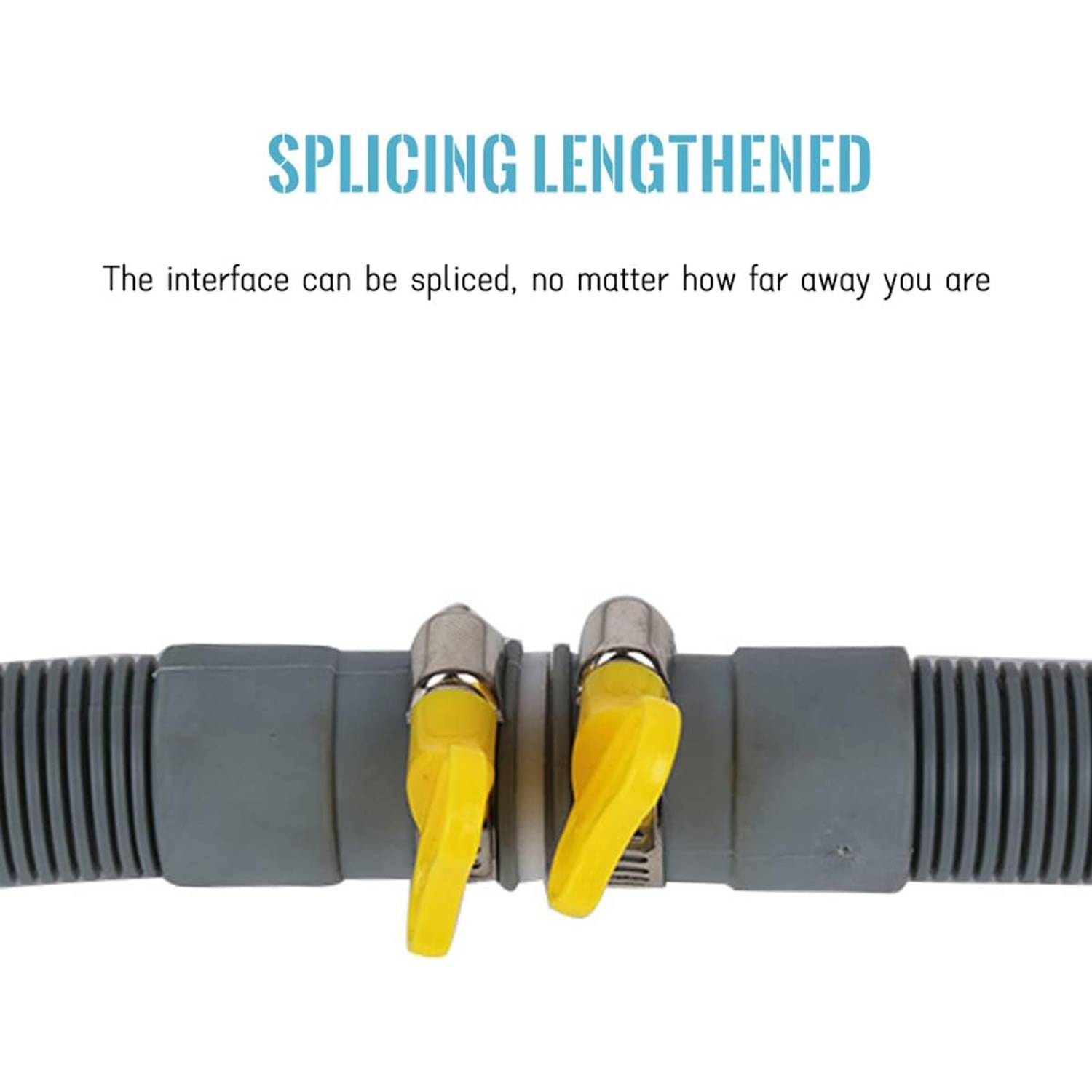
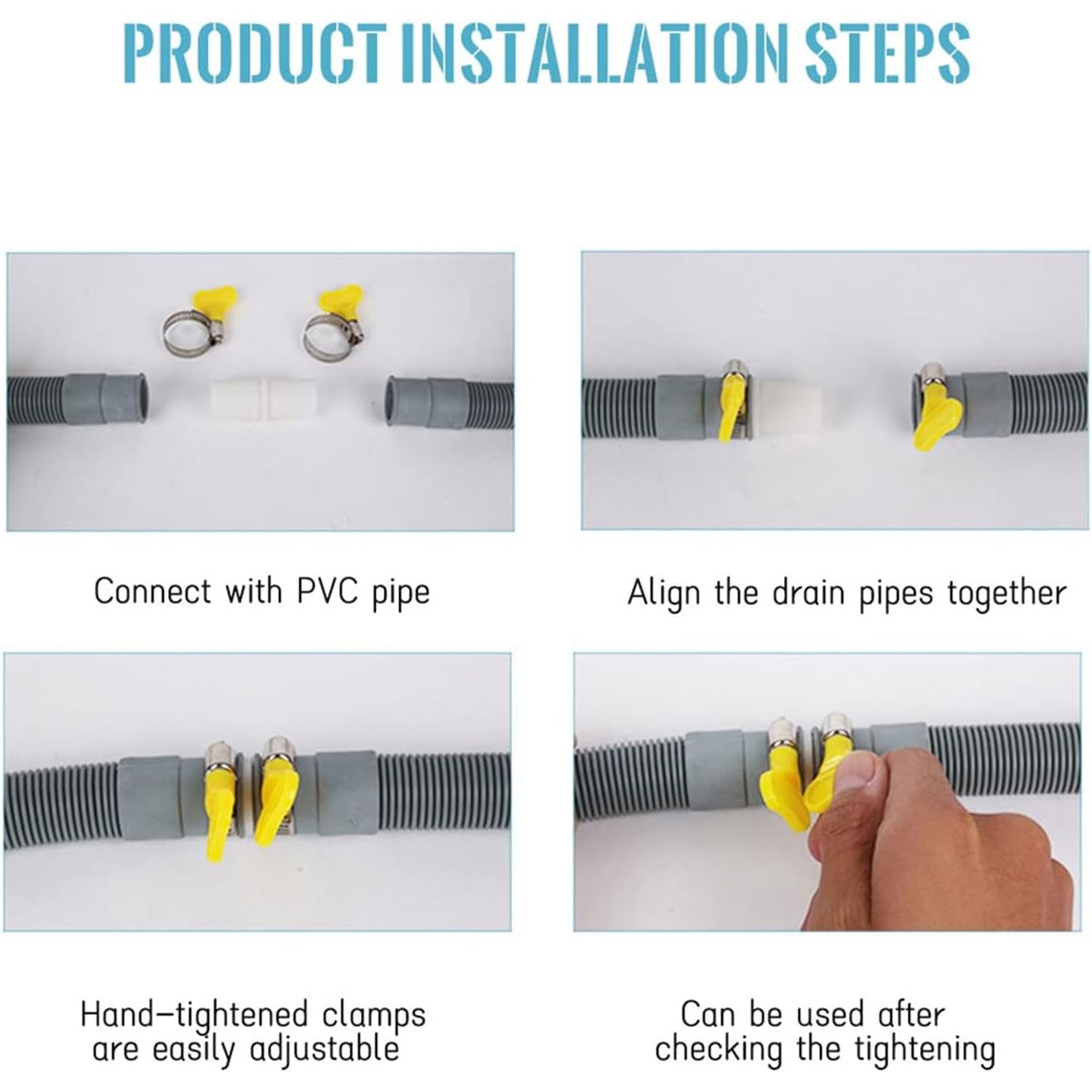
Decide whether you are replacing or extending. Replacing means removing the old hose from the appliance outlet entirely and fitting this one in its place. Extending means cutting or disconnecting the old hose at a sensible point and using the white connector to join the two, with a clamp on each side of the connector. That is what the two clamps are for.
Push each connection on fully. You want good overlap, not a hose balanced on the lip of a spigot. Slide the clamp over the overlap and tighten it evenly. Hand tight plus a touch more is usually right. Over-tightening a clamp on plastic can bite in and create the leak you were trying to prevent.
Fit the U-shaped bracket to the outlet end and hook it over the standpipe or tub. Make sure the hose rises before it falls, so you keep that anti-siphon loop.
Then test it before you push the machine back. Run the shortest rinse or drain cycle your machine has and watch both joins with a dry hand underneath. Thirty seconds of checking now beats a cupboard full of water later.
Keeping it working
Drain hoses need very little, but they do need something.
Every few months, when you clean the lint filter, have a look at the hose. Check the clamps are still tight, since plastic relaxes slightly over time. Look for flat spots, chalky patches or small splits near the bends.
Once a year or so, it is worth disconnecting the hose and flushing it through with clean water outside. You will be surprised what comes out. Lint, detergent sludge and hard water residue all build a lining inside the hose that narrows the flow. A slow-draining machine is often a dirty hose, not a failing pump.
Keep the hose away from heat. Do not drape it over a hot water pipe or let it rest against the back of a dryer. Polypropylene handles appliance wash temperatures fine, but constant external heat shortens its life.
And when it is finished, replace it. A drain hose is not a part worth nursing along. The cost of a new one is a fraction of the cost of a water-damaged floor.
The short version
This is a 2 metre grey polypropylene drain hose with a 20mm outside diameter and a 2.2mm nominal wall, supplied with a U-shaped support bracket, two hose clamps and a white connector. It works as a replacement hose or as an extension on an existing line, for both drum washing machines and dishwashers.
Measure your outlet spigot and your run before you order. Allow slack. Clamp both ends properly and keep the loop in place. Test it with a short cycle before you push the machine back against the wall.
Do that and you have a laundry connection you will not think about again for years, which is exactly what you want from a drain hose.