
The complete guide
Choosing a Toilet Plunger and Brush Set That Actually Earns Its Floor Space
The problem nobody plans for
A blocked toilet is never convenient. It happens on a Sunday night, or when there are people in the house, or five minutes before you need to leave. And the moment it happens you discover one of two things. Either you own a plunger and it is in the shed under a bag of potting mix, or you do not own one at all.
The second problem is quieter but more constant. Toilet brushes are genuinely unpleasant objects. They sit in a corner dripping, they tip over, the base fills with grey water, and the whole arrangement looks like something you forgot to deal with. Most people solve this by hiding the brush somewhere it is annoying to reach, which means the toilet gets cleaned less often than it should.
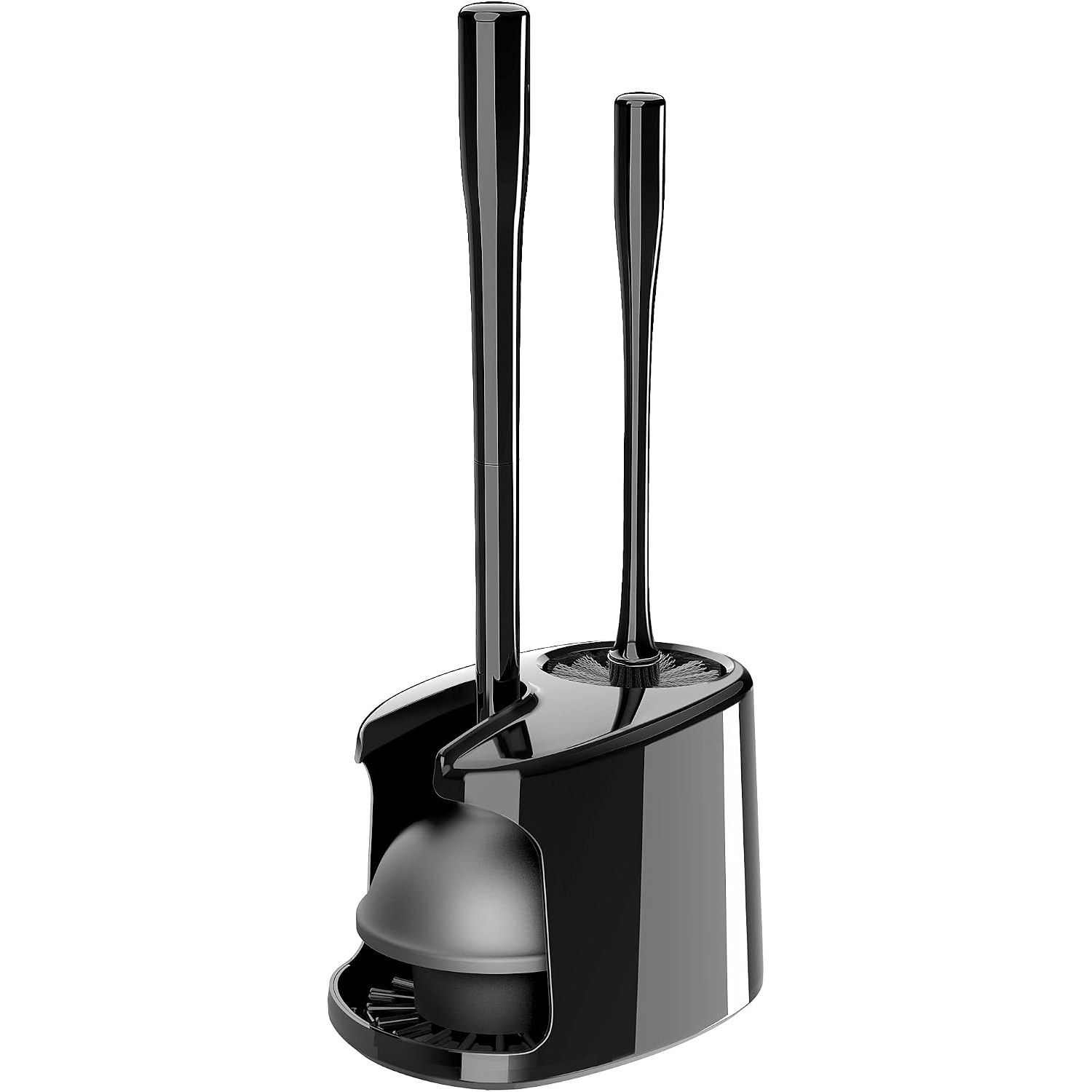
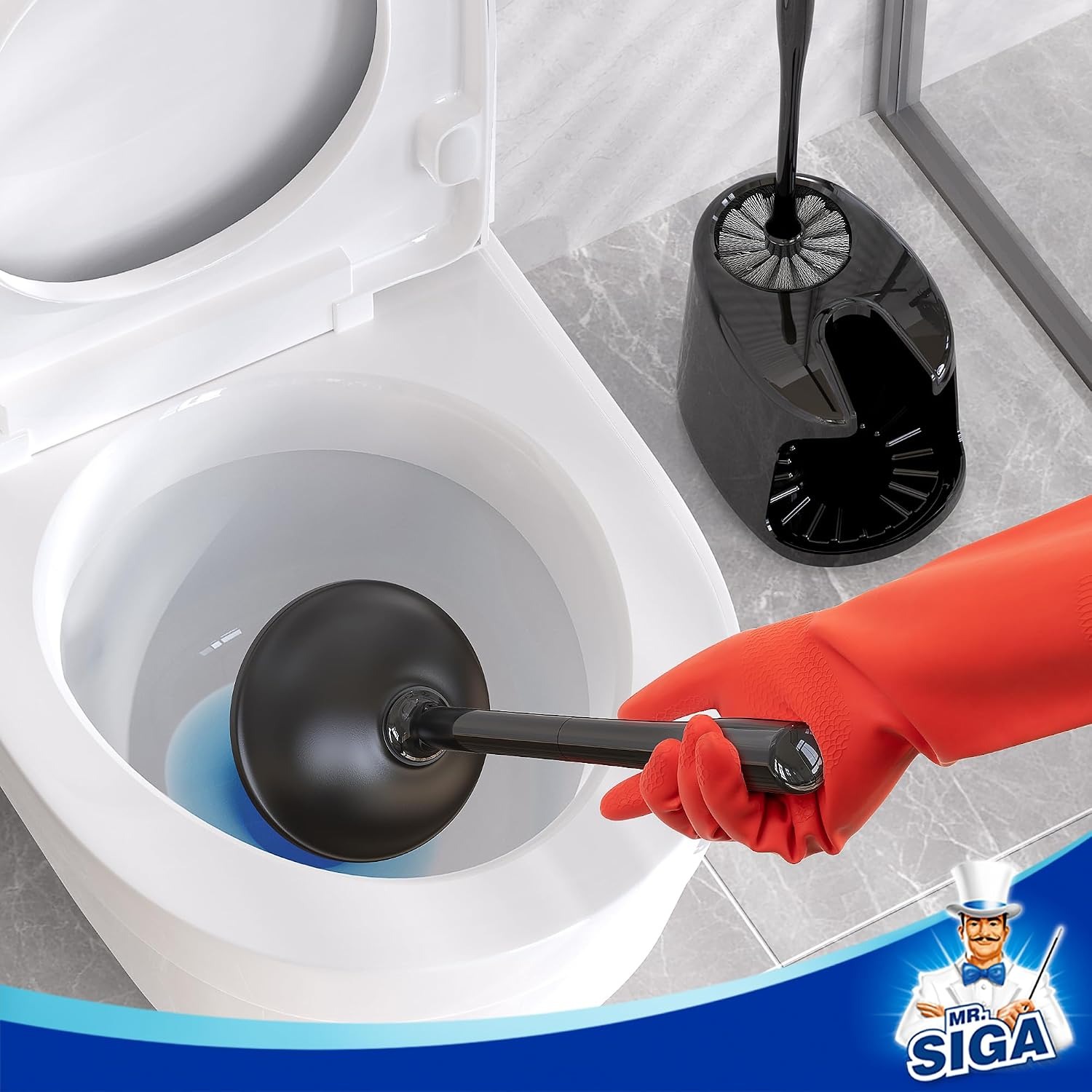
A combined toilet plunger and brush with holder deals with both of those at once. One compact caddy, two tools, both upright and draining, both within arm's reach of the bowl. It is not a clever product. It is just the sensible version of something most bathrooms get wrong.
How a plunger actually works
It is worth understanding, because it changes how you use one.
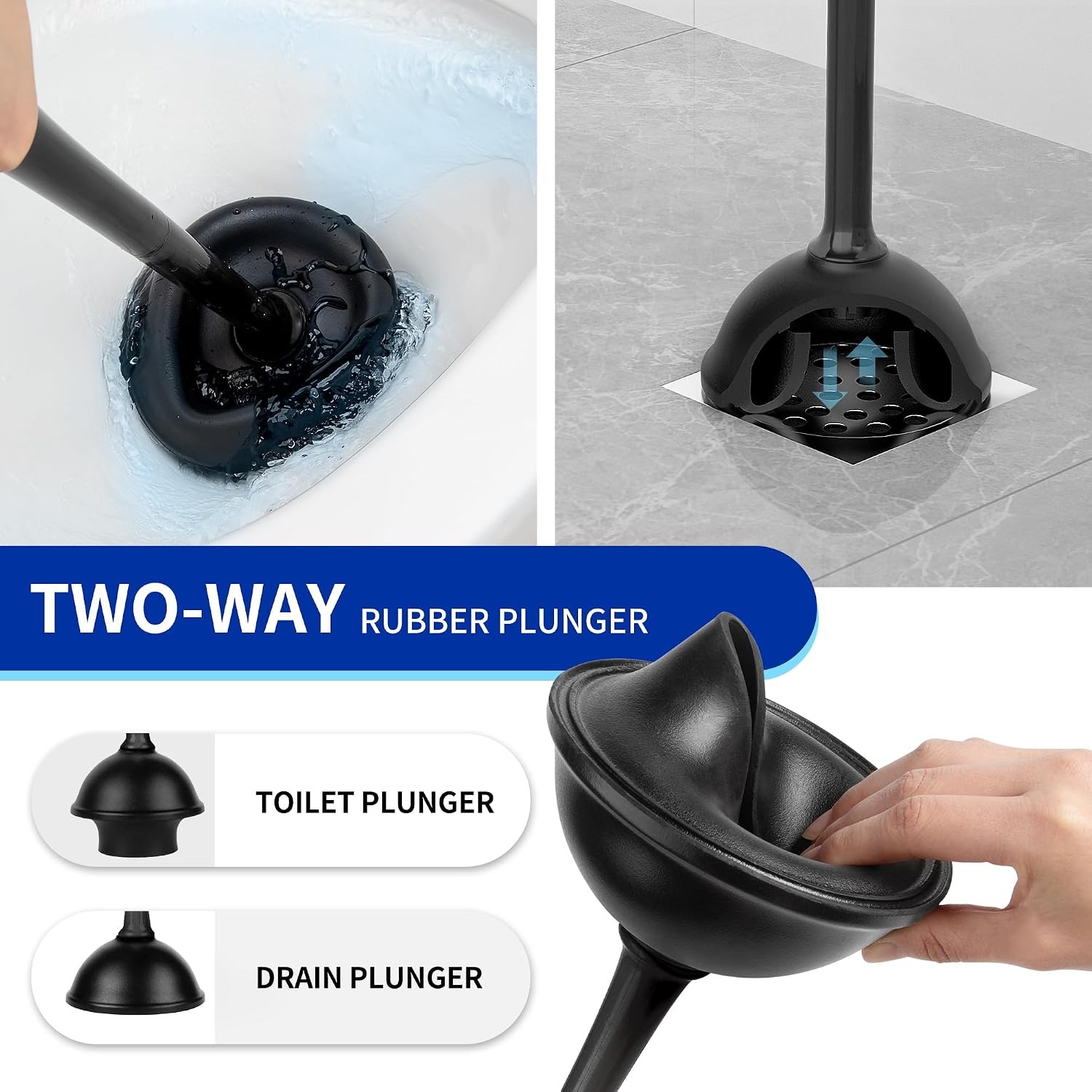
A plunger does not suck a blockage out. It moves water. When you press the cup down you push a column of water down the trap and against whatever is stuck. When you pull back, you drag that water the other way. The repeated push and pull breaks up the obstruction and lets it move on.
That only works if the cup seals against the porcelain. No seal, no pressure, and you are just splashing. So the quality of the rubber matters a lot. Thin, stiff rubber will not conform to the curve at the base of the bowl. The cup on this set is commercial grade rubber, which has the weight and flex to form that seal properly.
Two practical tips. First, make sure there is enough water in the bowl to cover the cup, otherwise you are pumping air. Second, make your first stroke gentle. The cup is full of air when you put it in, and a hard first push will fire that air back out along with everything else in the bowl. Press down slowly to expel the air, then start working.
What makes a toilet brush worth keeping
The failure point on cheap brushes is always the bristles. They are soft, they splay after a few months, and then the brush just pushes water around instead of scrubbing anything.
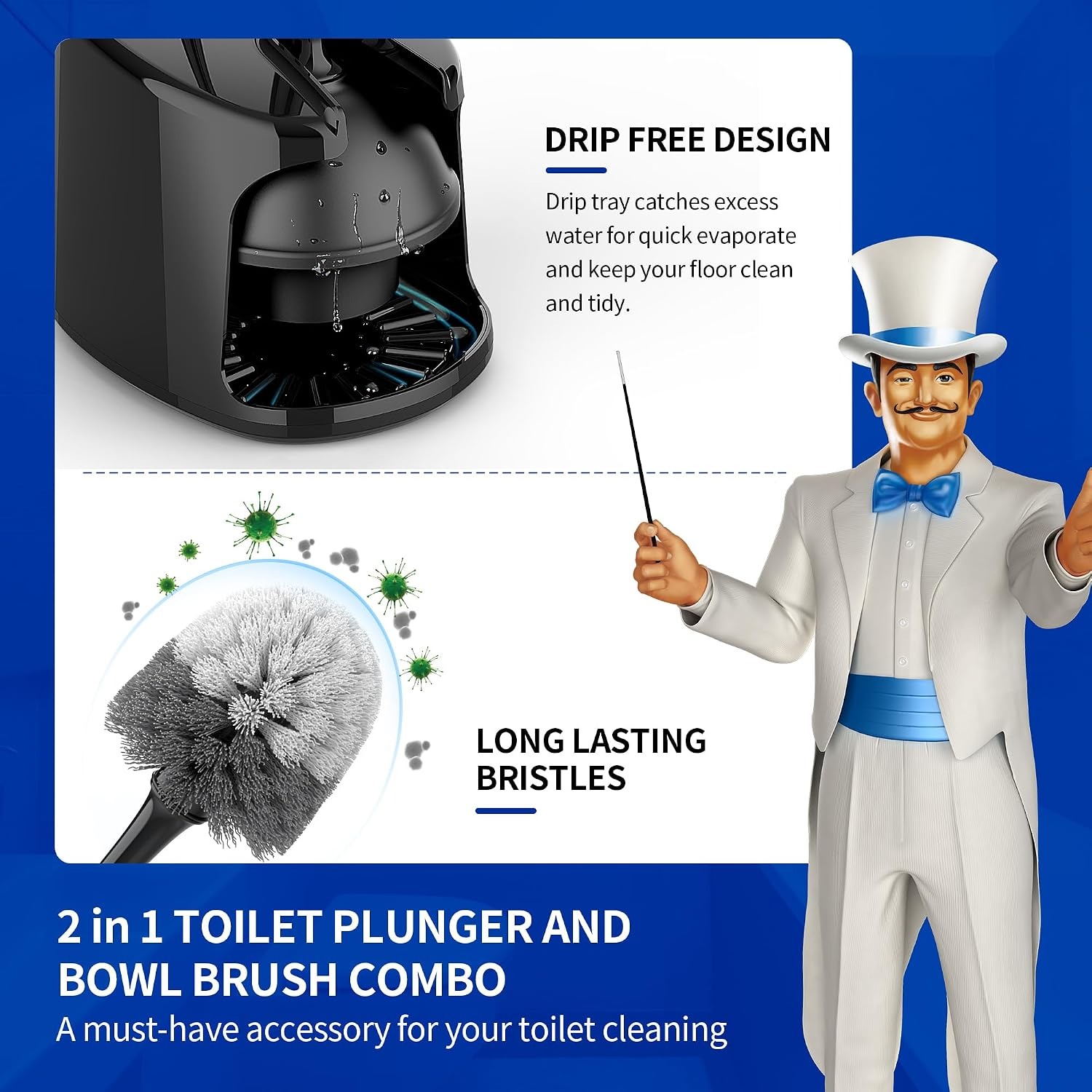
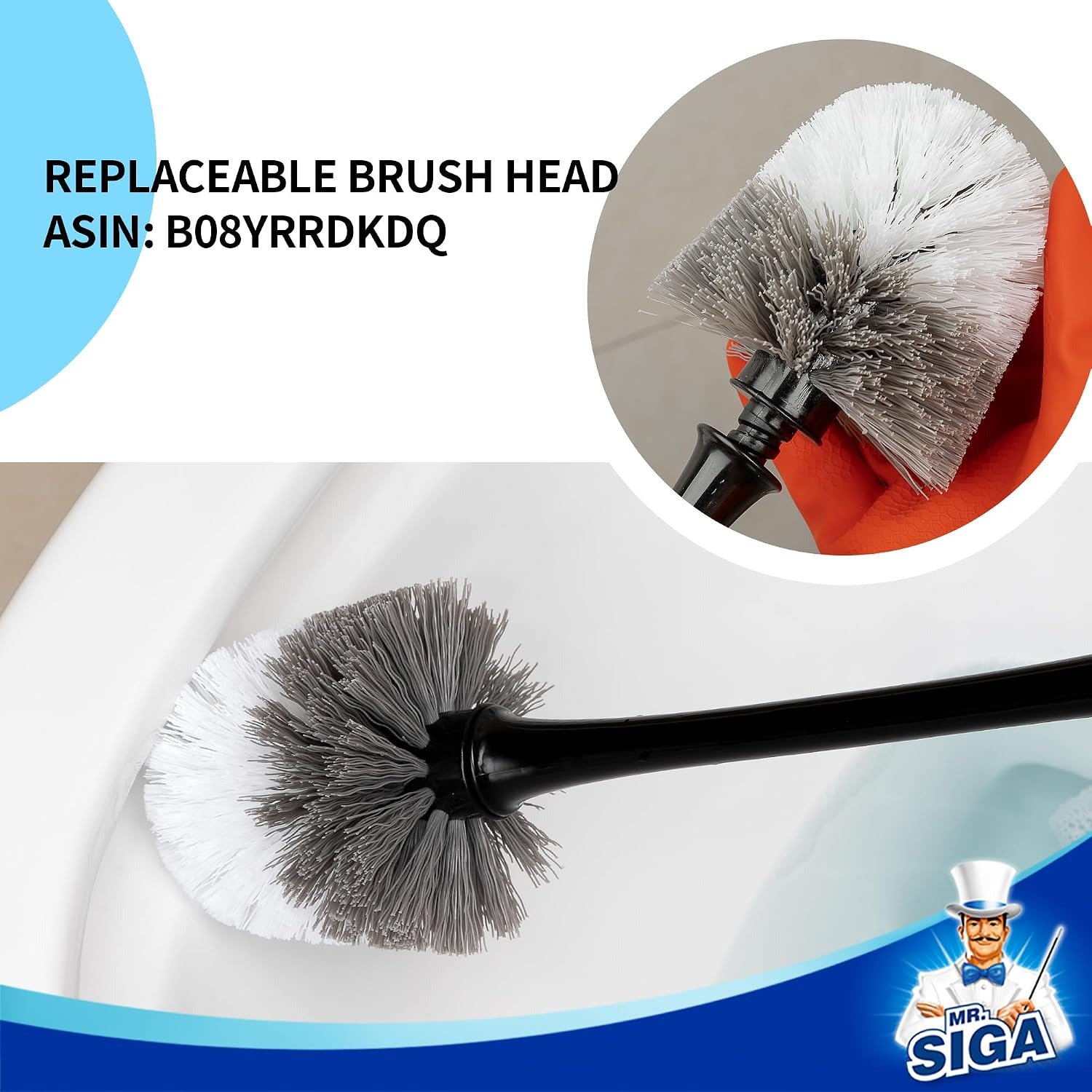
Dense nylon bristles hold their shape under pressure. That stiffness is what lets you work under the rim, which is the single most important part of the bowl to clean and the part most people skip. Staining and limescale start up there where the water flows, then creep down. A brush that cannot reach the underside of the rim is only doing half the job.
The other feature worth having is a replaceable head. Brushes wear out, holders and handles usually do not. Being able to swap just the head means you keep using the same caddy for years instead of buying a complete new set every time the bristles give up. It is cheaper, and there is less plastic going in the bin.
Why the two-compartment holder matters
This is the part people underestimate until they have lived with it.
A single-cavity caddy puts the plunger cup and the brush head in the same wet space. Whatever is on one ends up on the other. Two separate compartments keep them apart, which is more hygienic and also more stable, because pulling one tool out does not drag the other sideways.
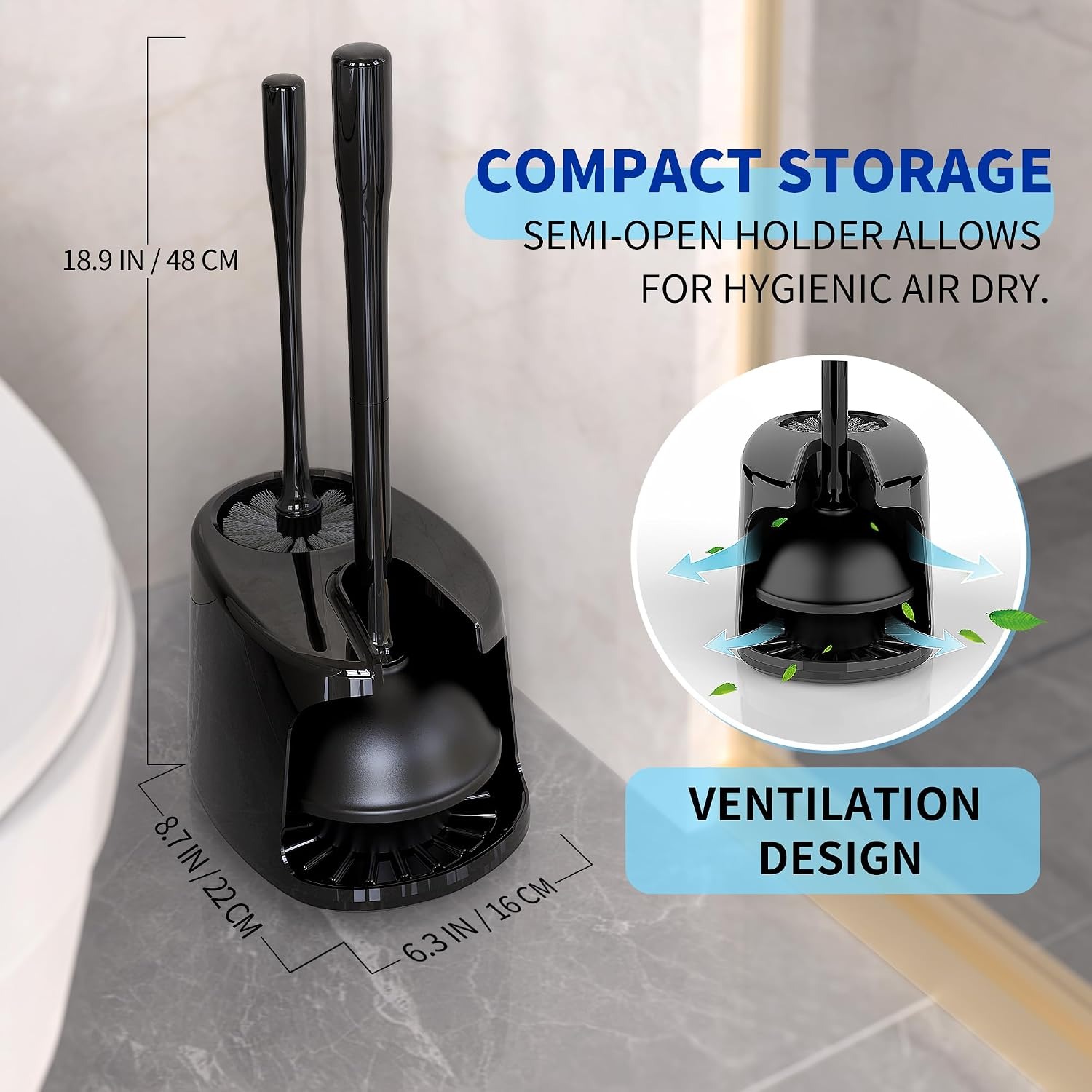
The holder also does the draining. Both tools are wet when you put them away. If there is nowhere for that water to go, it ends up on your floor. A proper base collects it, and you tip it out and rinse it when you do your weekly clean.
And it hides things. The brush head and plunger cup sit down inside the caddy. From across the room you see two handles, not two dirty tools. In a small bathroom, where the toilet is three steps from the door, that makes a visible difference.
Does it fit your bathroom?
The unit is 16 cm by 23 cm on the floor and stands 48 cm tall with the handles in place. Go and measure the gap beside your toilet before you order. Most standard gaps between a pan and a wall or vanity will take 23 cm comfortably, but tight or boxed-in layouts are worth checking.
Height is rarely an issue because the space beside a toilet is usually open above. If you are planning to tuck it under a shelf or a basin, check you have 48 cm of clearance.
The finish is black. That is a deliberate neutral choice. It sits fine against white ceramic, dark tiles, timber vanities and painted walls, and unlike pale plastic it does not show water spots and scuff marks after a year of being nudged by a mop.
Who it suits
Families, first homes, share houses and rentals are the obvious fits. In a share house particularly, having the tools visible and obviously available means somebody might actually use them.
It also works in small commercial settings. A cafe washroom, a workshop toilet, a small office. The plunger cup is commercial grade and the brush head can be replaced as often as the traffic demands. One caddy per toilet, nothing mounted to the wall, nothing a cleaner has to go and fetch.
If you are buying for a rental you manage, it is a low-cost item that prevents a much higher-cost callout. A tenant with a plunger in the bathroom handles a minor blockage themselves. A tenant without one calls a plumber.
Looking after it
The routine is simple and takes seconds.
After plunging, flush and work the cup in the clean water a few times, let it drip into the bowl, then put it back in its compartment. After brushing, rinse the head in the flushing water the same way, hold it over the bowl until it stops dripping, and stand it back up.
Every week or two, lift both tools out, tip the base into the toilet, rinse it with warm water and a general bathroom cleaner, and dry it. That is the whole maintenance programme. The reason brush holders go bad is that nobody ever empties them.
Keep the rubber cup out of direct sun or heat for long periods, and away from strong solvents. Rubber lasts a long time if you leave it alone and let it dry.
Swap the brush head when the bristles start to splay out or thin. You will notice it stops gripping the bowl. For a normal household that is usually somewhere in the six to twelve month range.
The short version
Buy this if you want a plunger and a toilet brush that live together, stay upright, drain properly and do not look awful in the corner of your bathroom.
The plunger is built around commercial grade rubber, which is the part that actually matters for clearing a bowl, and it works on sinks and shower drains too. The brush has dense nylon bristles that reach under the rim, and the head comes off and gets replaced instead of the whole thing going in the bin. The holder keeps the two apart and hides the messy ends.
It is 16 x 23 x 48 cm in black, it weighs under a kilo to ship, and it needs no assembly. Measure your gap, order it, and stop thinking about it. That is really the goal with a product like this.