
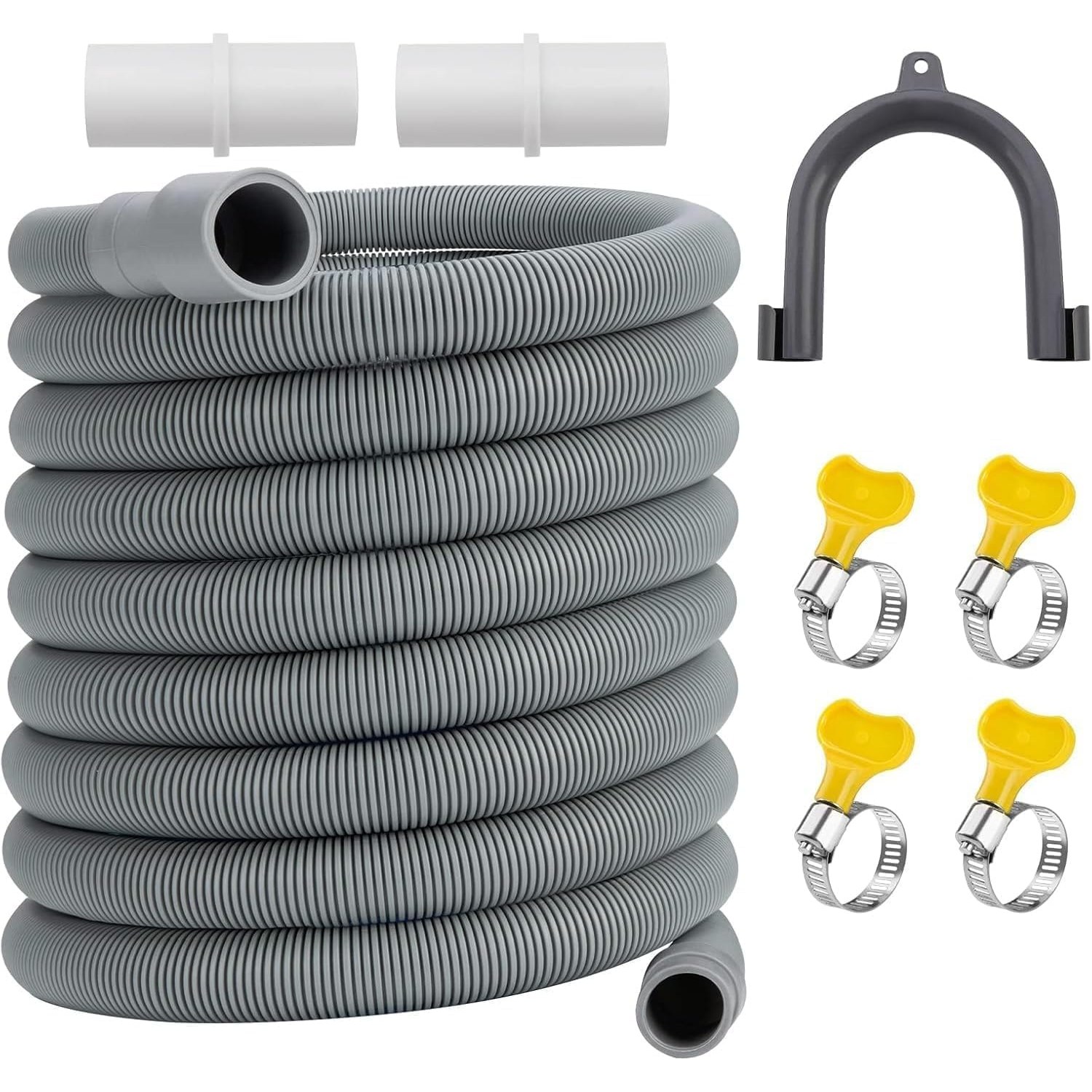
The complete guide
Choosing a Washing Machine Drain Hose Extension That Actually Fits
The problem nobody plans for
Laundry rooms are rarely designed around the machine. The drain is in one corner, the power point is in another, and the only space wide enough for a front loader is on the far wall. Then you unbox the machine and find a drain hose that reaches about a metre and a half. Something has to give, and usually it is the layout.
The same thing happens with portable washers in rented flats, dishwashers moved during a kitchen tidy-up, and any appliance that ends up in a caravan, a shed or a granny flat. The appliance works fine. The plumbing is fine. The hose in between is just too short.
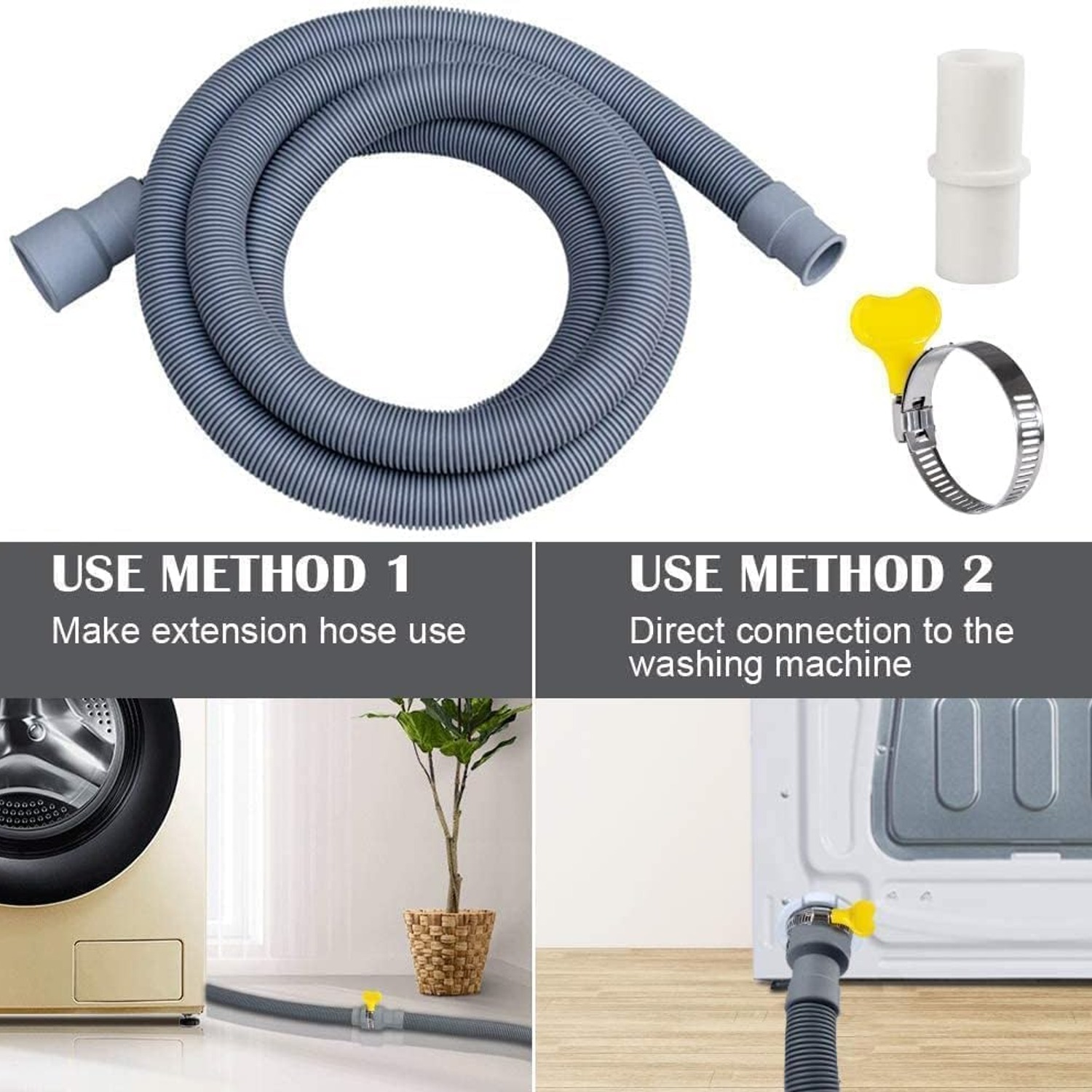
A washing machine drain hose extension solves it without touching fixed pipework. You add length, clamp the joint, and hook the far end into the sink or standpipe. No cutting into waste lines, no call-out fee, and the whole thing can be undone when you move.
How this kit works
Three parts do the real work here.
The hose is corrugated polypropylene, three metres long. The corrugation matters more than people expect. A smooth plastic tube looks neater but it flattens the moment you bend it around a corner, and a flattened hose is a blocked hose. The ribbed wall bends through a curve and keeps a round opening. If a machine foot or a storage box presses on it, the ribs push the hose back toward its original shape instead of leaving a permanent crease.
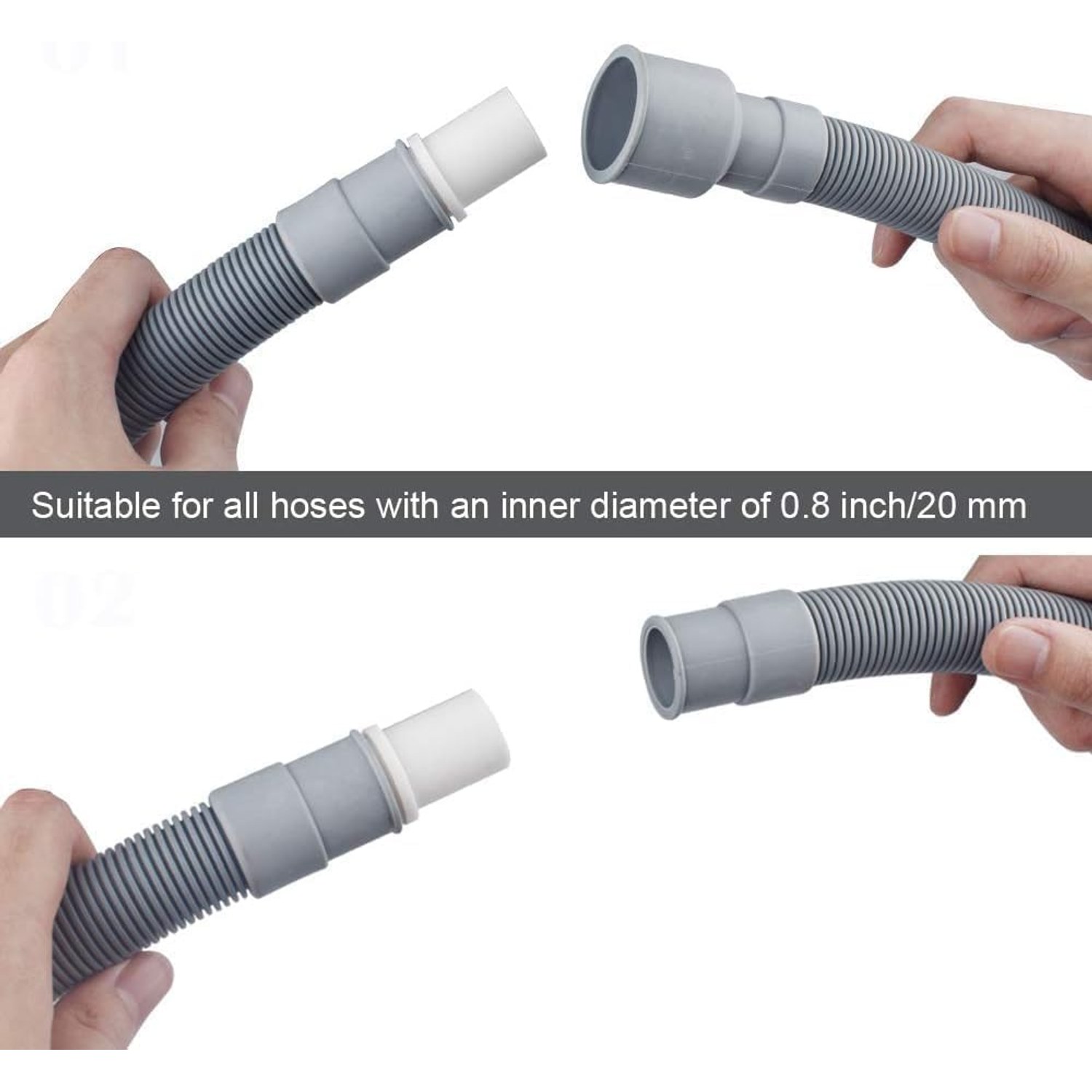
The stepped takeover fittings are the clever bit. Rather than guess which diameter your machine uses, you get a cone-shaped fitting with several steps moulded into it. You find the step that matches, then cut straight across with scissors. One fitting shape covers several common outlet sizes, which is why this kit works across washers, dishwashers and sink drains rather than fitting one brand only.
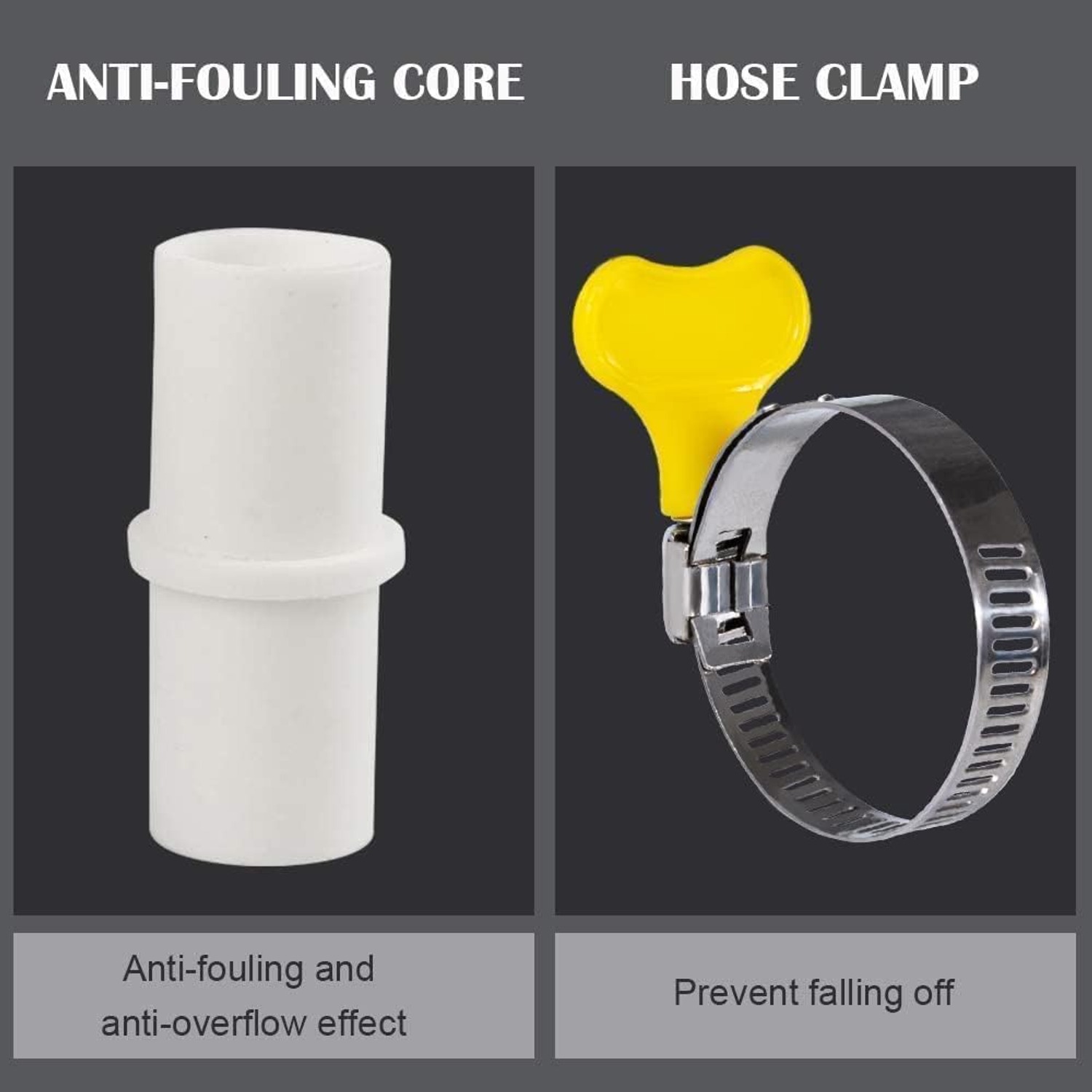
The clamps and the U-bend holder finish the job. Four adjustable clamps let you tighten each joint with a screwdriver. The U-bend holder clips to the discharge end and gives the hose a rigid hook, so it hangs over a laundry tub rim or sits in a standpipe without sliding out when the pump surges. That last part is the difference between a tidy install and a wet floor.
Who it suits
This is a good match if you are moving a washing machine to a new spot and the factory hose no longer reaches. It also suits anyone setting up a portable washer in a kitchen, since those nearly always need to reach a sink that is well out of range.
Renters get a lot out of it because nothing is permanent. You join the hose, use it, and take it with you. Caravan and small-space setups are the same story, where appliances sit wherever they physically fit rather than where plumbing is convenient.
It works for dishwashers too. A dishwasher drain hose extension job uses the same fittings and clamps, provided you cut to the right step and respect whatever drain loop height your dishwasher manual asks for.
It is less useful if your problem is pressure rather than reach. This is a drain hose, which carries water that the pump pushes out. It is not a supply hose and must never be used on the inlet side, where mains pressure runs constantly.
How to choose and measure
Start with distance, not with the product page. Run a tape measure from the appliance outlet, along the path the hose will actually take, to the drain point. Add a bit for the rise up to the sink rim and a bit of slack for moving the machine out to clean behind it. If that total is under three metres, this kit covers it comfortably.
Next, measure the outside diameter of your existing drain hose end, or the outlet spigot on the appliance. Write the number down. When the kit arrives you match that figure to the right step on the takeover and cut there. Measuring first is worth the two minutes, because an uncut fitting can be returned and a cut one cannot.
Check your appliance manual for maximum discharge height and maximum drain hose length. Both limits come from the pump inside the machine, not from the hose. A pump that was designed for a one metre lift will struggle if you hang the hose higher, no matter how good the hose is.
Finally, think about the path. A gentle downhill run from the machine to the drain is ideal. Long sags collect water and lint between cycles. Sharp U-shapes that sit below the drain point do the same. Keep it simple and the hose will look after itself.
Installing it without drama
Pull the machine out far enough to work behind it and put a towel down. Washing machines always have a cupful of water left somewhere.
Cut the takeover fitting at the step that matches your measurement. Make the cut square, because a ragged angled edge is where leaks start. Push the hose onto the barb as far as it will go, slide the clamp over the joint so it sits on the barb rather than past the end of it, and tighten with a screwdriver until firm. Firm, not crushed. Over-tightening a plastic fitting can split it.
Repeat at the appliance end. Then clip the U-bend holder onto the discharge end and hook it over the sink rim or feed it into the standpipe. Make sure the hose end is not pushed so deep that it sits in standing water, since that can cause siphoning.
Run one short cycle and watch the joints. A slow weep shows up within a few minutes. If you see one, loosen the clamp, check the cut edge, reseat and retighten.
Looking after it
Drain hoses live a quiet life but they do collect things. Lint from towels, detergent residue, the occasional stray sock fibre. Every few months, disconnect the discharge end and flush clean water through. It takes a minute and keeps the flow strong.
Check the clamps at the same time. Vibration from a spin cycle slowly works screws loose, and a quarter turn once or twice a year keeps everything sealed.
Store the hose loosely coiled if you take it out of service. Folding it flat and leaving it under a heavy box will defeat even corrugated plastic eventually. Keep it away from heaters and direct sun, which are harder on plastic than water ever is.
Hang on to the spare clamps and any offcut hose. They weigh almost nothing and they are exactly what you will want in two years when a joint needs redoing.
A few honest limits
Longer is not always better. Every extra metre of hose asks more of the pump. If three metres is more than you need, cut the hose down rather than coiling the excess behind the machine, where it can trap water.
This kit will not fix a blocked waste pipe or a failing pump. If the machine drains slowly with the original hose, extending it will make that worse, not better. Sort the underlying problem first.
And if your install involves cutting into fixed pipework or changing a waste connection, that is plumber territory. Local rules differ and it is not worth the risk.
The short version
If your appliance cannot reach the drain, a three metre corrugated extension with trim-to-size fittings is the cheapest fix available. The ribbed polypropylene resists kinks, the stepped takeovers suit a range of outlets, and the U-bend holder keeps the discharge end where you put it.
Measure the run, measure the outlet diameter, cut once, tighten the clamps properly, and run a test cycle. Ten minutes of care at the start saves a wet floor later.