
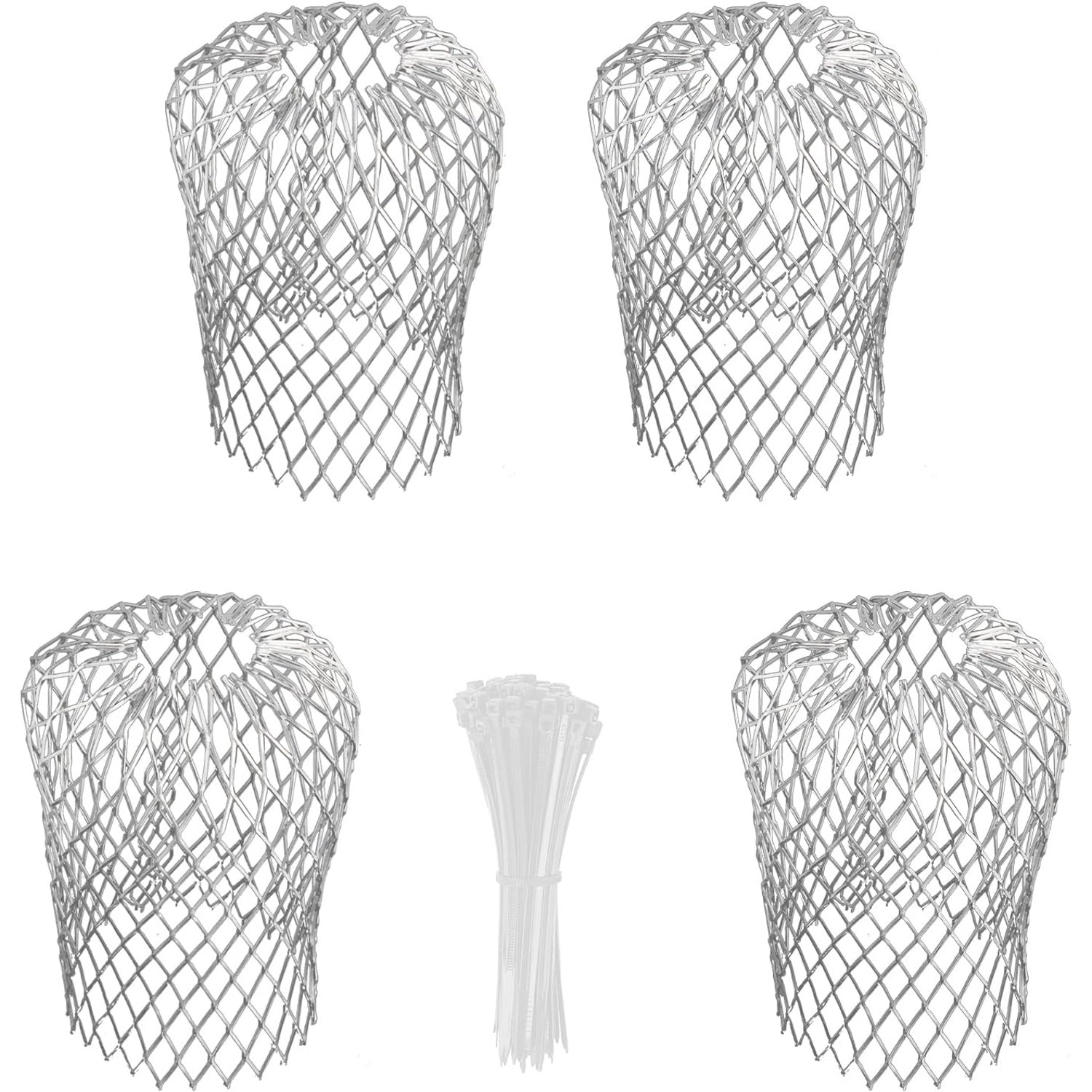
The complete guide
How To Choose A Downpipe Leaf Guard That Actually Keeps Water Moving
The problem starts at a hole the size of a mug
Most gutter trouble does not start in the gutter. It starts at the outlet, the round hole in the bottom of the gutter where water drops into the downpipe. That hole is usually somewhere between 50 mm and 100 mm across. A handful of wet leaves, a few twigs and some roof grit will bridge it in one storm, and from then on the gutter is a long shallow trough with nowhere to drain.
You often do not notice the blockage. What you notice is the symptom. Water sheeting over the front of the gutter during rain. A stripe of dirt down the wall. Soggy ground along the footings. Paint lifting on a fascia board. By the time those show up, the plug in the pipe has usually been there for months.
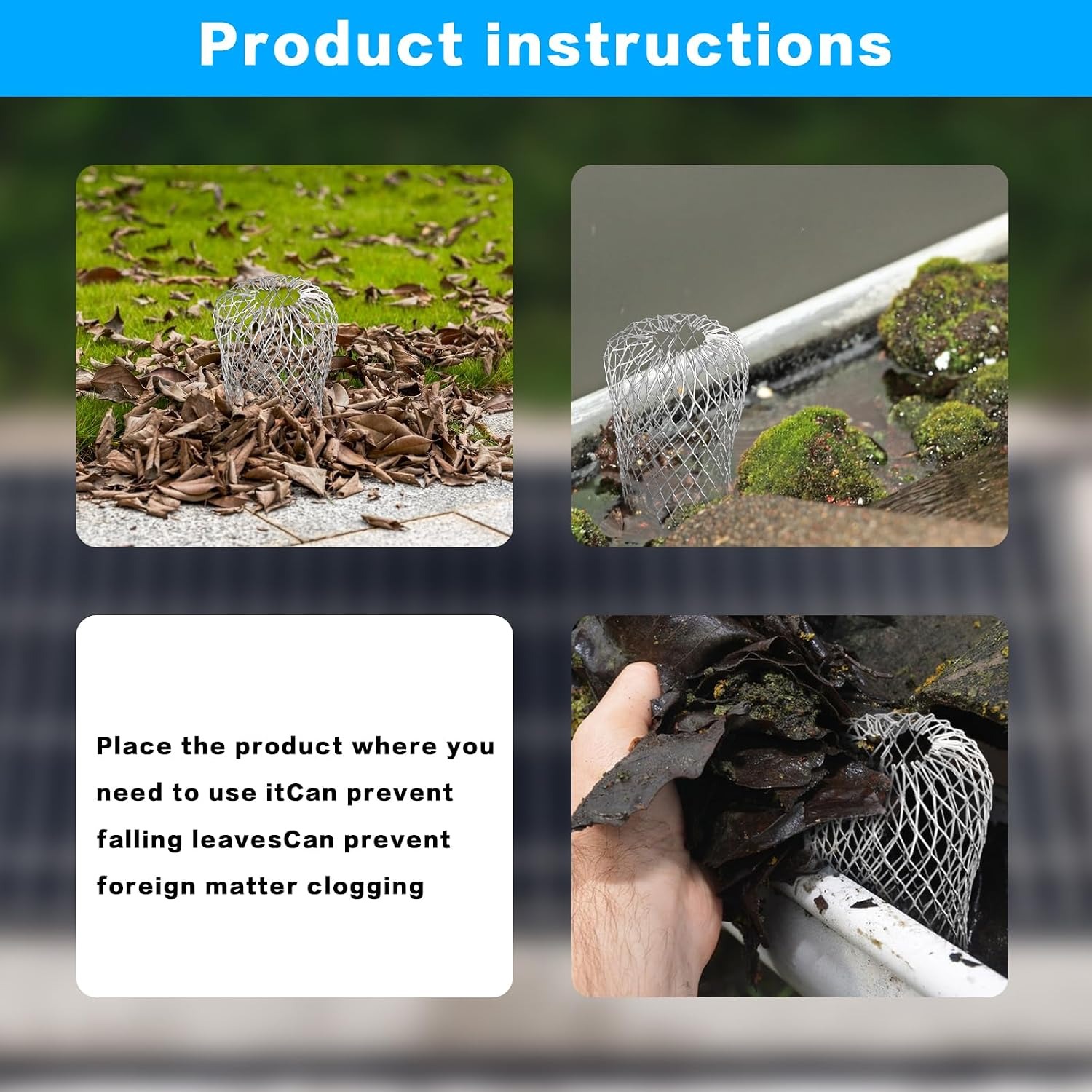
A downpipe leaf guard is a small part that fixes a disproportionate amount of that. Instead of debris disappearing into a pipe you cannot see, it piles up on a mesh you can see, reach and empty.
How an outlet strainer works
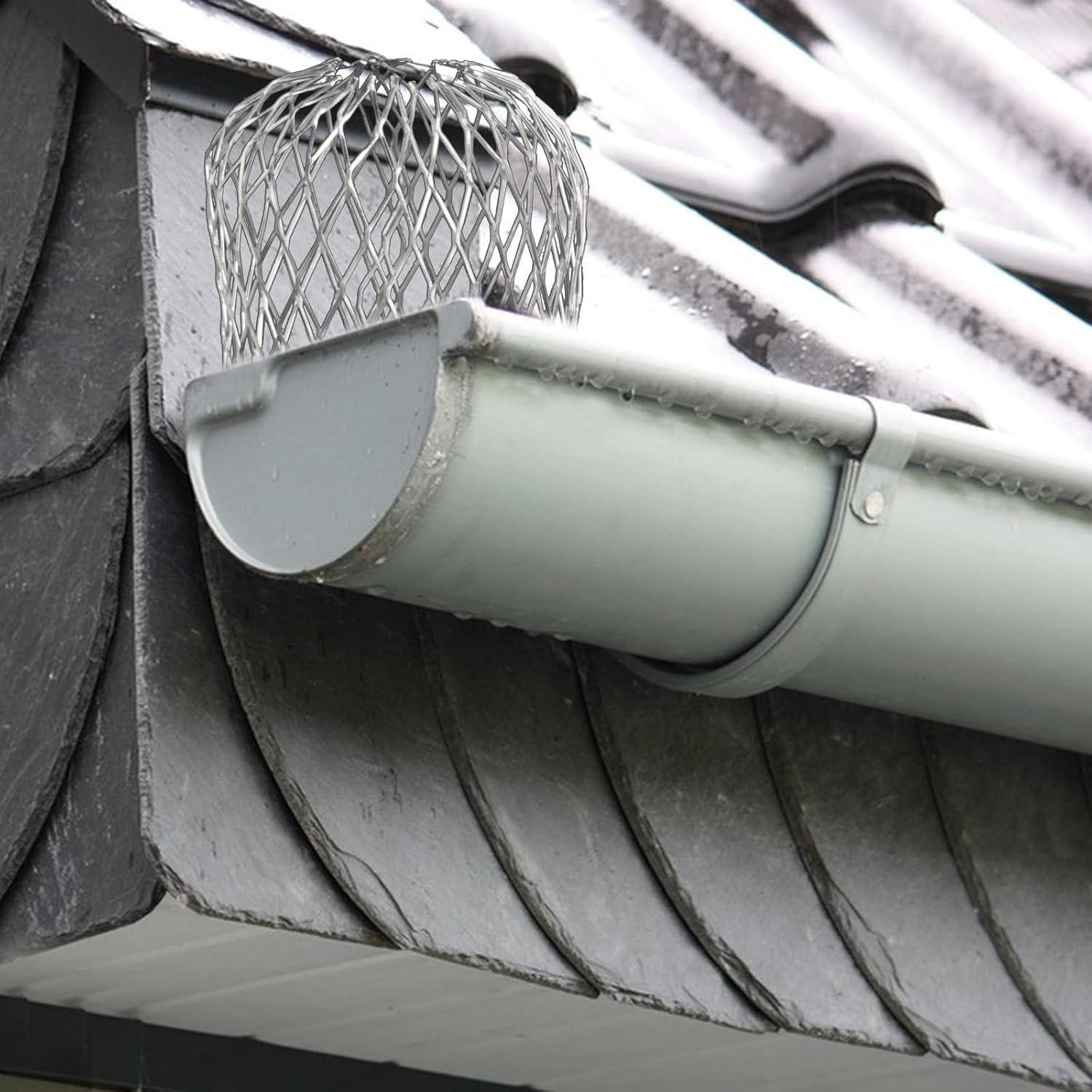
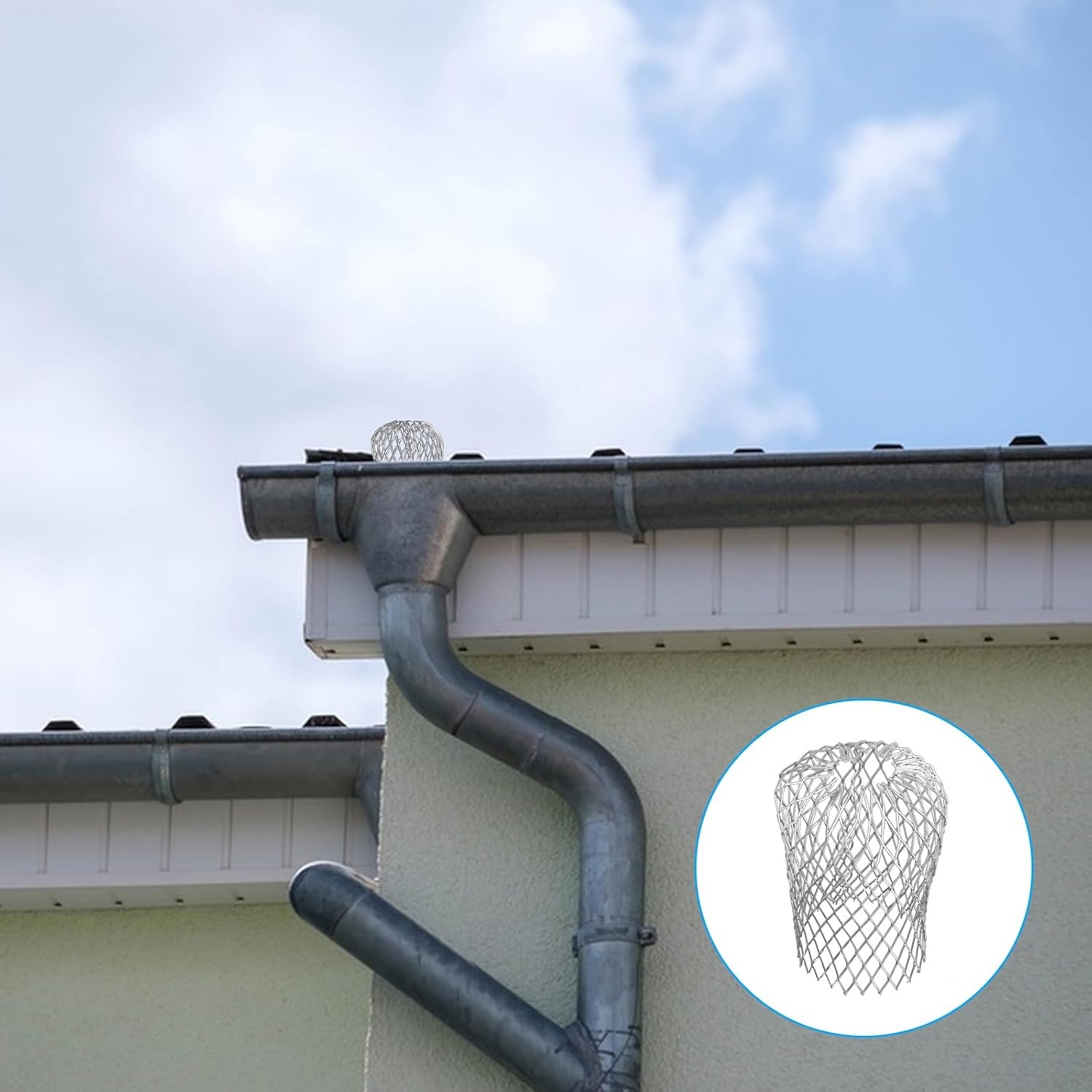
The idea is simple. You take a flexible piece of aluminium mesh, bend it into a rough cylinder or dome, and press it into the outlet hole so part of it sits above the gutter floor. Water runs along the gutter, hits the mesh, passes through the holes and drops into the pipe. Leaves and sticks cannot follow, so they sit on top or get pushed to one side.
Because the mesh stands proud of the gutter floor, it also has a useful property in heavy rain. Even if debris collects against one side, water can still get through the exposed sides and top. A flat screen lying over the hole does not have that advantage, since once it is covered it is covered.
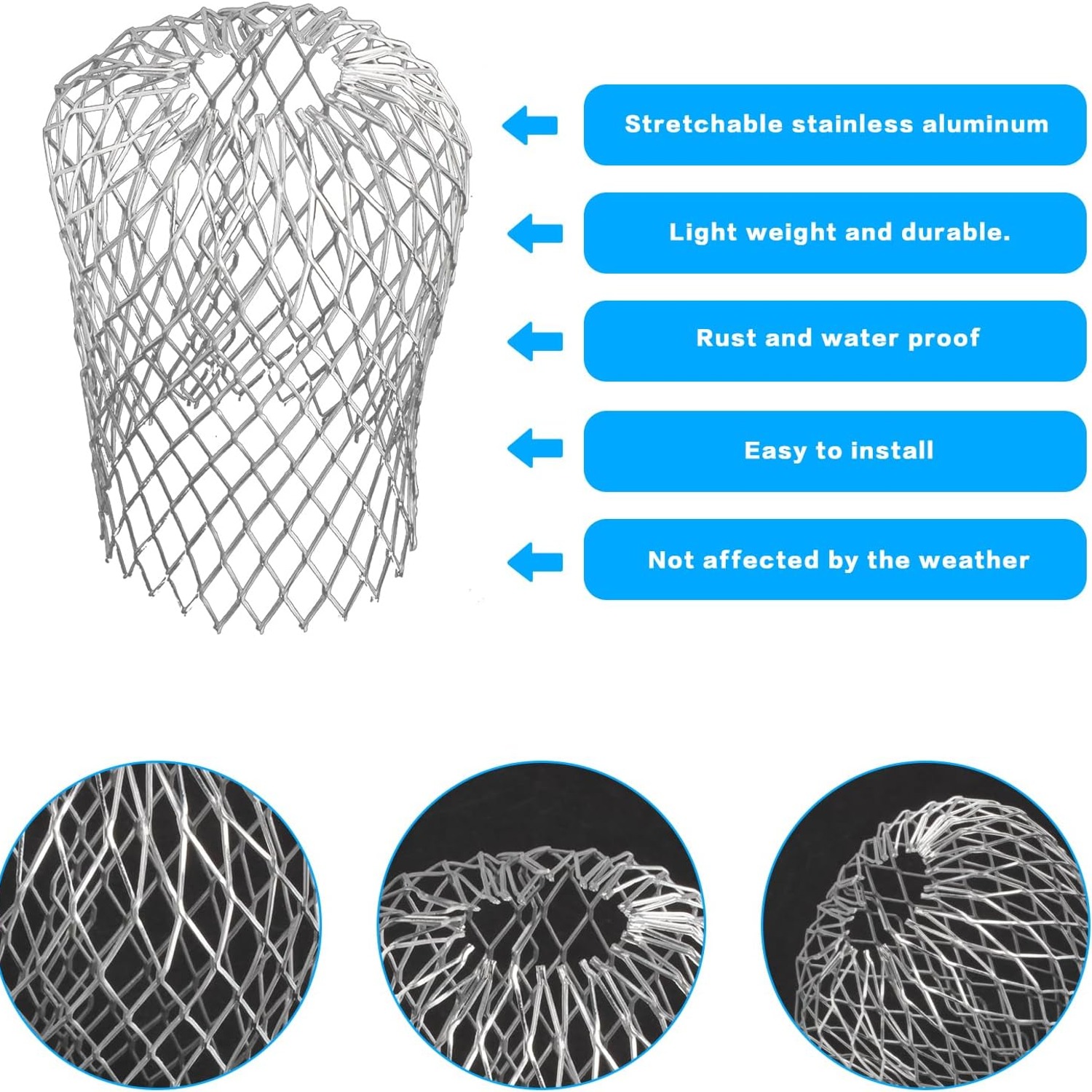
This set uses aluminium rather than steel for the obvious reason. The outlet is the wettest spot in the whole roof drainage system. Water pools there after every shower. Steel that is not well coated will corrode, swell and eventually become part of the blockage. Aluminium keeps its shape through repeated wetting, drying, sun and frost, and it is light enough that it will not stress the outlet collar.
There is a reason the best aluminium gutter guard designs are flexible rather than rigid. Gutter outlets are not standardised, especially on older houses, extensions and sheds. Something you can reshape by hand fits far more openings than a moulded part cast in one diameter.
Who this suits
If you have deciduous trees anywhere near the roof, this is the easiest win available. Gums, liquidambars, plane trees and wattles all drop material that is exactly the wrong size: too big to pass the pipe, too small to spot from the ground.
It also suits homes with pine or conifer nearby. Needles are a special nuisance because they knit together into a mat that holds water. A strainer catches that mat before it reaches the bend at the bottom of the downpipe, which is where it would otherwise pack solid.
Single-storey homes with easy ladder access get the most value, because cleaning a guard is quick when you can reach it. On a two-storey house the guard is still worth fitting, since it cuts how often you need to go up at all, but plan your access properly before you start.
It is also handy on structures people forget. Garages, carports, garden sheds, verandah roofs, pergola gutters and tank-feed lines all have small outlets that block just as readily as the house. With four in the pack you can treat the house corners that cause the most trouble and still have one left over for the shed.
Where it is not the right answer
Be clear about the limits. This is a strainer for the outlet, not a cover for the gutter. Leaves will still land in the gutter channel. If your goal is a gutter that never needs sweeping, you want full-length mesh running the whole gutter run, and that is a bigger and more expensive job.
It is also not a water filter. If you are feeding a rainwater tank, a strainer helps by keeping sticks and leaf litter out of the line, but you still want a proper tank inlet screen and ideally a first-flush diverter. Treat the guard as the first stage of debris control, not the only one.
And it is not an animal-proofing product. A guard sitting in the outlet makes it harder for small creatures to get into the pipe, which is a real benefit, but a sealed exclusion job needs purpose-built screening across the whole opening.
How to choose and fit
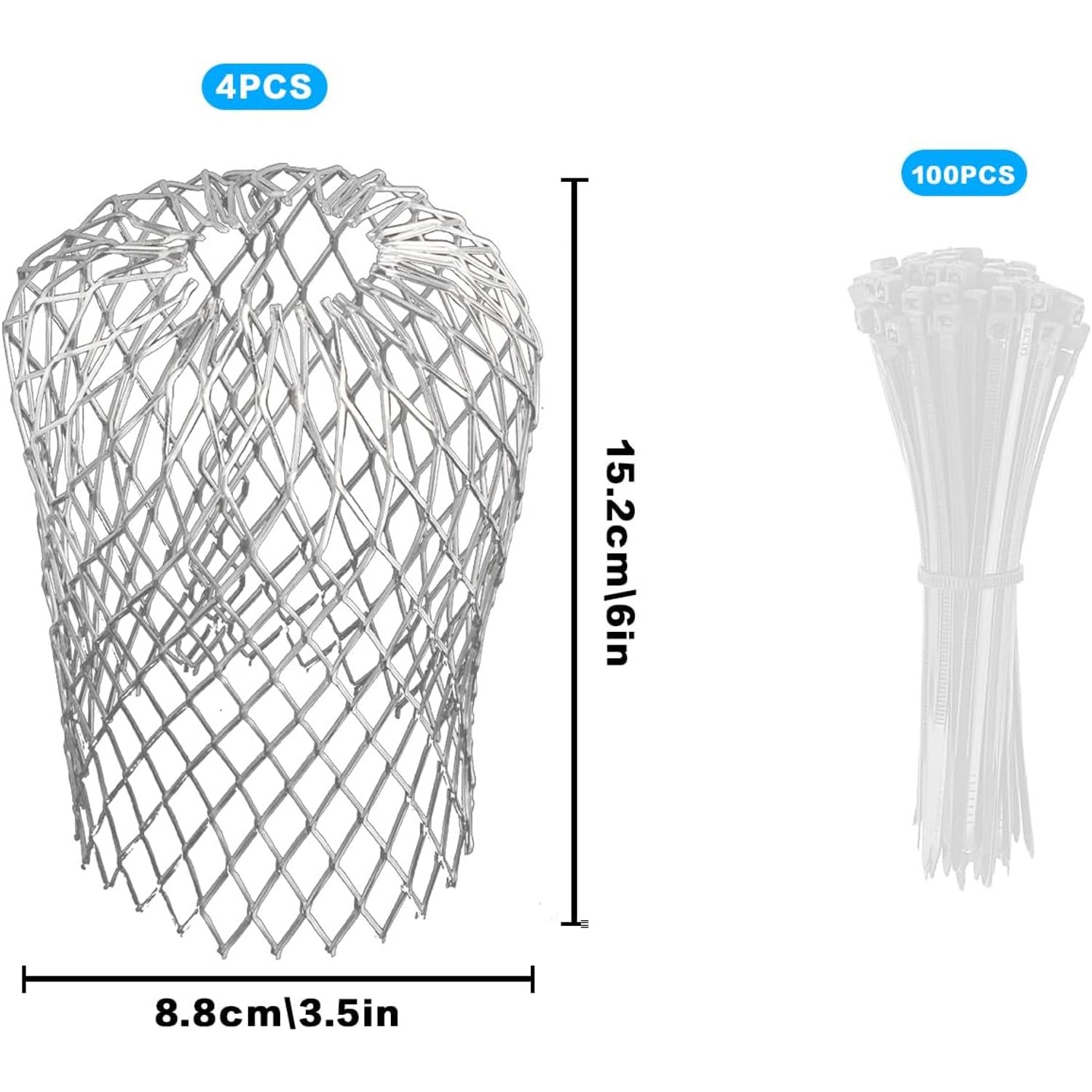
Start with a measurement. Climb up, look at the outlet and note the diameter. If you cannot get up there safely, look at the downpipe from the ground, since the outlet usually matches the pipe. A tape across the top of the pipe gives you a close enough figure.
Then think about how exposed the position is. A sheltered outlet under a low eave will hold a friction-fitted guard indefinitely. An outlet on a steep roof in a windy spot deserves a cable tie through the mesh and around the gutter edge or the pipe collar. The ties are in the pack for exactly this.
When you fit it, roll the mesh so the cut edge is on the inside of the cylinder. That protects your hands later and gives you a smooth face to the water. Press it down until it feels firm but leave a decent portion standing above the gutter floor. If you push it right down flush, you lose the side surface area that keeps water flowing when debris builds up.
Wear gloves. Cut aluminium mesh has fine sharp edges and it is easy to nick a finger while you are concentrating on your footing.
Finally, do a water test. Run a hose into the gutter for a minute and watch the bottom of the downpipe. Good steady flow means the guard is seated right and the pipe below is clear. A dribble means you have an existing blockage further down that needs clearing first, and fitting a guard on top of that will not help.
Keeping it working
The maintenance routine is short. Twice a year, lift each guard, tip off whatever has collected, rinse it and put it back. Autumn is the obvious time, and so is just before your wet season starts.
If you live under a heavy canopy, check more often during leaf fall. Five minutes in April or October beats a day of fixing water damage in July. Watch for the warning sign too: if water pours over the gutter lip during rain, something is restricted, and the guard is the first thing to inspect because it is the easiest to reach.
Over the years the mesh may lose some of its spring if it is bent and rebent repeatedly. It will still work, it just holds its shape less eagerly. If that happens, a cable tie restores a firm fit.
Store any spare guards somewhere dry and flat. They are thin, and a heavy box on top will crease the mesh into a shape you then have to work out of it.
The short version
Blocked downpipes cause more damage than most people expect, and they almost always start at the outlet. A flexible aluminium strainer in that hole turns an invisible problem into a visible one, and a visible one gets cleaned.
Four guards cover a typical home. Installation is a minute per outlet with no tools. Cleaning is lifting, tipping and dropping back in. Aluminium handles the constant wet without rusting away.
If you have trees near the roof and you have ever stood in the rain watching water pour over the front of your gutter, this is a small part that removes a recurring headache.