

The complete guide
How to Choose a Kitchen Sink Strainer and Stopper That Actually Fits
The slow problem under your sink
Nobody notices a kitchen drain until it stops working. Then it becomes the only thing in the house you can think about. Water pools in the bowl, it smells faintly of last week, and the plunger that lives under the sink comes out for the third time this year.
What causes it is rarely one dramatic event. It is accumulation. A spoonful of rice that slipped off a plate. Coffee grounds tipped from a cafetiere. Tea leaves, onion skins, the fine crumbs from a baking tray. Each one on its own is nothing. Together, over months, they build a soft lining inside the waste pipe that catches the next thing that comes along. Add cooking fat, which goes down warm and liquid and sets cold and solid, and you have the start of a real blockage.
The cheapest fix is also the oldest one. Stop the solids at the top. A kitchen sink drain strainer sits in the drain mouth and lets water through while holding everything else back. You tip the basket into the bin, and the pipe stays clear. It is not clever technology. It just works, as long as the strainer is the right size and you actually use it.
What the 3 in 1 design changes
Most sinks end up with two separate items floating around. There is a plug for holding water, usually on a chain or sitting wet on the draining board. And there is a strainer, often a flimsy mesh dome that sits on top of the drain and tips over when you knock it.
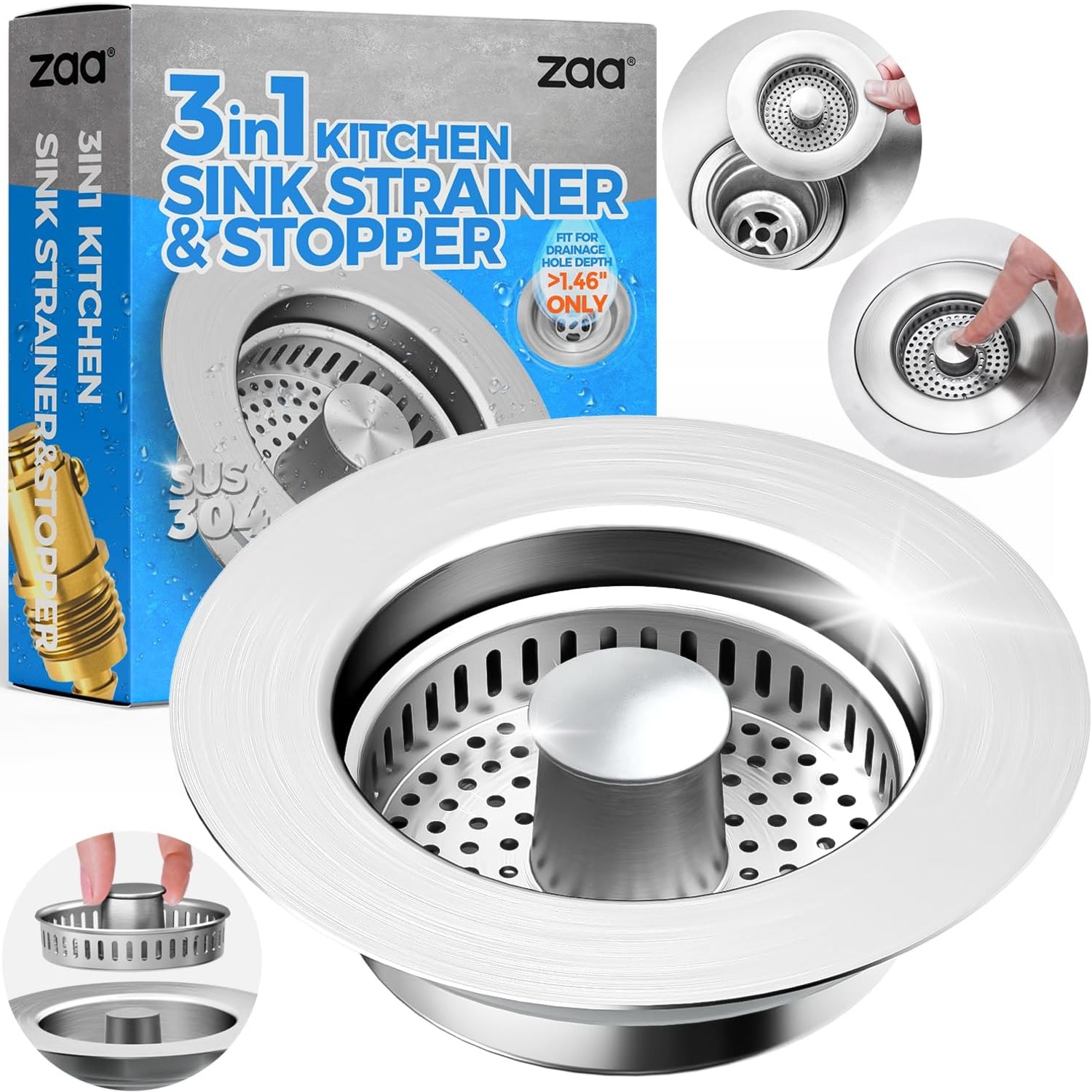
This 3 in 1 kitchen sink strainer and stopper puts both functions in a single stainless steel fitting, and adds a third, which is easy emptying.
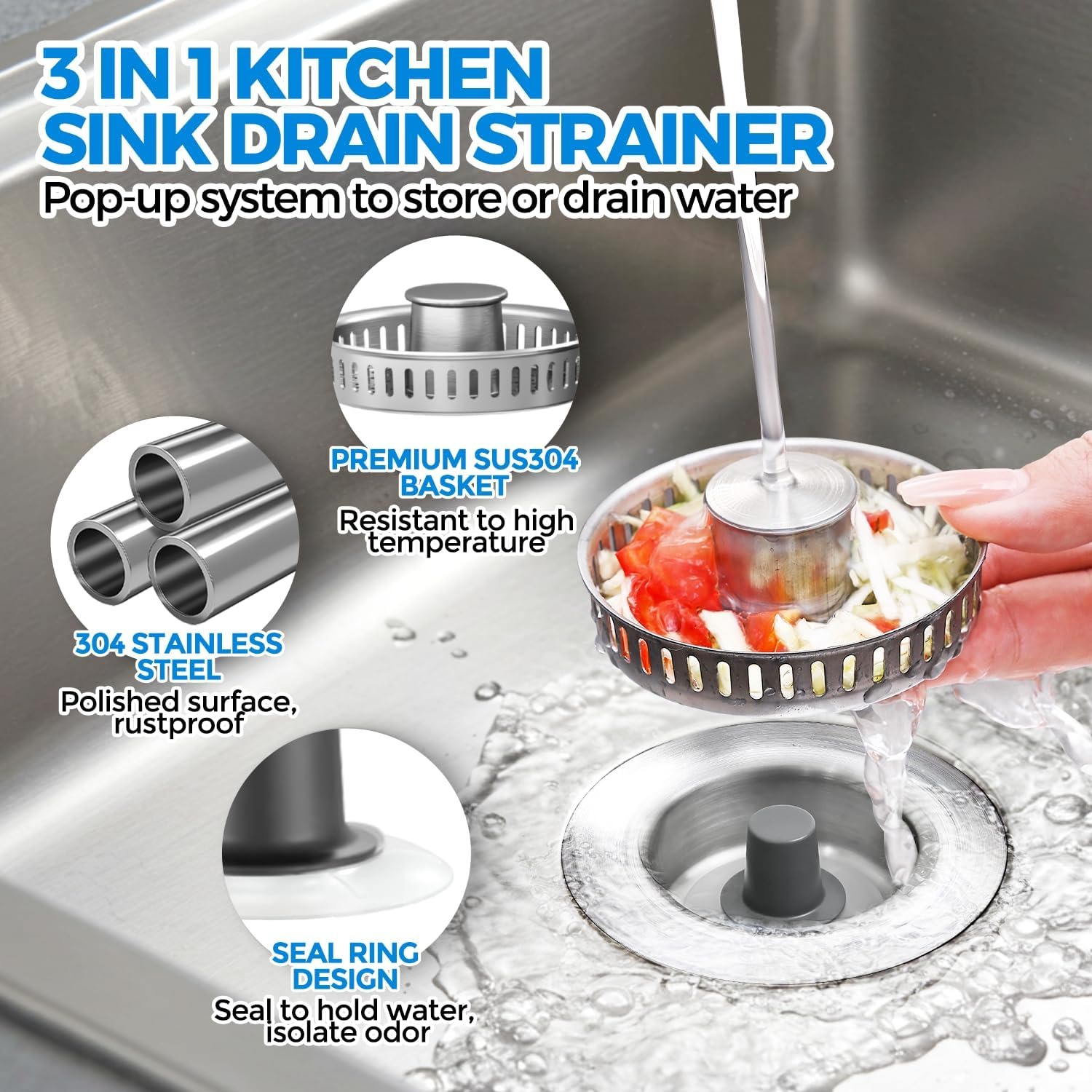
The straining part is a stainless basket that drops into the drain opening. Water runs through the perforations, solids stay in the basket. Nothing passes into the pipe unless it is small enough to be harmless.
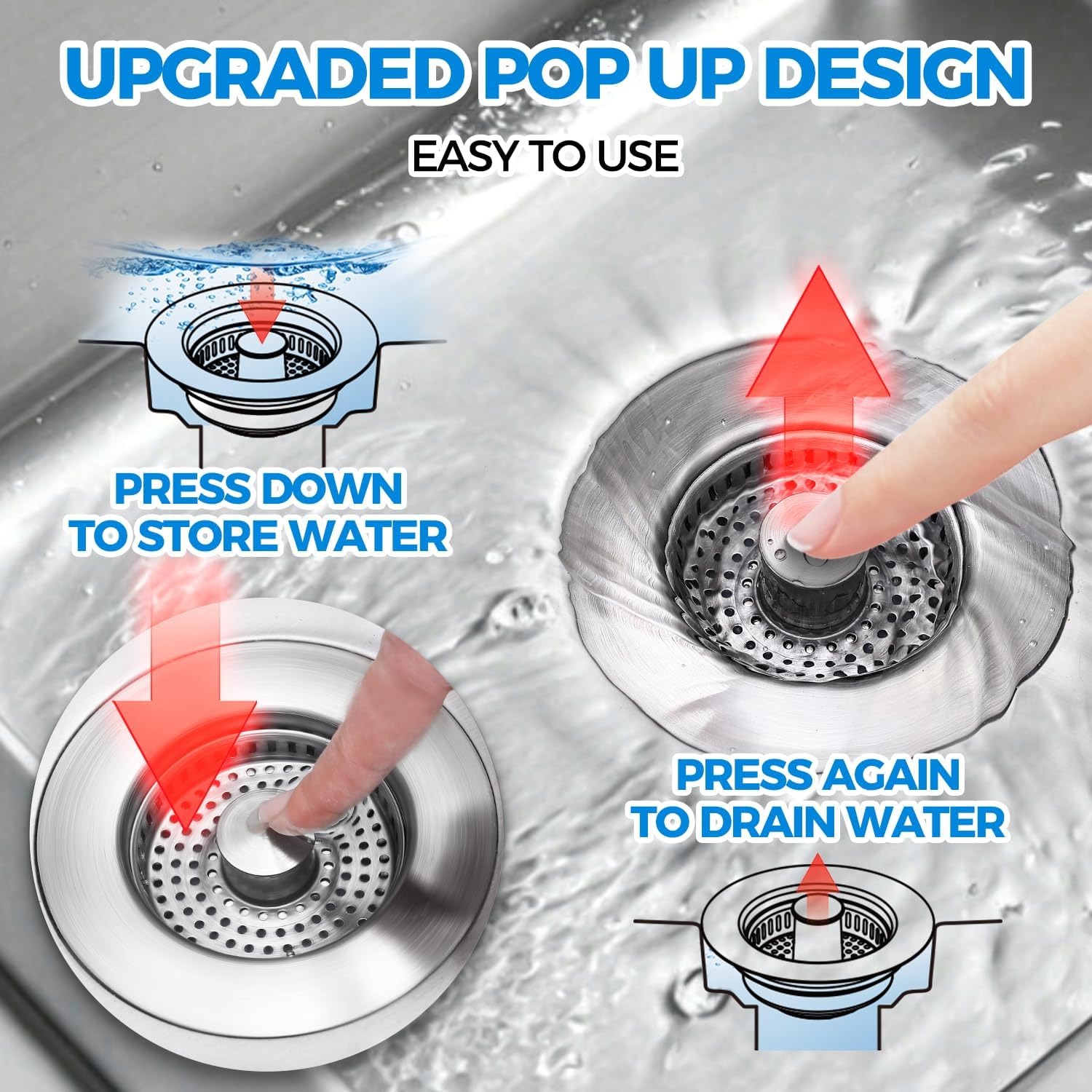
The stopper part is a press down pop-up core. Push the middle and it seals, so you can fill the bowl for soaking a roasting tin or washing glassware by hand. Push it again and it releases. There is no chain, no rubber disc to find, and nothing to keep track of. For anyone who has stood in a kitchen trying three different plugs from a drawer, that alone is worth something.
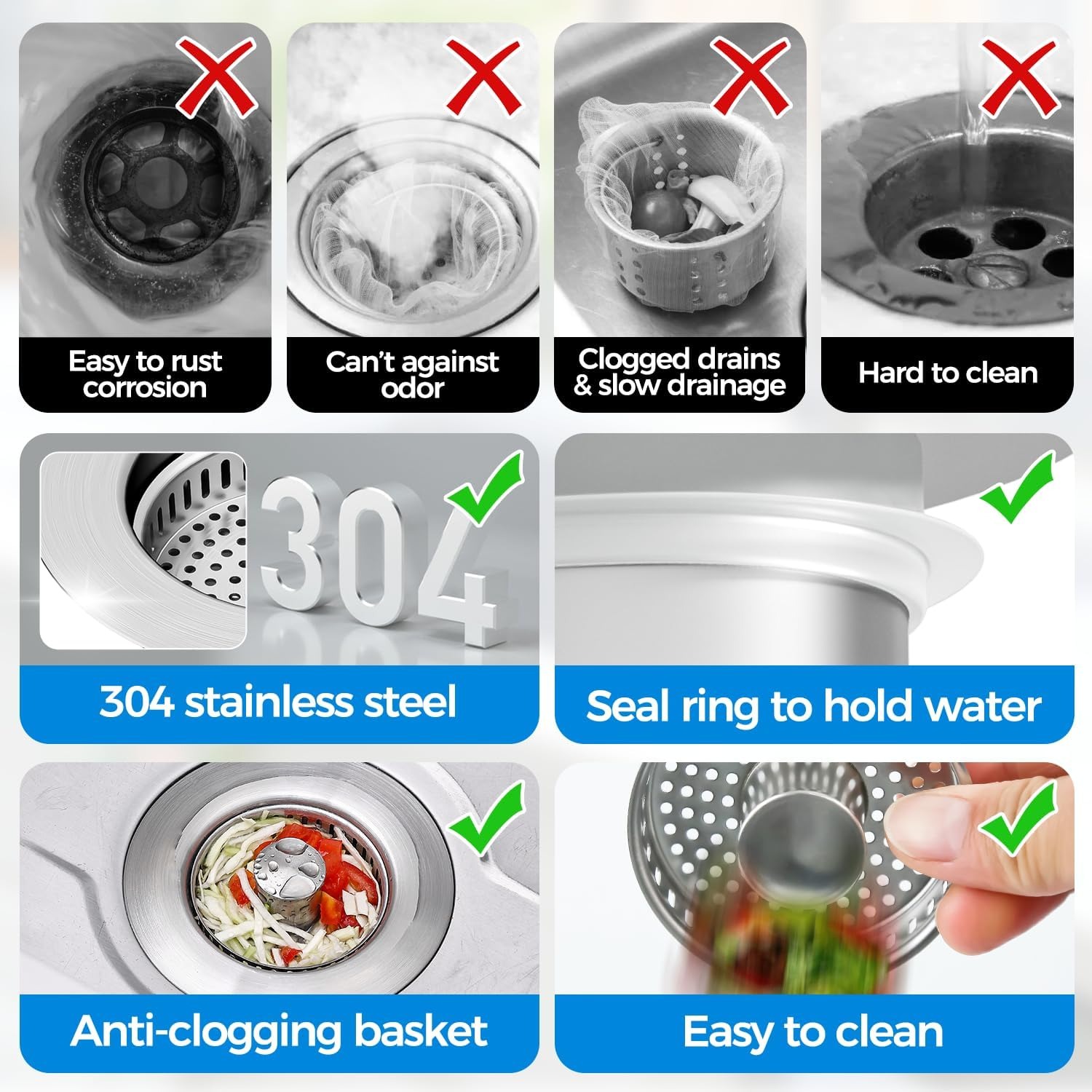
The third part is that the basket lifts out whole. You pick it up, tip it into the bin, rinse it and drop it back. No scraping food out of a fixed grate with your fingers, which is the bit most people quietly hate.
Why stainless steel is the right material here
A sink drain is one of the harshest small environments in a house. It is wet all day. It gets hit with hot water, cold water, dish soap, bleach if you use it, lemon juice, salted pasta water and warm cooking fat.
Plastic strainers survive that for a while. Then they go cloudy, they hold a smell no amount of washing shifts, and the thin edges crack. Rubber plugs perish and go sticky at the rim.
Stainless steel does not have those failure modes. It takes the heat, it takes the acid, and it does not absorb odour because there is nothing porous in it. The surface on this unit is smooth, which matters more than it sounds. Grease needs texture to cling to. On a polished steel face, most of it rinses straight off with warm water and a cloth.
It also looks like part of the sink rather than an accessory sitting in it. In a stainless bowl the match is close enough that it reads as a fitting, not an add-on.
Getting the fit right
This is the part worth slowing down for, because fit is the single reason sink strainers get sent back.
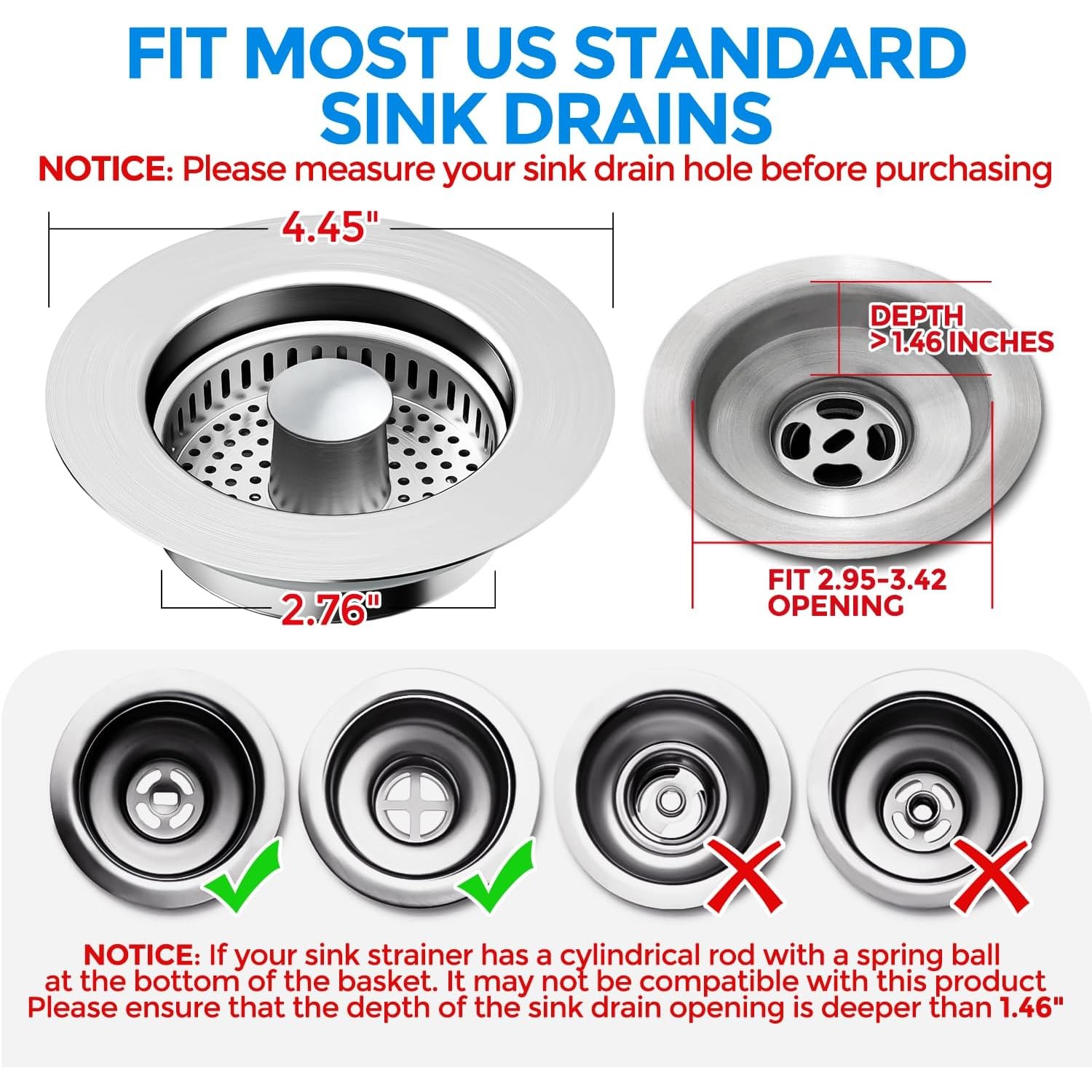
Two measurements matter. The first is the diameter of your drain opening, measured across the inside of the circle where a plug would sit. The second is the depth of that recess, from the top rim down to the point where the opening narrows into the pipe.
For this unit, the compatible groove diameter is 7 cm and the compatible groove depth is 3.8 cm. The overall product dimensions are 11.3 cm wide by 7 cm high, with an item depth of 1.46 inches.
Take a ruler or a tape measure and check both numbers on your own sink before ordering. If your opening is close to 7 cm across and your recess is close to 3.8 cm deep, you are in the right territory. If your opening is clearly wider, the stopper will not seal and water will seep away while you are trying to soak something. If your recess is much shallower, the unit will sit proud of the sink floor and rock.
One extra thing to check. If your sink has a waste disposal unit, the drain assembly is usually a different shape entirely, and a standard strainer often will not suit. Measure anyway, but set your expectations accordingly.
Who gets the most out of it
Households that cook from scratch benefit the most, because that is where the scraps come from. Peeling, chopping, draining pasta and rinsing rice all send small solids towards the drain, and a basket strainer catches nearly all of it.
Renters are another good fit. You cannot do much about old plumbing in a flat you do not own, but you can stop feeding it. Keeping solids out of a tired waste pipe buys you a lot of trouble-free months.
People with no dishwasher will notice the stopper more than the strainer. If you fill the bowl twice a day, having a seal built into the drain rather than a plug that wanders is a small daily improvement that adds up.
And if you have had one blockage already, you know exactly why this matters. A single call-out from a plumber costs more than a drawer full of these.
Living with it day to day
The habit is simple. Leave it in the sink. Empty the basket when you finish the washing up, not days later. Rinse it under the tap while you are there.
Once a week, give it a proper wash. Lift the whole unit out, wash it in warm soapy water, pay attention to the underside of the basket where a greasy film likes to settle, and dry it before putting it back. That is the whole maintenance routine.
Skip the steel wool and the harsh scouring powders. They will scratch the polish, and once a stainless surface is scratched it starts holding grime in the marks. A soft cloth and ordinary dish soap do the job.
If the pop-up action ever feels stiff, it is usually soap residue or a trapped food fragment around the core. A soak in warm soapy water and a rinse normally frees it.
What it will not do
Worth being straight about this. A strainer catches solids. It does not stop grease, because grease goes down as a liquid and passes through the holes with the water. If you pour cooking fat down the sink, you will still get a build-up in the pipe.
The fix for that is separate and free. Let fat cool, scrape it into the bin or a jar, and wipe greasy pans with kitchen paper before washing. Do that alongside using a strainer and your drain has very little left to clog it with.
A strainer also is not a plumbing repair. If your sink already drains slowly, clearing the existing blockage comes first. Fitting a strainer afterwards keeps the pipe clear once it is clean.
The short version
A kitchen drain blocks because small things go down it every day. A 3 in 1 kitchen sink strainer and stopper puts a stainless steel basket in the way, catches those things, and lets you lift them out in one movement.
The press down core means you also get a built-in plug, so the loose rubber one can go. Stainless steel handles the heat, water and grease that destroy plastic alternatives, and it wipes clean in seconds.
Before you buy, measure. Check your drain opening against the 7 cm groove diameter and the 3.8 cm groove depth. Get that right and this is a small item that quietly saves you a plumber's bill.