
The complete guide
How to Choose the Right Square Sink Strainer
The problem nobody notices until it is too late
A sink does not block overnight. It happens slowly, over weeks of rinsing plates, draining pasta and tipping out the last of the coffee. Each wash-up sends a small amount of solid material down the plughole. Rice grains, onion skin, a shred of lettuce, tea leaves, a bit of fat from the pan. On their own, none of them would do anything. Together, in the U-bend under your sink where water sits and cools, they knit into a soft grey plug that gets a little thicker every day.
The first sign is usually drainage that takes a second too long. Then water pools while you are still washing. Then one evening the sink refuses to empty at all and you are under the cupboard with a bucket and a torch, or calling someone who charges by the hour.
A strainer breaks that chain at the very start. It is the least glamorous thing in a kitchen and one of the most useful. Everything solid stays in the strainer, you tip it into the bin, and the pipe only ever sees water and dissolved detergent.
What this strainer actually is
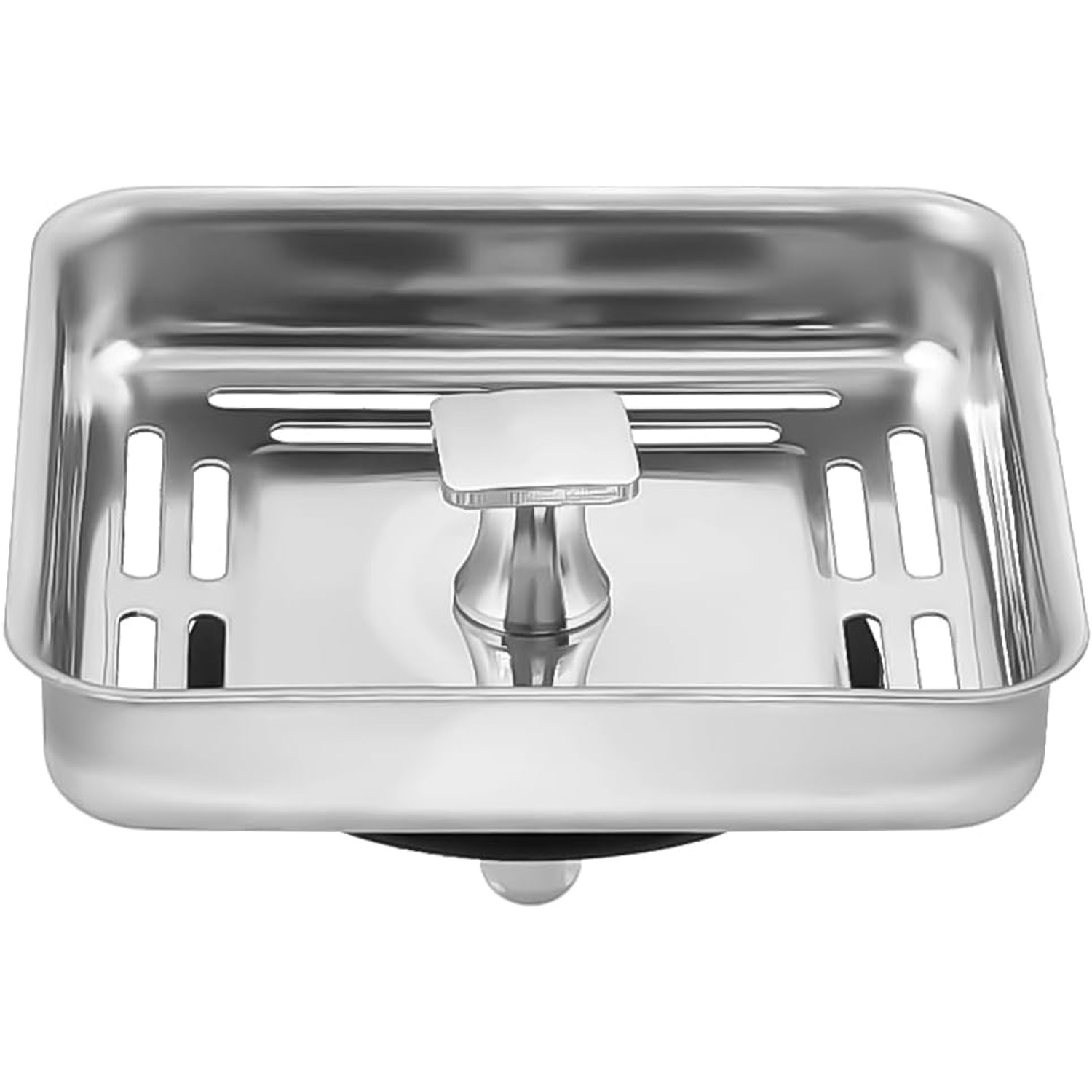
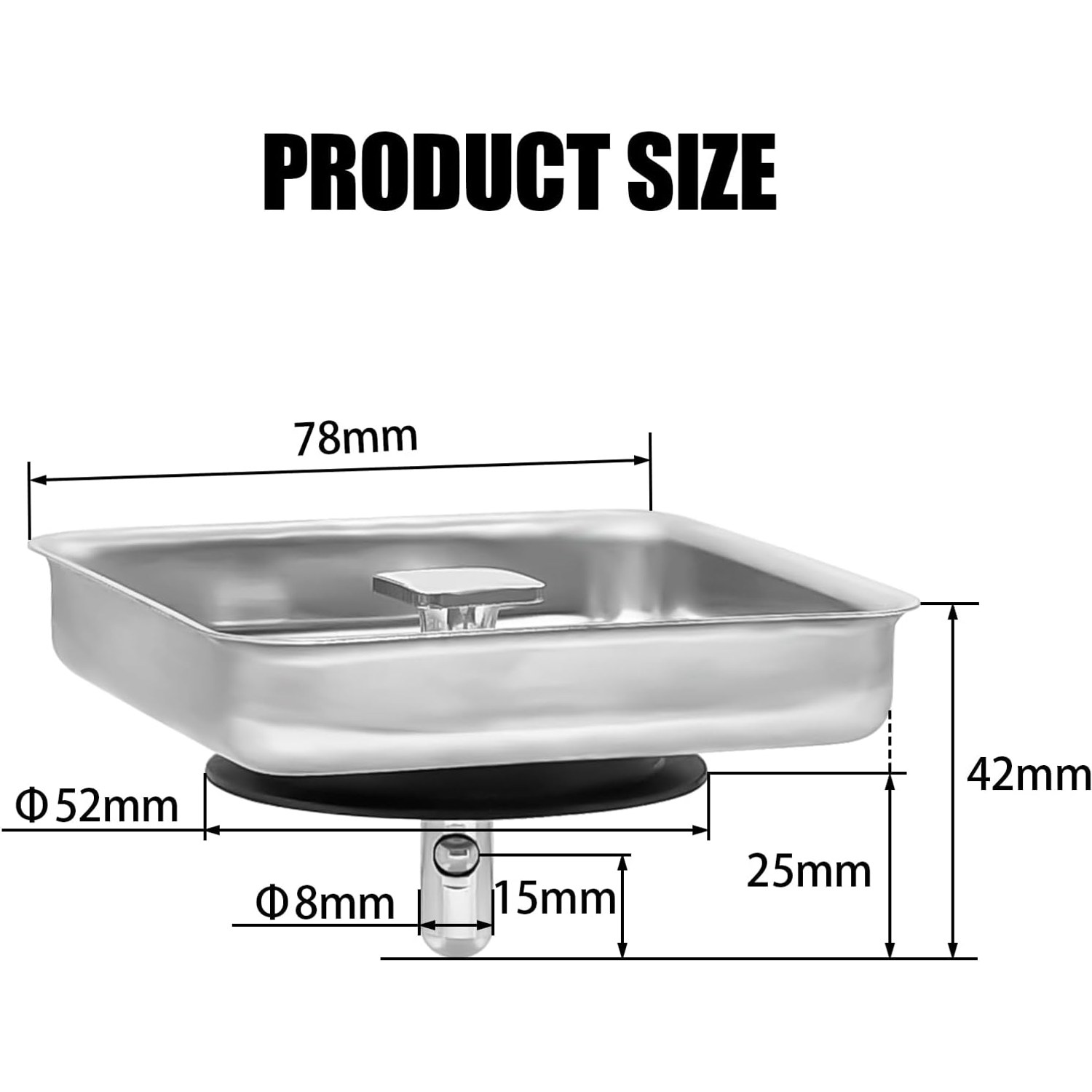
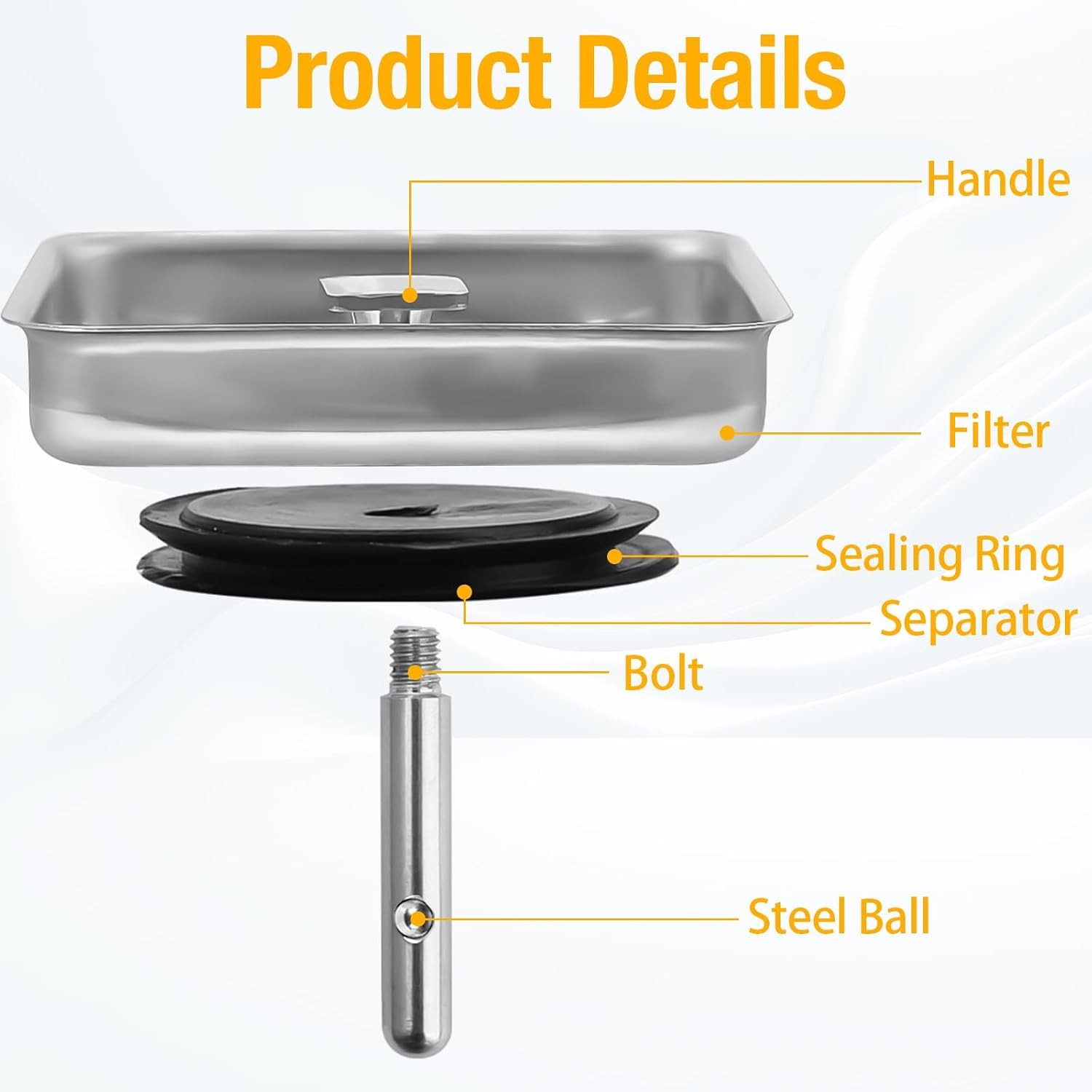
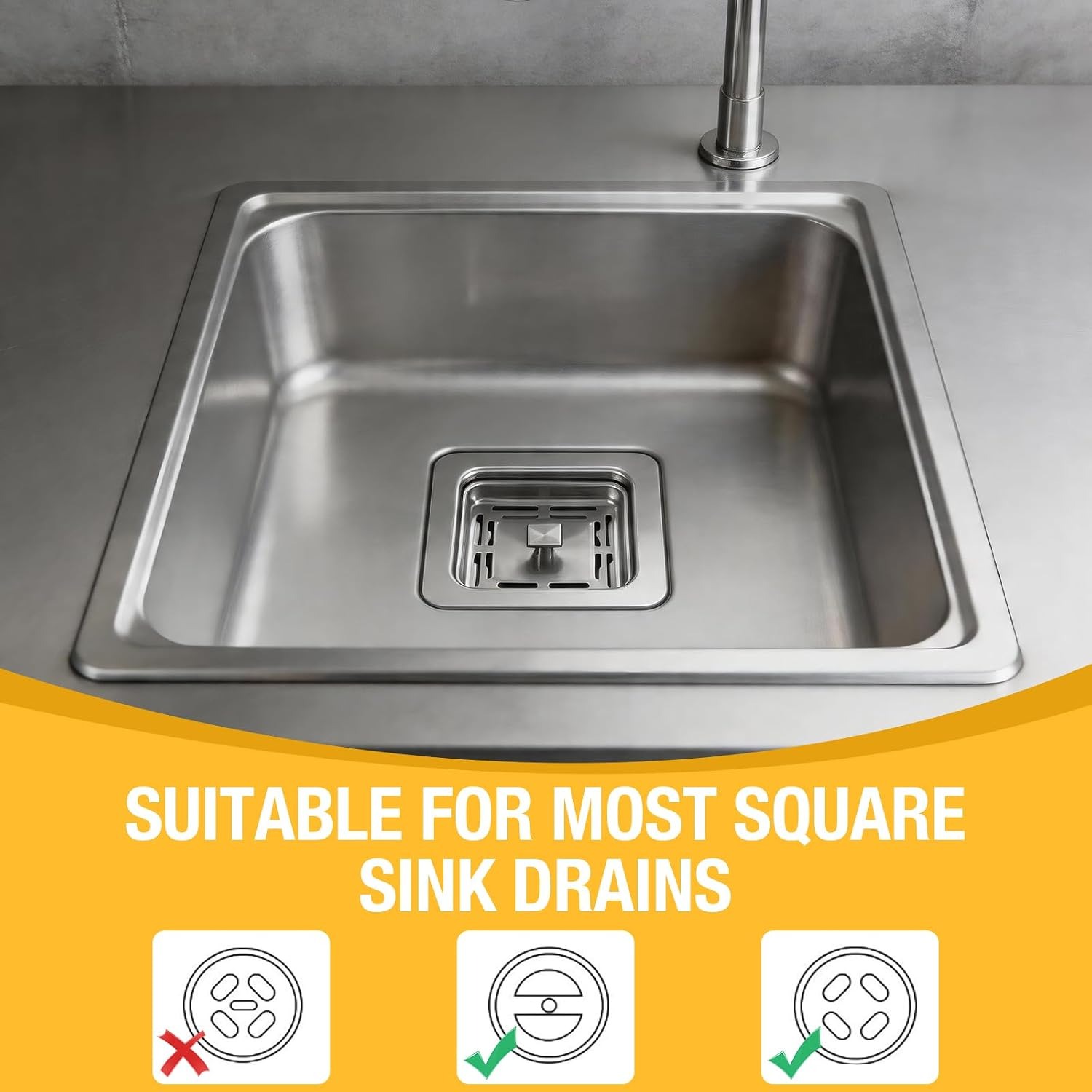
This is a square sink strainer measuring 78 x 42mm, stamped from stainless steel and finished in silver. It weighs 0.08 kg. The face carries sixteen arc-shaped slots that let water through while holding back solids, and the edges have been passivated so the rim is smoothed rather than left as a raw cut.
That is the whole product. There is nothing to install, no rubber seal to perish and no moving parts to jam. You put it in the drain opening and use your sink as normal.
Why the shape matters more than the material
People tend to shop for a strainer by material first. In practice, shape and size decide whether it works at all.
Round plugholes are the classic, but a lot of sinks, laundry tubs, balcony drains and shower outlets use a long rectangular opening instead. Sometimes it is a slot at the back of the bowl. Sometimes it is a narrow grate set into the floor. You cannot sit a round strainer in a rectangular slot, no matter how good the steel is. It will either rock on the edges or drop straight through.
That is why the 78 x 42mm figure is the first thing to check. Take a ruler or tape and measure the opening twice, once along its length and once across its width. If you get numbers close to 78 and 42, this will seat properly. If your opening is noticeably bigger, the strainer will fall in. If it is smaller, it will sit proud and get knocked out of place.
It is worth doing this before you order rather than after. Thirty seconds with a tape measure saves a return.
Why stainless steel is the sensible choice
A sink strainer lives in the worst conditions in the house. It is wet almost all the time, it meets hot water several times a day, and it gets detergent, salt, vinegar, citrus juice and cooking fat on it constantly.
Stainless steel handles all of that. It resists rust, it does not soften in hot water, and it will not crack if a heavy pan lands on it. It also does not hold onto smells the way porous materials can, so a quick rinse genuinely resets it.
Plastic strainers are cheaper and they do work, but they stain, they go brittle around the edges after a year or two of hot water, and they can warp enough to stop sitting flat. Silicone is soft on the hands but tends to collect a greasy film that needs proper washing rather than a rinse. For something you handle every single day, metal is the one that stays the same after two years as it was in week one. If you are hunting for the best stainless steel sink strainer, the thing to look at is whether the edges are finished, because that is where cheap pressings give themselves away.
How the slot design affects drainage
Sixteen arc-shaped openings might sound like a small number, but hole count is not the thing to measure. What matters is total open area and the length of the open edge.
A curved slot has far more perimeter than a round hole of the same width. Water can enter along the full length of the curve rather than squeezing through a small circle. That keeps flow fast while the gap stays narrow enough to stop rice, peelings, coffee grounds and hair.
There is a second benefit. Because the slots are shaped and sit flush with the top surface, scraps tend to rest on top rather than wedging down inside. That makes emptying much easier. Lift, tip, rinse, done. Strainers with deep cylindrical holes are the ones where you end up poking at each hole with a toothpick.
Who this suits
It suits anyone with a rectangular drain opening, which is a bigger group than most people expect.
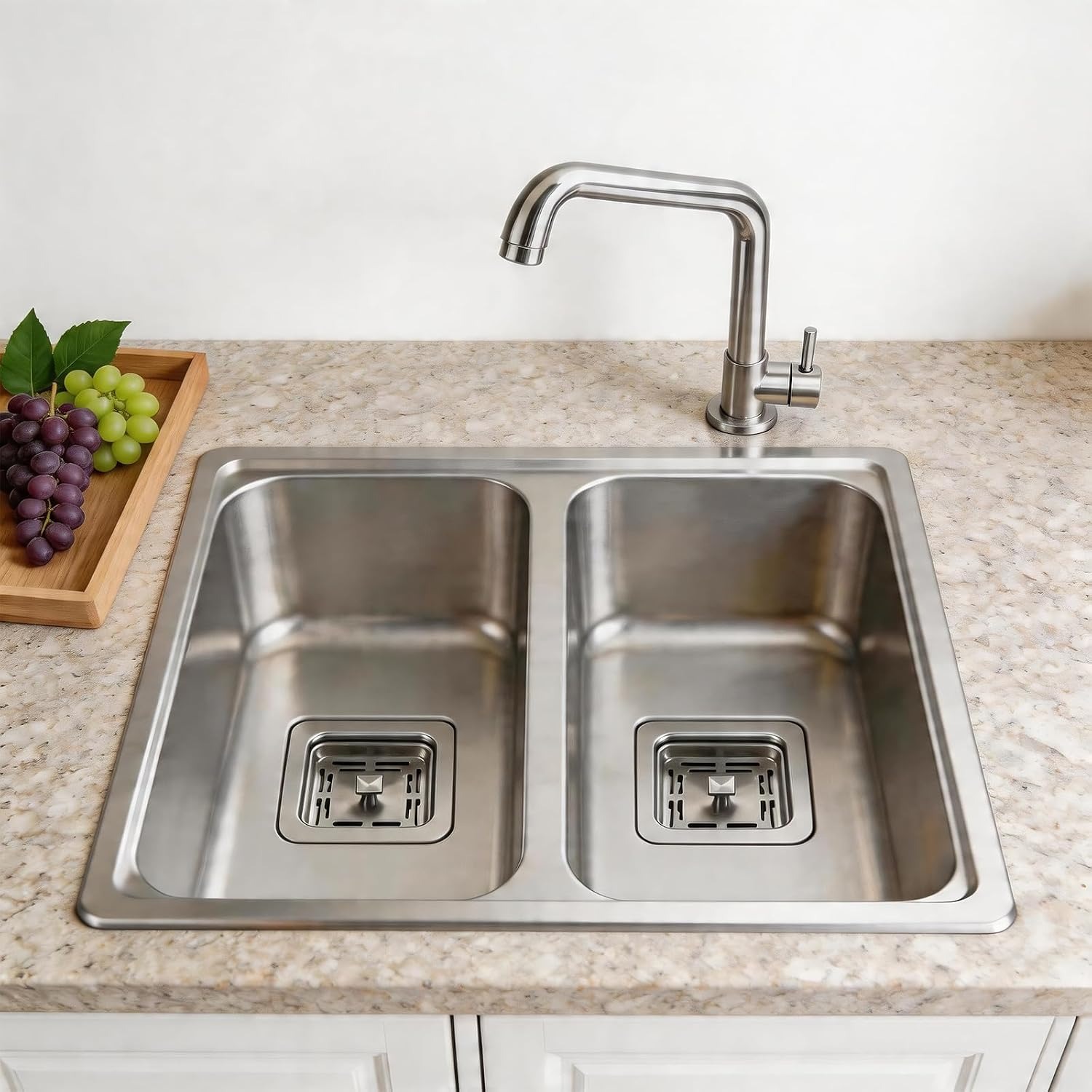
In a kitchen it is the main line of defence against food scraps. In a bathroom basin it catches hair, which is the single most common cause of slow drainage in a bathroom. In a laundry tub it catches lint and grit from hand-washed items. On a balcony or in a shower floor drain it stops leaves, hair and sand from washing into the line.
Renters get a particular benefit, because nothing is fitted or fixed. There is no adhesive, no screw, no modification to the fitting. It goes in when you arrive and comes with you when you go.
It also makes sense for anyone with older plumbing. Narrow or partly scaled pipes block far more easily, and keeping solids out is much cheaper than clearing them later. If you have been comparing options for the best anti clog drain screen, a simple metal filter at the opening does more real work than most of the chemical products sold for the same problem.
Choosing between strainer styles
There are three broad types and they suit different habits.
Flat strainers like this one sit level with or just inside the drain opening. They take up no space in the bowl, they are easy to lift out, and they are the right answer for narrow rectangular drains.
Basket strainers sit down inside the plughole and hold more waste before needing emptying. They need a round opening of matching diameter and they take up room in the bowl.
Mesh dome strainers sit over the top of the drain. They catch a lot but they move around, and they only work on flat sink bases.
For a 78 x 42mm rectangular opening, the flat shaped strainer is really the only one that fits. That narrows the decision down to build quality and edge finish.
Keeping it clean
Care is simple and takes seconds, but doing it consistently makes the difference.
Empty it after each wash-up rather than leaving wet scraps sitting overnight. That one habit prevents almost all strainer smells. Rinse it under the tap when you lift it out.
Once or twice a week, give it a proper wash with warm soapy water and a soft sponge to clear the thin grease film that builds up from washing-up water. If hard water leaves a chalky mark, soak the strainer in warm water with a splash of white vinegar for a few minutes, then rinse and dry.
Avoid steel wool, wire brushes and abrasive powders, which scratch the finish and give grime somewhere to sit. Avoid bleach-based cleaners left to soak, which can mark stainless. Dry it before putting it back if you want to avoid water spotting.
The short version
Measure your drain opening first. If it is a rectangular slot close to 78 x 42mm, this strainer fits and most round ones will not.
It is stainless steel, so it survives constant water, heat and detergent without rusting or going brittle. Sixteen arc-shaped slots keep water moving while holding back scraps and hair. The edges are smoothed, which you notice every time you lift it out with wet hands. At 0.08 kg it is light enough to handle with one finger.
It is a small, cheap piece of hardware that quietly prevents an expensive problem. Empty it after each wash-up, rinse it under the tap, and it will keep doing its job for years.