
The complete guide
How to Clear a Slow Drain Yourself, and Which Tool to Use When
The problem nobody wants to deal with
A drain rarely blocks overnight. It starts with water taking a second too long to go down. Then the shower tray holds a puddle while you are still in it. Then one morning the sink is full and nothing is moving, and you are late for work.
What is causing it is almost never exotic. In a bathroom, it is hair. Hair goes down the plughole, snags on something, and then catches more hair. Soap, conditioner and skin oils bind it all into a dense grey mat. That mat sits in the first part of the pipe, usually less than half a metre from the plughole, slowly narrowing the opening until the water cannot get past.
In a kitchen, it is grease. Fat goes down warm and liquid, then cools and sticks to the pipe wall. Food scraps catch on it. Same outcome, different material.
Both of these are physical objects. That matters, because it changes what actually works.
Why pouring something down the drain often disappoints
Chemical drain cleaner is the reflex response. You buy a bottle, pour it in, wait, and flush. Sometimes it works. Often it half works, which is worse, because the drain runs for a week and then stops again.
The reason is simple. A caustic cleaner has to sit in contact with the blockage long enough to break it down. If the pipe is already full of standing water, the chemical is diluted before it gets anywhere near the clog. If the clog is dense hair, the outer surface dissolves and the core stays put. You get a temporary channel through the middle, which closes again as soon as more hair arrives.
There are other reasons to be cautious. Those products are harsh on skin and eyes, they can soften rubber seals in older plumbing, and if they fail you now have a pipe full of caustic liquid that a plumber has to deal with. Plenty of plumbers will tell you they would rather you had just left it alone.
Pulling the blockage out solves the problem completely. There is nothing left to grow back from.
What the nine pieces actually do
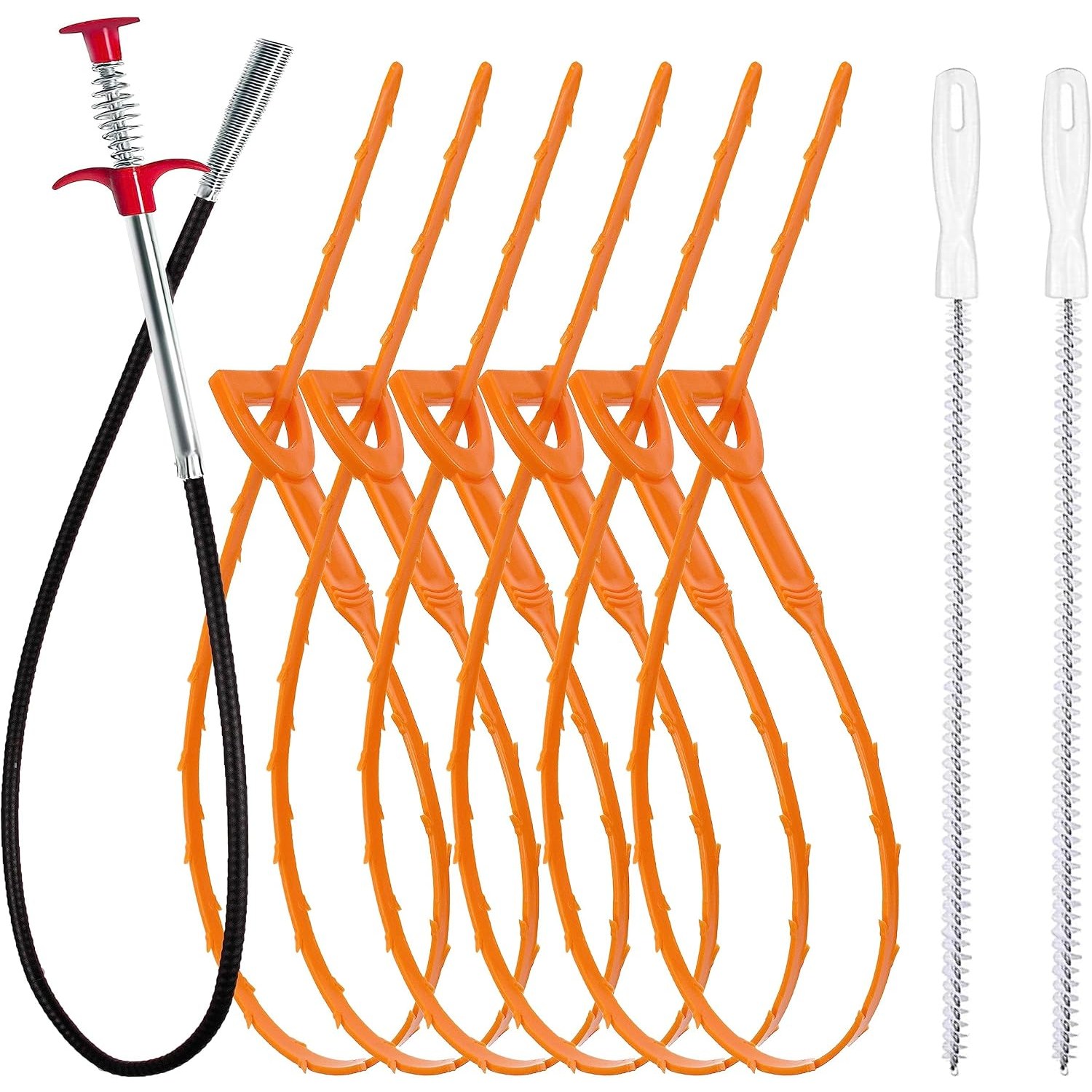
This kit splits the job into three tools, which is more sensible than it first looks.
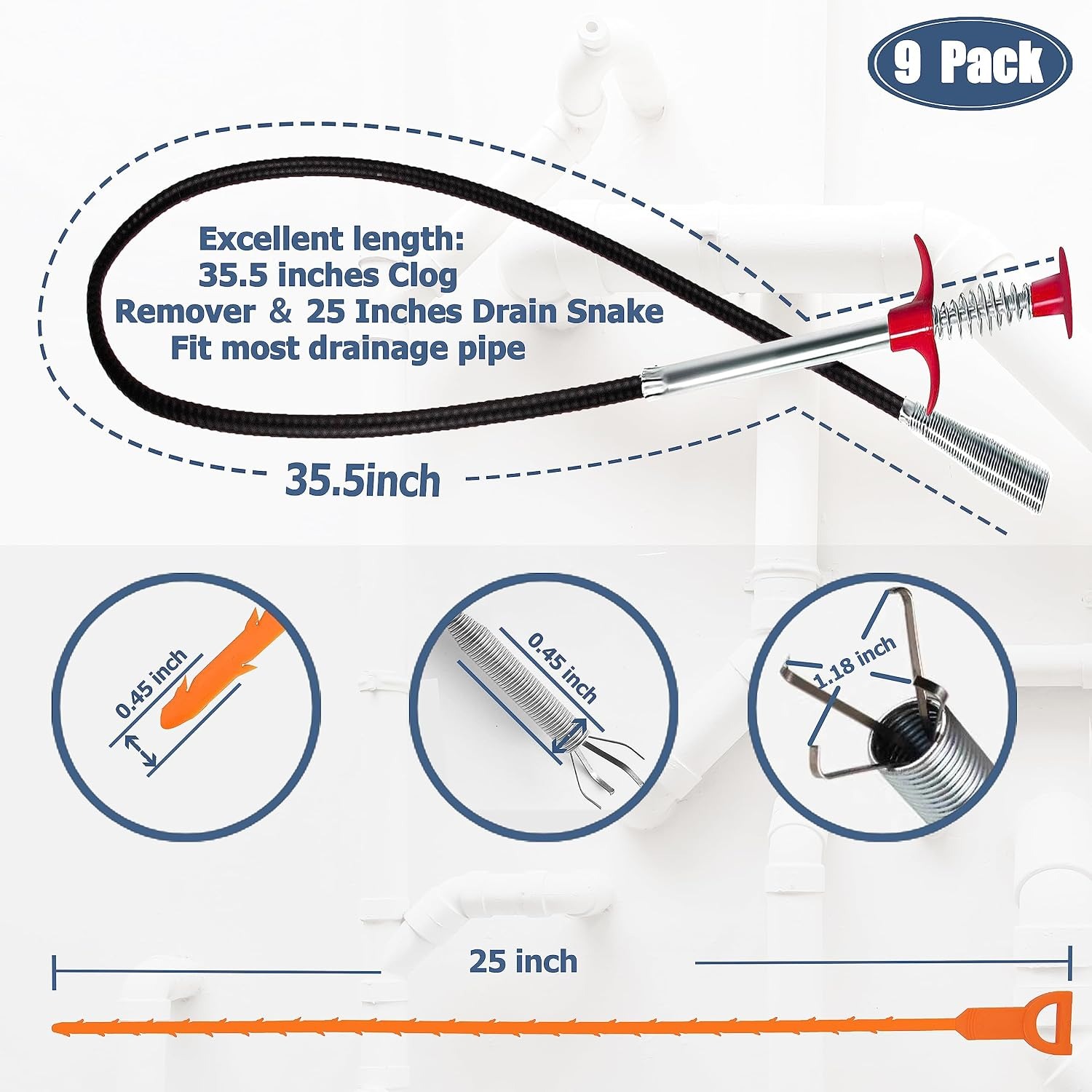
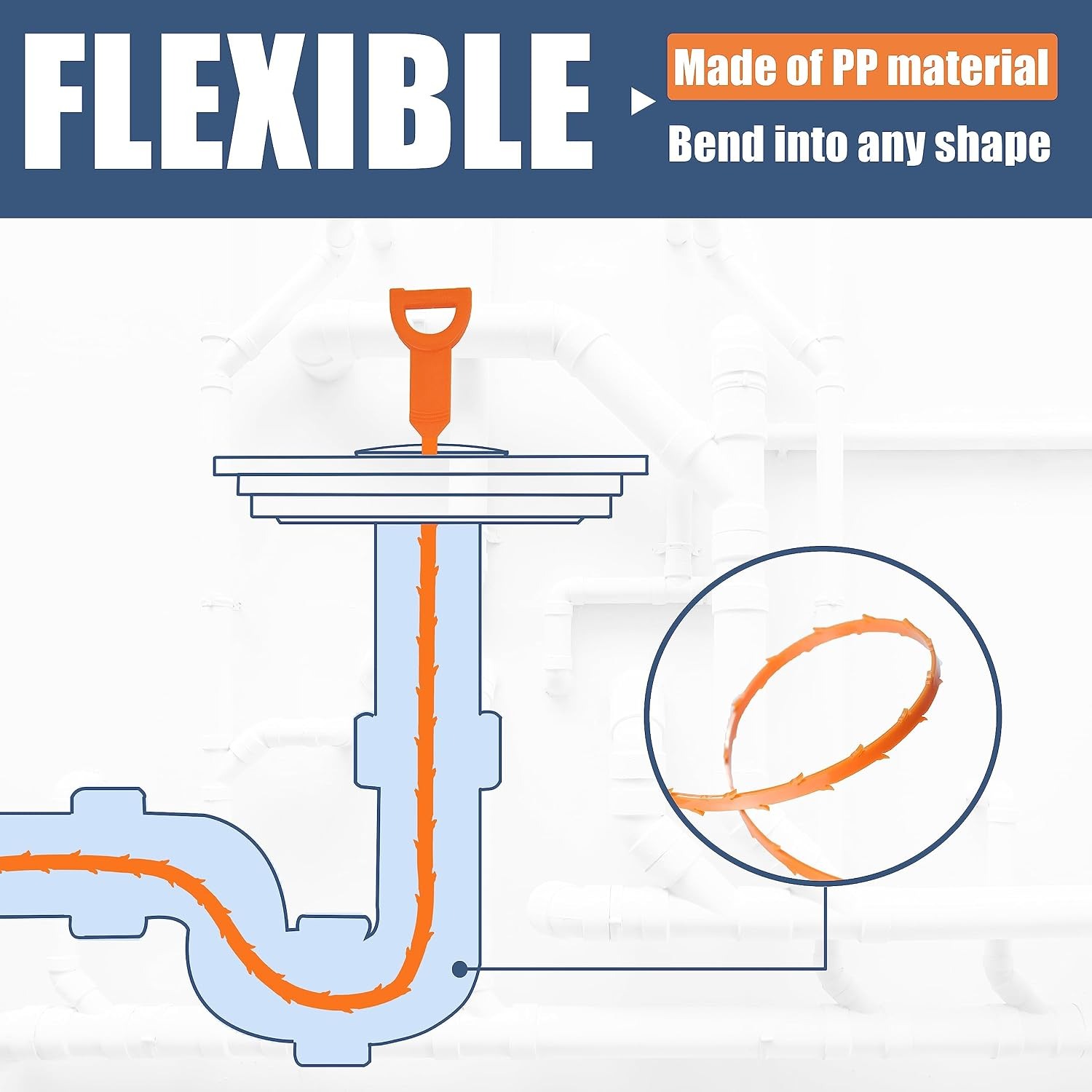
The six 25 inch drain snakes are the everyday workers. Each one is a thin, flexible strip of PP plastic with rows of small hooked teeth running along both edges. They are narrow enough to go through a shower strainer or a basin plughole without removing anything. You feed one down, twist it, and draw it back. The teeth catch hair the way a comb catches a knot, and the whole mass comes up with the tool.
Six of them sounds like a lot until you have used one. They are the piece you reach for most, and having spares in different rooms means you deal with a slow drain the day you notice it instead of putting it off.
The 35.5 inch metal clog remover is the next step up. It has a claw at the tip that grips when you pull, and a shaft rigid enough to push through resistance but soft enough to bend by hand. The extra length gets it past the trap, which is the U shaped bend under your sink, and into the pipe beyond. When a plastic snake comes out clean but the drain is still slow, this is the tool that finds out why.
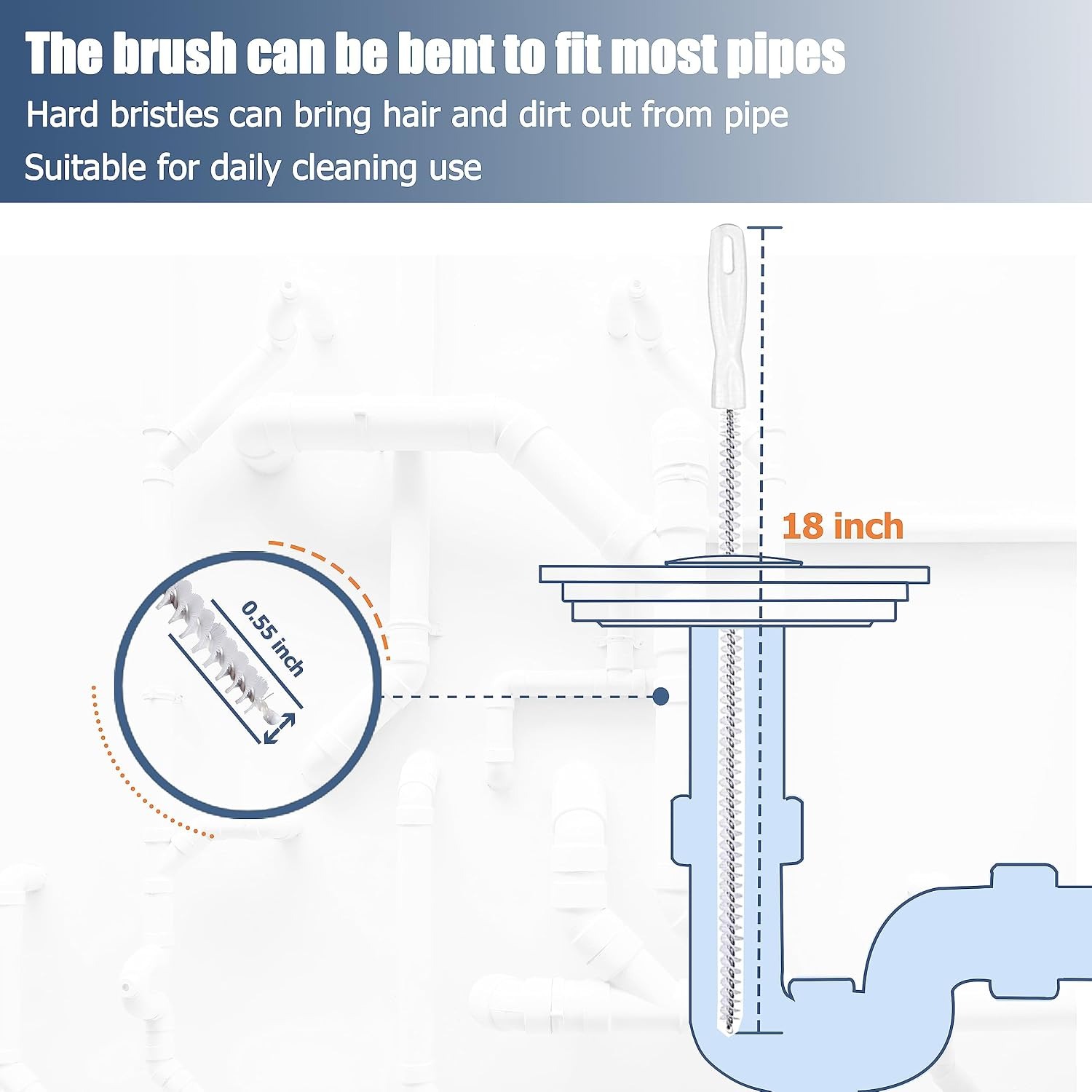
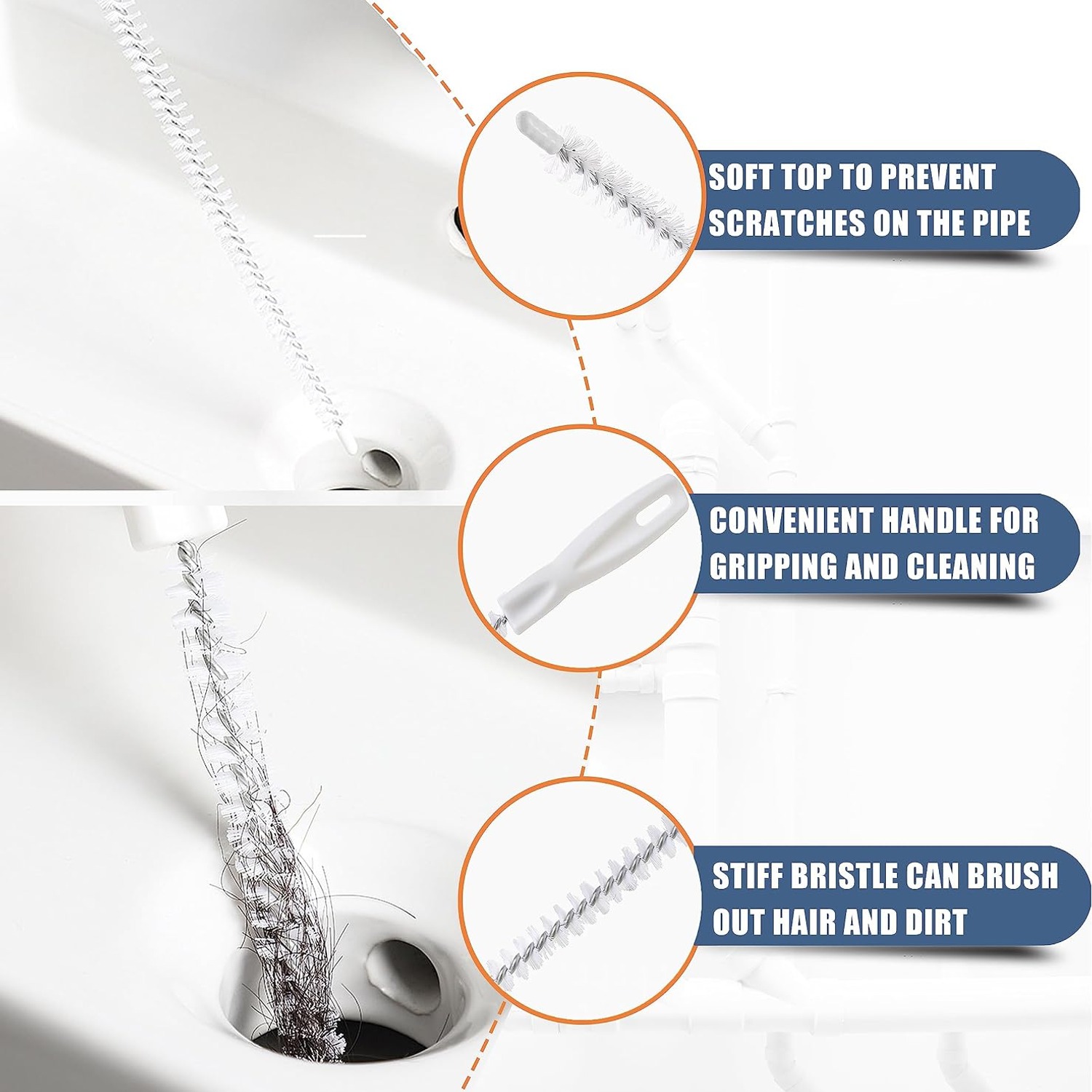
The two cleaning brushes are the ones people underestimate. They bend to shape and are made for scrubbing, not grabbing. Their job is the film of soap, toothpaste and biofilm coating the inside of the pipe, plus the overflow hole near the top of a basin or bath. That overflow is a small, dark, permanently damp tunnel that almost nobody ever cleans, and it is a common source of a persistent bathroom smell with no visible cause.
Working through a blocked drain, step by step
Start by getting the standing water out if you can. A cup and a bucket is fine. Working into clear air is much easier than fishing blind through murky water.
Take the plug or strainer out. On most basins the pop up plug lifts with a twist, or you loosen a small nut on the rod underneath. Shower strainers usually lift or unscrew. This step alone sometimes reveals the whole problem sitting right there.
Put gloves on. Have a plastic bag and some paper towel ready, because what comes out is going somewhere and you want that decided in advance.
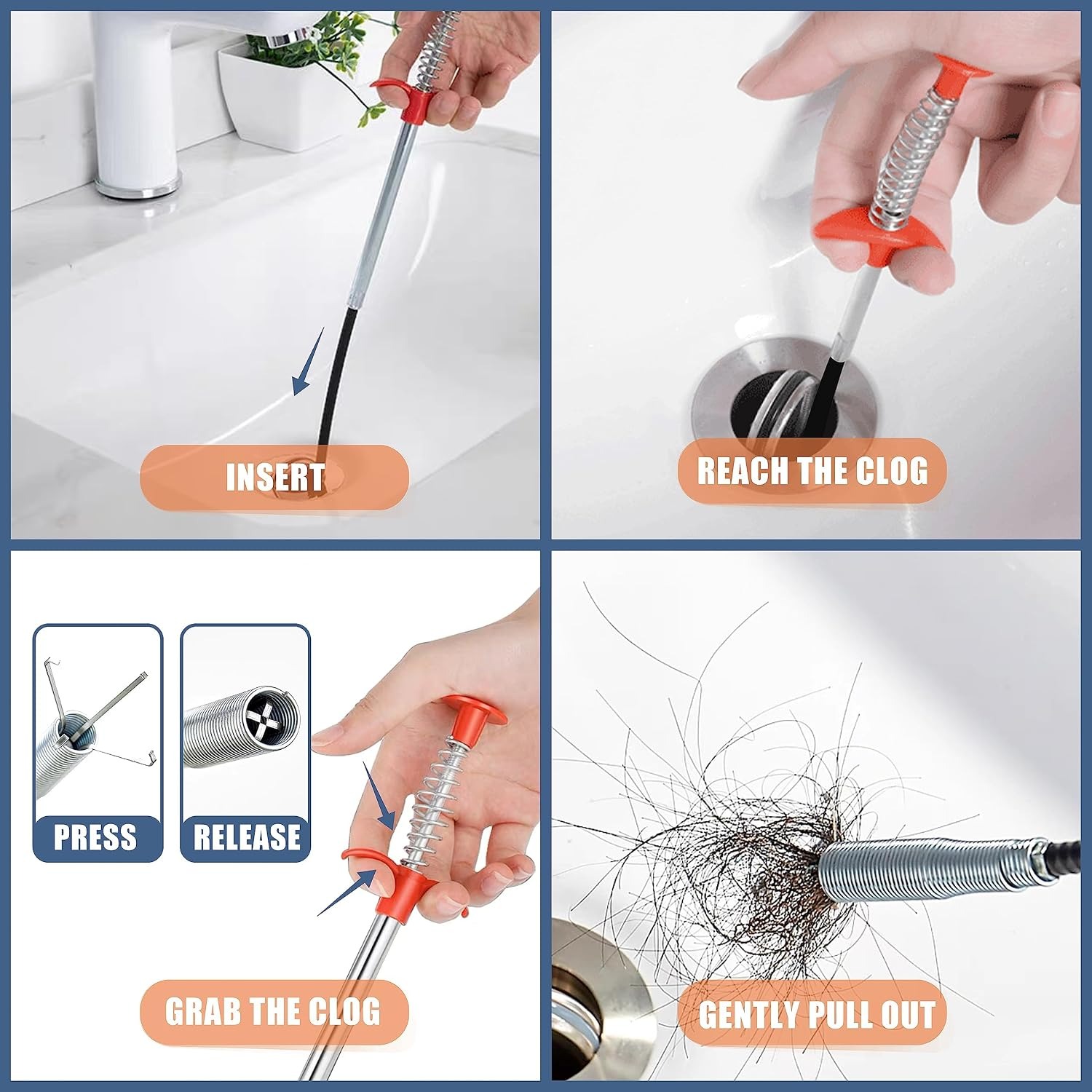
Feed a snake in slowly. If it stops, back off slightly, rotate it a quarter turn, and try again. You are trying to get past the clog, not punch through it. Once you feel you are in or past it, give the snake two or three full rotations to wind hair onto the teeth, then pull up steadily. Do not yank. Wipe the tool into your bag and repeat until it comes back clean.
Then run hot water for a minute or two. You want to flush the loose bits that came free but did not come out on the tool.
If the snake keeps coming back empty but the drain is still slow, switch to the metal clog remover. Bend it slightly to match the curve of your pipe, feed it down, and work past the trap. The claw will tell you when it has hold of something.
Finish with a brush through the pipe and the overflow. This is the part that stops you doing the whole thing again next month.
Choosing the right tool for your situation
For a shower or bathtub, the plastic snakes will handle the large majority of blockages on their own. Hair clogs sit shallow and these tools are built for exactly that.
For a bathroom basin, you often need both. Hair comes up on the snake, and then the metal tool clears whatever has collected in the trap below.
For a kitchen sink, grease is the usual culprit, and grease does not grab onto teeth the way hair does. The metal clog remover and the brushes do more here, paired with a flush of very hot water afterwards to carry the softened fat away.
For a toilet, a plunger is still the right first move for paper blockages. The metal tool earns its place when something solid has gone down the bowl and needs retrieving.
Keeping on top of it
The real value of a reusable kit is not the emergency, it is the prevention. Five minutes with a snake every six to eight weeks in a busy bathroom means you never meet a serious clog at all. Run a brush through the overflow once a quarter.
A simple strainer over the shower drain cuts the amount of hair entering the pipe dramatically, and costs almost nothing. In the kitchen, wiping greasy pans with paper before washing them keeps most of the fat out of the system in the first place.
After each use, rinse the tools under running water, wipe them, and let them dry fully before putting them away. Do not store them tightly coiled, because the plastic will take a set over time. Laid flat in a drawer or hung on a hook is ideal. Wash your hands properly afterwards.
Who this suits
Renters, because nothing here is permanent and there is no chance of chemical damage to someone else's plumbing. Households with long hair, where a bathroom drain is an ongoing project. Anyone living in an older building with narrow or awkward pipework. People who would simply rather fix something themselves than wait for a tradesperson and pay a call out fee for twenty minutes of work.
It is less relevant if your blockage is in the main line beyond the house, or if you have recurring clogs in the same spot with no obvious cause. That pattern usually points at a pipe fault, a collapsed section or tree roots, and that is a job for someone with a camera.
The short version
Most slow drains are a lump of hair or grease sitting close to the plughole. Chemicals dilute and only partly dissolve it. Pulling it out with a hooked snake removes it completely.
This kit gives you six short flexible snakes for hair, one long metal tool with a claw for deeper blockages, and two brushes for keeping the pipe wall and overflow clean. Everything is reusable, the whole set weighs 272 grams, and it lives in a drawer.
Use a snake when the water slows, not when it stops. That is the whole trick.