
The complete guide
The Practical Guide to Sealing a Washing Machine Drain
The wet patch behind the machine
Most laundry leaks are not dramatic. There is no burst hose or flooded floor. Instead there is a faint damp smell, a patch of discoloured skirting board, and a puddle that appears every few washes and dries before you get around to investigating it.
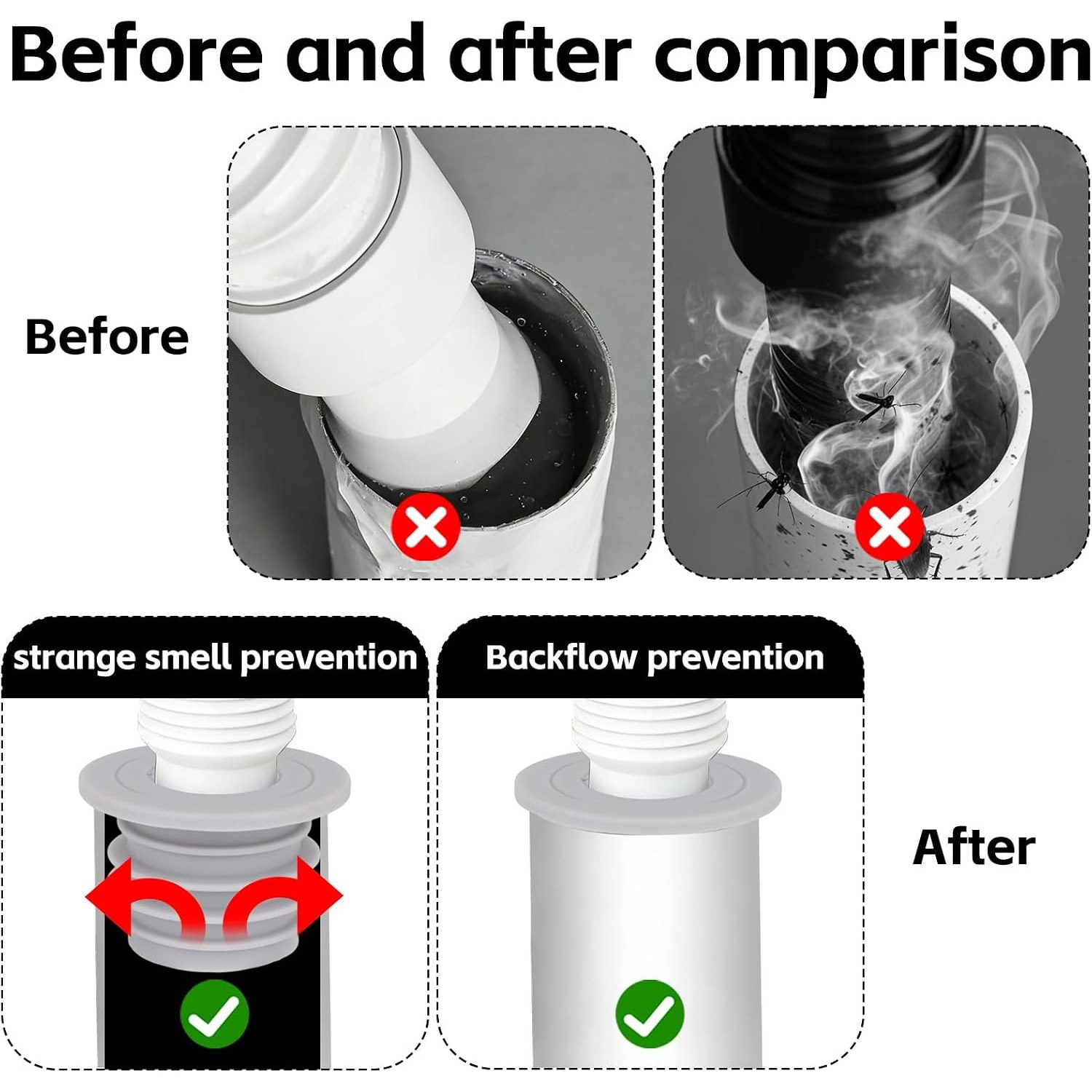
Nine times out of ten the source is the same spot: where the drain hose disappears into the standpipe. The hose is usually just pushed into a wider pipe and left there. Nothing holds it. Nothing seals it. When the machine pumps out, the water leaves in a hard surge, hits the inside of the standpipe, and some of it bounces straight back up and out around the hose.
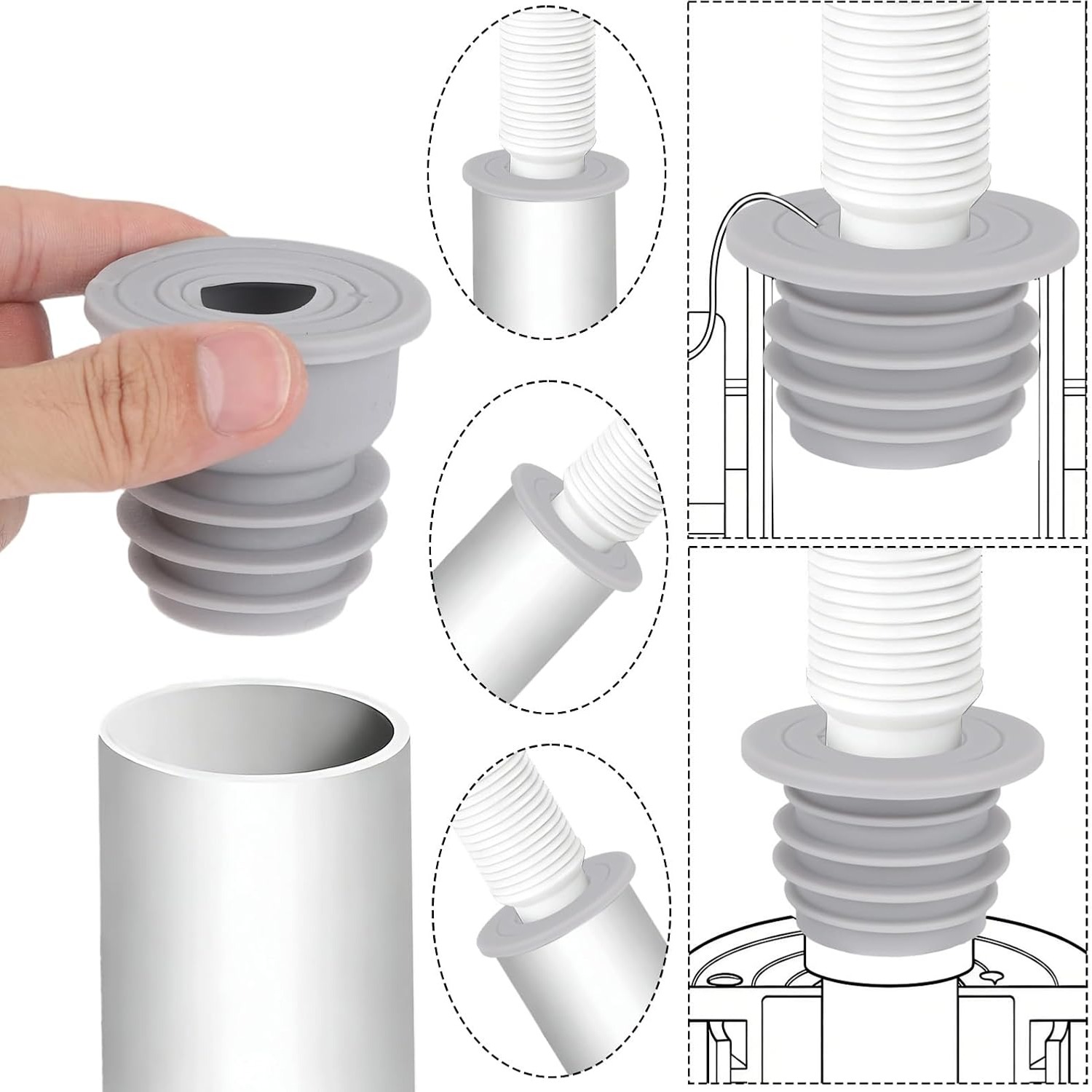
A washing machine drain seal fixes this by taking away the gap. That is the whole idea. It is a simple part doing one job, and when it works you stop thinking about it.
How a hose seal actually works
Picture the drain opening as a circle and your hose as a smaller circle sitting inside it. The ring of empty space between the two is where the trouble lives. Water escapes outward through that ring. Air travels inward through it, bringing the smell of the drain with it.
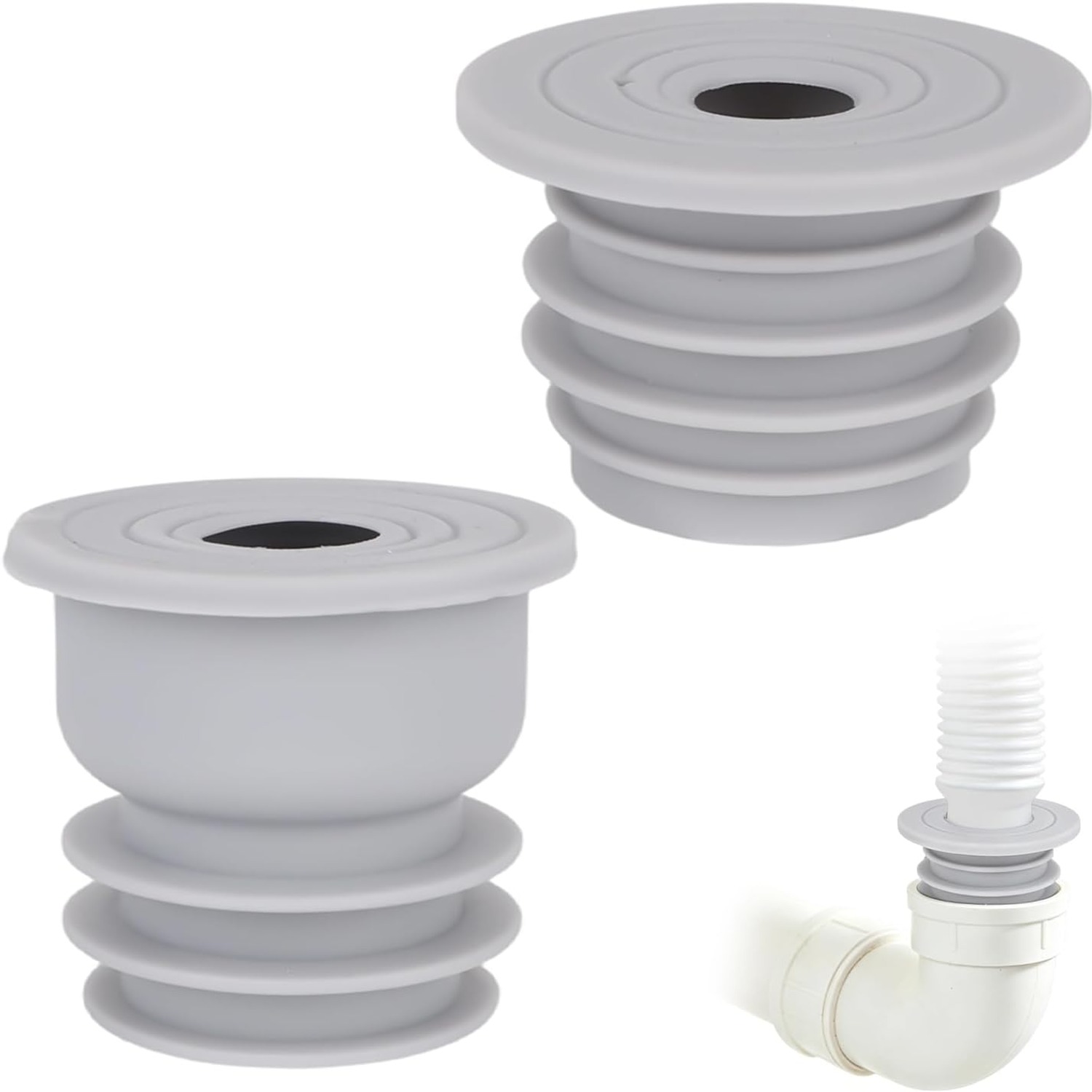
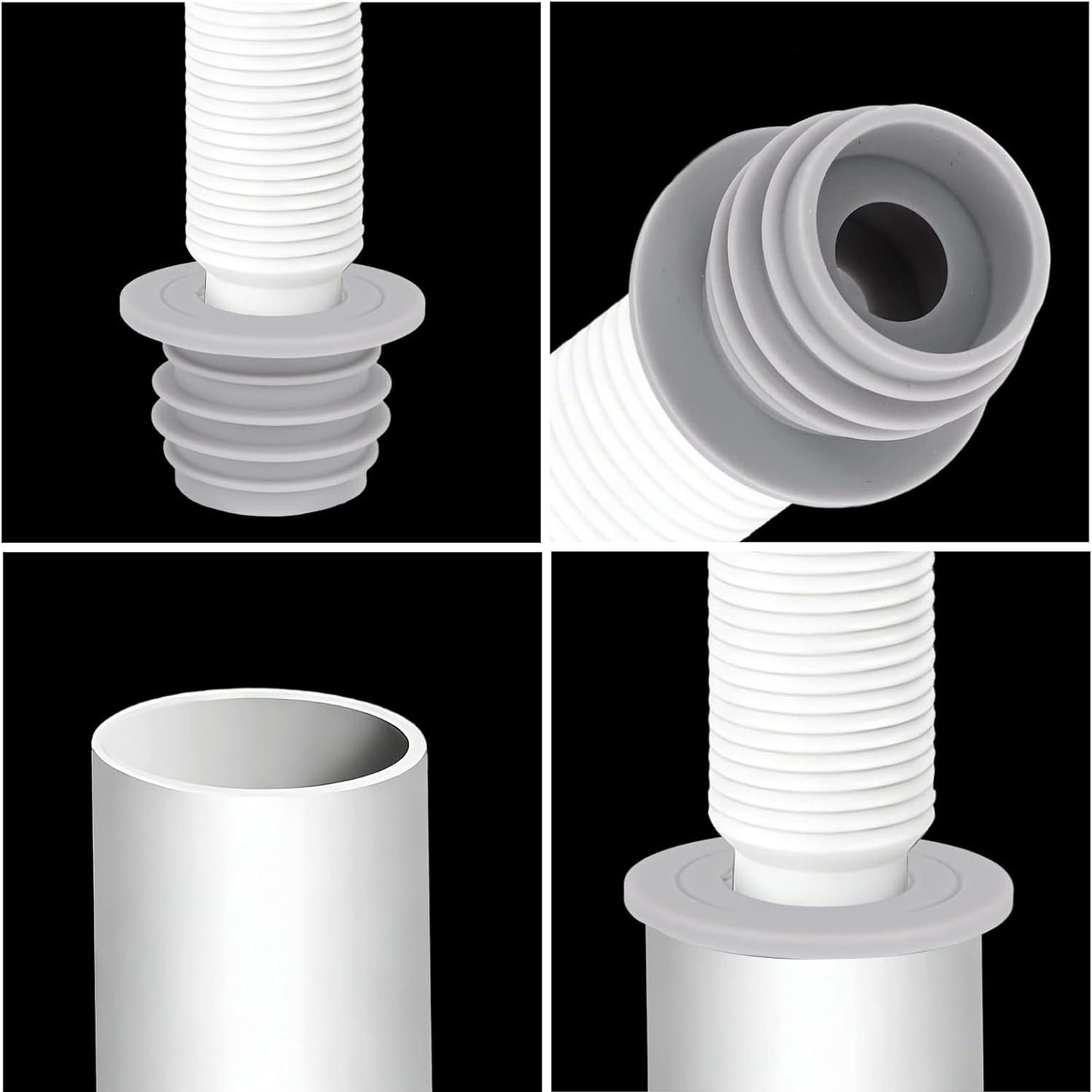
The seal is a moulded silicone piece that slides onto the hose and expands to occupy that ring. Because silicone is soft, it presses against both surfaces rather than sitting rigidly against one. Small irregularities in an old standpipe get filled rather than bridged.
Once the ring is closed, the surge of water has only one direction to travel. The drain odour has nowhere to rise. And the hose itself gets a bit of grip, which reduces the slow creep that eventually has the hose hanging half out of the pipe.
This pack contains three seals made from grey silicone, with the maker's details noting an anti-clogging design. The weight of the whole pack is 58 grams, which tells you how small and light these parts are.
Why silicone and not hard plastic
Material choice matters more here than it looks. A drain hose connection sees hot water, detergent, lint and constant small movements from the machine vibrating during spin.
Hard plastic grommets hold their shape, but they do not conform. If your standpipe is slightly oval, or has a lip from an old adhesive repair, a rigid part leaves gaps exactly where you needed it not to. Cheap rubber conforms nicely at first, then hardens and cracks after a year of hot cycles.
Silicone sits between the two. It stays flexible after repeated heat exposure and it does not turn brittle. It also cleans easily, which matters because lint will build up on any surface near a laundry drain. A quick wash under the tap and the seal goes back to work.
That cleanability is the reason these are reusable rather than disposable. You are not buying a consumable. You are buying a part you clean occasionally.
Who this suits
If your washing machine drain hose sits loosely in an open standpipe, this is for you. That describes a huge number of laundries, especially in older houses and rentals where the plumbing was done long before anyone thought about splashback.
It also suits people chasing a laundry smell they cannot locate. Before you start pulling up flooring, seal the standpipe and give it a week. An open pipe is a direct line to the drain, and a good anti odour drain plug often solves the problem for the price of a takeaway coffee.
Renters do well with this product too. Nothing is glued, drilled or permanently altered. You push a seal on, and when you move out you pull it off and take it with you.
It is less useful if your machine drains into a threaded connection or a sealed boss fitting. In those setups the gap is already closed and you do not need this. It is also not the right tool for a wide open floor drain, where a proper laundry floor drain cover does a better job.
Choosing and fitting
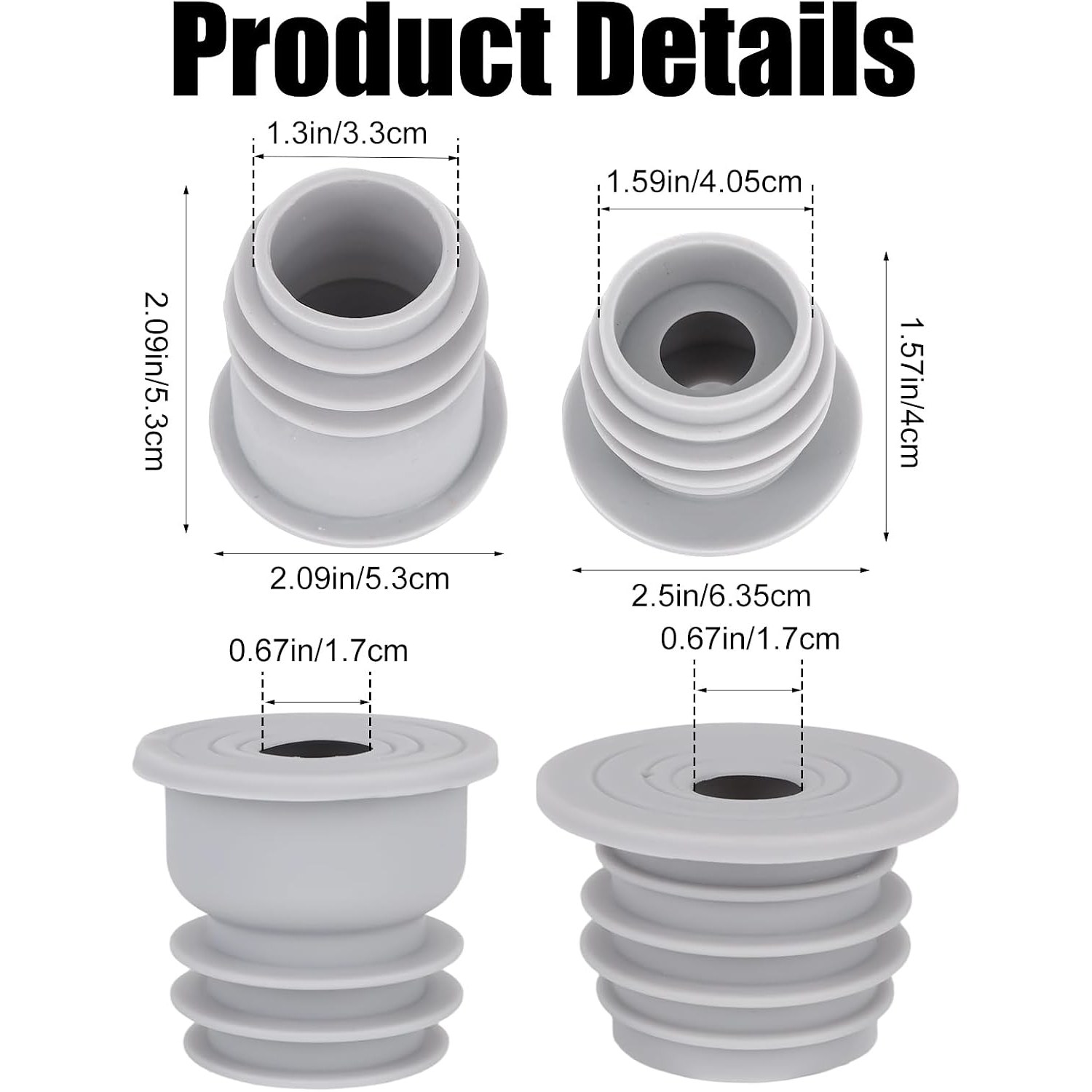
Start with two measurements. Measure the outer diameter of your drain hose at the end that goes into the pipe. Then measure the inner diameter of the drain opening. The difference between those two numbers is the gap you need to fill.
The supplier record for this product does not specify individual seal dimensions, which is why the three piece pack is helpful. You have options to try rather than one fixed size to hope for.
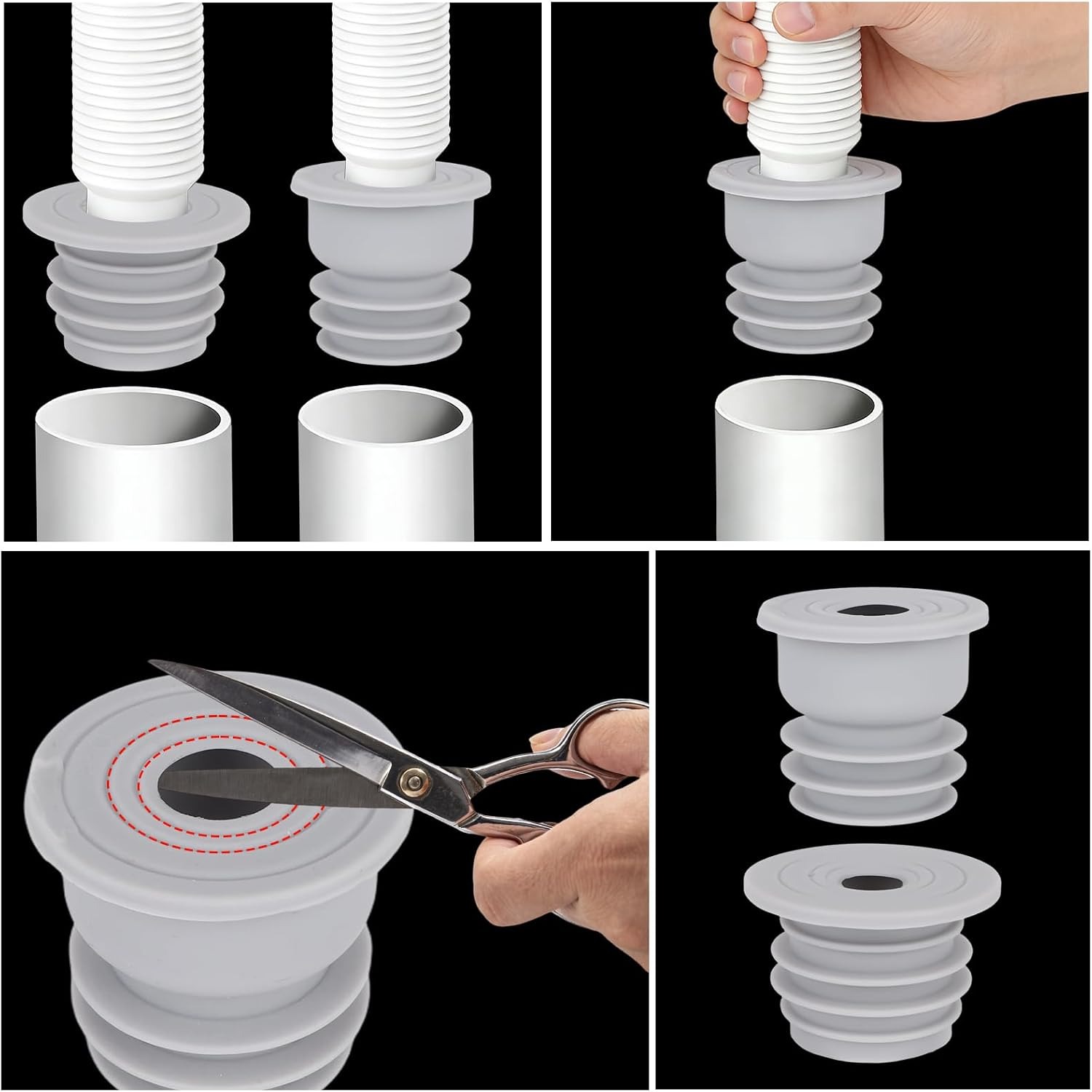
Fitting goes like this. Pull the hose out of the drain. Slide a seal over the hose end and work it down until it sits a little back from the tip. Push the hose back into the drain so the seal meets the pipe mouth, then press until it seats. You should feel resistance. If it slides in with no effort at all, try the next seal in the pack.
Then test it properly. Run a short cycle and stay in the room during the drain phase. Watch the connection. You are looking for spray, dribbling, or the hose shifting. A good fit gives you none of the three, and the sound changes too: less splashing, more of a clean rush down the pipe.
If you still see movement, a cable tie or a simple hose clip securing the hose to the standpipe takes care of the rest. The seal handles the water, the clip handles the mechanics.
Keeping it working
Maintenance is minimal but not zero. Lint and detergent residue collect on anything near a laundry drain, and over months that film can reduce how well the silicone grips.
Every few months, pull the seal off, rinse it under warm water, and wash it with a little mild dish soap if there is a visible film. Rinse again, dry it with a cloth, and push it back on. Fitting it while damp makes it slip, so give it a minute.
Refit the seal any time you move the machine. Pulling the appliance out to clean behind it will usually unseat the hose, and it is easy to shove it back in without checking. A ten second look saves you a wet patch later.
Store the spare seals somewhere dry and out of the sun. UV is harder on silicone than hot water is.
If you ever see water rising inside the standpipe rather than escaping around the seal, that is a blockage further down the line. Take the seal out, clear the drain, and refit. The seal is not the cause, but it will hide the early warning signs of a slow drain, so stay alert to water taking longer to disappear.
The short version
An open standpipe is an invitation for splashback and drain smell. A silicone seal around the hose closes the gap and takes away both problems.
This pack gives you three grey silicone seals, a reusable material that handles hot cycles, an anti-clogging design, and a fitting job that needs no tools and takes about two minutes. Total weight for the pack is 58 grams.
Measure your hose and your drain opening before you order. If the numbers look sensible and your hose currently sits loose in a wider pipe, this is a cheap fix for an annoying problem, and you get spares for next time.