
The complete guide
Drain Jetter Hose Buyer's Guide - How To Clear A Blocked Drain With A Pressure Washer
The problem with a slow drain
Most blocked drains do not happen overnight. They build. A season of leaves washes into the gully, kitchen grease cools and sticks to the pipe wall, soap and hair knit together at a bend, and the pipe narrows a little more each month. By the time water is standing in the drain, the pipe might be carrying a fraction of what it was designed for.
The usual responses are limited. A bottle of drain cleaner can shift a soft clog near the opening, but it rarely reaches a blockage ten metres down the run, and it does nothing about the greasy coating on the pipe wall. A plumber will fix it properly, but a call out for a drain that blocks every autumn gets expensive fast. Plenty of people end up living with a drain that works badly rather than paying to have it cleared twice a year.
A drain jetter hose sits neatly in that gap. If you already own a pressure washer, you own most of the machine. All you are missing is the hose and the nozzle that turn it into a jetting tool.
How a pressure washer drain jetter works
The principle is simple and it has been used by professional drain crews for decades, just at much higher pressures.
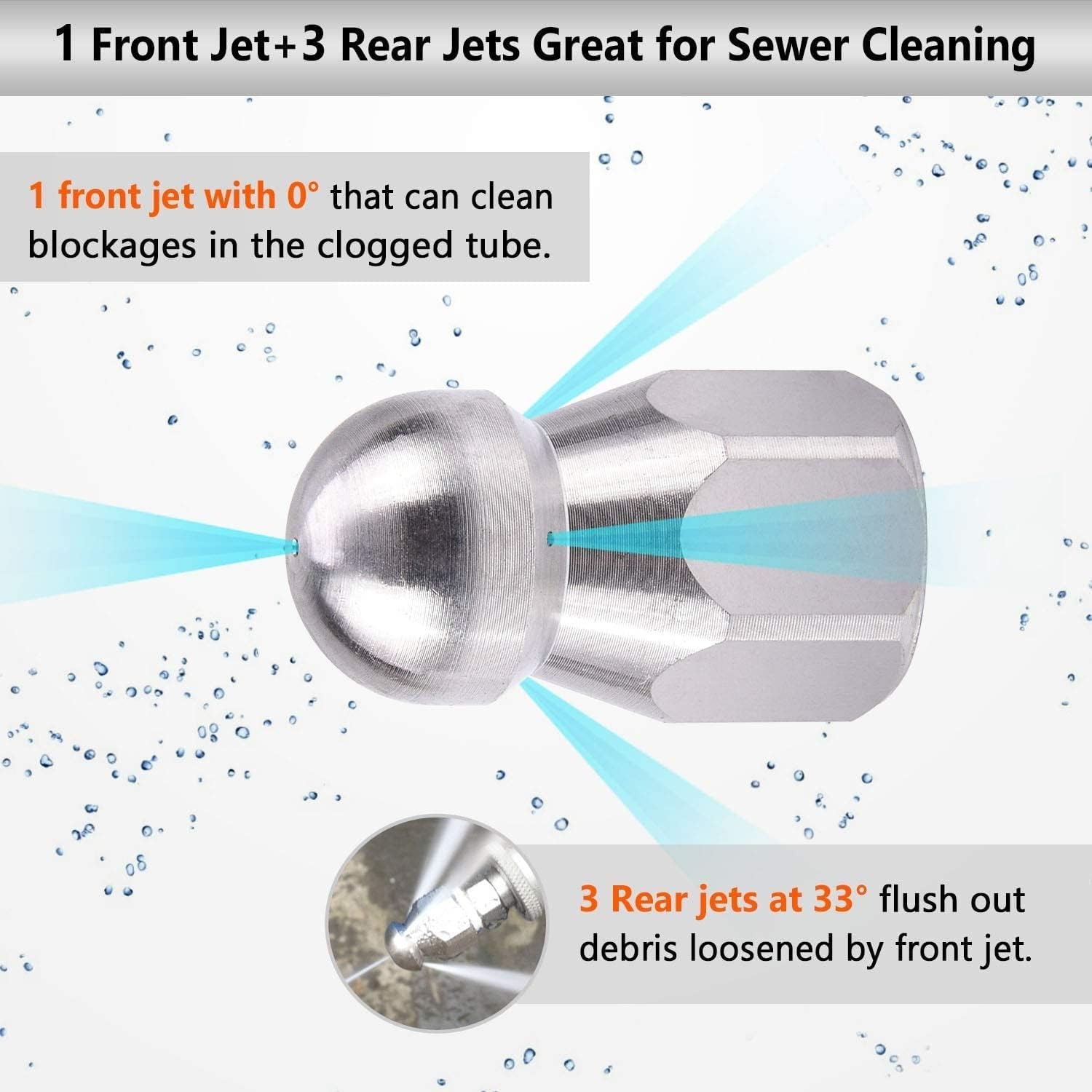
You attach a long, thin hose to your pressure washer in place of the lance. On the end of the hose is a nozzle with jets pointing backwards and one pointing forwards. When you pull the trigger, the rear jets fire water back down the pipe. That reaction pushes the nozzle forward, so the hose feeds itself deeper into the drain with no shoving from you. At the same time the forward jet cuts into whatever is blocking the way.
The backward jets do a second job that matters just as much. They flush debris back towards the drain opening. So as the nozzle travels forward, the muck it loosens is already being pushed out behind it rather than packed further in.
The rotating nozzle in this kit works on the same idea but with a spinning head. Instead of three fixed streams, it sweeps water around the full inside of the pipe. That is the one to use once the main blockage has moved, because it scrubs the wall coating that would otherwise catch the next lot of debris.
What is in this kit
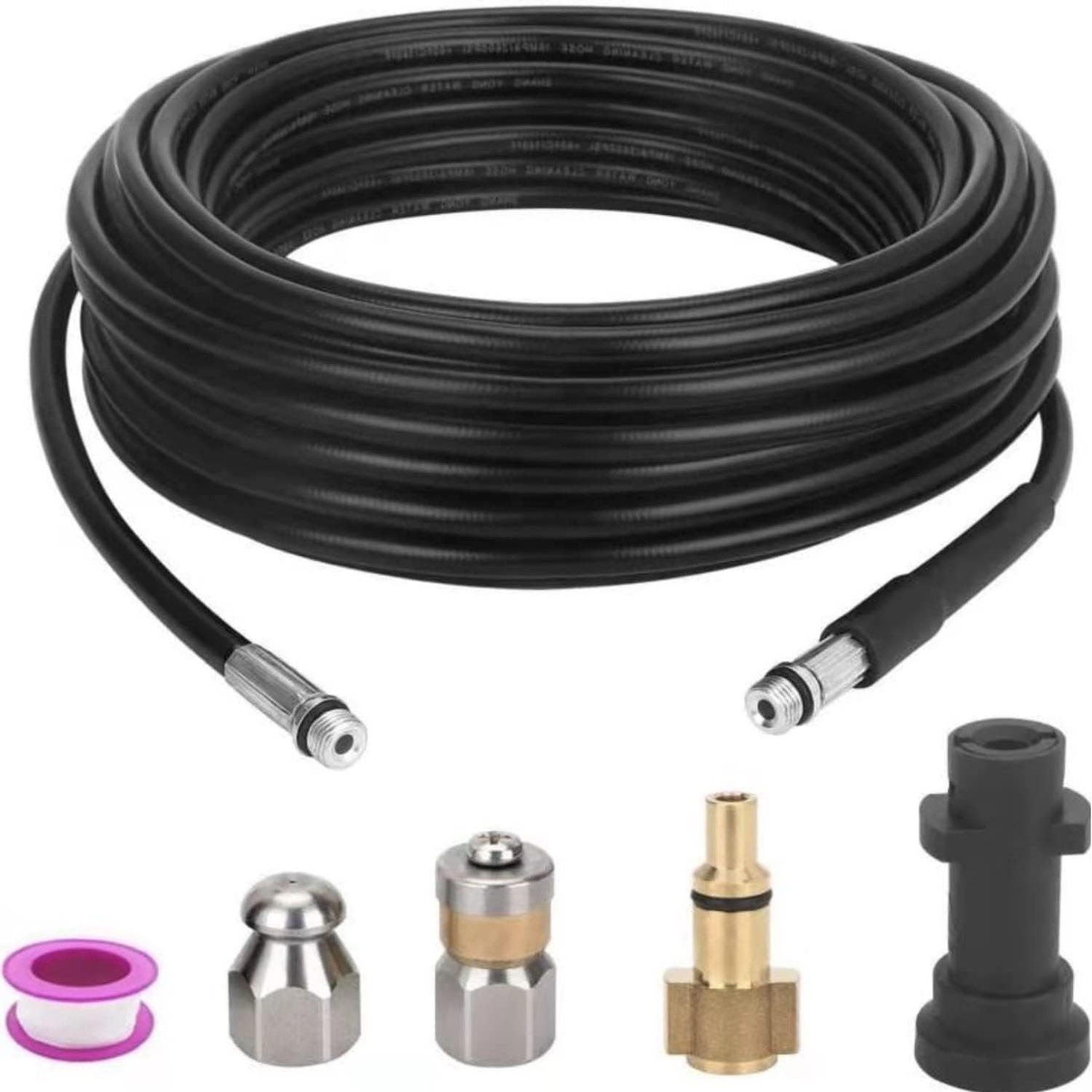
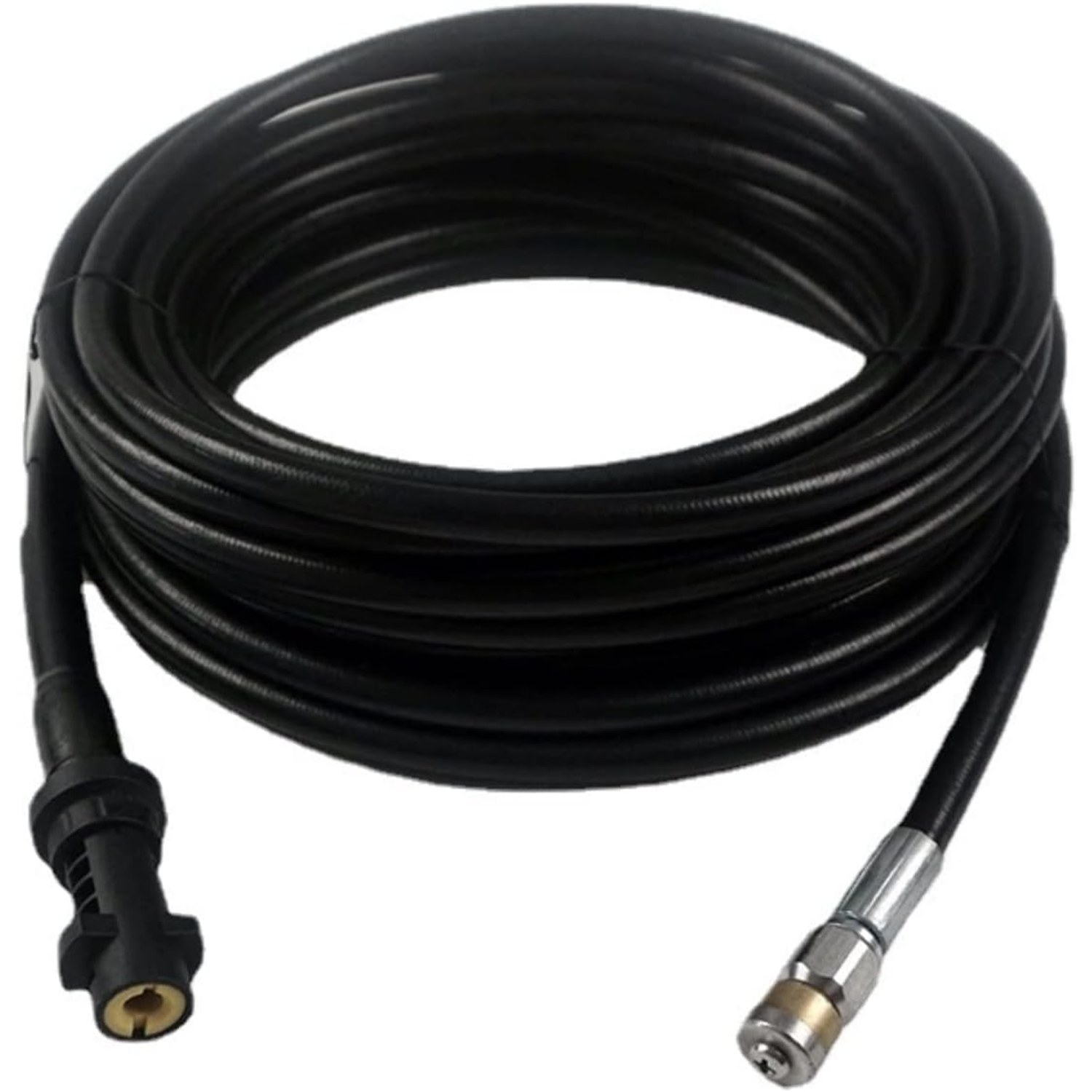
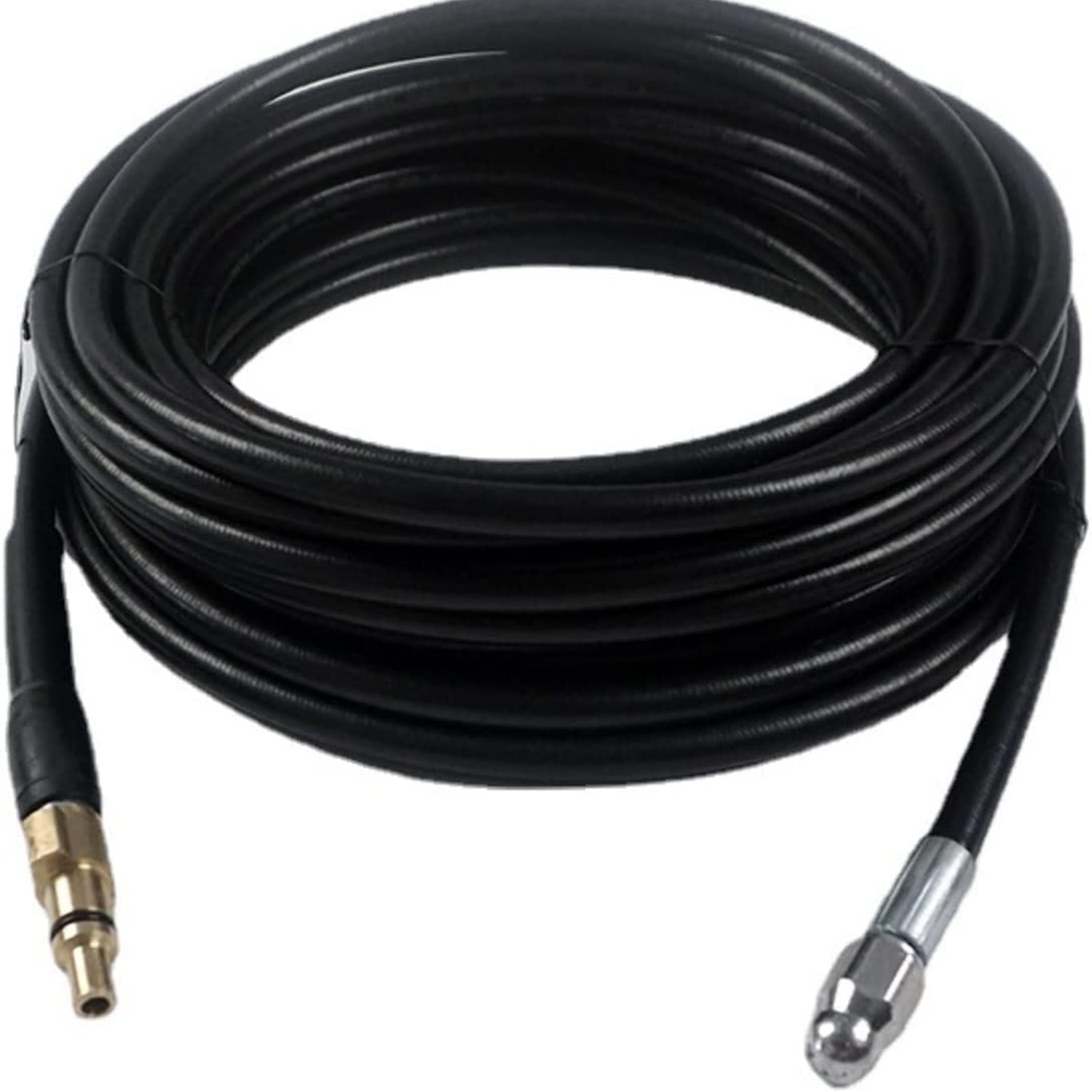
This is a 20 metre hose in black PVC with an 11 mm outside diameter and a 1 mm nominal wall thickness. The maximum pressure rating is 200 bar. Packed, the whole kit weighs 1.15 kg and arrives in a parcel about 22 cm long.
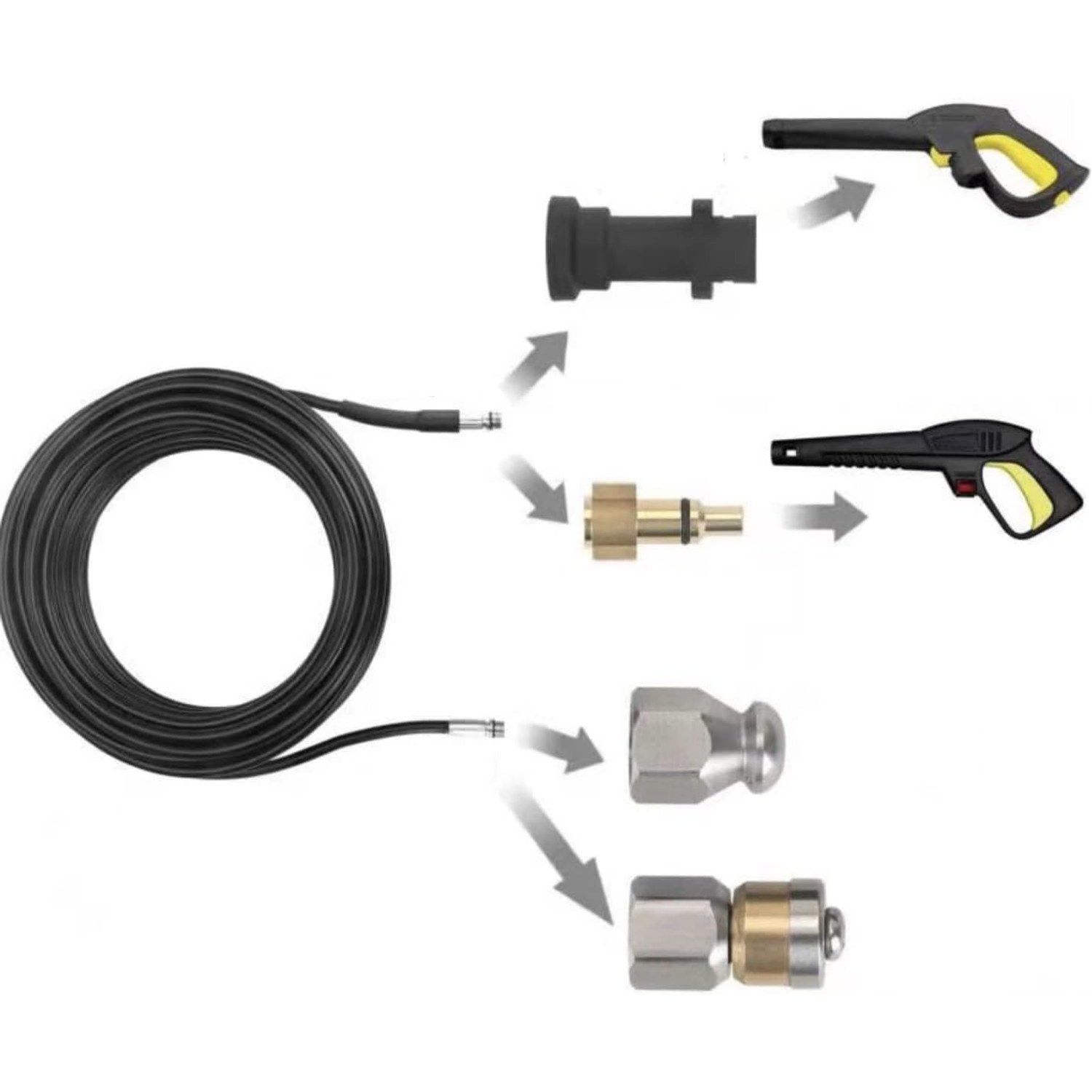
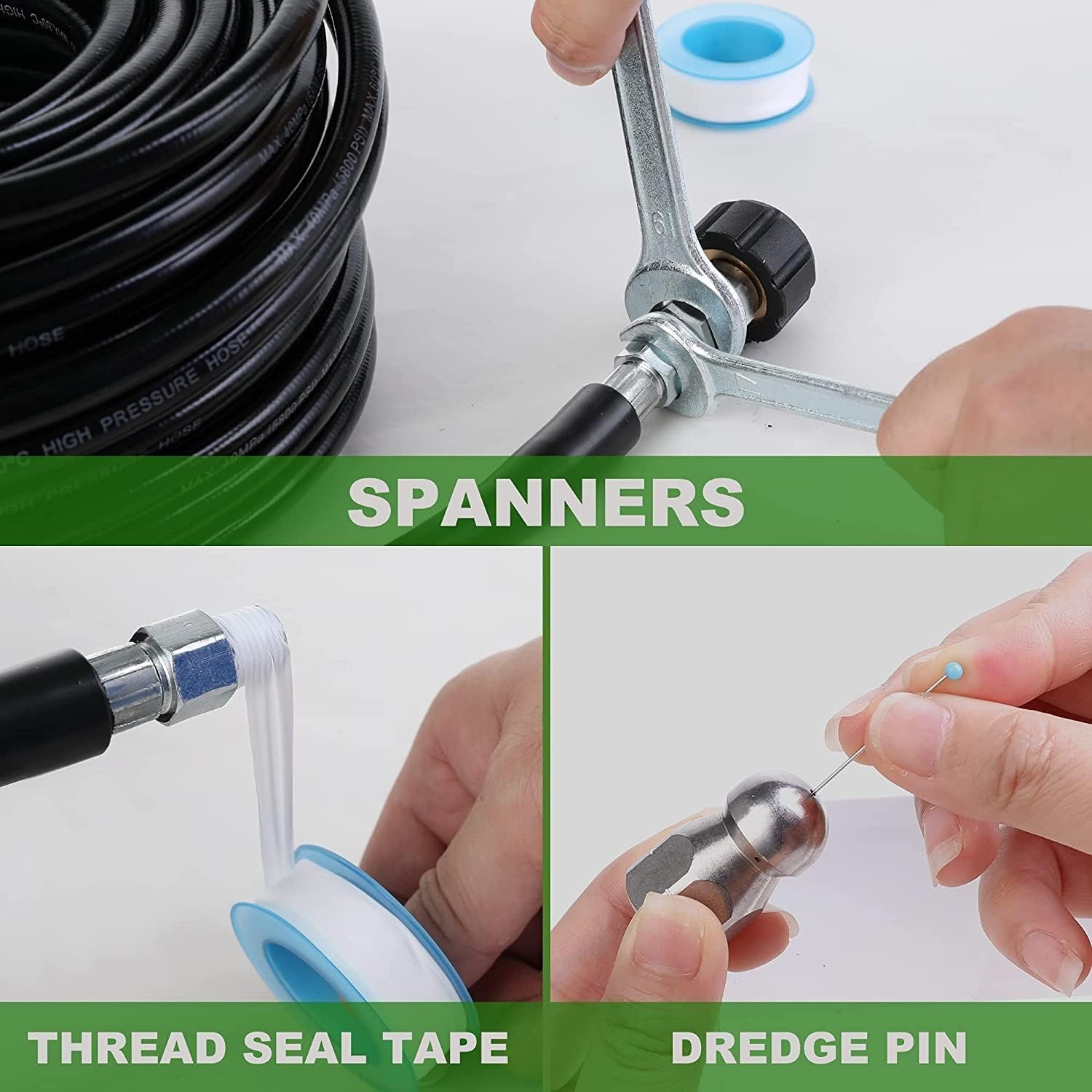
Alongside the hose you get a button nose jet nozzle, a rotating jet nozzle, an adapter for Karcher K-Series machines and an adapter for LAVOR machines. That is the complete list, so if your pressure washer uses a different connector you will want to source the matching fitting separately.
Twenty metres is a sensible length for home use. It clears a gully, a downpipe, a garage drain and the run from a kitchen waste out to the main. Longer hoses exist, but every extra metre adds friction loss and makes the hose harder to coil and store. For most houses, 20 metres is the sweet spot.
Who this suits
This kit makes sense if you already own a pressure washer and you look after your own property. Rural blocks with long driveway drains, older homes with cast iron or clay runs that silt up, houses under big deciduous trees, and anyone who has paid a plumber more than once for the same drain will all get value from it.
It also suits people who look after more than one property. A landlord with a handful of rentals, a caravan park, a small workshop with a yard drain. One kit covers all of them, and the running cost after purchase is water.
It is less useful if you do not have a pressure washer, because the hose is not a standalone tool. It also will not help with a collapsed pipe, a broken joint, root intrusion, or a blockage that sits under a concrete slab with no access point. Those need a camera and a plumber.
Choosing the right hose and nozzle
Three things matter when you compare a sewer jetter hose kit.
The first is diameter. A thin hose bends through tight elbows that a thick one will jam against. At 11 mm outside diameter, this one is on the slim side, which is what you want for domestic pipe.
The second is pressure rating. Your hose needs to be rated at or above your machine's output. At 200 bar this one covers the great majority of domestic pressure washers with room to spare.
The third is the nozzle. A kit with only a forward jet will punch a hole through a blockage and leave the walls coated. A kit with rear jets self feeds and flushes. A rotating nozzle cleans the pipe wall properly. Having both nozzle types, as this kit does, means you can punch through first and clean second, which is how a professional crew would do it.
Using it safely
A few habits make the difference between a quick job and a soaking.
Feed the nozzle at least a metre into the pipe before you touch the trigger. Those rear jets are powerful, and if the nozzle is near the opening when you fire, the water comes straight back at you along with whatever was in the drain.
Release the trigger before you withdraw the nozzle. Same reason.
Wear eye protection and gloves. Drain water carries bacteria and grit, and at pressure it atomises. Old clothes and boots are sensible too.
Feed the hose in steadily rather than forcing it. If it stops moving, back off half a metre, let the jets work for a few seconds, then try again. Shoving a stuck hose hard enough can kink it, and a kinked jetting hose is finished.
Finally, think about where the water goes. It comes out the way it went in, carrying everything the nozzle loosened. Position yourself and anything you care about accordingly.
Looking after the kit
Flush the hose with clean water at the end of each job and let it drain before you pack it away. Grit left sitting inside is what wears nozzles out.
Coil it in wide, loose loops. Tight bends and kinks are the main thing that kills a PVC jetting hose. A cheap hose reel or a pair of wall hooks is a worthwhile addition if you use it regularly.
Check the nozzle jets after each use. A fine pin clears a blocked hole without enlarging it, and a nozzle with one blocked jet will pull to one side and stop self feeding properly.
Keep the adapters and nozzles in a small box with the hose. They are the parts that go missing, and a jetter hose with no adapter is just a hose.
Store everything out of direct sun. UV is hard on plastic hose over the years, and a shed shelf costs nothing.
The short version
If you own a pressure washer and you have a drain that keeps backing up, this kit gives you a way to fix it yourself. Twenty metres of 11 mm PVC hose rated to 200 bar, a button nose nozzle that drives itself down the pipe while cutting into the blockage, a rotating nozzle that scours the pipe wall clean afterwards, and adapters for Karcher K-Series and LAVOR machines.
It will not solve a broken pipe and it is not a substitute for a plumber when something is structurally wrong. For the far more common problem of leaves, grease, silt and soap narrowing a perfectly good pipe, it does the job in an afternoon and keeps doing it year after year. Check your washer's connector against the supplied adapters, keep the hose uncoiled and out of the sun, and it will pay for itself the first time you skip a call out.