
The complete guide
How To Choose And Use A Drain Brush Set That Actually Clears The Pipe
The slow drain problem nobody deals with until it is bad
A drain rarely blocks overnight. It slows down over weeks. The sink empties a little more lazily each morning, the shower collects an inch of water around your feet, and at some point you notice a smell. By then there is a mat of hair, soap scum and grease lining the inside of the pipe, and water is squeezing through a hole the size of a pencil.
Most people wait until that point, then reach for a bottle of chemical drain cleaner. It works sometimes. It also sits in your pipework doing its job slowly, it is unpleasant to store, and in older plumbing or a septic system it is not something you want to make a habit of.
A drain brush set attacks the problem from the other direction. Instead of trying to dissolve the clog, you reach in and pull it out. It takes about three minutes per drain, costs nothing after the initial purchase, and shows you exactly what was in there.
What is in this set and why three tools
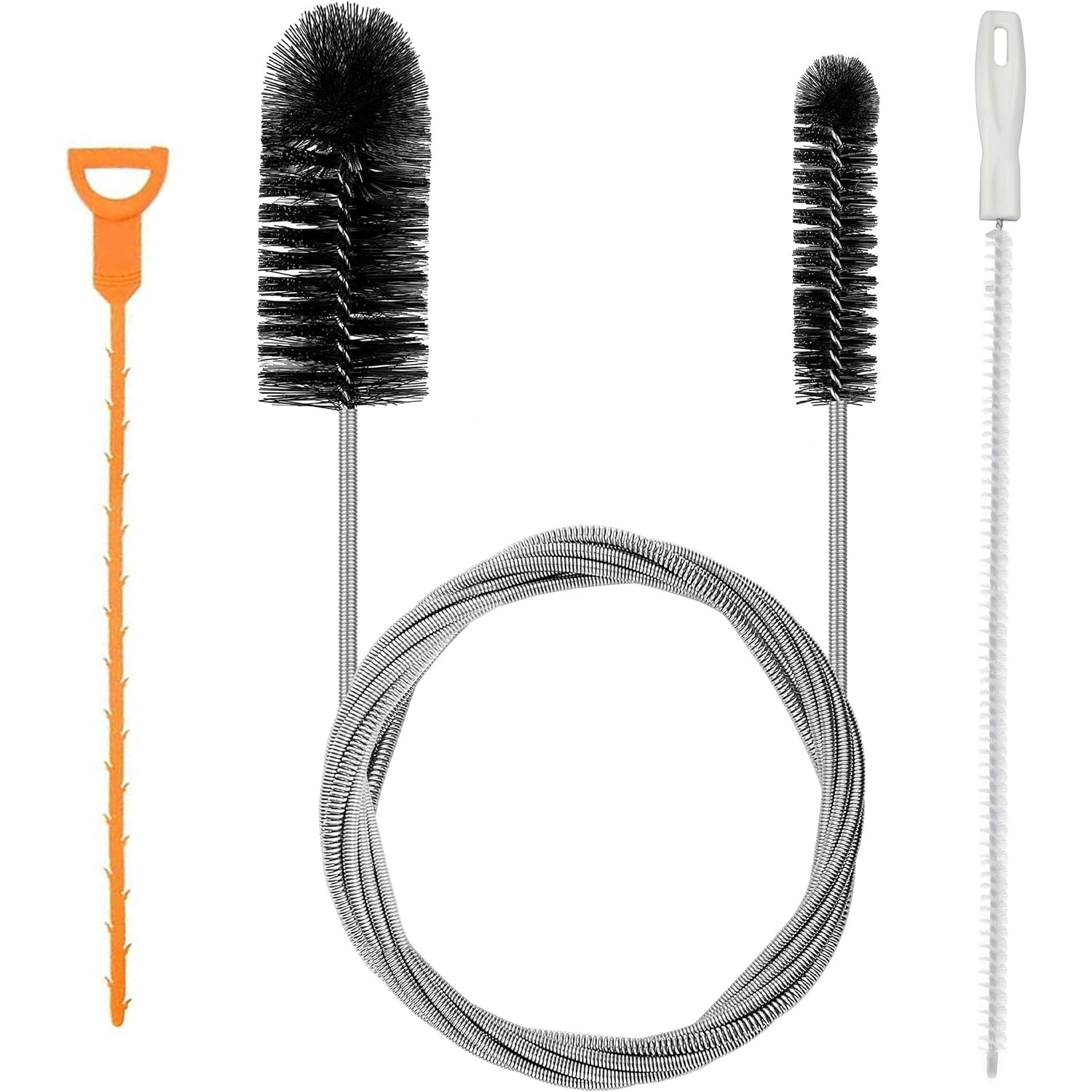
This kit contains three brushes rather than one, and that is the main reason it is more useful than a single tool.
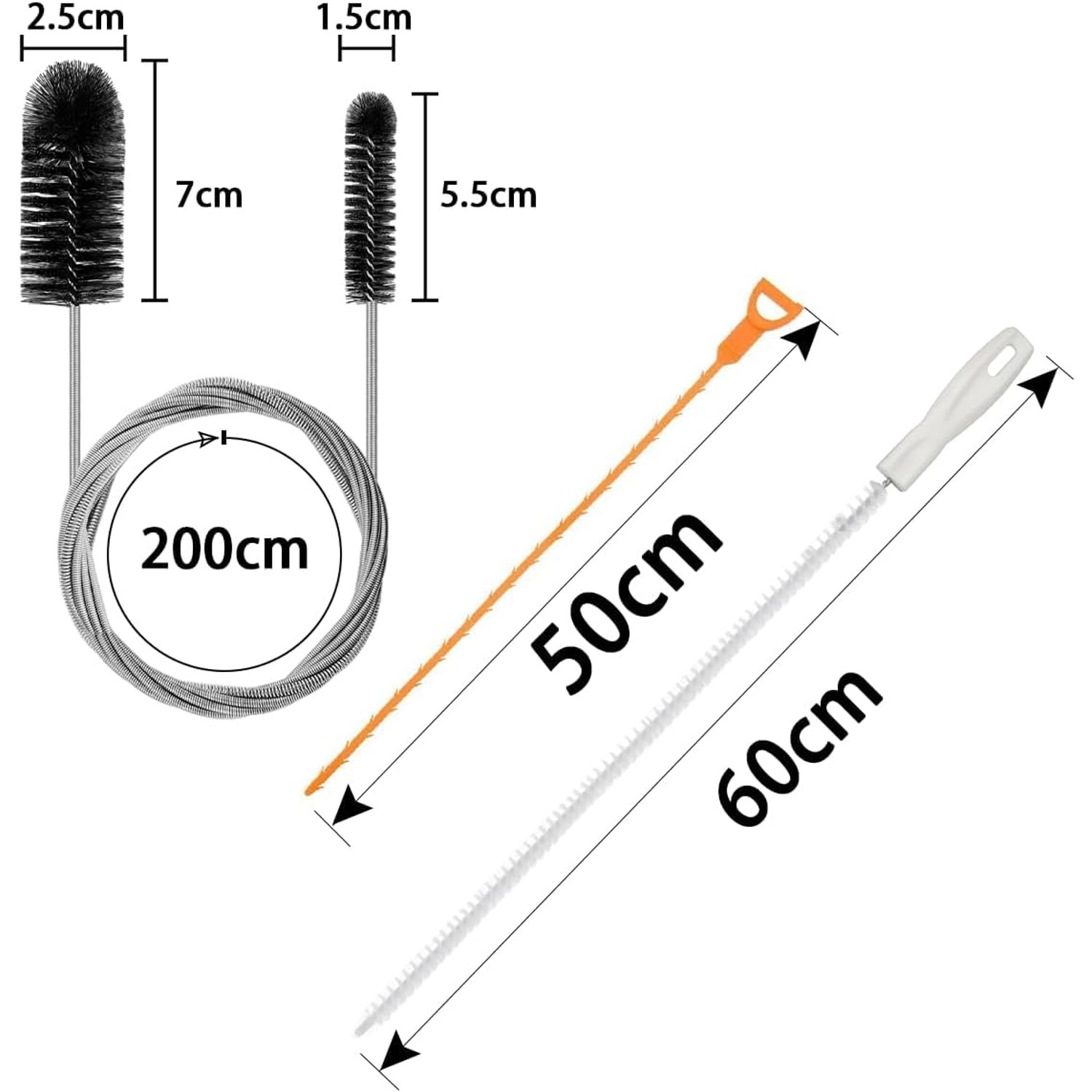
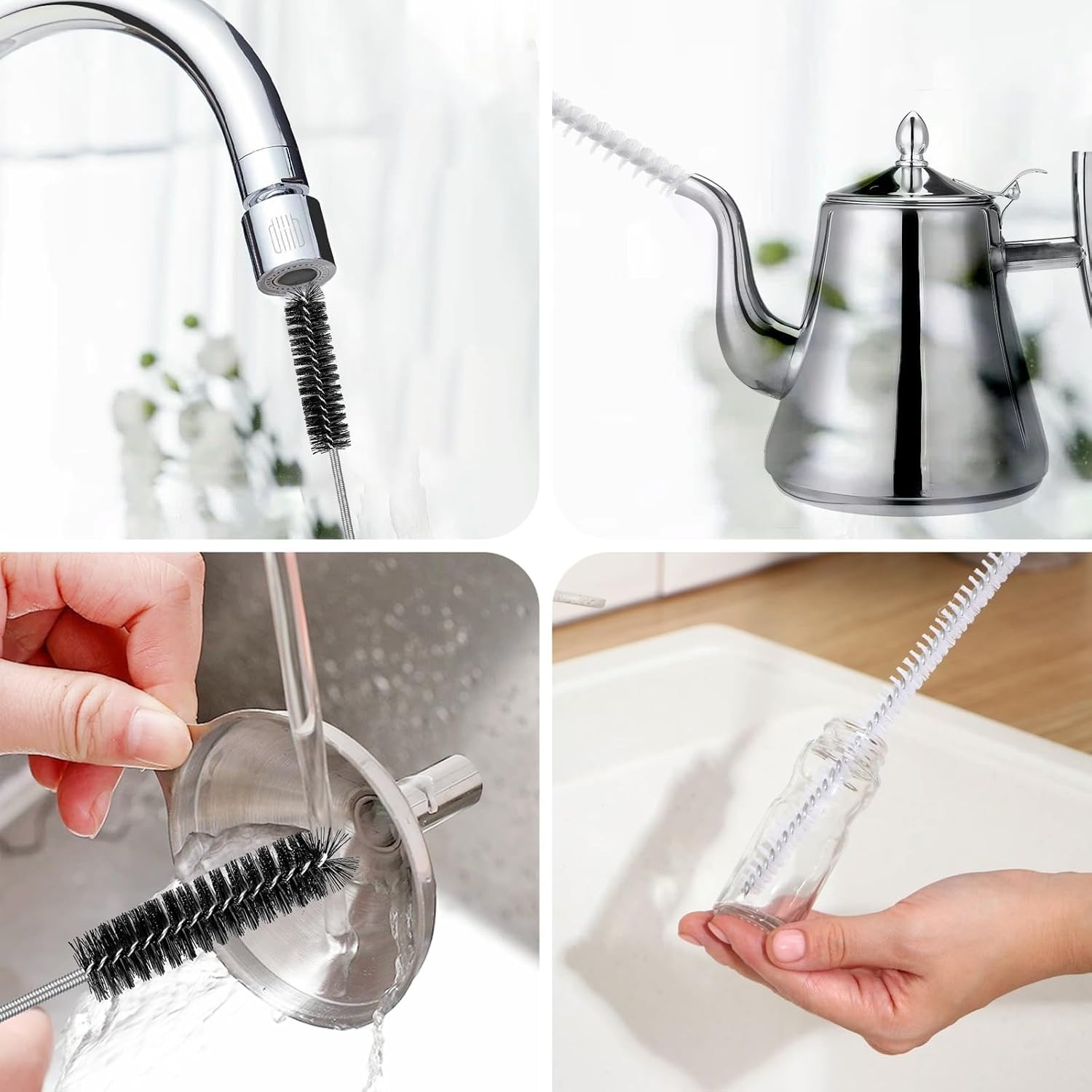
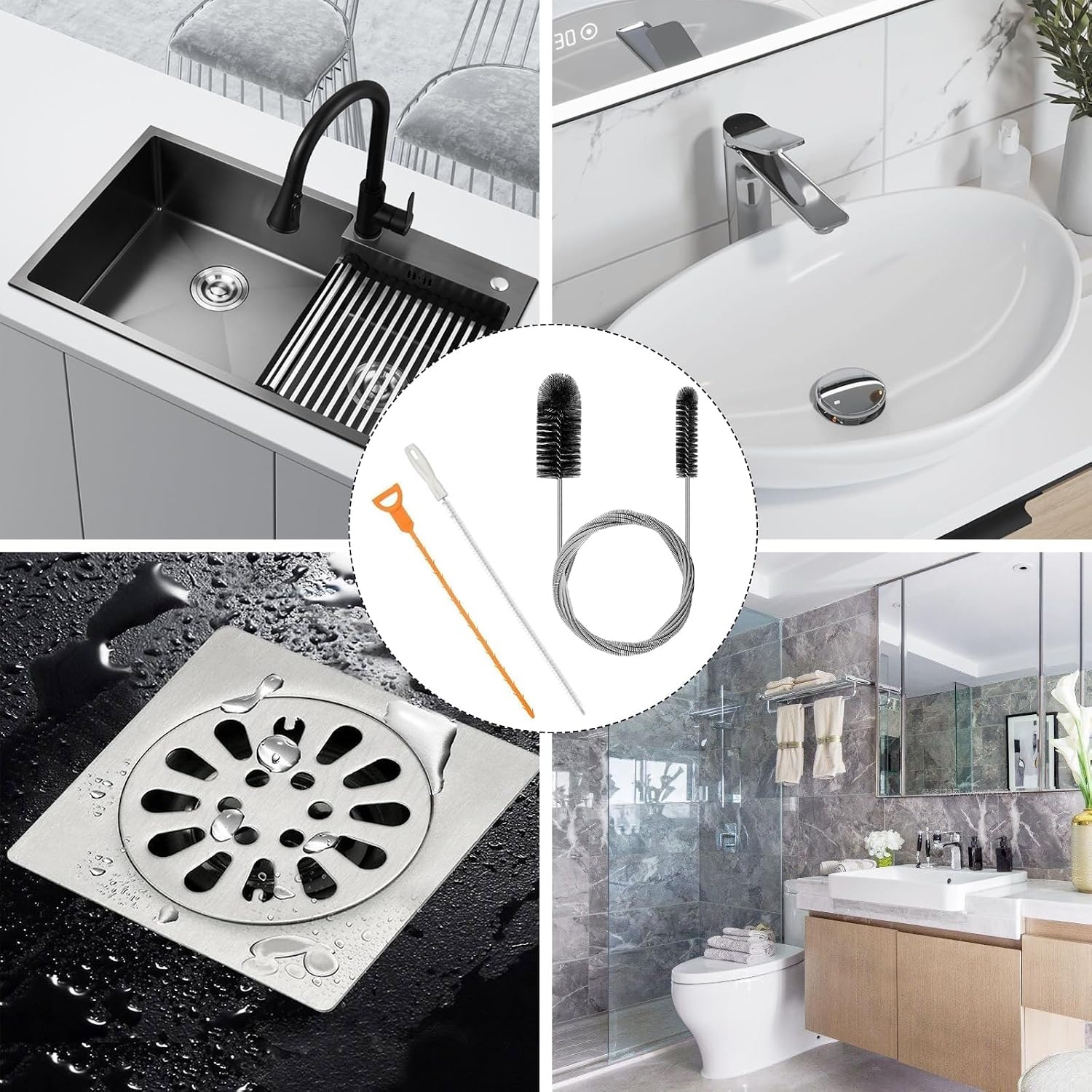
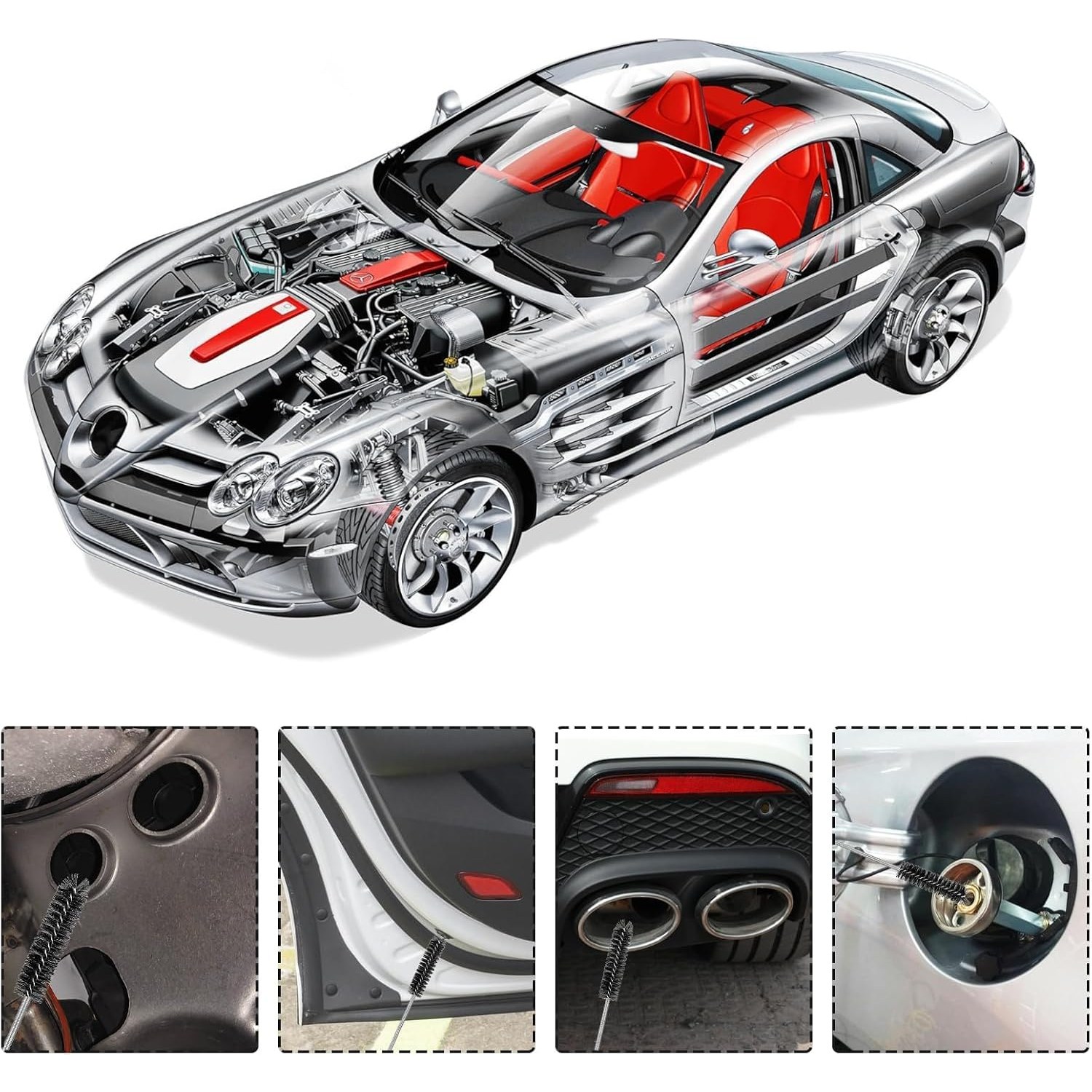
The longest piece is a flexible pipe cleaner brush of roughly 200cm with a bristle head at both ends. This is your reach tool. It is thin enough to feed into appliance tubing and long enough to pass right through most of it. Refrigerator drain lines, aquarium filter hoses, washing machine outlets, coffee machine pipes, car sunroof drain channels: these are all narrow, curved and otherwise impossible to clean.
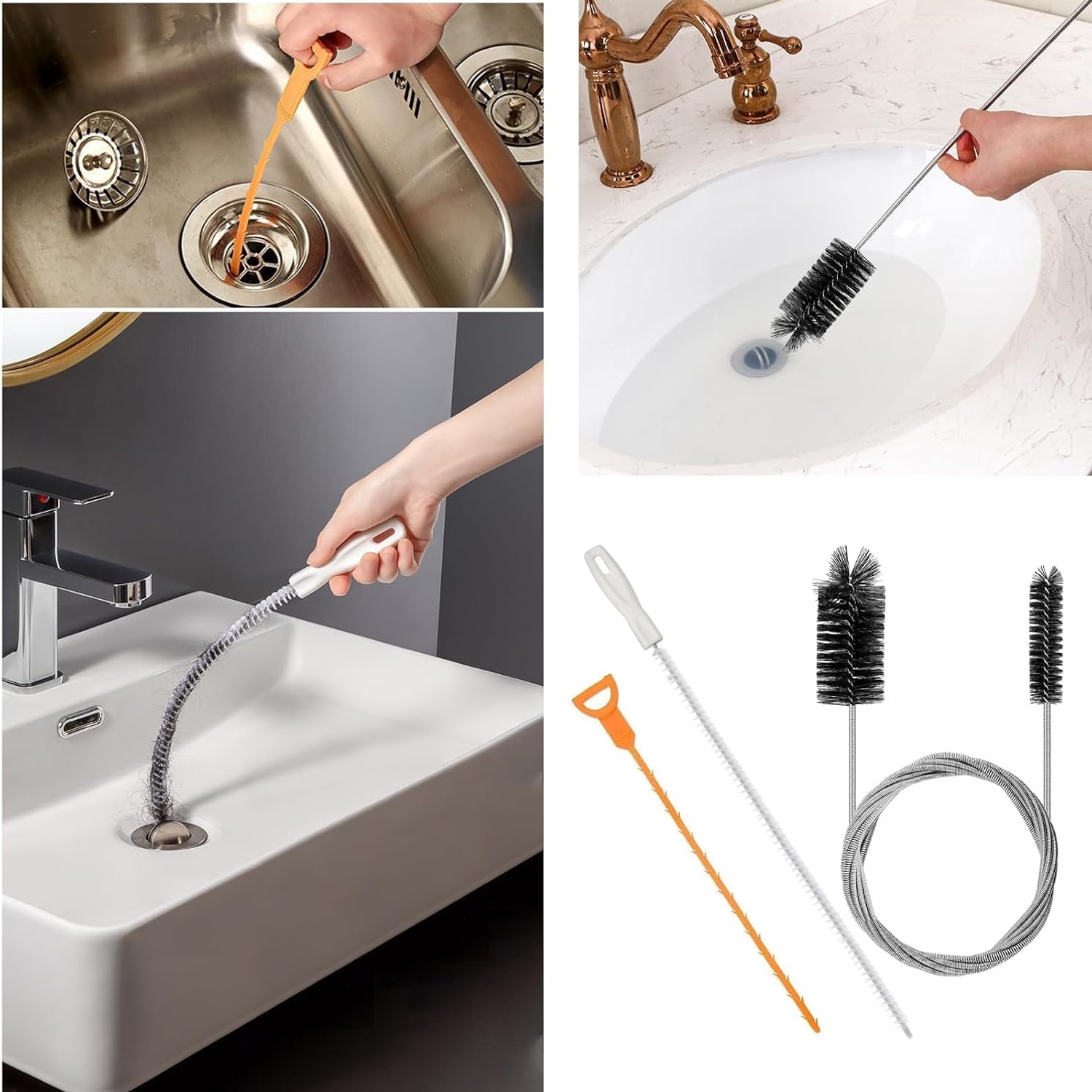
The second piece is a sink unblocker brush around 60cm long. This is the general household tool, sized for kitchen and bathroom sink drains, long enough to get past the trap, and stiff enough to scrape the pipe wall on the way back out.
The third is a shorter drain stick of about 50cm, aimed at shower trays, bathtubs and floor drains. These are the drains that fill with hair fastest, and the shorter length makes the tool easier to control when you are working through a grate.
Having all three means you stop trying to force the wrong tool into the wrong opening, which is how people bend wire and give up.
How the materials matter
The bristles are high density nylon filament. Nylon is the right choice here for two reasons. It keeps its stiffness when wet, which natural bristle does not, and it is springy enough to push outward against the pipe wall as you twist. That outward pressure is what actually scrapes residue off instead of sliding past it. Dense packing also means the brush grabs hair rather than letting it slip between strands.
The core is stainless steel wire, listed as 304 grade. Stainless matters because this tool lives in water. A plain steel core would rust at the first spot where the coating wore through, and rusty wire stains and eventually snaps. The 304 grade is the standard rust resistant choice for anything that stays damp.
Firmness is rated medium, which is the sensible middle. Too soft and the brush bends away from the gunk. Too stiff and it will not follow a bend, and you end up pushing against a fitting rather than going round it.
Handles are listed as plastic or metal depending on the piece. The practical point is that you have something to grip and twist with, which is the part of the technique that does the work.
The technique, step by step
Start by removing the drain cover or strainer if yours comes off. Clean the underside of it while it is out, because that is usually where the first layer of build up lives.
Feed the brush in slowly. When you feel resistance, do not push harder. Twist. Rotate the handle in one direction and keep rotating as you ease the brush a little deeper. This wraps hair around the bristles. Pushing straight ahead does the opposite, compacting the clog and moving it further down the pipe where it is harder to reach.
Once you feel the brush has gripped, draw it back out slowly and steadily. Expect something unpleasant. Have a bin bag or newspaper ready, because you do not want to drop a wad of drain hair into the clean sink you are standing at.
Repeat two or three times until the brush comes back clean. Then run hot water with a squirt of dish soap for thirty seconds to flush out whatever the bristles loosened but did not catch. That final flush makes a bigger difference than people expect.
For appliance lines, disconnect the hose first, lay it somewhere you do not mind getting wet, and work the long brush through from one end to the other. Have a bucket at the low end.
Who this suits, and who needs something else
This set is for routine maintenance and for the everyday hair and soap clogs that build up in bathrooms and kitchens. If you have long hair in the household, or you share a bathroom with several people, this is probably the single most useful cleaning tool you can own. Renters like it because it travels and it does not involve chemicals that might argue with old plumbing. Pet owners use it on fur that comes off in the bath.
It is also the obvious choice for appliance maintenance. The number of fridges with water pooling at the bottom because of a blocked drain hole is enormous, and almost all of them are a two minute fix with a thin flexible brush.
It is not a replacement for a plumber. If water is backing up into another fixture, if more than one drain in the house is slow at the same time, or if the blockage is somewhere beyond the trap, you have a main line issue and a brush will not touch it. A proper powered drain auger is a different class of tool for a different class of problem. Think of this set as prevention and light rescue.
Keeping the set in good shape
Cleaning the brushes is part of the job, not an optional extra. Pull the obvious debris off by hand, with gloves on if you would rather. Then run the bristles under hot water with detergent and work them between your fingers to release the grit and soap that is trapped at the base. Rinse again.
Let everything dry completely before it goes into a cupboard. Damp storage is how tools develop a smell, and it is the one thing that will shorten the life of the wire.
Store the long brush loosely coiled. A tight fold or a sharp crease puts a permanent kink in the wire, and from then on the brush will always want to bend at that point, which makes it awkward to feed into tubing. A wide loop hung on a hook is ideal.
Keep the set out of reach of children. The steel wire is thin and the ends are not toys.
Building it into a routine
The real value shows up when you stop treating this as an emergency tool. A quick pass through each bathroom drain once a month takes maybe ten minutes for the whole house, and you will almost never see a full blockage again. Kitchen sinks are worth doing at the same time, especially if you cook with a lot of oil.
Appliances are a once or twice a year job. Fridge drain hole, washing machine hose, dishwasher filter area, coffee machine lines. Put it on the same list as cleaning the oven and you will not forget.
The short version
Three brushes, three lengths, nylon bristles on stainless steel wire. The long 200cm one reaches into appliance tubing and narrow pipes. The two shorter sticks handle sinks, showers, baths and floor drains. You twist them in, catch the hair, and pull it out, with no chemicals involved at all.
Rinse them after use, dry them properly, store them without kinking the wire, and the same set will keep your drains moving for a long time. For a tool this cheap, the amount of hassle it saves is hard to beat.