
The complete guide
How To Choose And Use A Flexible Pipe Cleaning Brush
The problem nobody looks at
Drains fail slowly. You notice the sink takes a second longer to clear, then five seconds, then you are standing there watching water sit while you brush your teeth. By the time it is obvious, the inside of the pipe has been building up for months.
What is actually in there is rarely a dramatic object. It is a layer. Fat from washing-up water cools and sticks. Soap scum bonds to it. Hair and food particles catch on that surface and the gap narrows a little more each week. The same thing happens in a fridge condensate line, where dust and mould sludge build into a plug, and in aquarium hose, where a soft film of algae and bacteria coats the whole inside wall.
Liquid drain cleaner does not really fix this. It can melt a path through the middle and give you back some flow, but the layer on the pipe wall is largely still there and it starts closing in again straight away. The only thing that properly removes it is something physical travelling along the pipe with bristles touching the wall. That is the whole job of a long drain brush.
How a flexible pipe brush works
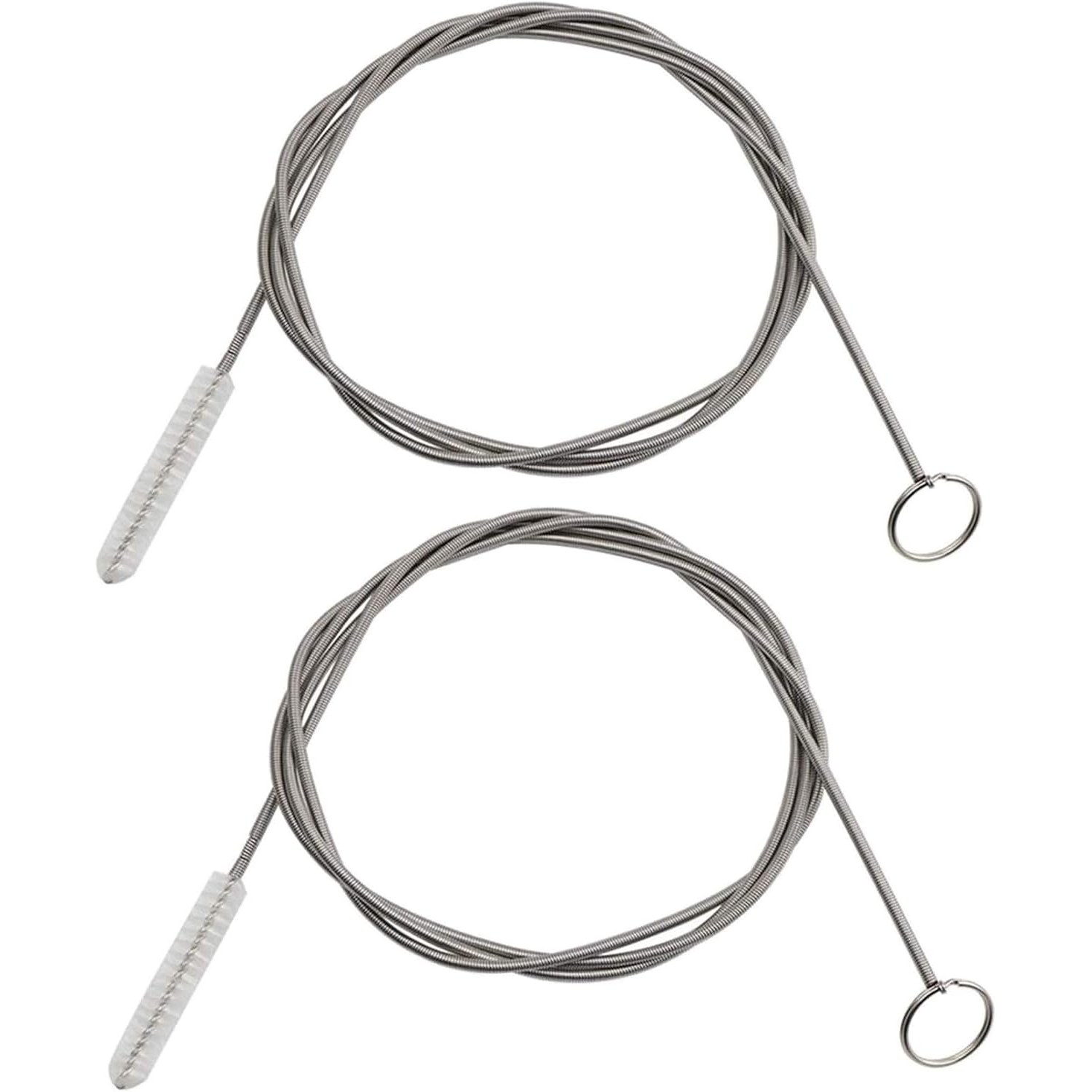
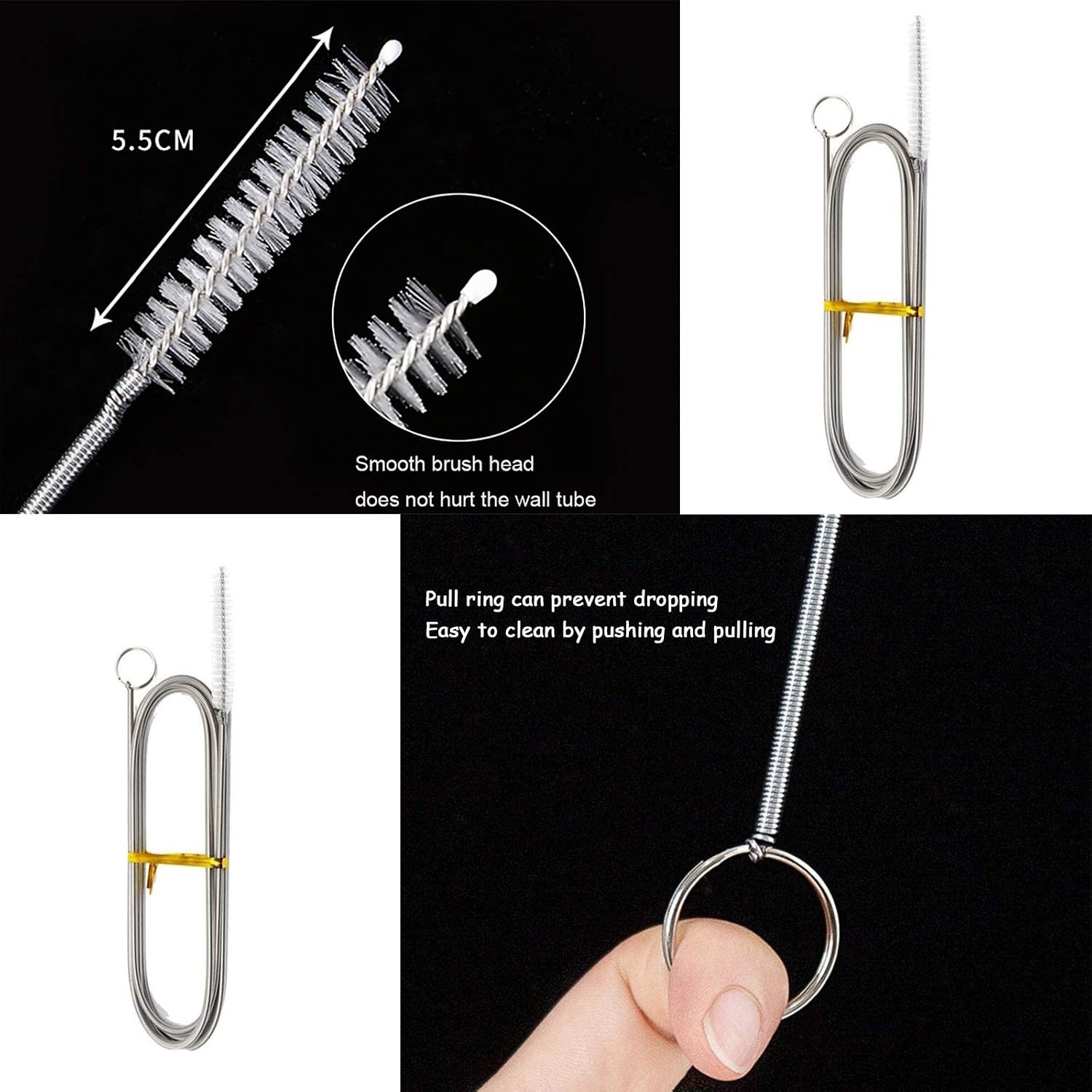
The design is simple and has not changed much because it does not need to. A long steel wire forms the stem. At one end, nylon bristles are twisted into the wire so they stand out all the way around, forming a cylinder of bristle. At the other end, the wire is bent into a loop.
The stem is the clever part. Stainless steel wire has a useful combination of properties. It is stiff enough along its length that when you push one end, the other end moves forward rather than folding up. It is also springy sideways, so when the brush head meets a bend, the stem flexes and follows the curve instead of jamming. This brush is rated for curves angled at less than 90 degrees, which covers the standard bend under a sink and most appliance drain lines.
The bristles are soft nylon. People sometimes see that and assume it means weak. It does not. Nylon is tough and it holds its shape when wet, and the scrubbing action comes from thousands of bristle tips dragging across the surface rather than from any one of them being hard. What soft nylon does avoid is scoring the tube. A scratched pipe wall has more surface area and more places for grime to grab, so an aggressive brush can actually make the next clog arrive faster.
The loop handle does two jobs. It gives you something to pull on, which matters when the brush is halfway down a drain and gripping. It also acts as a stop. A plain wire end can slide right into the pipe if your hand slips, and getting it back out is a miserable afternoon. The loop is wider than the opening, so the brush stays where you can reach it.
Who this suits
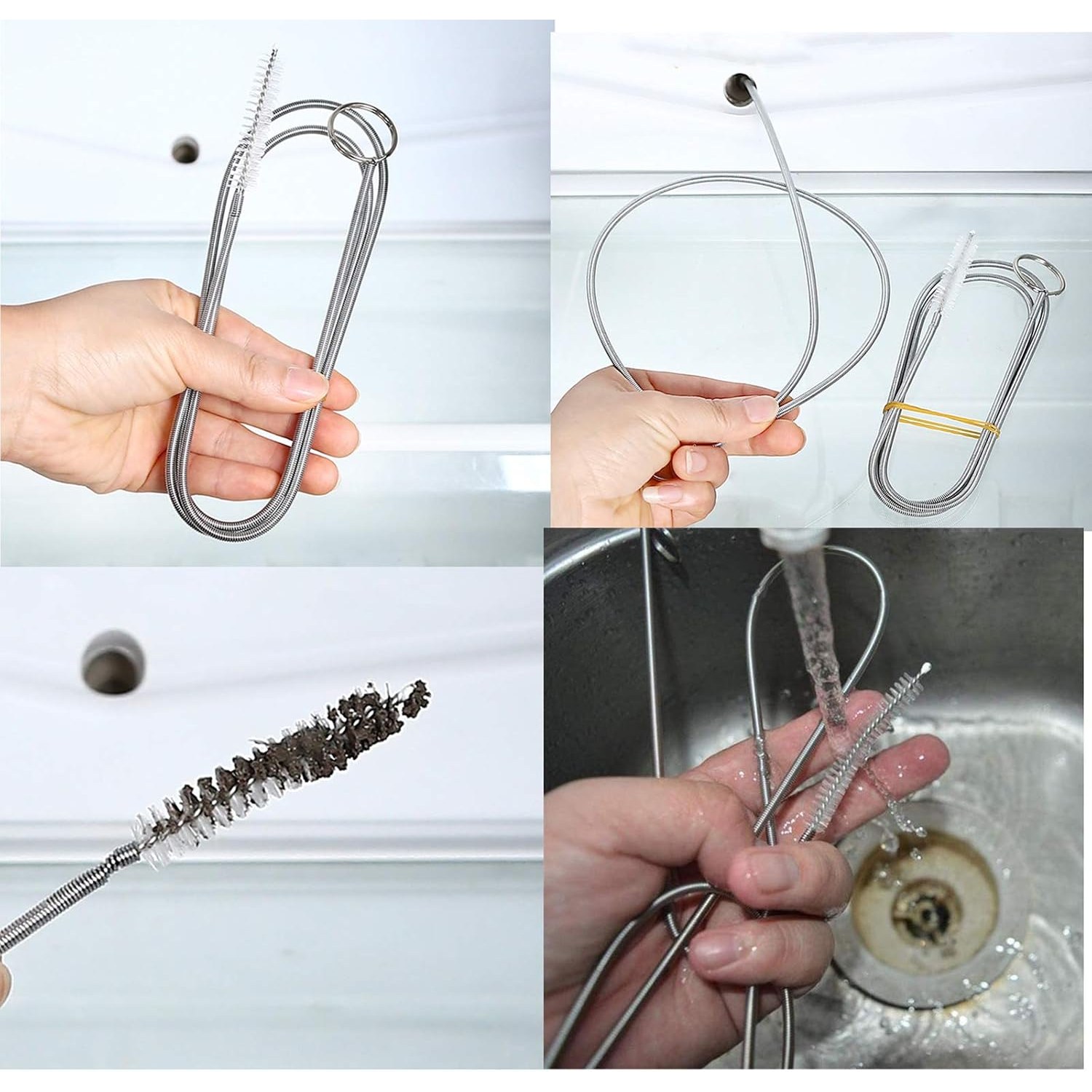
If you have a kitchen sink that smells faintly even after you clean it, this is for you. That smell is biofilm on the pipe wall just out of sight, and a brush gets it off.
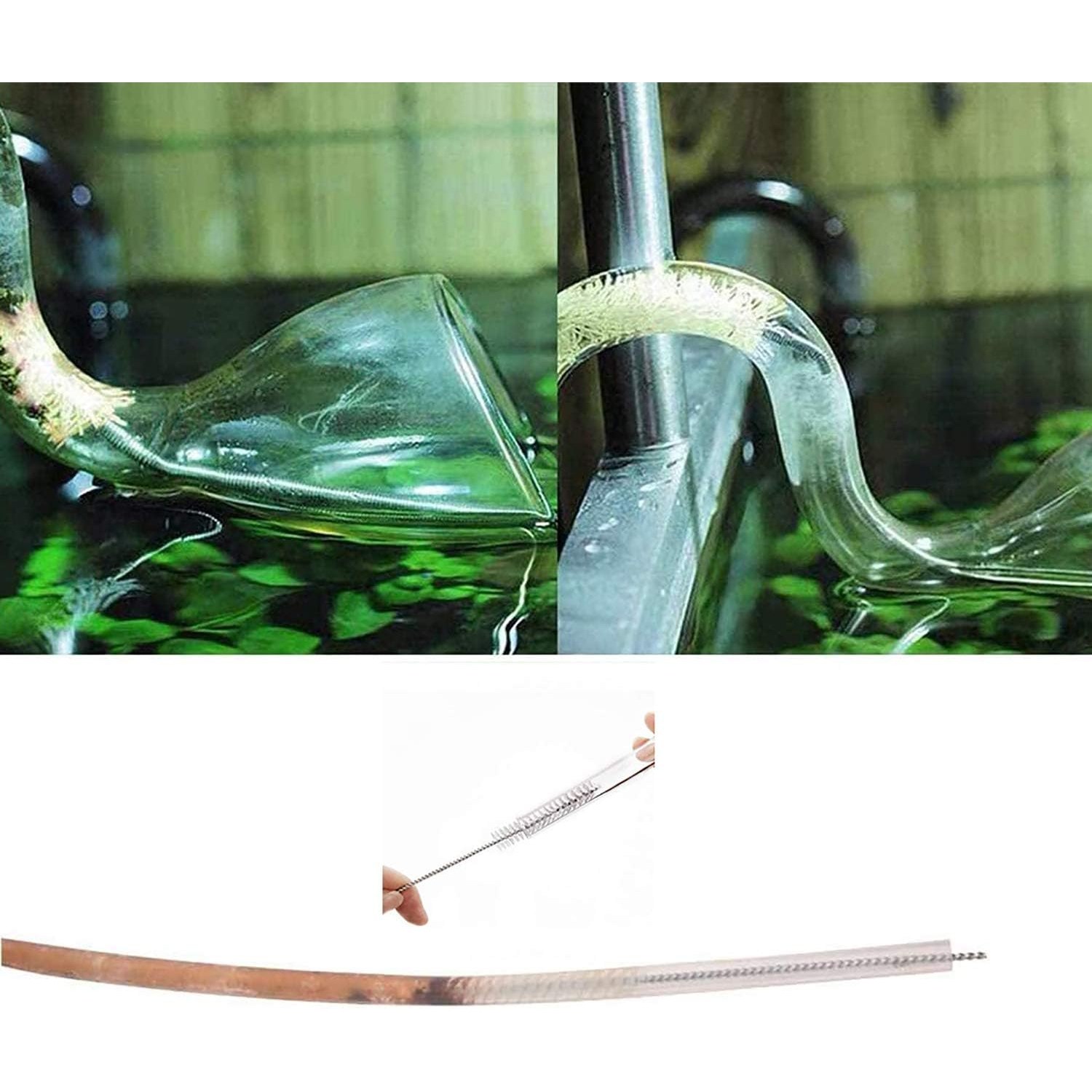
Aquarium keepers use these constantly. Filter pipework, airline and intake hose all grow a film that cuts flow and looks grim through glass. A long bendable brush with soft bristles is one of the few tools that fits.
Anyone who owns a fridge with a water dispenser or an internal drain hole will meet the sludge problem eventually. The symptom is water pooling in the bottom of the fridge or under the crisper drawer, and the cause is usually a small blocked tube that a narrow brush clears in a minute.
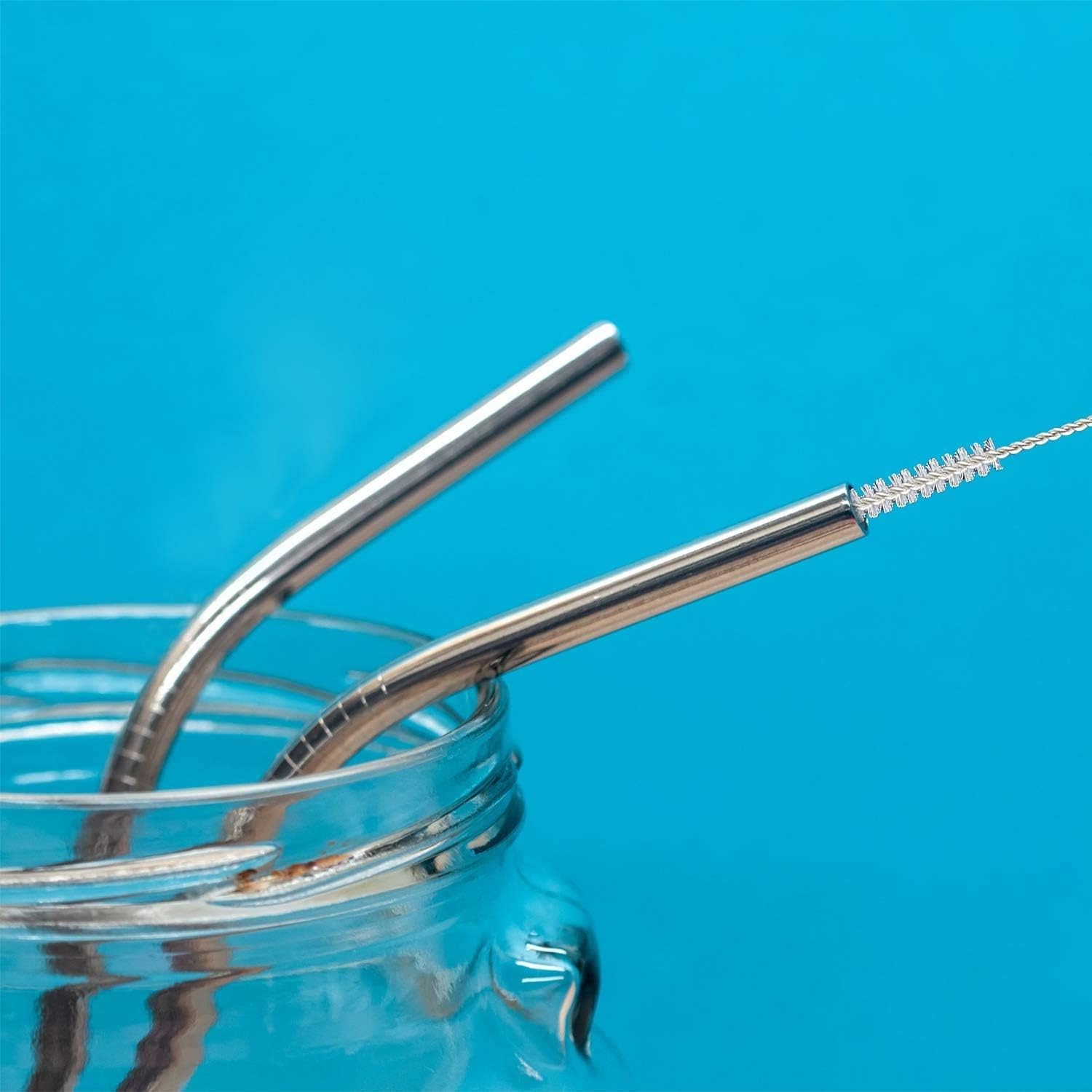
People with reusable straws, tall water bottles, coffee gear, pet drinkers and bird feeders all have the same issue on a smaller scale. Narrow, curved, hard to see into. The best tube cleaning brush for those jobs is almost always a long flexible one rather than a short rigid one.
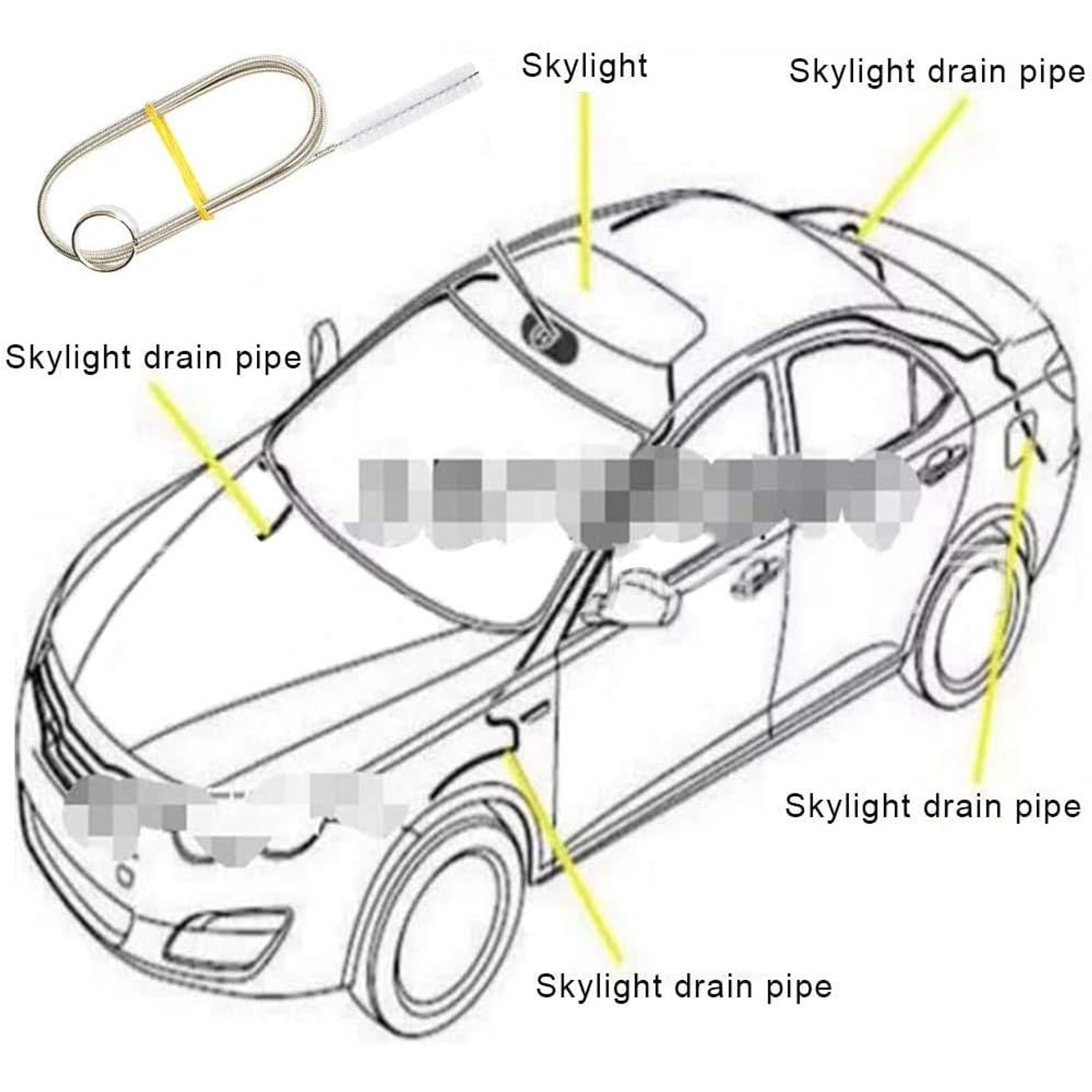
Mechanics and van owners use the same tool for sunroof and door drain channels. Those channels are long and curved and completely hidden, and a blocked one puts water where it should not be.
How to choose the right one
Three things matter and length is only one of them.
Start with length. 60 inches, around 150cm, is a lot of reach. It will get well past a kitchen trap and along the run behind it. If you only ever clean straws, that length is more than you need, but extra length does not hurt as long as you have somewhere to store the coil.
Then look at bristle head diameter against your pipe. This is where most people get it wrong. The bristles need to touch the pipe wall to scrub it. If the head is much narrower than the pipe, the brush just slides through the middle and achieves nothing. If the head is much wider, you will struggle to feed it in and risk bending the stem. Measure the inside opening of your narrowest target tube before you buy.
Then consider stem flexibility against the shape of your run. A rigid rod is fine for a straight tube and useless for anything that turns. A wire stem that bends is what you want for real plumbing, because almost nothing in a house runs straight for long.
Bristle firmness comes last and depends on surface. Soft nylon is the right call for plastic, vinyl, rubber and glass, which covers aquarium gear, appliance lines, straws and bottles. Hard bristles belong on metal pipe and baked-on deposits, and they are the wrong tool for most domestic jobs.
Getting a good result
Technique makes more difference than people expect.
Feed the bristle end in first, always. Pushing the loop end in defeats the point and makes retrieval awkward.
Go in slowly. If you hit resistance, do not lean into it. Pull back a few centimetres and push again with a slight twist. The stem will usually find the line of the bend on the second or third try.
Do the scrubbing on the way out, not the way in. Short back-and-forth strokes while gradually withdrawing drag the loosened material toward you instead of packing it deeper into the pipe.
Flush with hot water afterwards. Not boiling, especially on plastic waste pipe, but hot tap water running for thirty seconds carries away whatever the brush broke loose.
Then clean the brush. Warm water, a little dish soap, work it through the bristles with your fingers, rinse, and stand it up to dry. A brush left damp in a cupboard starts to smell, and then you are reluctant to use it, and then the drain gets bad again.
Looking after it
Store it coiled loosely rather than folded tight. Sharp folds put a permanent kink in the wire, and a kinked stem catches on the inside of pipes.
Keep the two brushes for different purposes if you can. Food-contact items like straws and bottles deserve their own brush, separate from the one that goes down drains. Having two in the pack makes that easy rather than a hassle.
Replace it when the bristles splay outward and no longer form a tight cylinder, or when the stem has a bend you cannot straighten. A tired brush slides past grime instead of lifting it.
A sensible routine
Prevention is less work than rescue. Running the brush through your main kitchen drain every month or two keeps the film from establishing. It takes about two minutes. Compare that to the evening you spend with a bucket and a wrench taking the trap apart.
For aquariums, fit it into your normal maintenance cycle. For fridge drain lines, once or twice a year is usually enough unless you see water collecting. For straws and bottles, after every few uses, or whenever you can see cloudiness inside.
The short version
A flexible pipe cleaning brush is a long stainless steel wire with soft nylon bristles on one end and a loop on the other. This pack gives you two of them, each with 60 inches of reach, able to follow bends under 90 degrees.
It suits sink drains, fridge condensate lines, aquarium hose and filter pipe, water pump fittings, bottles, straws, feeders and glass tubes. The soft bristles clean without scoring plastic or glass, the wire stem goes where a rigid rod cannot, and the loop keeps the brush in your hand instead of down the pipe.
Measure your narrowest pipe before you order, feed the bristle end in first, scrub on the way out, and rinse the brush when you finish. That is genuinely all there is to it.