
The complete guide
How To Choose And Fit A Downpipe Leaf Guard
The problem nobody notices until it rains hard
Gutters get blamed for a lot of water damage they did not cause. Nine times out of ten the gutter itself is fine. The trouble starts at the outlet, the hole where the gutter feeds into the downpipe. That hole is narrow, and it only takes a clump of wet leaves, a few gum nuts or a wad of roof moss to seal it shut.
Once it seals, water has nowhere to go. It fills the gutter, sits there, then spills over the front edge in a sheet. On a still day that just makes a muddy strip in the garden. In a real downpour it runs down the fascia, soaks the eaves, and pools against the base of the wall. Repeated often enough, that is how rot and damp get started.
The other half of the problem happens inside the pipe. Debris that gets past the outlet travels down until it hits a bend and stops there. You cannot see it, you cannot reach it, and clearing it means either a plumber's snake or taking the pipe apart.
A downpipe leaf guard tackles both versions of the problem by refusing to let the debris in at all.
How these strainers actually work
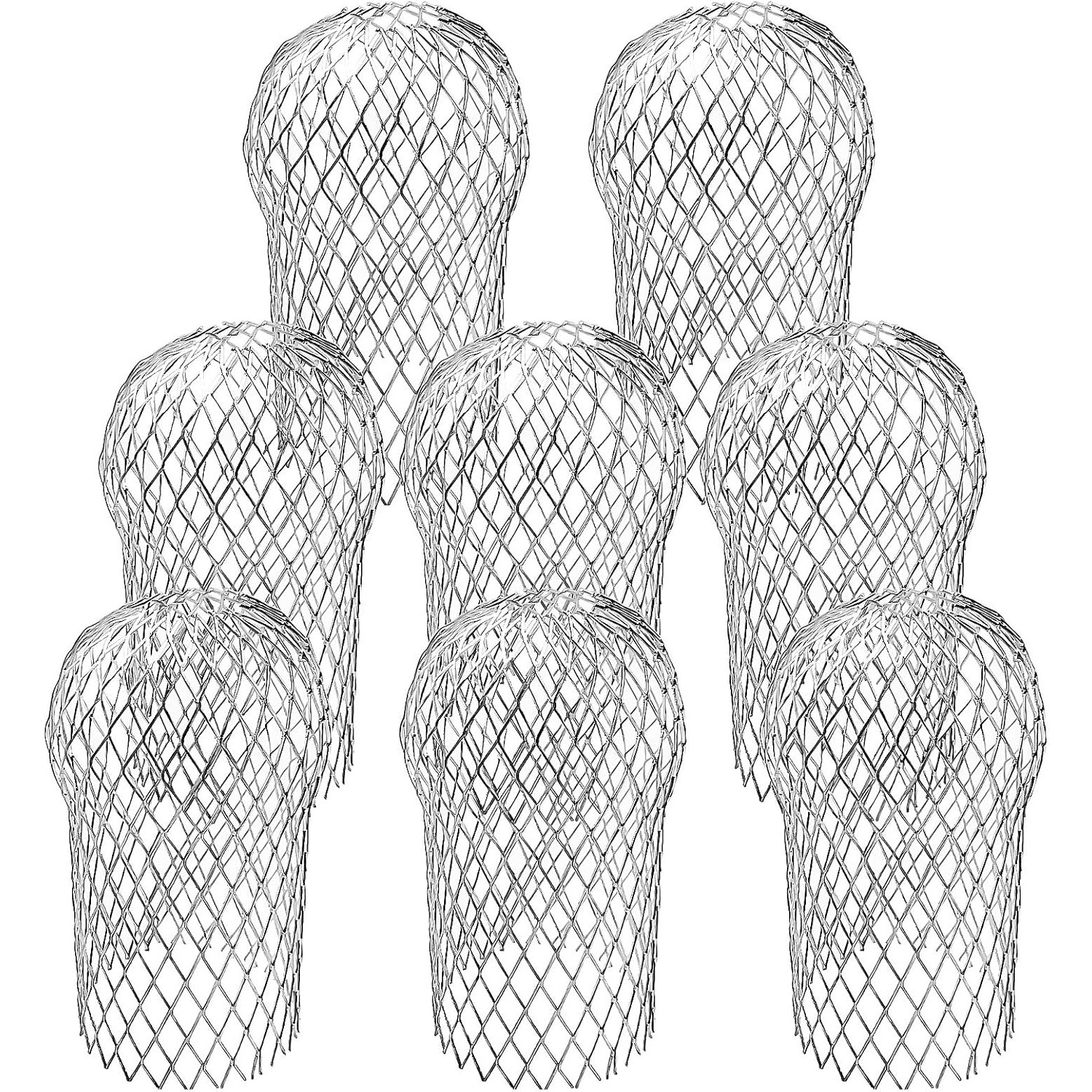
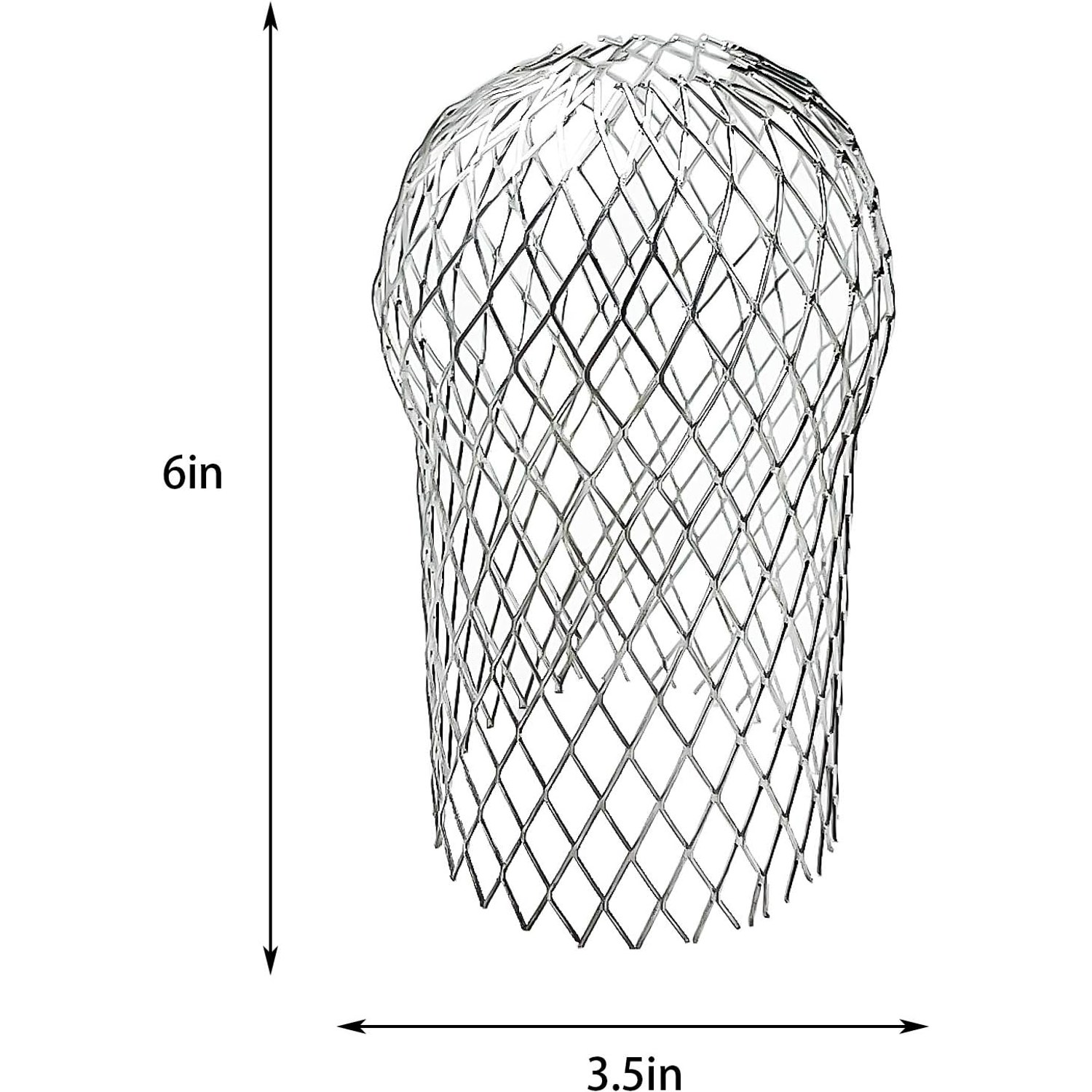
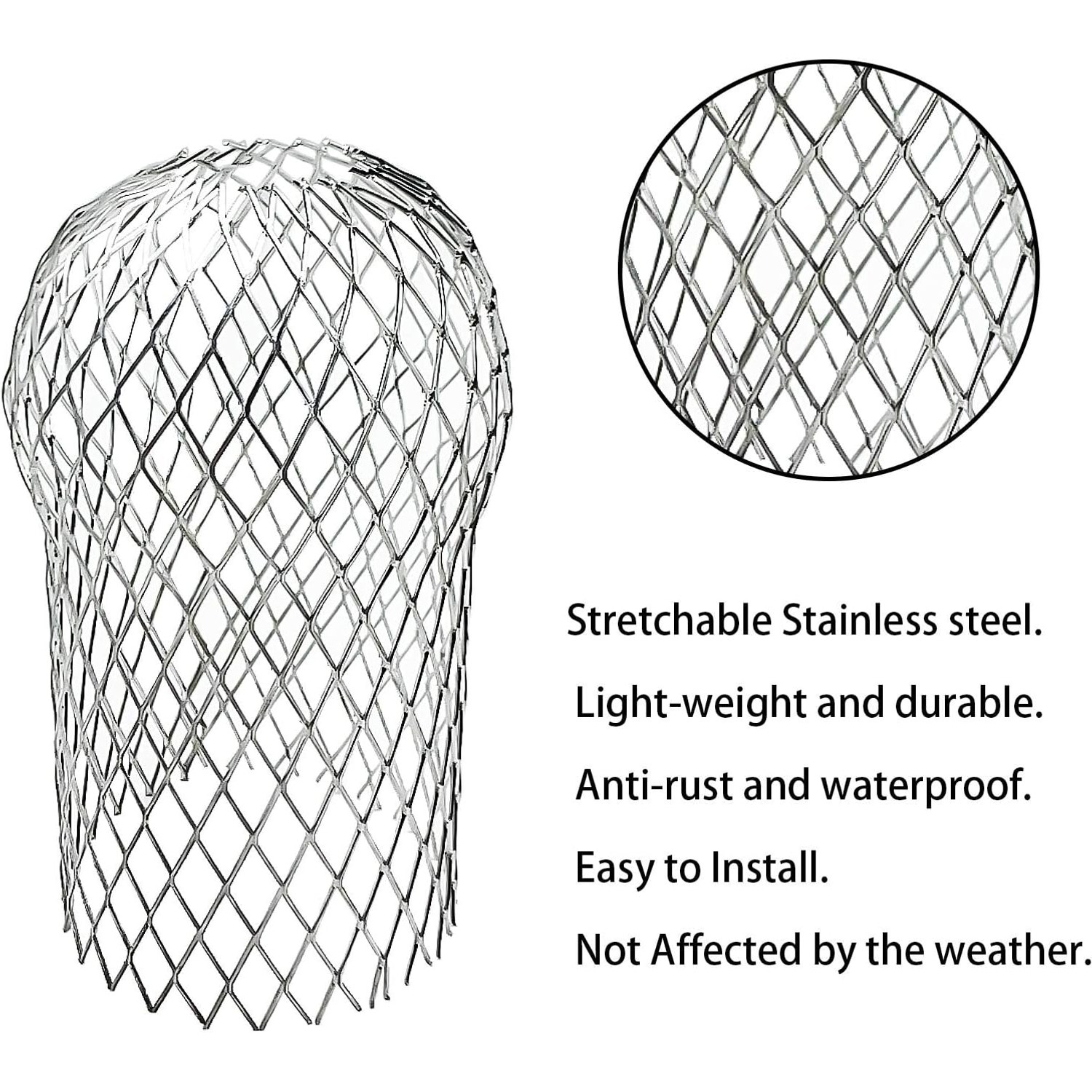
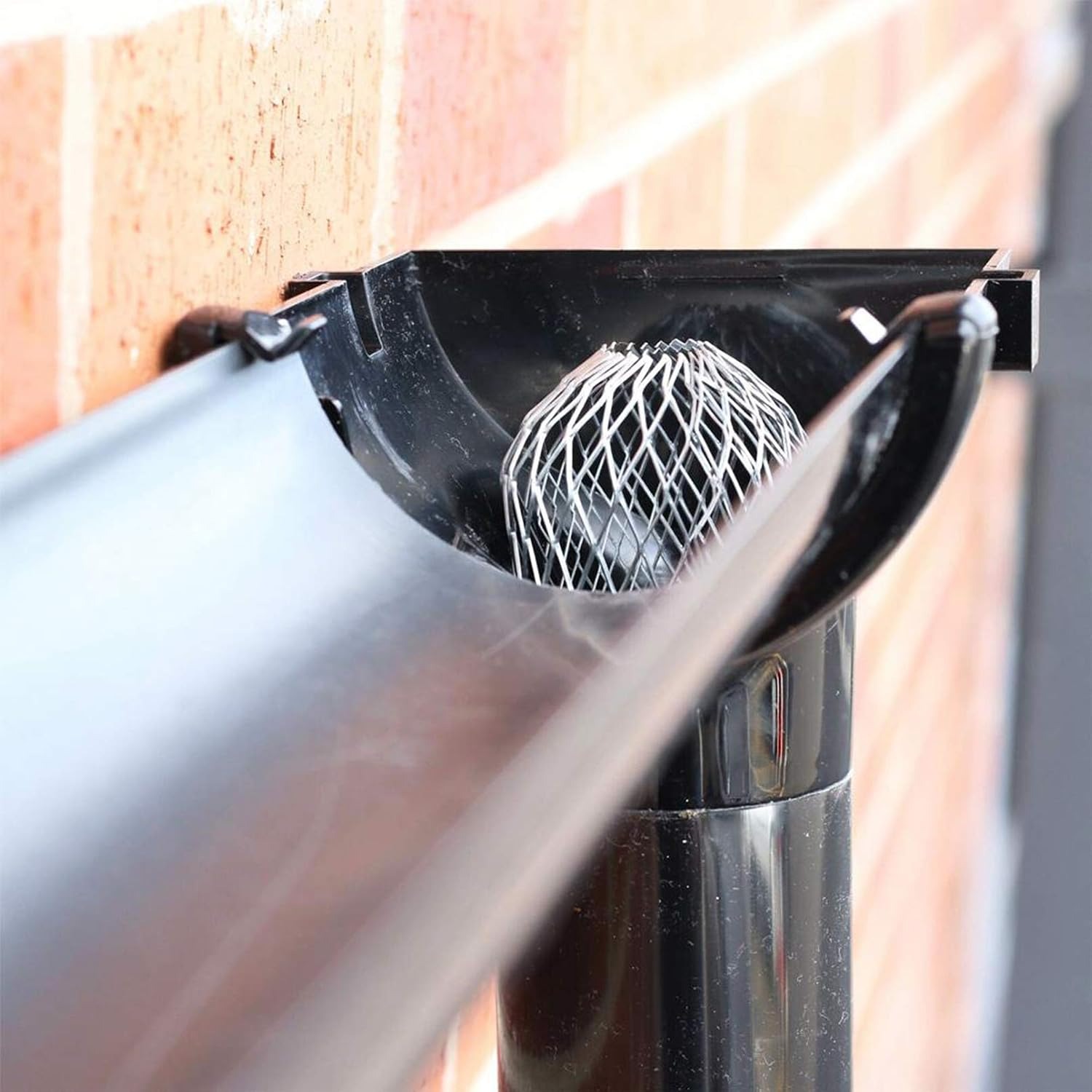
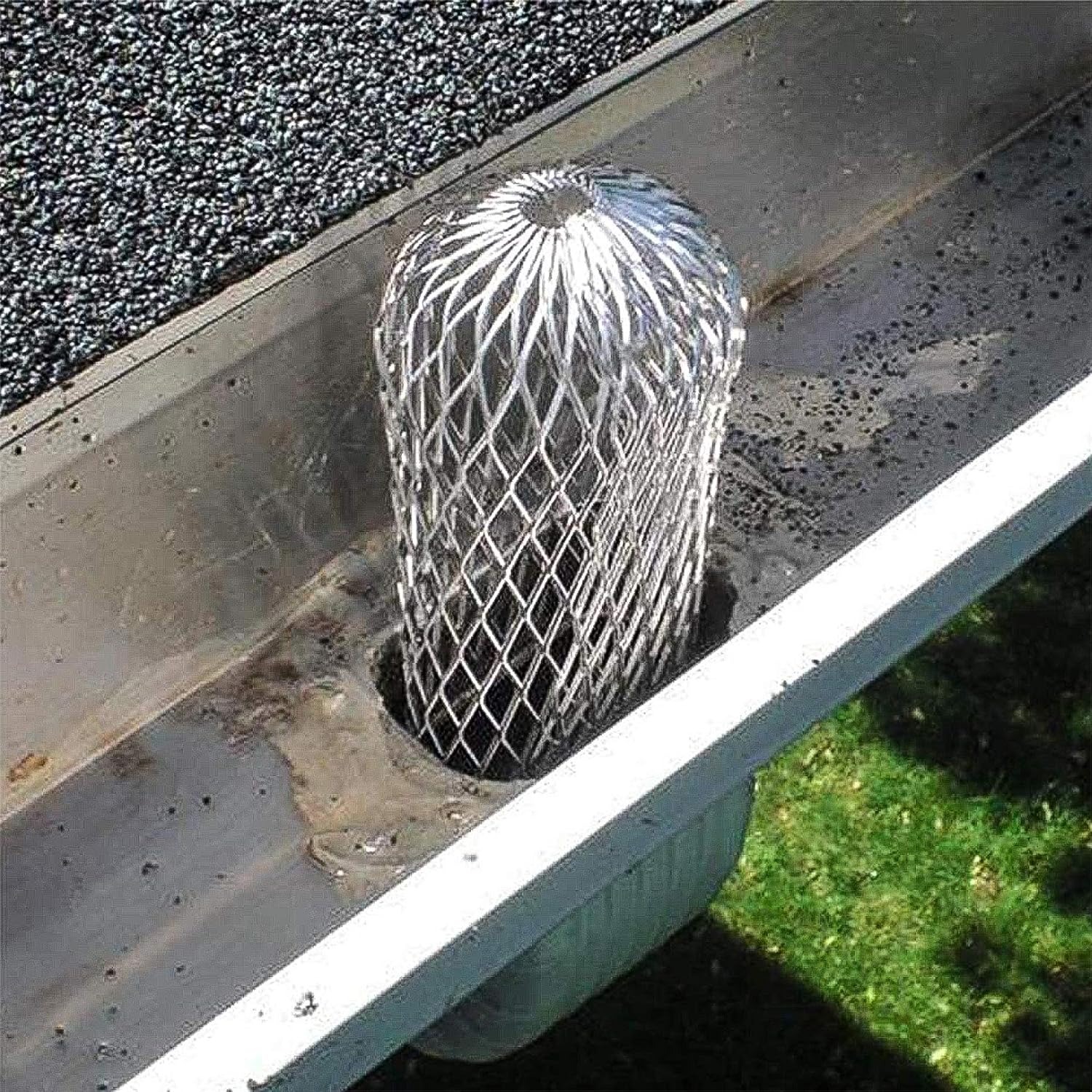
Each guard in this pack is a cylinder of brushed aluminium mesh, 8.9 cm wide and 15.2 cm tall. You shape it slightly narrower than the outlet hole, drop it in, and push until it seats. Part of the cylinder sits below the hole and part stands proud above the gutter floor.
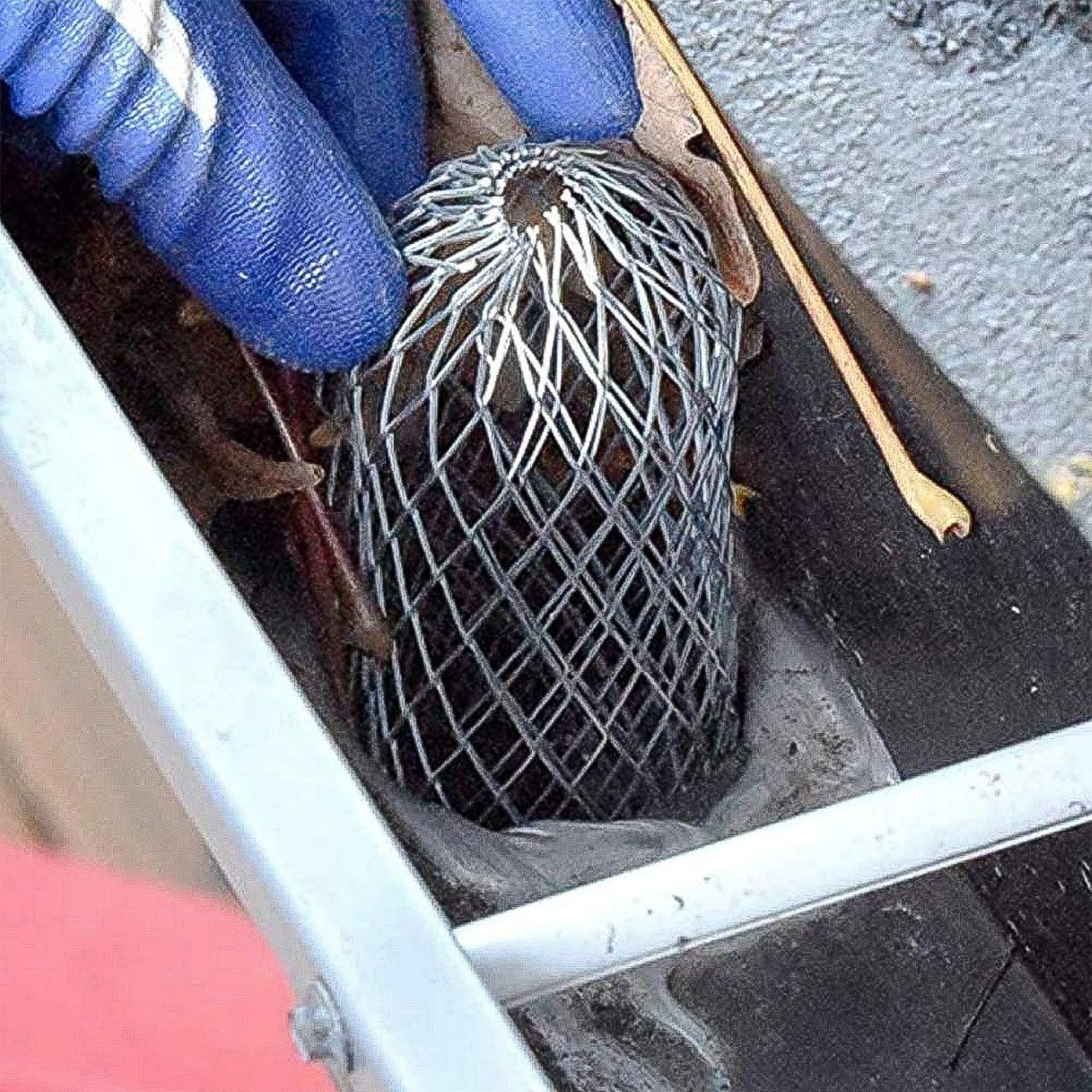
Rain hits the roof, runs into the gutter, and flows toward the outlet as usual. When it reaches the strainer it passes through the mesh openings and carries on down the pipe. Leaves, twigs, grit and bits of roof moss are too big to follow. They collect against the outside of the mesh and stay in the gutter.
That last part is the whole point. The debris is still there, but now it is in a place you can see from a ladder and remove with a gloved hand. No disassembly, no guessing where the blockage sits.
There is a side benefit too. Narrowing the outlet opening makes it much less inviting for birds, insects and small animals looking for a dry pipe to explore.
Why aluminium
Material choice matters more than it sounds for something sitting in standing water half the year.
Plain steel mesh rusts, and rusty mesh sheds flakes into the very pipe you were protecting. Plastic strainers go brittle after a couple of summers of direct sun and crack when you flex them. Aluminium avoids both failure modes. It resists corrosion, it shrugs off UV, and it stays flexible enough to reshape years later.
It is also light. That sounds minor until you are balanced on a ladder with a bucket of eight guards and a pair of gloves. A brushed finish keeps the look tidy, though honestly once these are installed you will not see them from the ground.
Who these suit
If you have mature trees anywhere near the roofline, this is an easy decision. Eucalypts, jacarandas, oaks and anything that drops needles all produce exactly the sort of fine, stringy debris that forms a dense plug at an outlet.
They also make sense on properties where getting to the gutters is awkward. A two-storey house, a steep block, a roof with limited ladder access, anywhere that makes maintenance a production. Shifting the problem from inside the pipe to inside the gutter cuts the difficulty of each clean considerably.
People running rainwater tanks get an extra benefit. Less organic matter reaching the tank means your first-flush diverter and inlet screen have less work to do, and the water sitting in the tank stays cleaner. Think of an outlet strainer as the first stage of filtering rather than the only one.
Finally, there is the sheds and carports case. These outlets are the ones nobody inspects. With eight guards in a pack, you can cover the house and still have spares for the structures out the back.
Measuring before you buy
Take two minutes with a tape measure before ordering anything.
Climb up and measure the diameter of the outlet hole in the gutter floor, not the outside of the downpipe. Those two numbers differ. The listed compatible groove diameter for these guards is 5 cm, and each strainer is 8.9 cm wide before you shape it, so there is a useful amount of room to work with.
If your outlet is square, measure across the opening. The mesh can be folded into a rounded square shape that grips the sides well enough to stay put. The thing you are trying to avoid is a guard that slips straight through, which is a nuisance to retrieve.
Count your outlets while you are up there. Most houses have four or five. Knowing the number tells you whether eight is plenty or whether you need a second pack.
Fitting them without cutting your hands
Wear gloves. Cut mesh is sharp, and this is the single most common complaint with any wire strainer. A basic pair of garden gloves is enough.
Start by separating the guards. They arrive stacked tightly, so work them apart one at a time on a bench rather than at the top of a ladder.
Clear the gutter first. Fitting a guard over an outlet that is already half blocked just hides the problem. Scoop out the leaves, flush with a hose, and make sure water is draining freely.
Then shape the first guard. Roll the mesh so the diameter sits just under the outlet size, hold it, and press it down into the hole. The spring in the metal will push outward and hold it. Give it a gentle tug upward to check it does not lift out too easily.
Do one, then go back down and look at it from the ground before committing to the other seven. If the fit is good, repeat.
Keeping them working
The maintenance routine is simple and quick.
Twice a year, lift each strainer out, shake it over a bucket, and rinse it with a hose. Reshape it by hand if it has been flattened. Put it back and move on. Two or three minutes per outlet.
Schedule one of those cleans for late autumn, after the main leaf drop has finished. Schedule the other before your wettest season. In areas with heavy leaf fall you may want a third check somewhere in between.
Watch for the warning sign. If you see water spilling over the front edge of the gutter during rain, a strainer has filled up. That overflow is actually doing you a favour by making a hidden problem visible. Clear the mesh and flow returns immediately.
Check them after storms too. A falling branch can crush a guard or knock it loose, and it takes seconds to press one back into place.
The short version
Downpipe blockages are nearly always caused by debris slipping through the gutter outlet and lodging somewhere you cannot reach. Putting a mesh strainer at that outlet stops the debris at the one point where it is still easy to remove.
This pack gives you eight aluminium guards, each 8.9 cm by 15.2 cm, that bend by hand to suit your outlets and push in without tools. Aluminium handles weather better than steel or plastic for this job, and eight is enough for most homes with a few left over.
Measure your outlet, wear gloves, clear the gutter first, and give yourself an afternoon. After that, gutter maintenance becomes a shake-and-rinse job instead of a plumbing call.