
The complete guide
How To Choose A Plunger That Actually Works (And Fits In The Cupboard)
The problem with most plungers
Almost everyone owns a plunger they do not like. It is too long to fit anywhere sensible, so it lives behind the toilet leaning at an angle, or it is shoved under the sink where it falls over every time you open the door. Then, on the day it matters, it turns out the cup does not seal properly on the toilet outlet and you spend ten minutes splashing water around the bowl without shifting anything.
Both of those problems come from the same place. Plungers are usually sold as one fixed shape, and that single shape has to do two jobs that pull in opposite directions. A long handle is better to use. A short one is better to store. A flanged cup seals a toilet. A flat cup seals a sink. Picking one means losing the other.
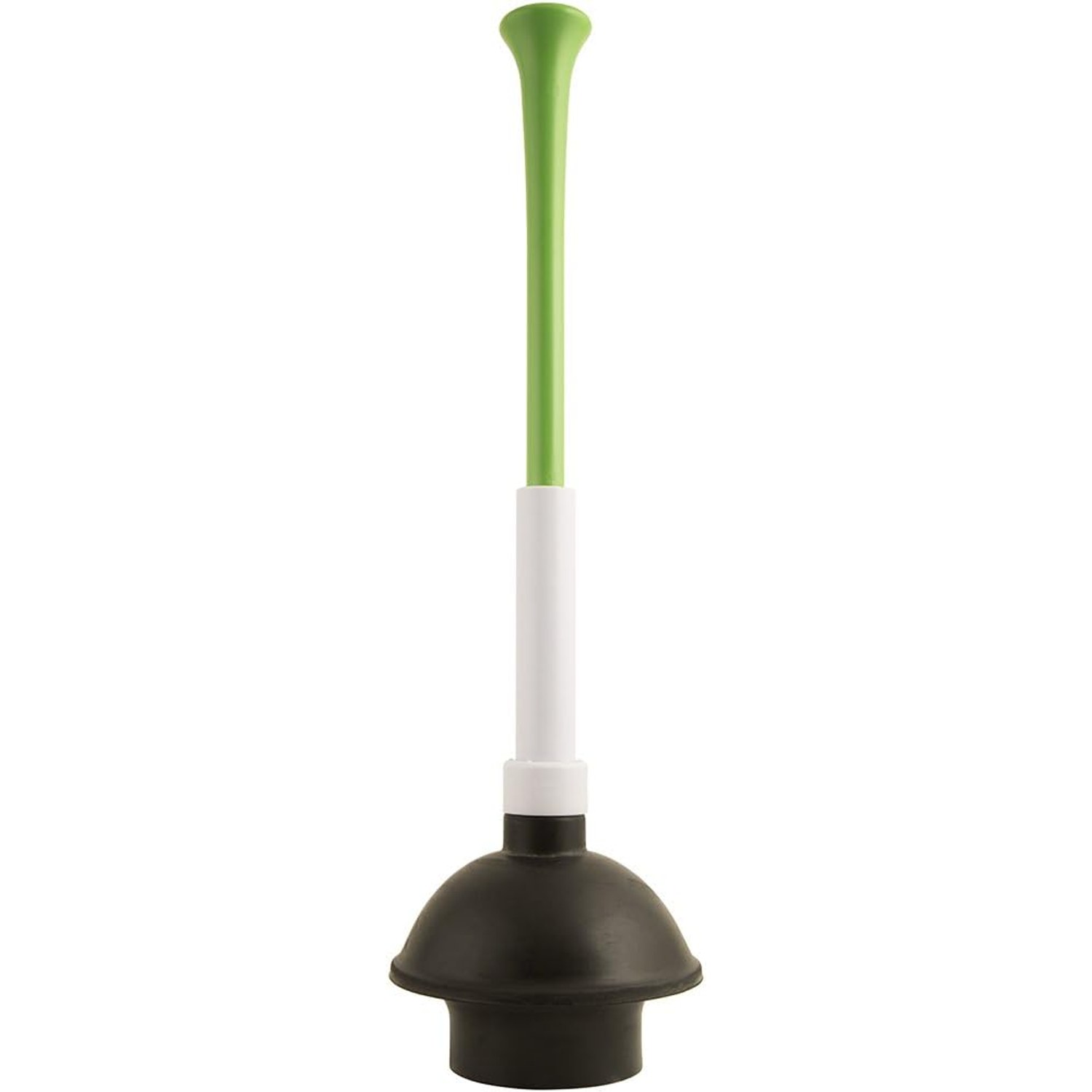
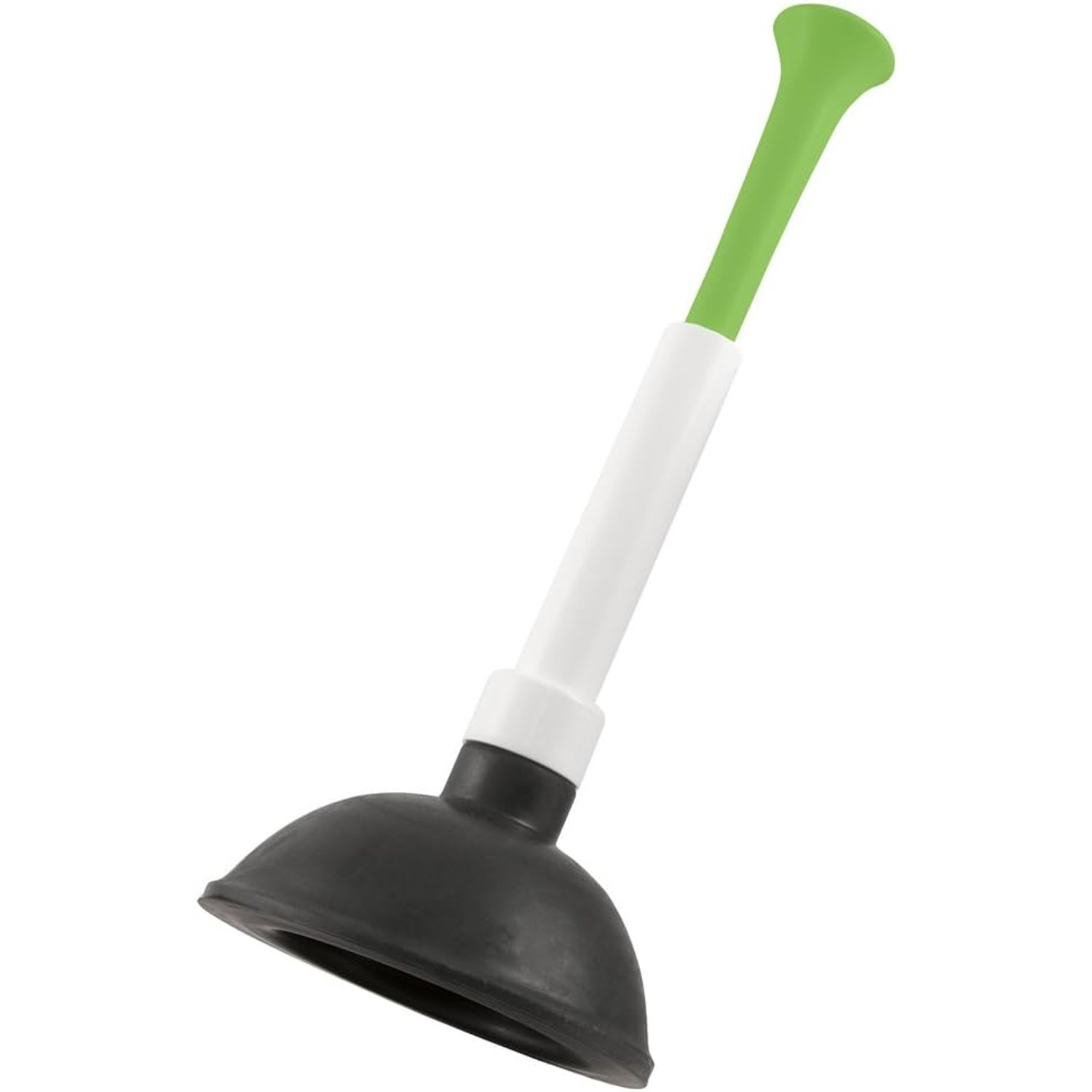
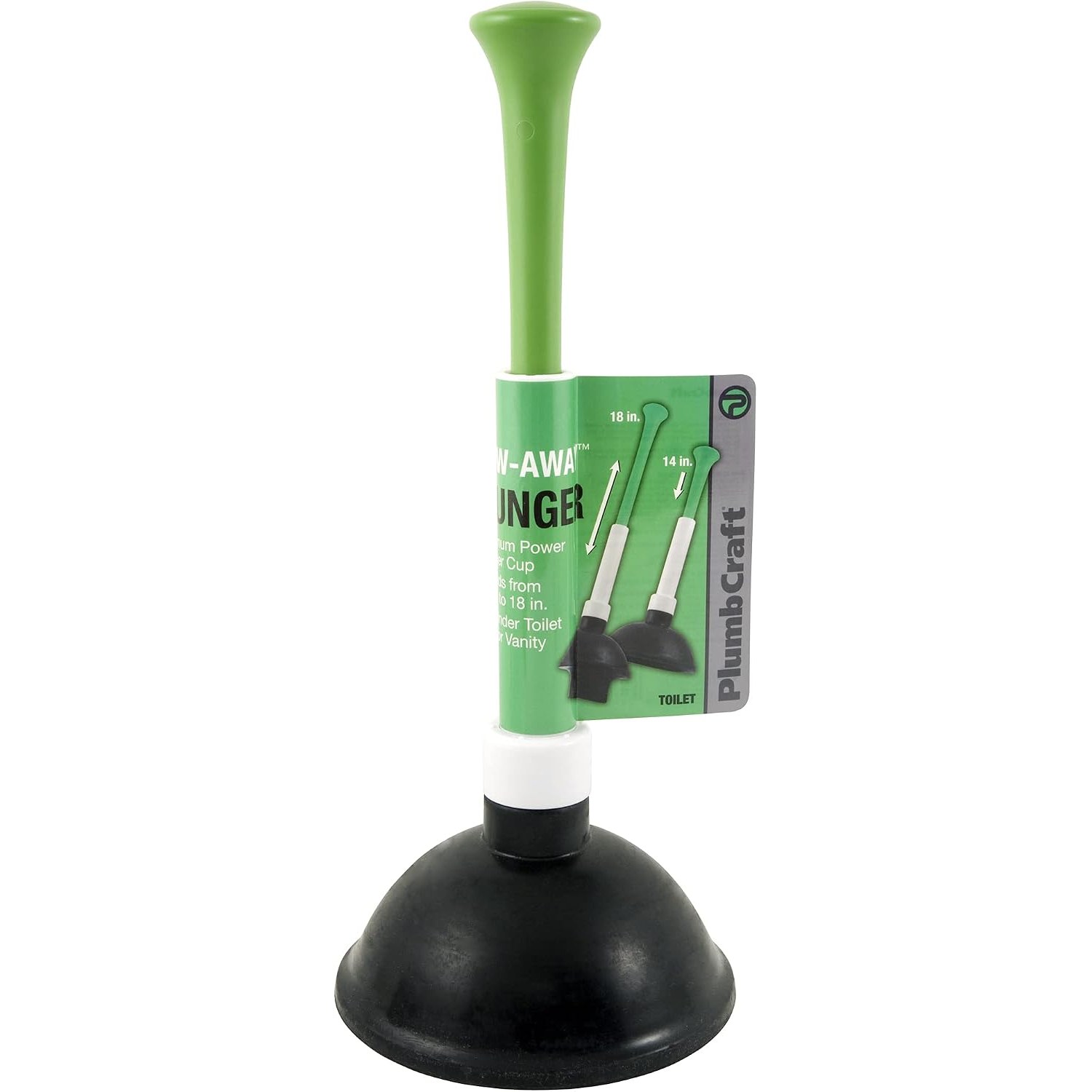
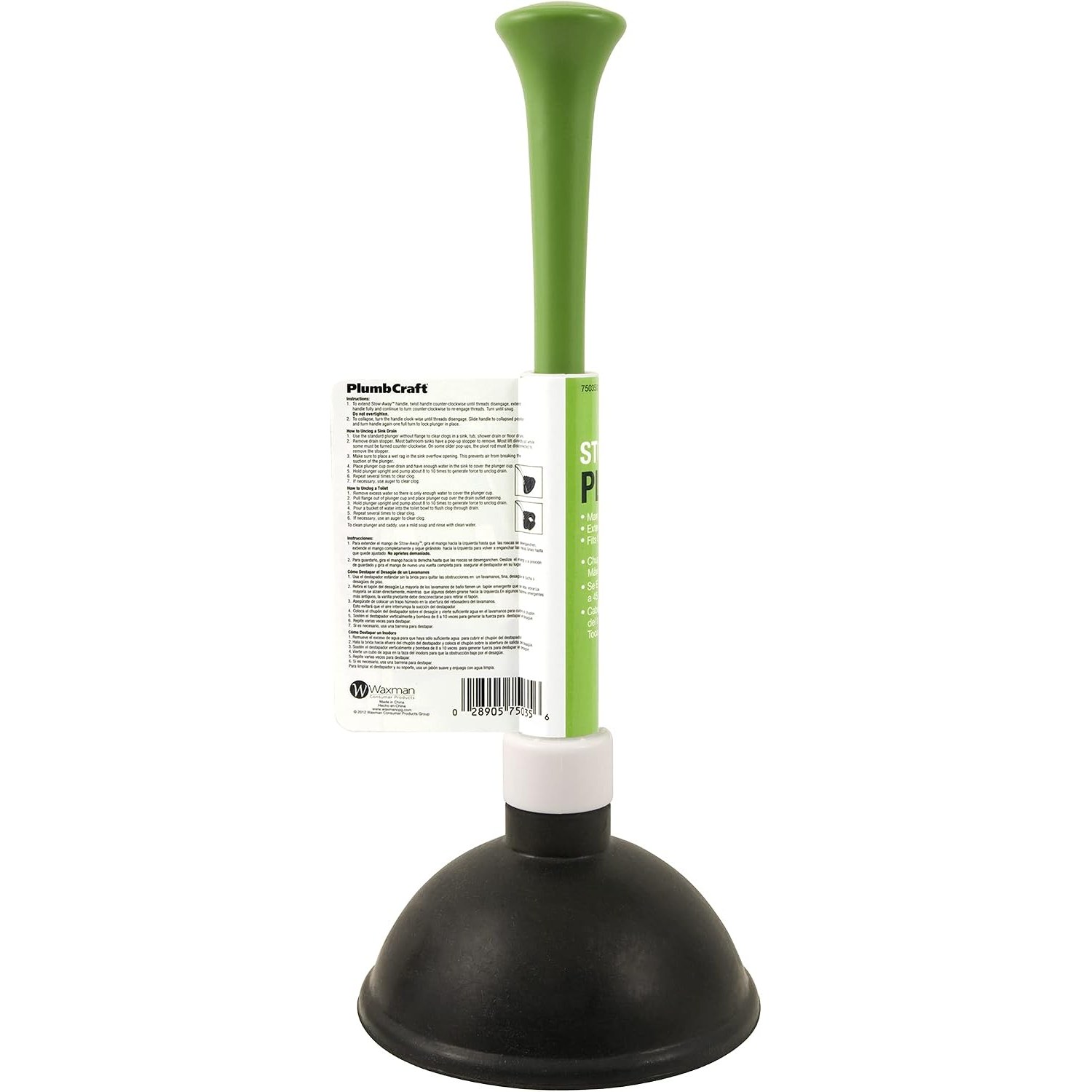
The Stow-Away design handles it by making both parts adjustable. The handle twists longer or shorter. The flange folds out or tucks in. You set it up for the job in front of you, then set it back down for storage.
How it actually works
There are two moving parts worth understanding.
The first is the telescoping handle. Twisting it one way extends the length, twisting the other way brings it back in. Once you have the length you want, you tighten the joint and it holds. Longer settings are for using it, when you want to stand up straight with your face and hands well clear of the bowl. Shorter settings are for storing it under a vanity or in a corner.
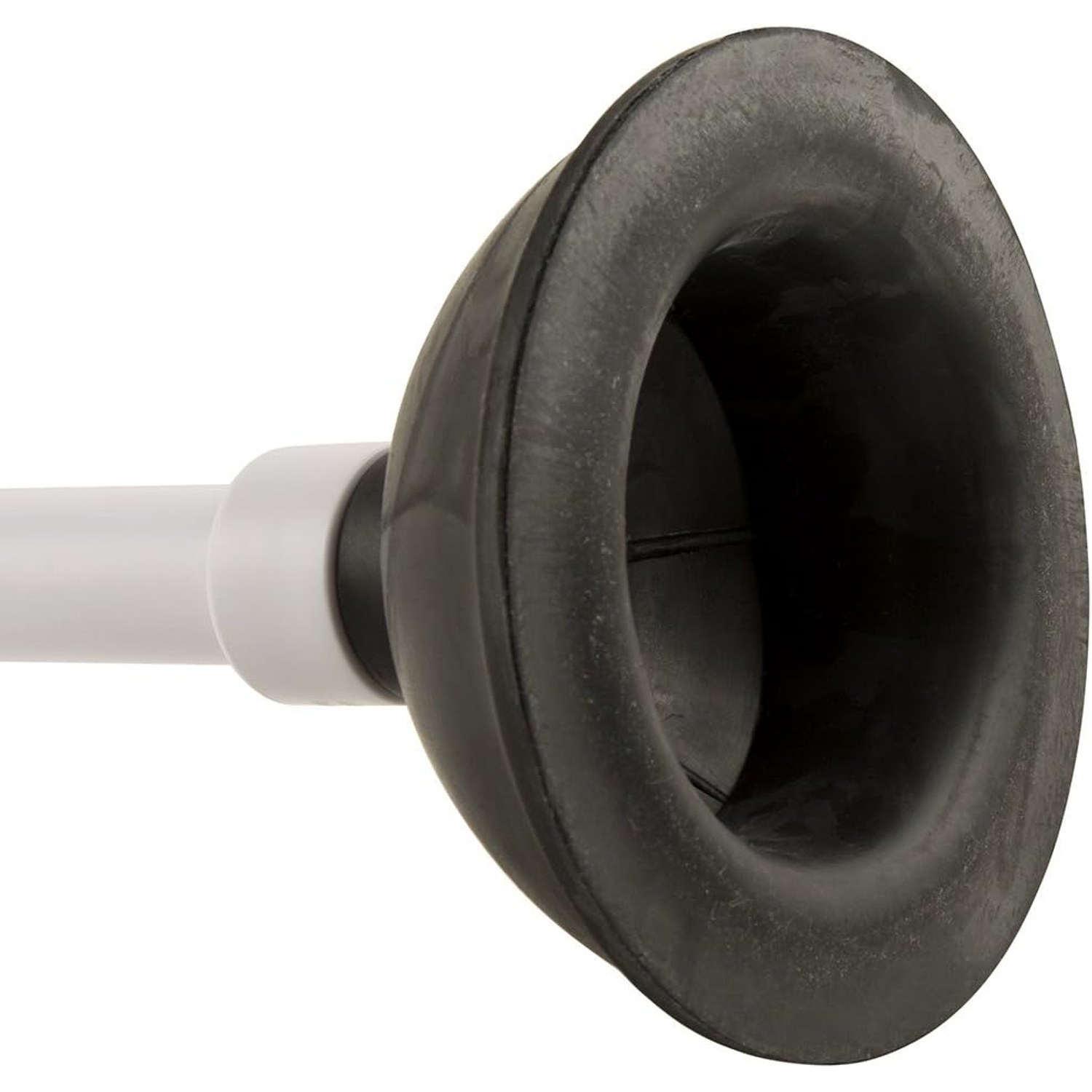
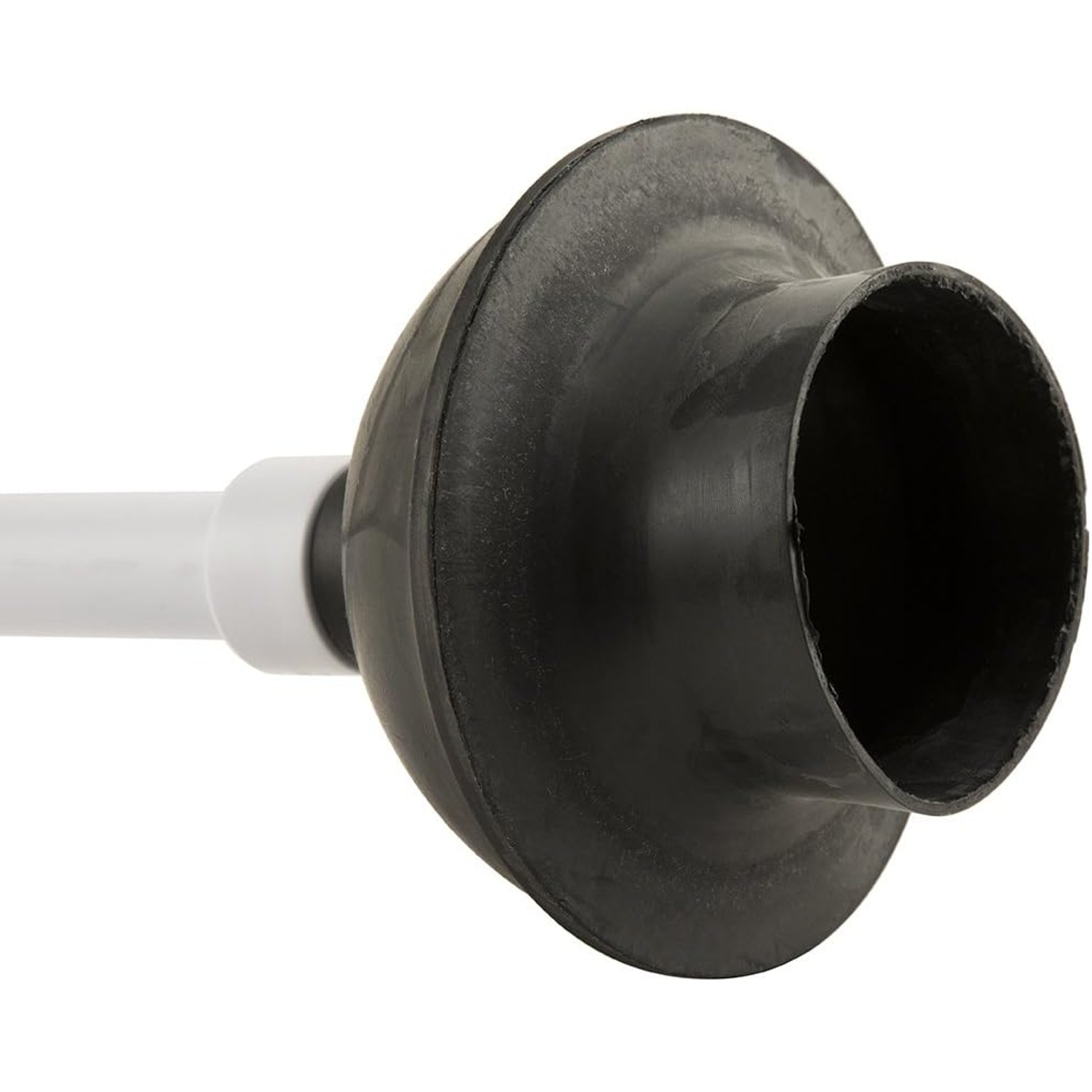
The second is the flange. That is the narrower rubber lip tucked inside the main cup. A toilet does not have a flat drain, it has a curved outlet at the bottom of the bowl, and a flat rubber cup can never get a proper grip on that shape. The flange drops down into the outlet and fills it, which is what gives you the airtight seal. Fold the flange back up inside the cup and the face goes flat again, which is exactly what a sink or a shower drain needs.
The physics behind plunging is simple enough. Water does not compress. When you have a sealed cup full of water and you push down, that force has to go somewhere, and the only place it can go is into the pipe and against the blockage. If air is in the cup instead of water, the air compresses and absorbs the push, and nothing happens. Getting a seal and keeping the cup submerged is most of the skill.
Who this suits
This one makes sense for a few groups of people.
If you live in a flat or a small house with one bathroom and a tight cupboard, the folding size is the selling point. A compact bathroom plunger that shrinks down is much easier to live with than a full-size fixed model that you have to prop somewhere.
If you have more than one bathroom, a lightweight plunger at 454 g is easy enough to carry between them, though a lot of households buy two so they never have to walk a used plunger through the hallway.
If you rent, it is the kind of basic you want on hand before a problem turns into a call to the agent. And if you are kitting out a first home, a plunger with a flange plus a plain cup mode covers the toilet and the kitchen in one purchase.
It is a household tool, not a trade tool. For deep blockages a plumber uses a drain machine, and no hand plunger replaces that.
Choosing between the options
When people compare a cheap plunger to a better one, a few things are worth checking.
Does it have a flange? A plain cup plunger with no flange will struggle on a toilet. If you only have one plunger in the house, get one that can do both.
What is the cup made of? Rubber flexes to form a seal and then springs back to drive water through. Hard plastic cups are cheaper but do not seal as well on an uneven surface.
Can you push down on it comfortably? A flat top on the handle is worth more than it sounds. It gives you somewhere to put the heel of your hand so you can lean your bodyweight over the top. Pumping with your arms alone tires you out quickly and does not generate the same force.
Where will it live? This is the question people skip, and then the plunger ends up somewhere inconvenient and nobody uses it. Measure the space you actually have before you buy. The listed product dimensions here are 36.2 by 14.6 by 14.6 cm.
Getting the best out of it
A bit of technique saves a lot of mess.
Start by checking the water level in the bowl. You want enough to cover the cup but not so much that it overflows when you push. If the bowl is very full, bail some out into a bucket first. If it is low, add water from a jug until the cup will be submerged.
Lower the cup in at an angle so it fills with water as it goes down rather than trapping a pocket of air. Seat the flange into the outlet and press down gently to set the seal. Then push and pull with steady strokes, keeping the cup under water the whole time. The pull stroke matters as much as the push, because it rocks the blockage loose from both directions.
Work in sets of ten or so, then stop and see if the water level drops. If it does, you are getting somewhere. Flush once to check before you pack up.
Do not plunge water that has drain cleaner sitting in it. Splashing caustic liquid around is not worth the risk, and strong chemicals shorten the life of rubber. And if several honest attempts get you nowhere, stop. Something further down the line may need a drain snake or a professional.
Looking after it
Care is quick. Rinse the cup under running water or flush it clean in the bowl a few times, shake it off, and wipe the handle with a damp cloth and a little household disinfectant. Then stand it upright so the cup drains and the air can get to it. Storing a wet plunger in a closed cupboard is how they start to smell.
Keep rubber away from direct heat, strong sunlight and solvents, all of which make it stiff and brittle over time. Once a year, give the twist joint on the handle a check and make sure it still tightens properly. There is nothing else to service.
If you store it in a cupboard, a small plastic tray underneath catches drips and protects the shelf. If it lives beside the toilet, the same applies to the floor.
The short version
A plunger is one of those tools that costs little and saves a lot, but only if it is the right shape and it is somewhere you can reach it. A fold-out flange means it seals on a toilet outlet properly instead of sloshing water about. A telescoping handle means you can stand up straight while you use it and then shrink it back down so it is not taking over the cupboard.
Add a flat-topped grip you can lean on and a 454 g weight you can swing around one-handed, and you have a tool that handles the toilet, the kitchen sink, the basin and the shower drain without taking up much room between jobs. Buy it before you need it, keep it close to the bathroom, and rinse it after every use. That is the whole job.