
The complete guide
How to Choose a Pop Up Basin Plug That Actually Fits
The small part that ruins a basin
Nobody buys a basin plug for fun. You buy one because the old one has given up. Maybe the rubber has gone hard and the water trickles away while you are still filling the bowl. Maybe the chain has snapped and the plug lives in the soap dish now. Or maybe it is an older pop-up waste where the rod behind the tap has seized, so the plug sits permanently half open and the basin never properly holds water.
It is a tiny failure that is out of all proportion to how annoying it is. You cannot soak a shirt collar. You cannot rinse a razor. You cannot fill the bowl to wash your face without standing there with a finger over the hole. And because the part is small and cheap, it tends to get put off for months.
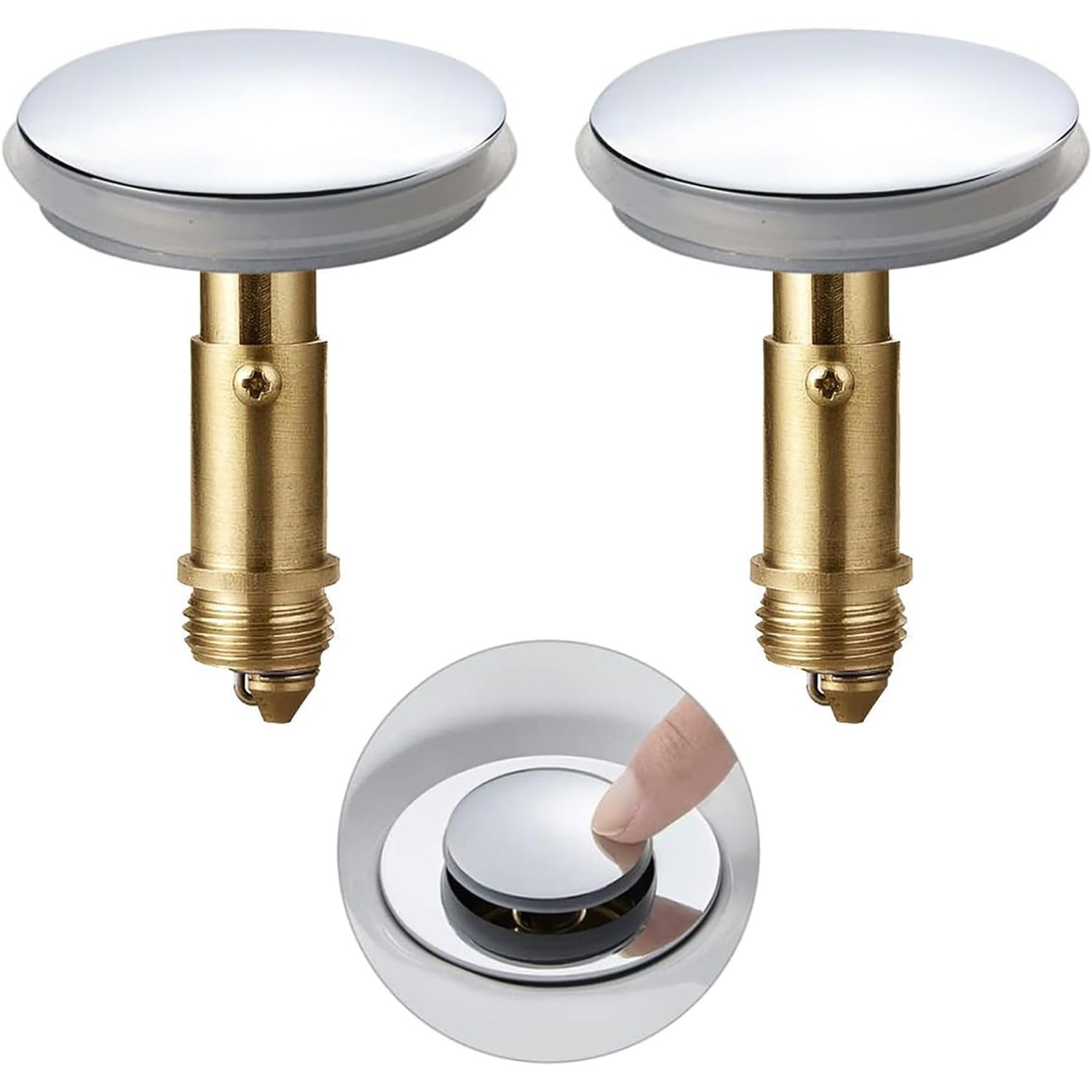
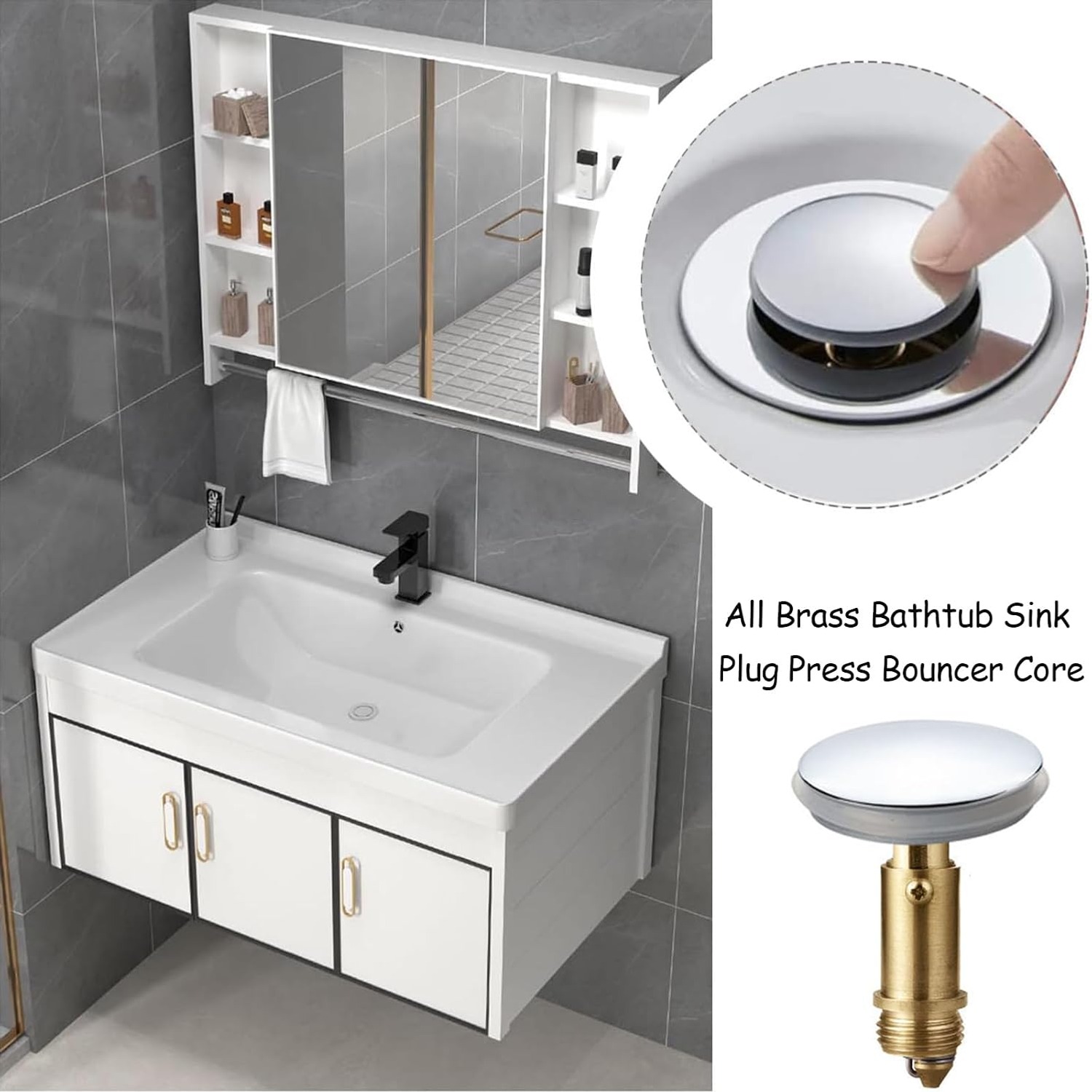
A click clack plug is the simplest fix available. There is no linkage, no chain, no lever. You press the top down with a finger and it stays down. You press it again and it comes back up. That is the whole mechanism, and because there is so little to it, there is very little to go wrong.
How a click clack plug works
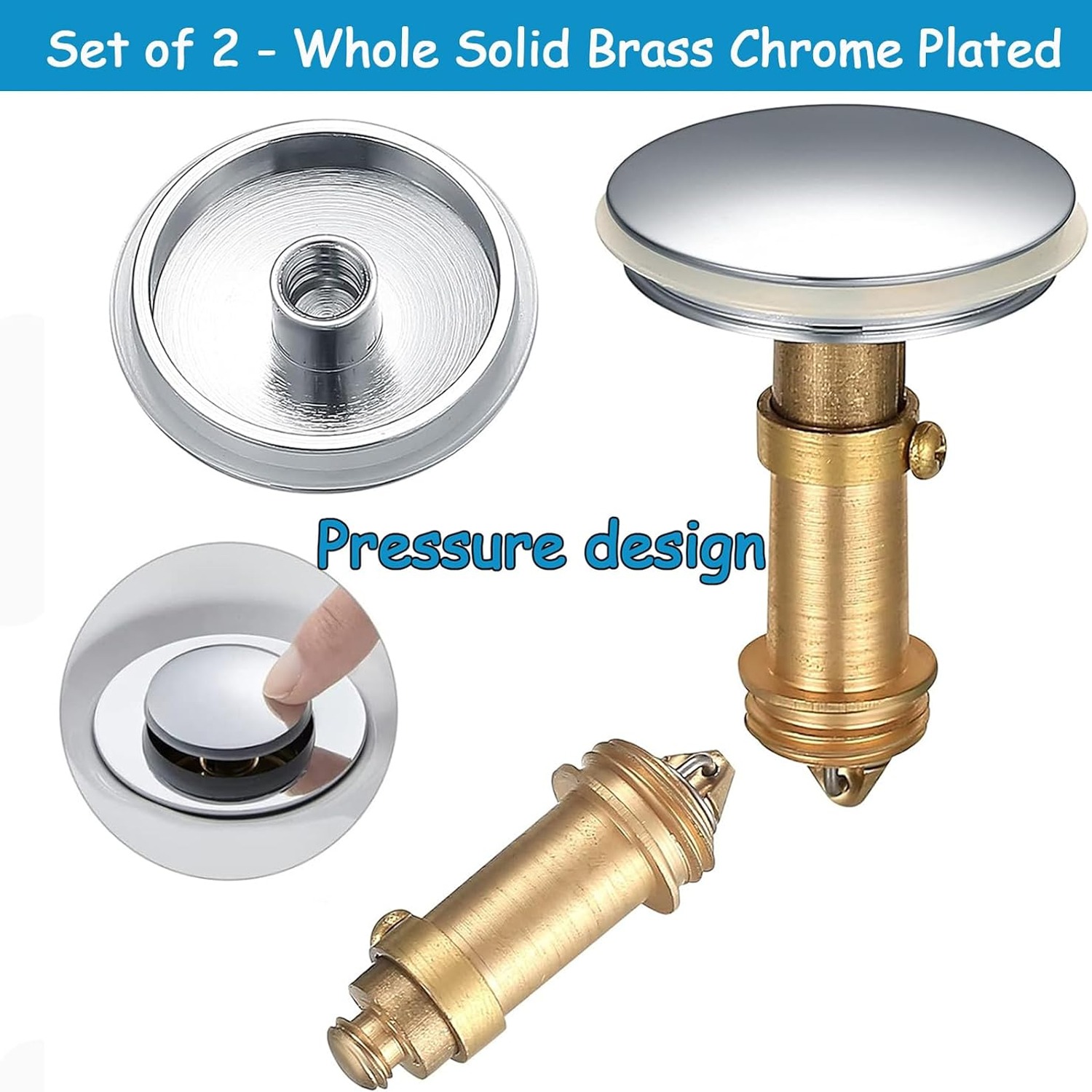
Inside the cover sits a spring-loaded core. Push the cover and the spring latches into a closed position, pulling the seal tight against the seat of the waste. Push again and the latch releases, the spring pushes the cover back up, and the water drains.
It is the same idea as a retractable pen, applied to plumbing. That is also why these plugs tend to outlive the rod-and-lever style. A traditional pop-up waste has a horizontal rod running through the back of the drain, connected to a vertical lift rod behind the tap. Those linkages corrode, the pivot nut weeps, and the adjustment drifts until the plug no longer seats. A click clack has none of that behind the wall.
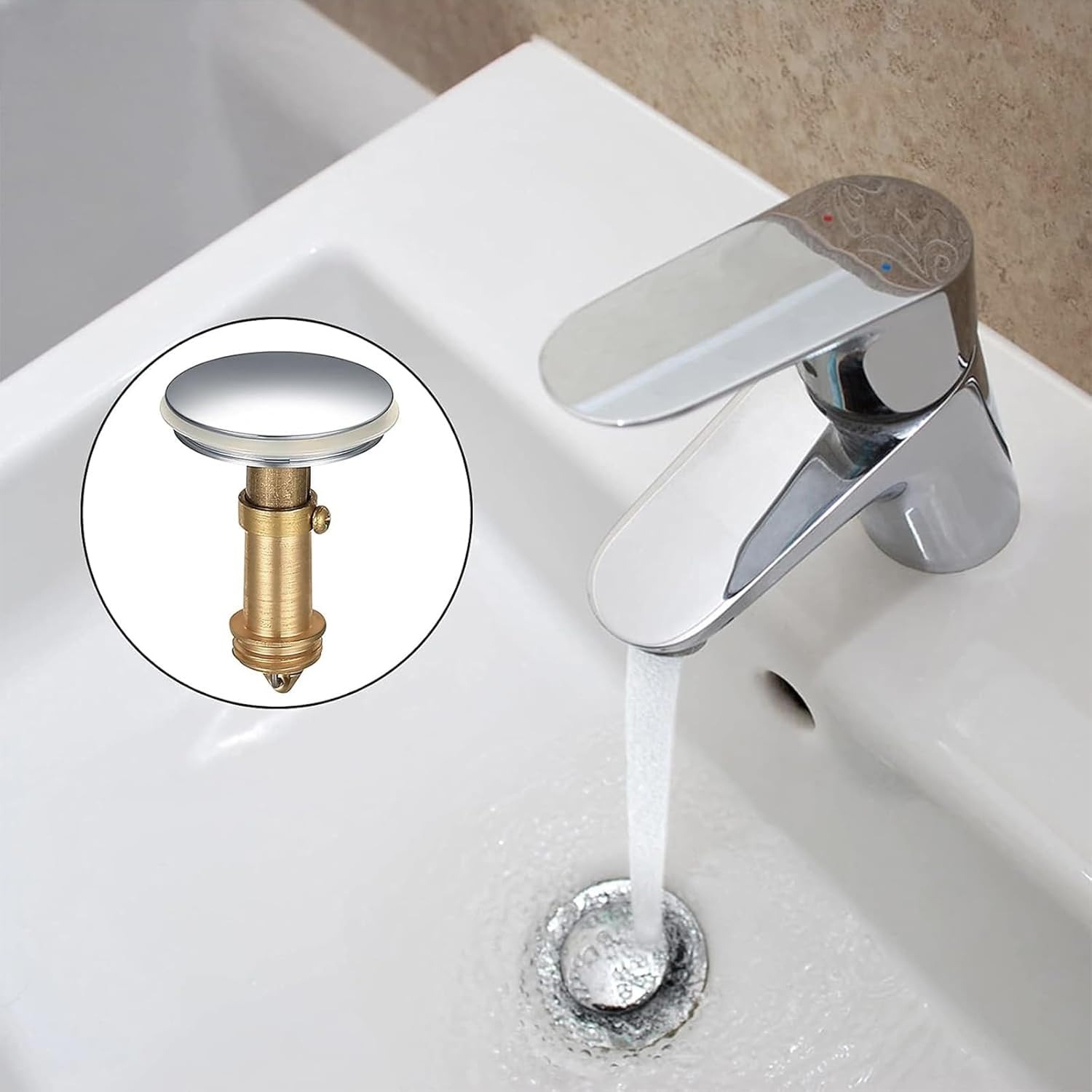
The second advantage is how it looks. There is no chain hanging over the side of the bowl and no lug on top of the plug. A flat silver disc sitting flush in the ceramic reads much cleaner, which matters in a small bathroom where every visible fitting counts.
Measuring before you buy
This is the part people skip, and it is the single most common reason a replacement plug ends up going back in the box.
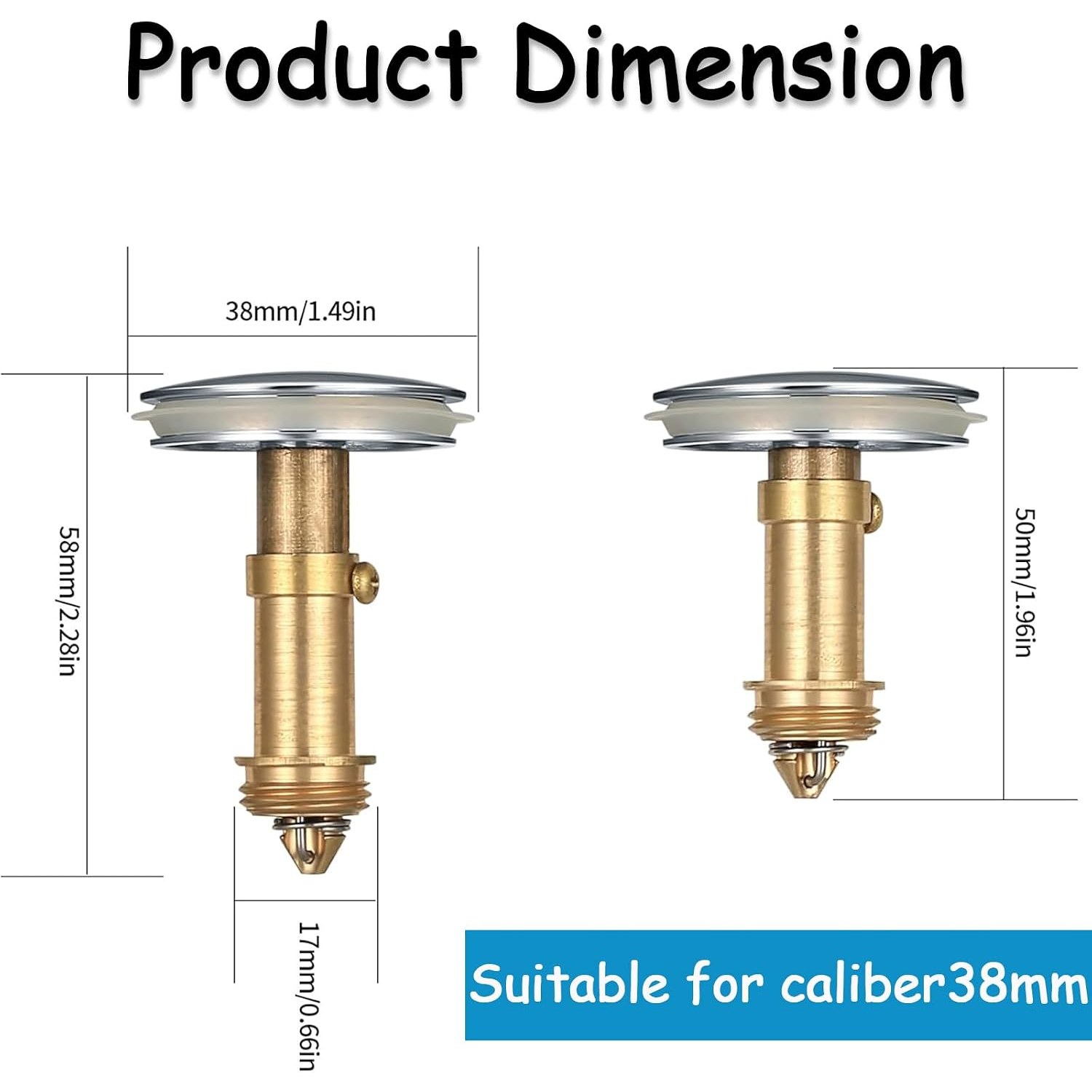
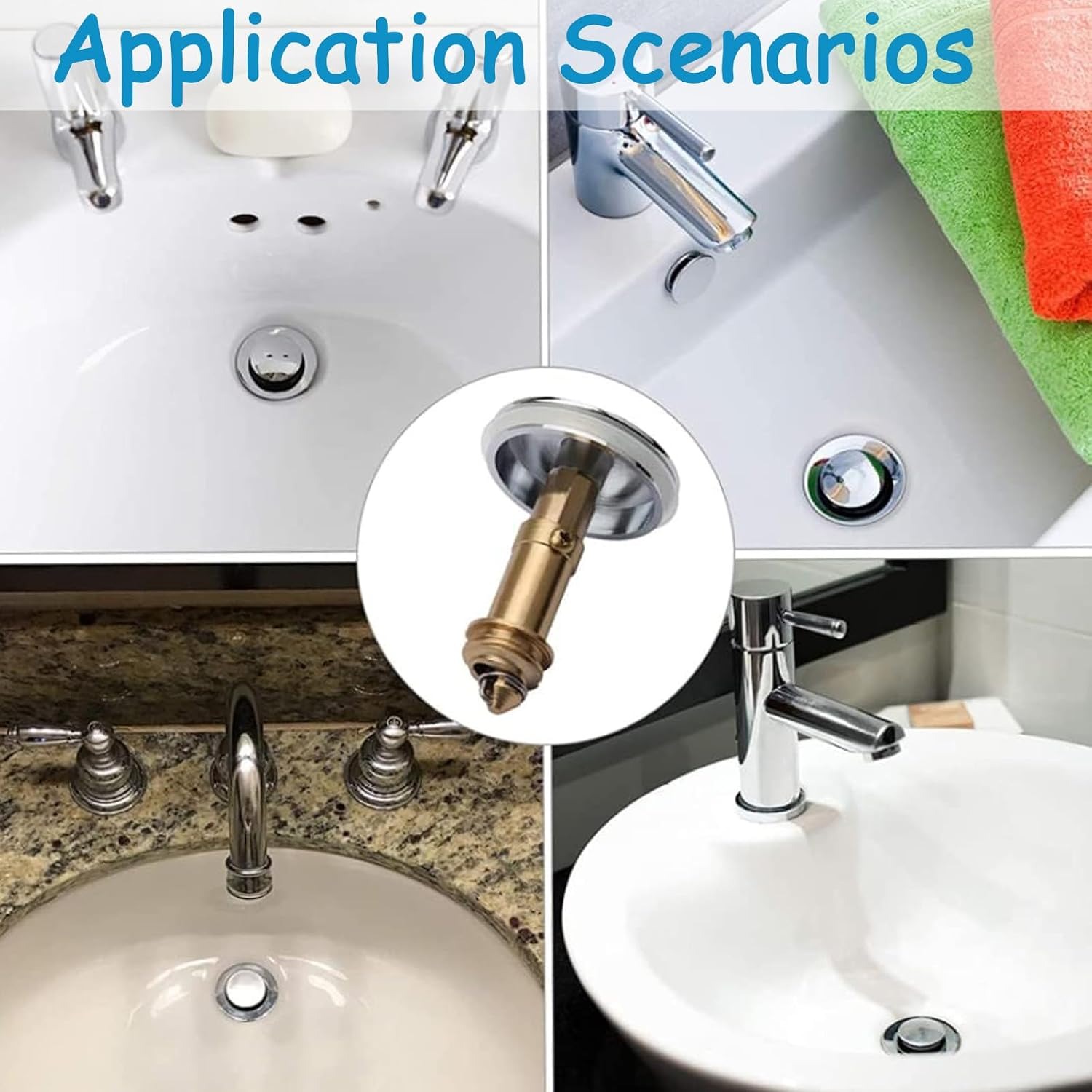
There are two measurements that matter. The first is the top diameter, which is the width of the visible cover. This one is 38mm, which is a widely used size for household bathroom basins. Put a tape or ruler across your current plug and check.
The second measurement is the bottom screw thread, where the plug screws into the bolt in the waste below. This one is M16 x 1.5, meaning a 16mm thread with a 1.5mm pitch. If your waste uses a different thread, the cover size will not save you. The plug simply will not hold.
The easiest method is to unscrew the old plug and take it with you to compare. If you cannot get it out, measure the opening in the waste and look down at the bolt. When in doubt, ask. A two-minute question beats a wasted order.
One exclusion is worth noting. If your drain already has a fixed filter or grate across the opening, this style of push stopper will not work, because there is nothing for the threaded stem to engage with. You need a different type of plug for those.
Who this suits
The clearest fit is anyone replacing a failed plug in a standard bathroom basin. If the old one is rubber on a chain and you want something tidier, or the old pop-up has seized, this is a direct upgrade that takes minutes.
It also suits renters who want to improve a bathroom without touching anything structural. Swapping a plug is reversible. Keep the original in a drawer and put it back when you leave.
Landlords and anyone managing more than one property tend to buy these in pairs for a reason. Basin plugs fail often enough that keeping spares on hand saves repeated small orders. Looking for the best replacement sink plug usually comes down to having one in the cupboard when you need it.
Families with long hair in the house get a specific benefit from the two-part design. Hair collects around the stem of any plug. With a click clack you lift the cover out, pull the hair off, and rinse. No tools, no drain cleaner, no disassembly.
Brass versus the cheap alternatives
You can buy basin plugs for a few dollars in moulded plastic with a thin metallic coating. They look fine for a while. Then the coating flakes at the edge, or the spring inside loses its tension and the plug stops latching reliably.
Brass is the material plumbers reach for in wet fittings because it handles constant water contact well and takes a finish properly. It also has some weight to it, which you notice the first time you press the cover. A solid press with a clean click feels different from a hollow plastic one.
That does not make brass indestructible. Any finish will dull if you attack it with scouring powder, and limescale will mark it in a hard water area if you never wipe it dry. But under normal bathroom use it holds up far better than the budget alternatives.
Fitting it
Clear the basin and dry it so nothing slips. Unscrew the old plug by turning it anticlockwise. If it has been in place for years it may be stiff, and a little penetrating oil left to sit for ten minutes usually frees it.
Wipe the seat inside the waste. Grit, old sealant or a ring of soap scum sitting on that surface is the most common reason a brand new plug does not hold water properly. It should be clean metal or clean ceramic before the new plug goes in.
Drop the new plug into the opening and turn it clockwise until it engages the bolt below. Hand tight is correct. Do not reach for pliers, because over-tightening can distort the seal and defeat the point.
Test it by filling the bowl and leaving it five minutes. If the level drops, lift the plug out, check the seat again, and refit. Nine times out of ten the problem is something caught under the seal.
Keeping it working
The maintenance routine is short. Every week or two, lift the cover off the stem, rinse both pieces under the tap, wipe away hair and soap, and press it back on. That is it.
Use a soft damp cloth and a mild bathroom cleaner on the visible surface. Avoid abrasive pads and bleach-heavy products, which dull finishes on any metal fitting. If you live somewhere with hard water, drying the cover after use goes a long way towards keeping it bright.
If the plug ever starts to feel sticky or does not latch on the first press, take it out and rinse the stem properly. Build-up around the spring is almost always the cause, and a clean usually restores the action completely.
The short version
A click clack plug replaces a failed basin stopper with something simpler than what it replaces. Press to close, press to open, lift out to clean. Brass construction and a silver finish keep it looking right next to standard chrome tapware.
Before you order, check two numbers. The top cover is 38mm and the bottom thread is M16 x 1.5. If those match your waste, fitting takes a few minutes with no tools. If your drain has a built-in filter grate, this is not the plug for it.
You get two in the pack, which covers a second basin or keeps a spare for when the first one has done its years of service.