
The complete guide
How to Choose and Fit a Dishwasher Drain Hose
The problem nobody notices until there is water on the floor
A dishwasher drain hose does one job, and it does it out of sight. That is exactly why it gets neglected. The hose runs from the back of the machine, behind the cabinet, up over a loop and into the sink waste or a standpipe. Nobody looks at it from the day it is installed until the day something goes wrong.
When it does go wrong, the signs are usually small at first. The cycle takes longer. There is standing water in the base of the machine at the end of a wash. The drain phase gurgles louder than it used to. Then one morning there is a dark line along the edge of the kickboard, and you pull the machine out to find the hose has been kinked flat against the wall for two years, or has split where it was stretched tight.
Most of these faults are not pump failures. They are hose problems, and a hose is one of the cheapest parts of the whole machine.
What this hose actually is
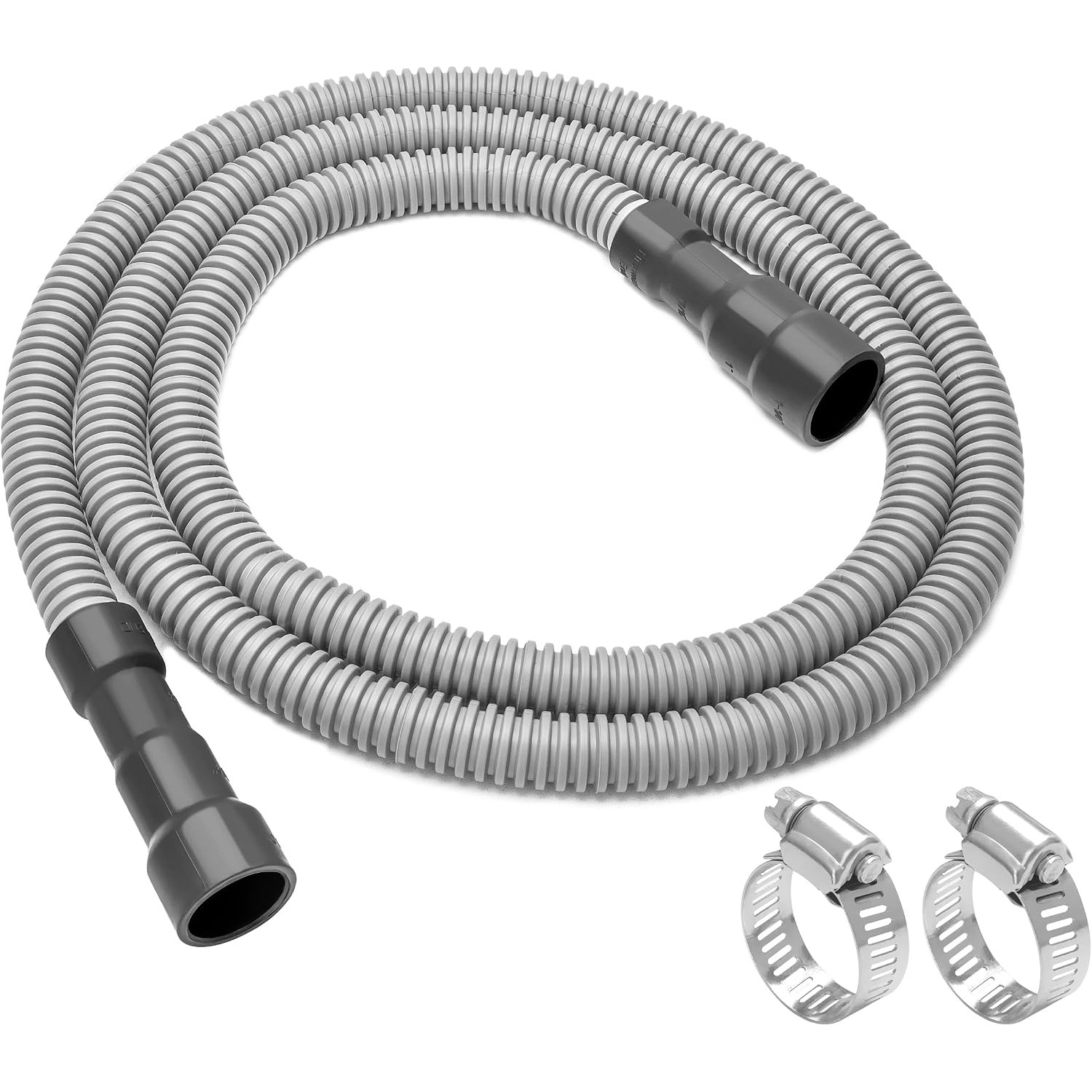
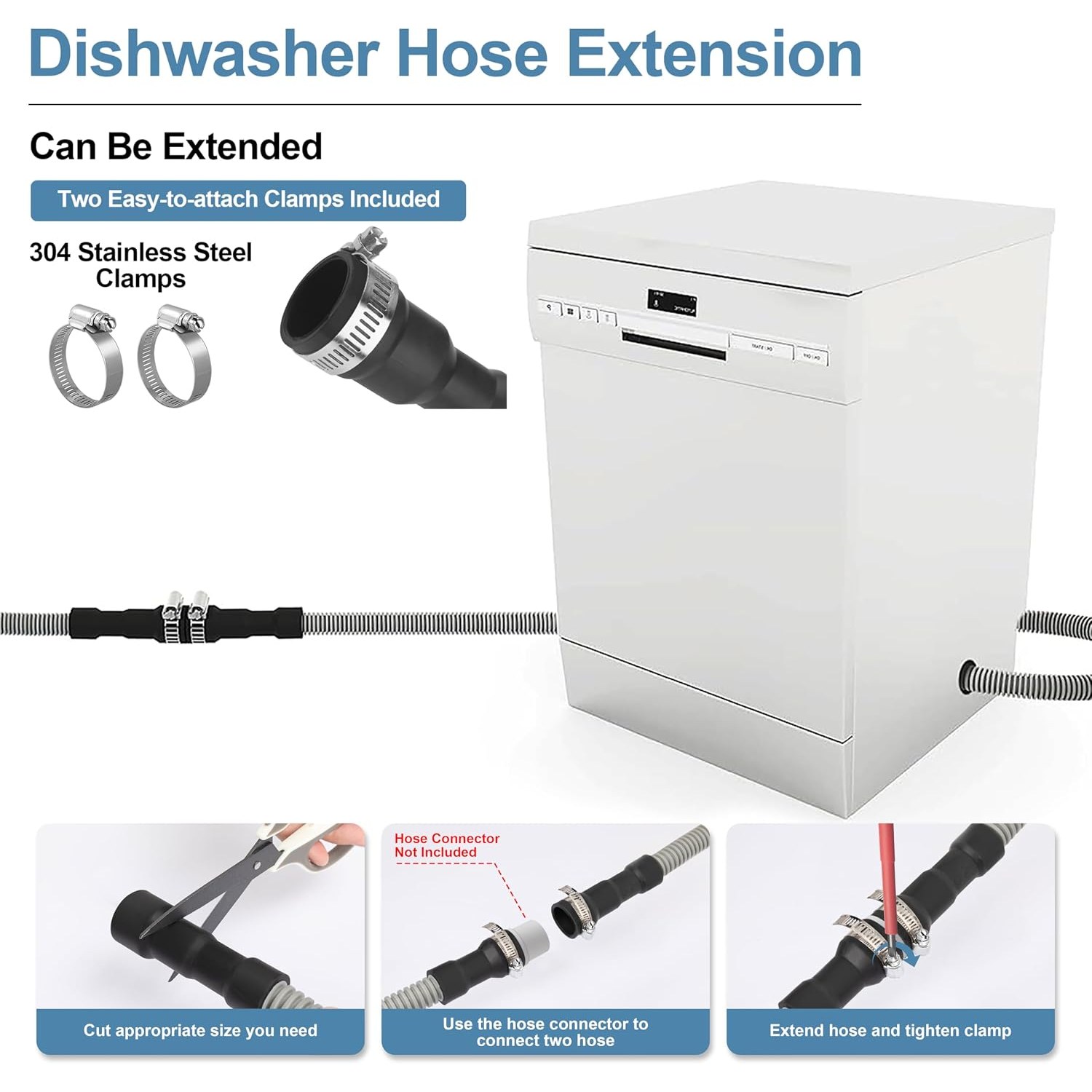
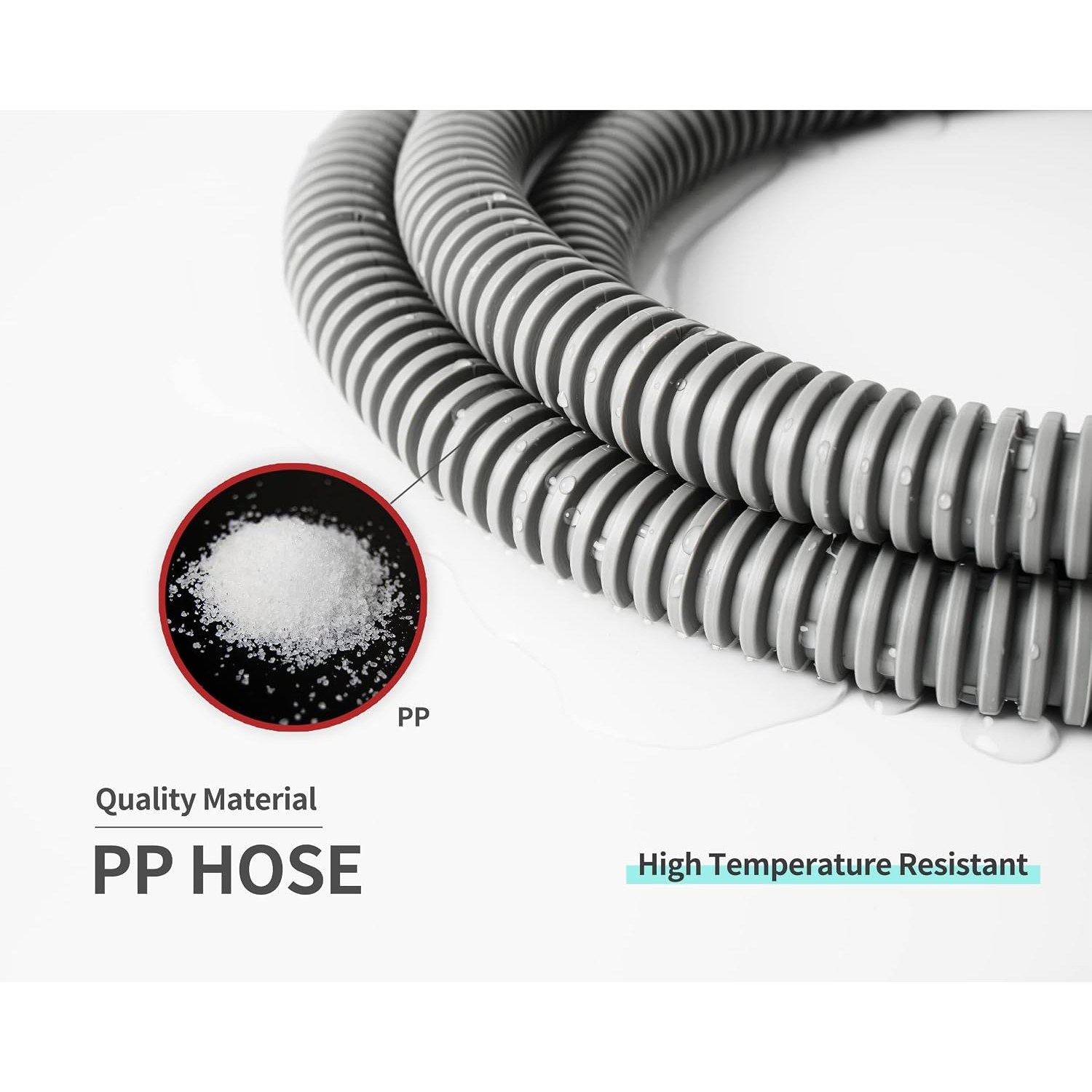
This is a 2.04m corrugated drain hose extension made from polypropylene, supplied grey, with two stainless steel clamps in the pack. The corrugation is the important part of the design. It lets the tube bend around the back of an appliance and through a cabinet cut-out without collapsing on itself. A plain-walled tube of the same diameter would flatten the moment you asked it to turn a corner.
Inside, the wall is smooth. That matters more than it sounds. A rough bore slows water down and gives grease and food particles somewhere to catch. A smooth bore keeps the flow moving, which means less resistance for the pump and less build-up over time.
Polypropylene is the standard material for this kind of line because it copes with warm discharge water, resists the mineral scale that narrows older hoses, and stays flexible at room temperature. It is also reasonably good at damping sound, so a decent hose tends to be quieter during the drain phase than a thin, hard one.
The stepped end is what makes it universal
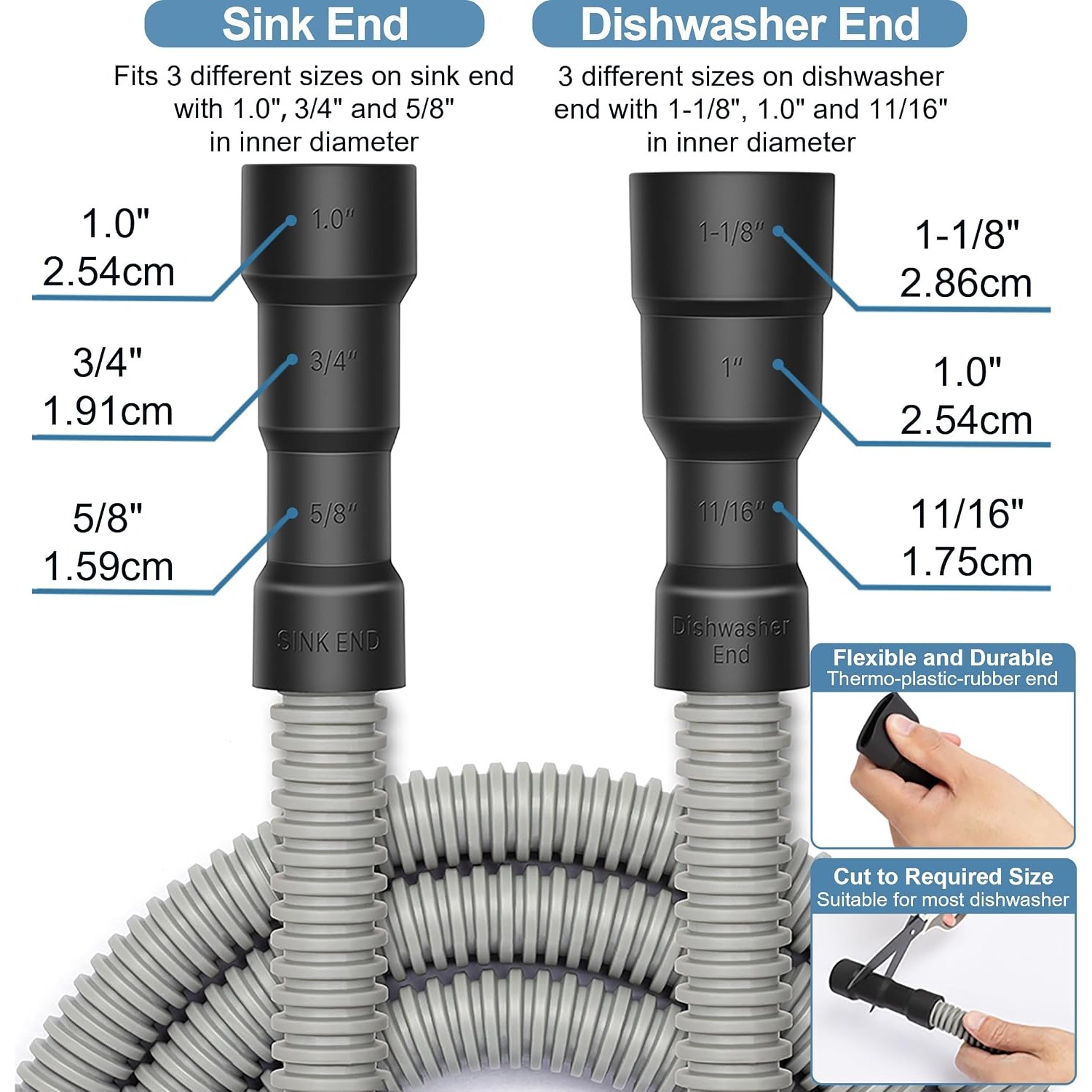
The outlet end of this hose is formed in steps at 11/16 inch, 1 inch and 1-1/8 inch. You look at the spigot you need to connect to, work out which of those three diameters matches, and cut the hose back to that step with a knife. Push it on, clamp it, done.
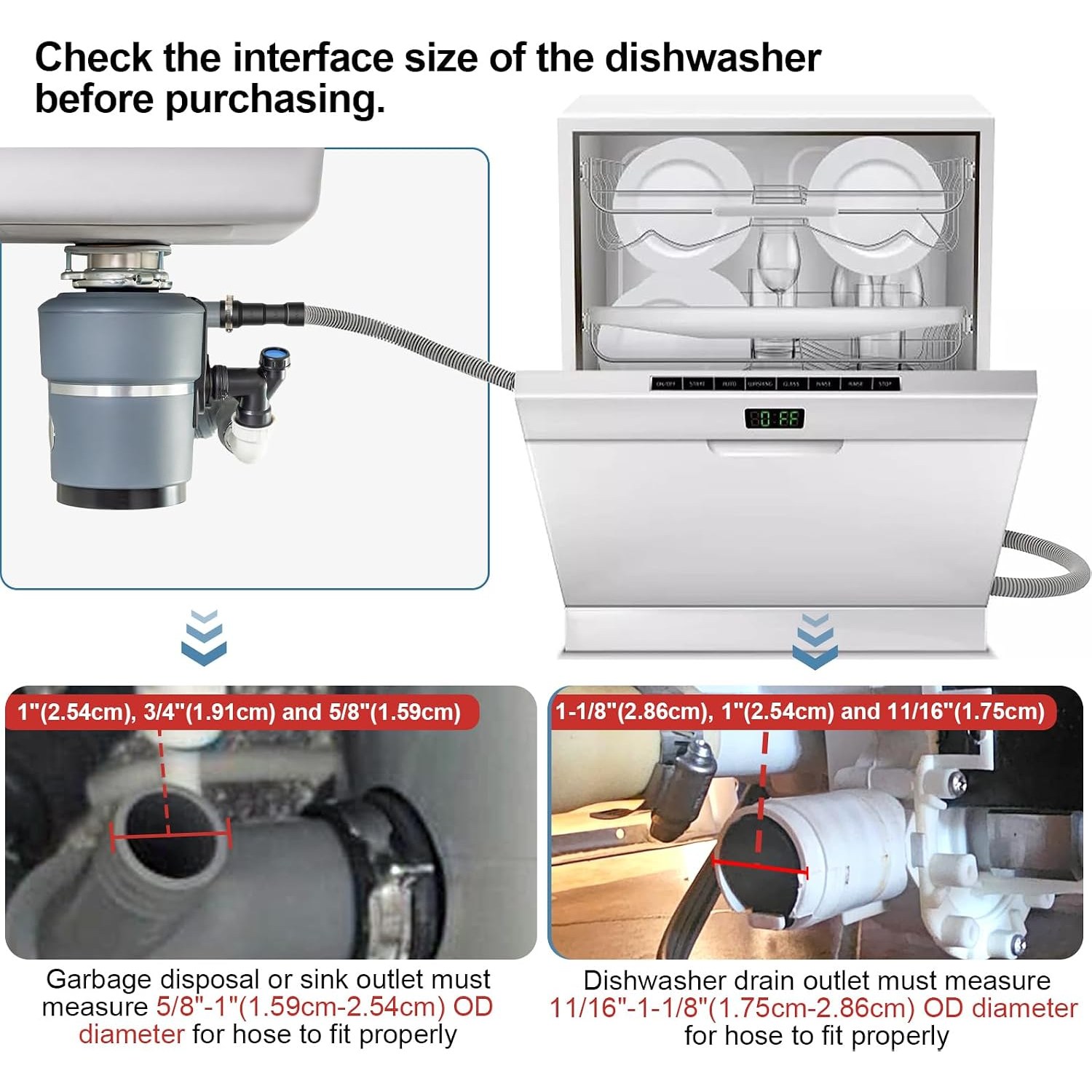
That single feature is why this is sold as a universal dishwasher discharge hose rather than a part number tied to one brand. Dishwasher outlets, sink waste spigots and sink waste disposal unit inlets across most of the market land in that range. It covers a lot of kitchens with one part.
If you are shopping around for the best universal dishwasher hose, the stepped end is the thing to look for. The alternative is buying a brand-specific hose, which works perfectly but means ordering again if you change machines.
Who this suits
It suits anyone replacing a failed or kinked hose, which is the most common reason people buy one. It also suits a few other situations.
If you have moved the dishwasher, swapped kitchens, or the machine now sits further from the waste connection than it used to, the original hose is probably too short. Stretching a hose tight is one of the fastest ways to split it. Two metres gives you room to route the line with a gentle sweep rather than pulling it taut.
It suits people connecting to a sink waste disposal unit unit, since the stepped end usually matches the disposal inlet. And it suits landlords and anyone managing a rental, because having a spare in the cupboard turns an urgent plumber call into a fifteen-minute job.
It is not the right part if your machine needs a moulded elbow at the appliance end, or a hooked end designed to hang in a standpipe. Check what came off before you order.
How to choose the right length
Longer is not always better. An over-long hose has to go somewhere, and coiled excess behind a machine is an invitation to a kink. Measure the actual path the hose will take, including the rise and fall of the loop, then add a little slack so the hose is not under tension.
Two metres is a sensible default. It covers most runs from a machine to an adjacent sink cabinet, and anything left over can be trimmed. Trim from the dishwasher end, not the outlet end, so you keep the stepped fitting that does the hard work.
One thing a hose cannot fix is pump lift. Every dishwasher has a maximum height it can push water to, usually stated in the manual and often around a metre. If the waste connection sits higher than that, a longer hose will not help. You need the connection lowered or a different arrangement.
Fitting it without drama
Turn off the power and the water supply to the machine first. Have a towel and a shallow tray ready, because there is always a little water left in the old hose and it will find your socks.
Undo the clamp on the old hose at the outlet end, work the hose off, and do the same at the appliance end. Some machines have the hose clipped to the chassis as well, so look for a retaining clip before you pull.
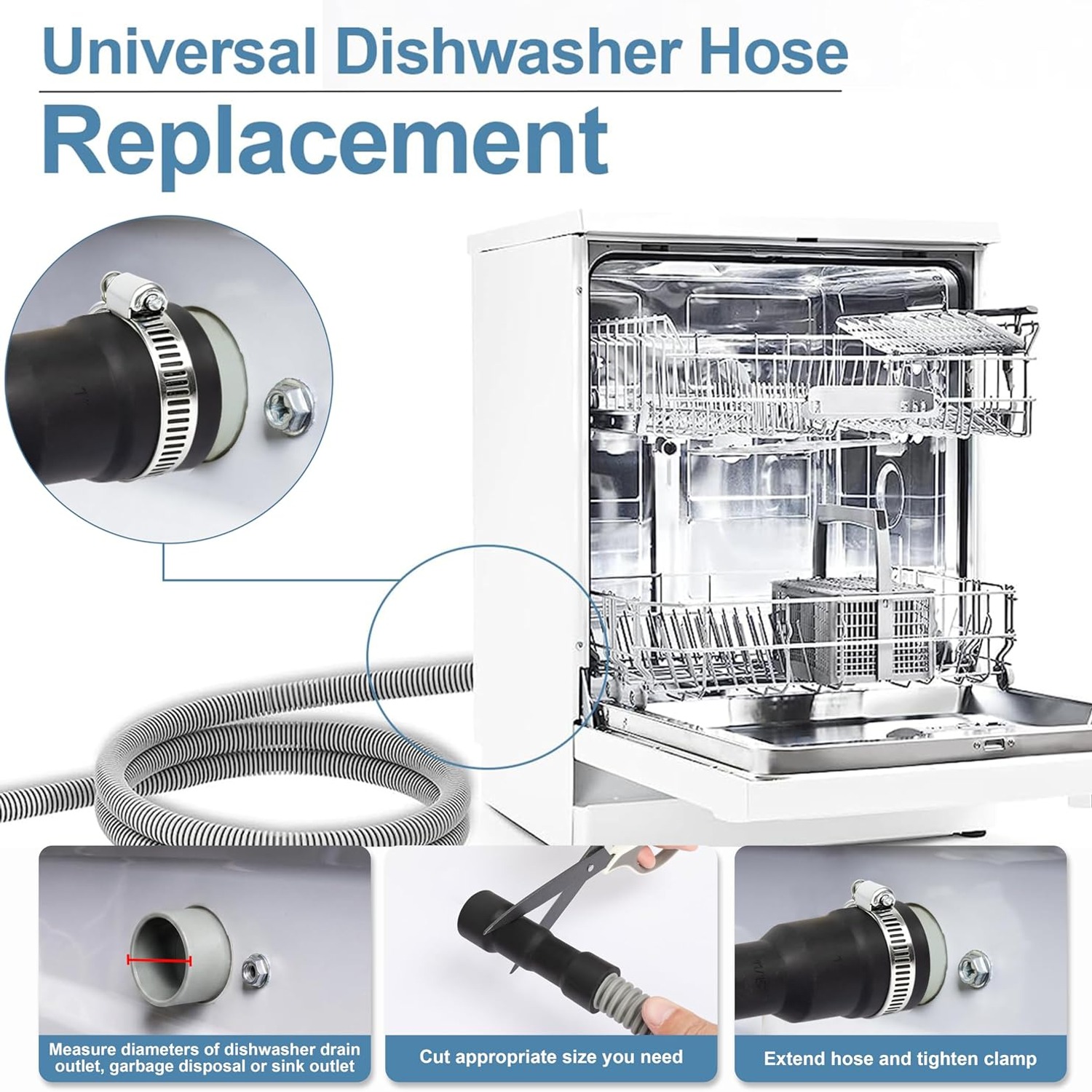
Offer up the new hose. Cut the stepped end back to the diameter you need with a sharp utility knife, slicing through a valley in the corrugation for a clean square cut. Ragged cuts are the most common cause of a weeping join. Slide a clamp on before you push the hose home, since threading it on afterwards is fiddly.
Push each end fully onto its spigot and tighten the clamp with a flat screwdriver. Snug, not crushed. The steel band should hold the hose firmly without digging a groove into the plastic.
Then set the loop. The hose needs to rise above the level of the sink waste before dropping into it, or go through an air gap if your local rules call for one. That loop is what stops dirty sink water siphoning back into the machine, which is the usual cause of a dishwasher that smells no matter how often you clean it.
Run a short cycle and watch the joins during the drain phase. Check the clamps again once the hose has warmed up and settled.
Keeping it working
There is not much maintenance to a drain hose, which is part of the appeal. Flush the new one with clean water before you fit it to clear any manufacturing dust. After that, the main thing is keeping it free of sharp bends.
Every time you pull the machine out for any reason, glance at the hose. Look for hardening, splits, flat spots and anything pressing against it. A hose squashed between the machine and the wall will fail eventually.
Running a hot cycle with a dishwasher cleaner every month or two helps keep grease from building up in the line. If the hose does get badly fouled inside, replacing it is faster and tidier than trying to clean it out.
The short version
A drain hose is a small part that causes disproportionate trouble when it fails. This one is 2.04m of flexible polypropylene with a stepped outlet end covering 11/16 inch, 1 inch and 1-1/8 inch, plus two stainless steel clamps so you can fit both ends properly.
Measure your run, check which step matches your spigot, trim from the appliance end, clamp both joins, and set the loop as your manual specifies. It is a short job with a decent payoff, and it is one of the few appliance repairs most people can handle without calling anyone.