
The complete guide
Laundry Drain Smells and How a Standpipe Seal Fixes Them
The smell that never quite goes away
You clean the laundry. You wipe the machine, you run a hot empty cycle with cleaner, you leave the door open to air out. And a day later there it is again, that faint sour, swampy smell that sits low in the room.
Nine times out of ten, people blame the washing machine. Sometimes that is fair. But very often the machine is innocent and the smell is coming out of the floor.
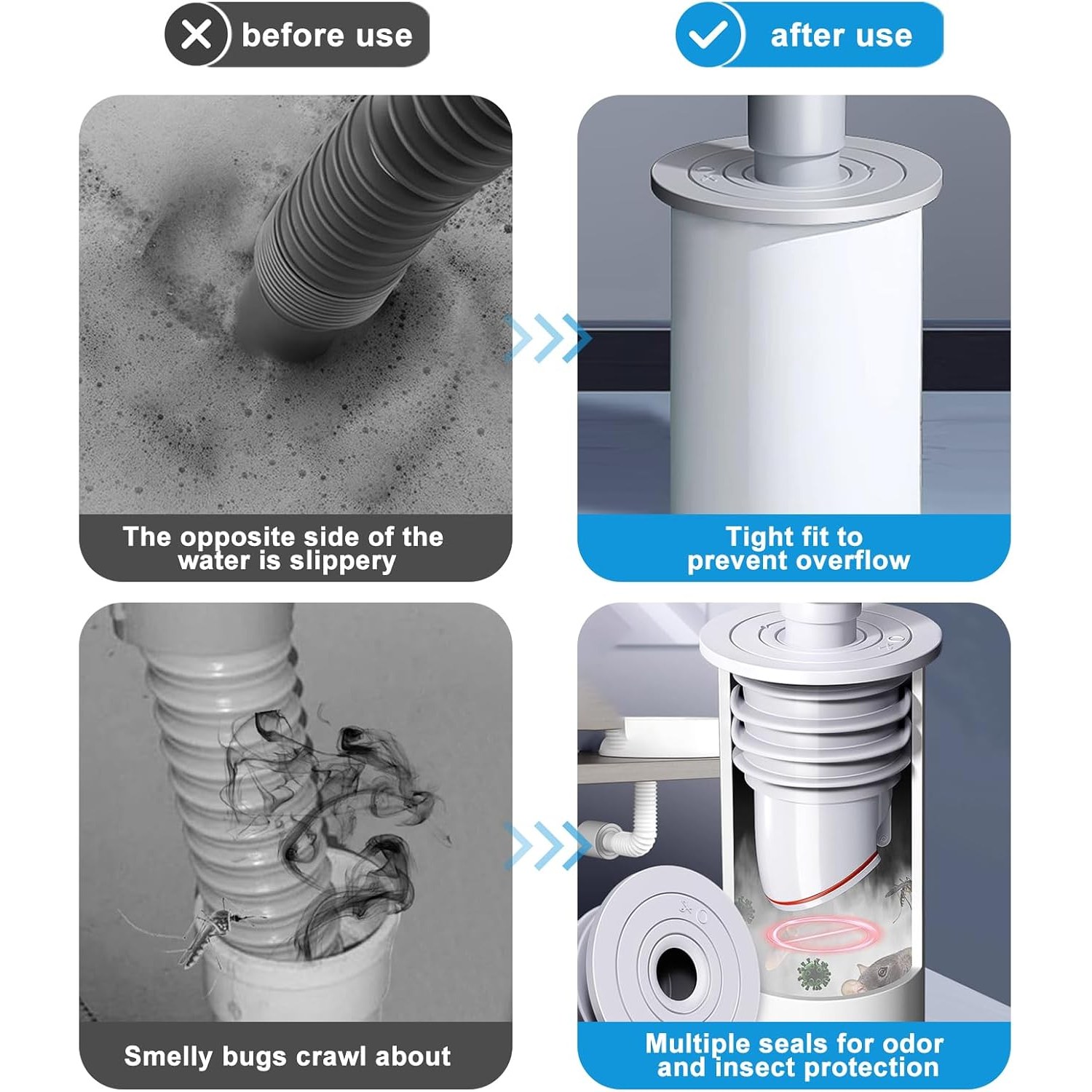
Look at where your drain hose goes. In most laundries it ends in a standpipe, a vertical pipe set into the floor or the wall, and the hose just sits loosely inside the opening. There is a visible ring of air around it. That ring of air is a direct, unsealed connection between your room and the waste line.
Air moves through that gap. It moves up when the pipe warms, when the sewer line is under pressure, when wind pulls on the vent stack, when a toilet flushes somewhere else in the building. And every time it moves up, it brings the smell of the drain with it.
How a standpipe seal works
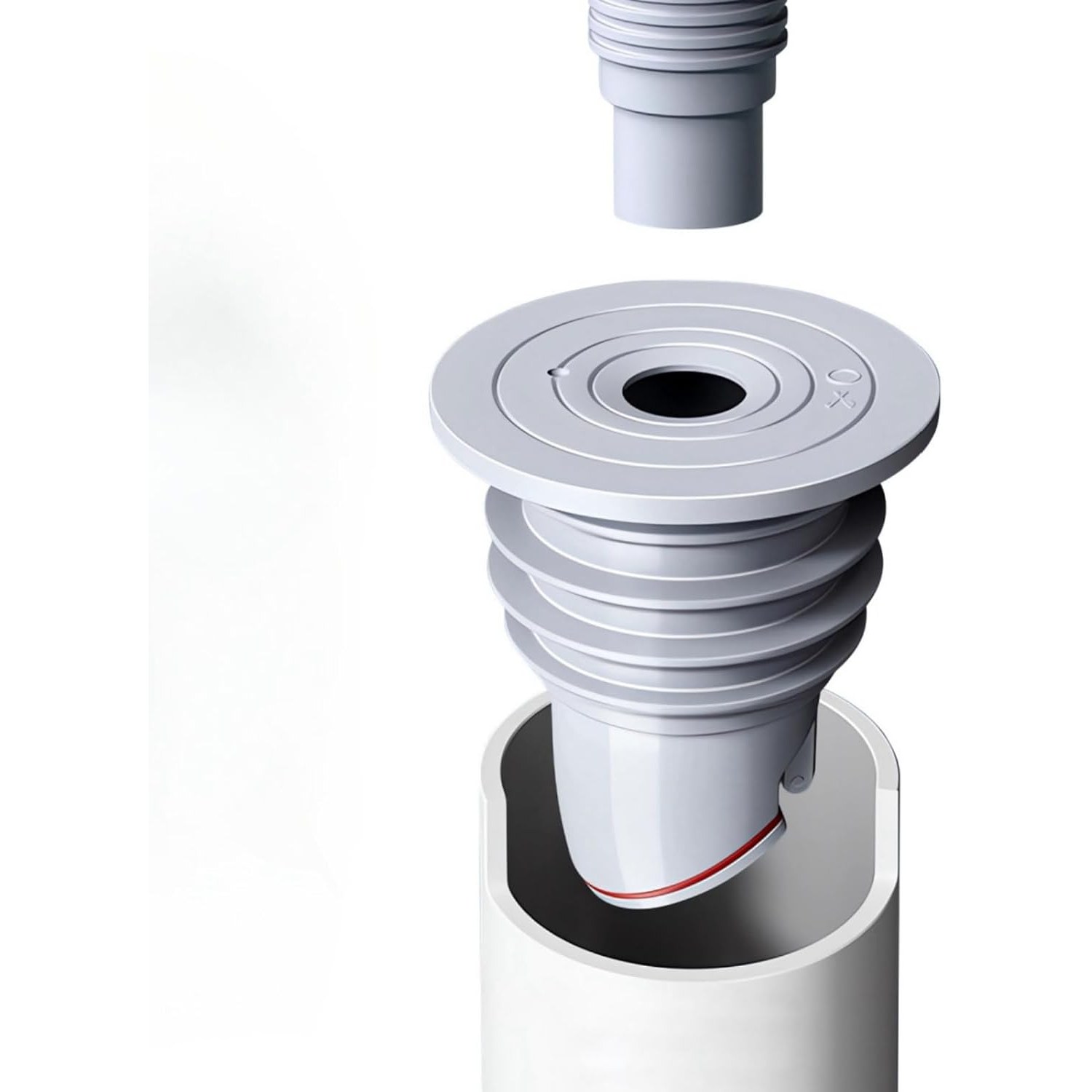
A washing machine drain hose seal is a simple answer to a simple problem. It is a flexible insert that sits in the mouth of the drain and closes that ring of air.
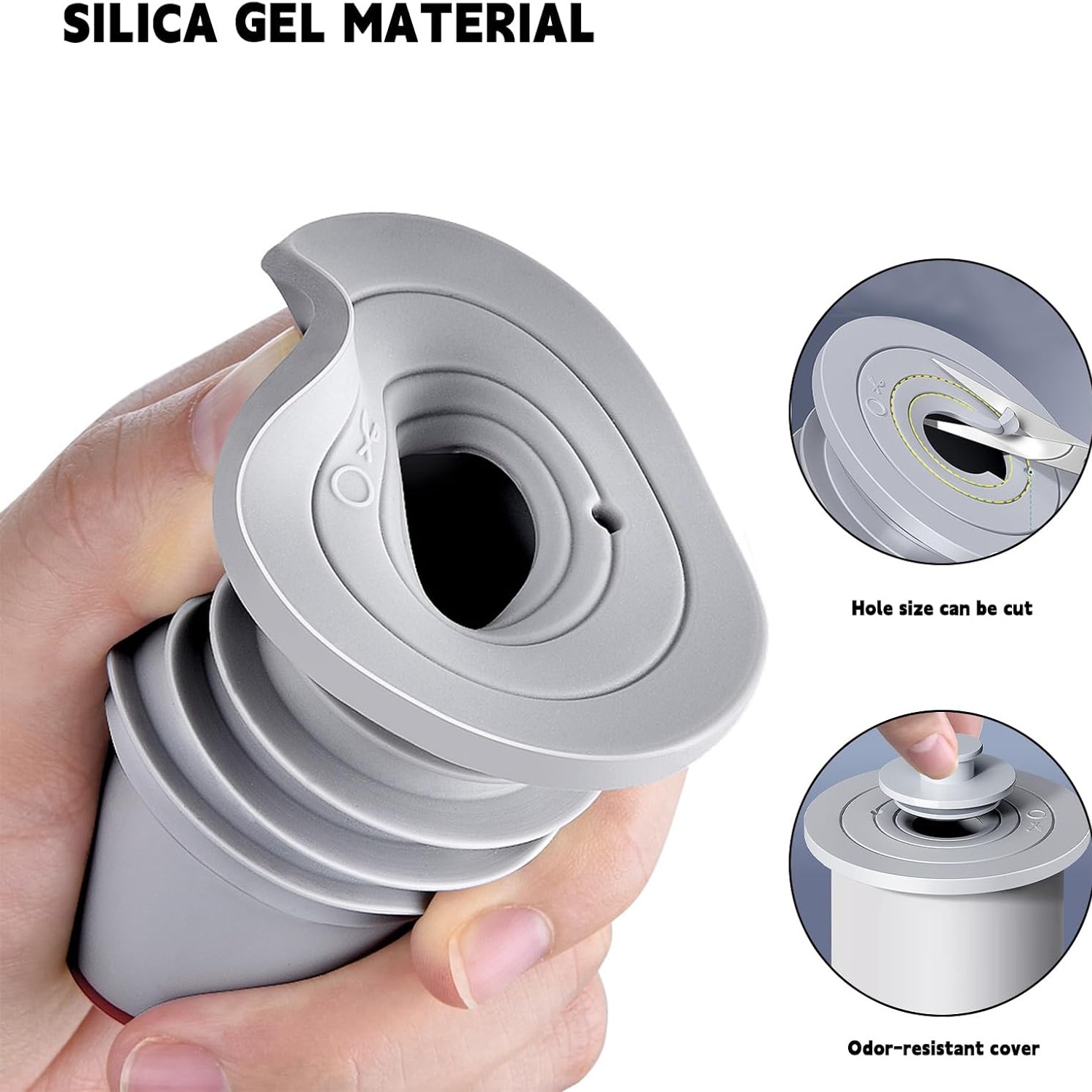
This one is silicone, which matters more than it sounds. Silicone compresses a little as you push it in, then pushes back outward against the pipe wall. That is what holds it in place without clips or glue. It also stays soft in a cold laundry, handles hot wash water without going brittle, and does not react badly to detergent, bleach residue or whatever else goes down the pipe.
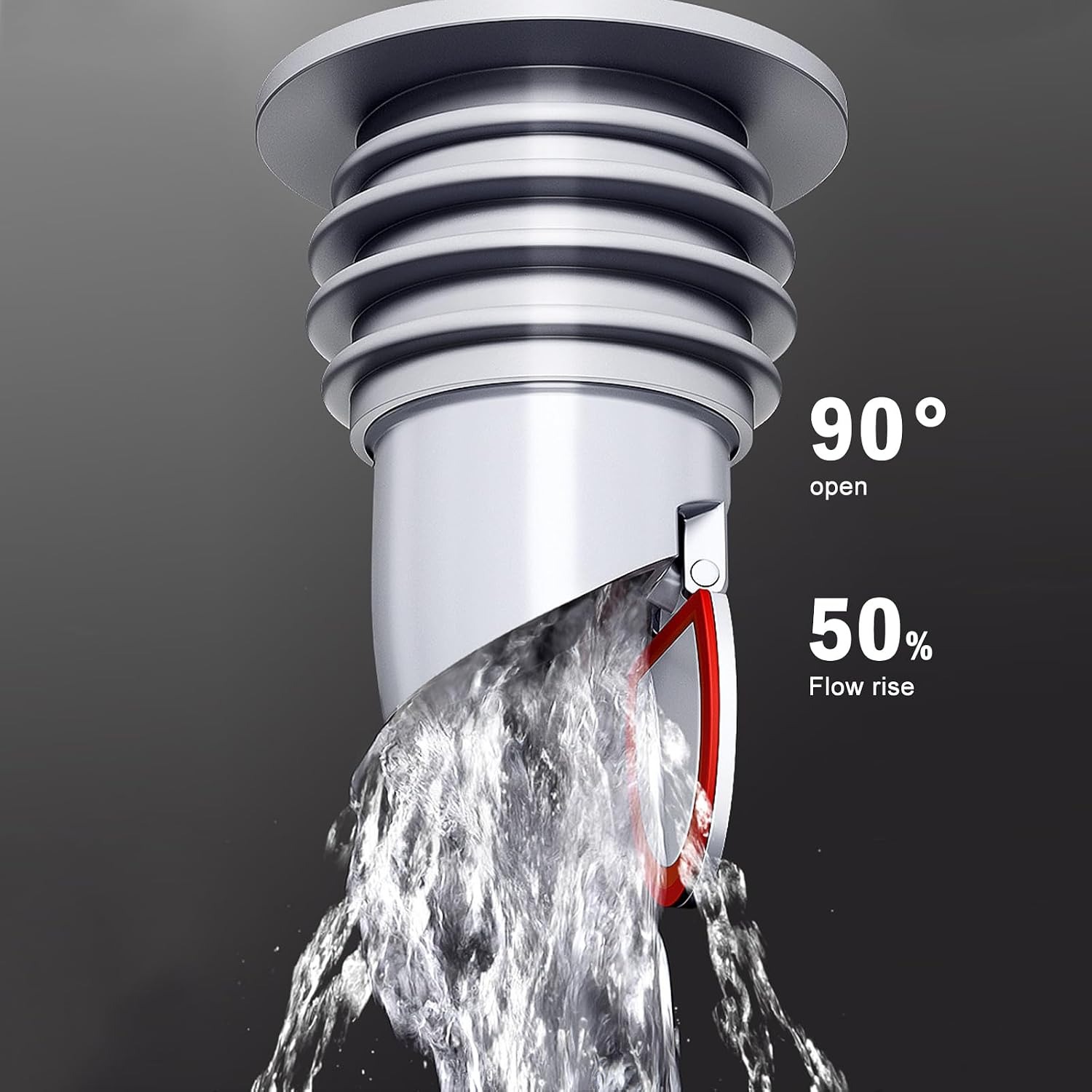
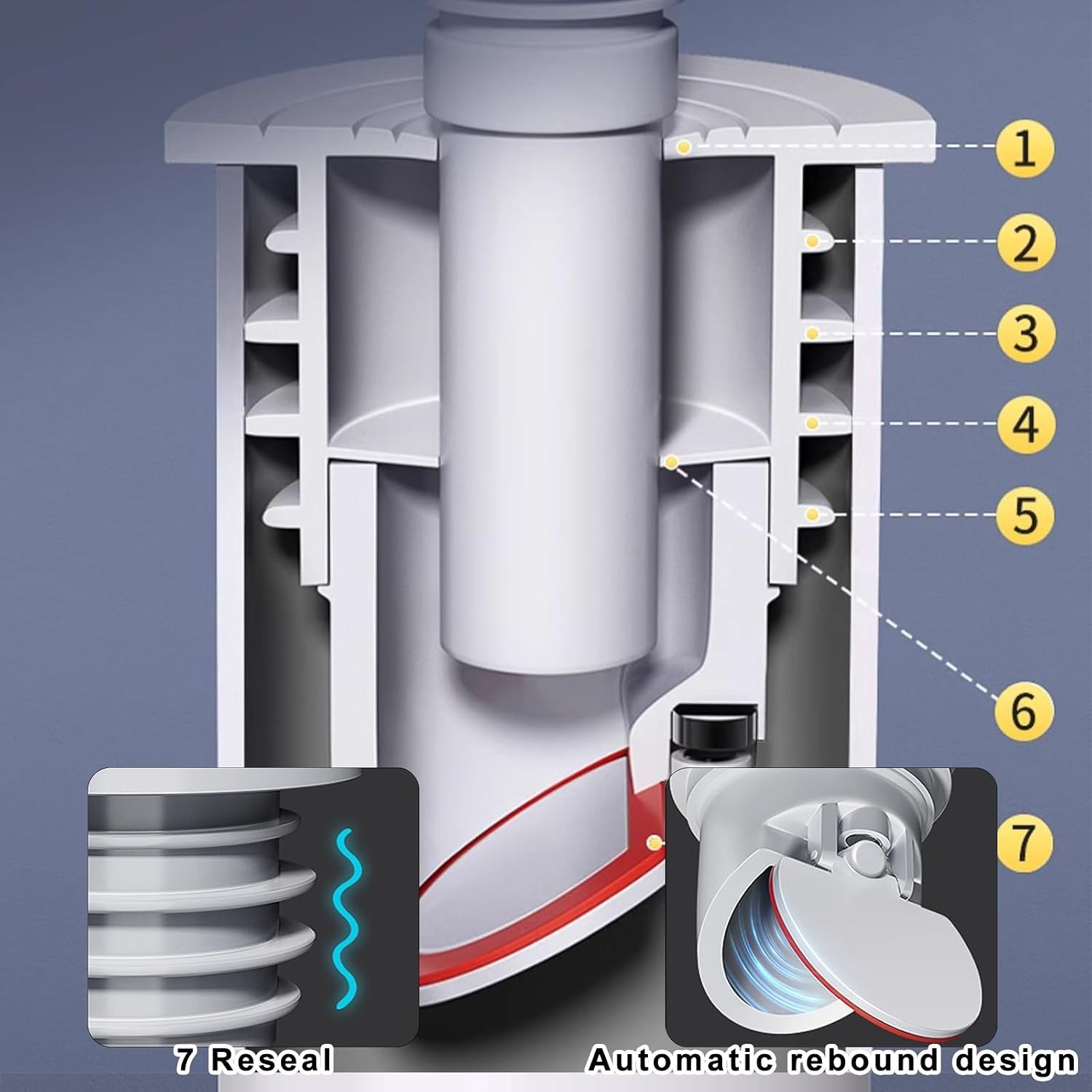
Inside the seal there is a core that moves. When your machine pumps out, the weight and pressure of the water force the core open and the water drains away normally. When the pump stops, the core springs back and closes. So the drain is open for the two or three minutes a day it needs to be, and sealed for the rest of the time.
That timing is the whole trick. Odour does not build up during the drain cycle, it builds up during the twenty-three and a half hours in between. A seal that closes automatically covers exactly the window where the problem happens.
The hose itself passes down through a collar in the top of the seal. So you get a closed drain and a connected hose at the same time, which is not something a plain cover can do.
Getting the size right
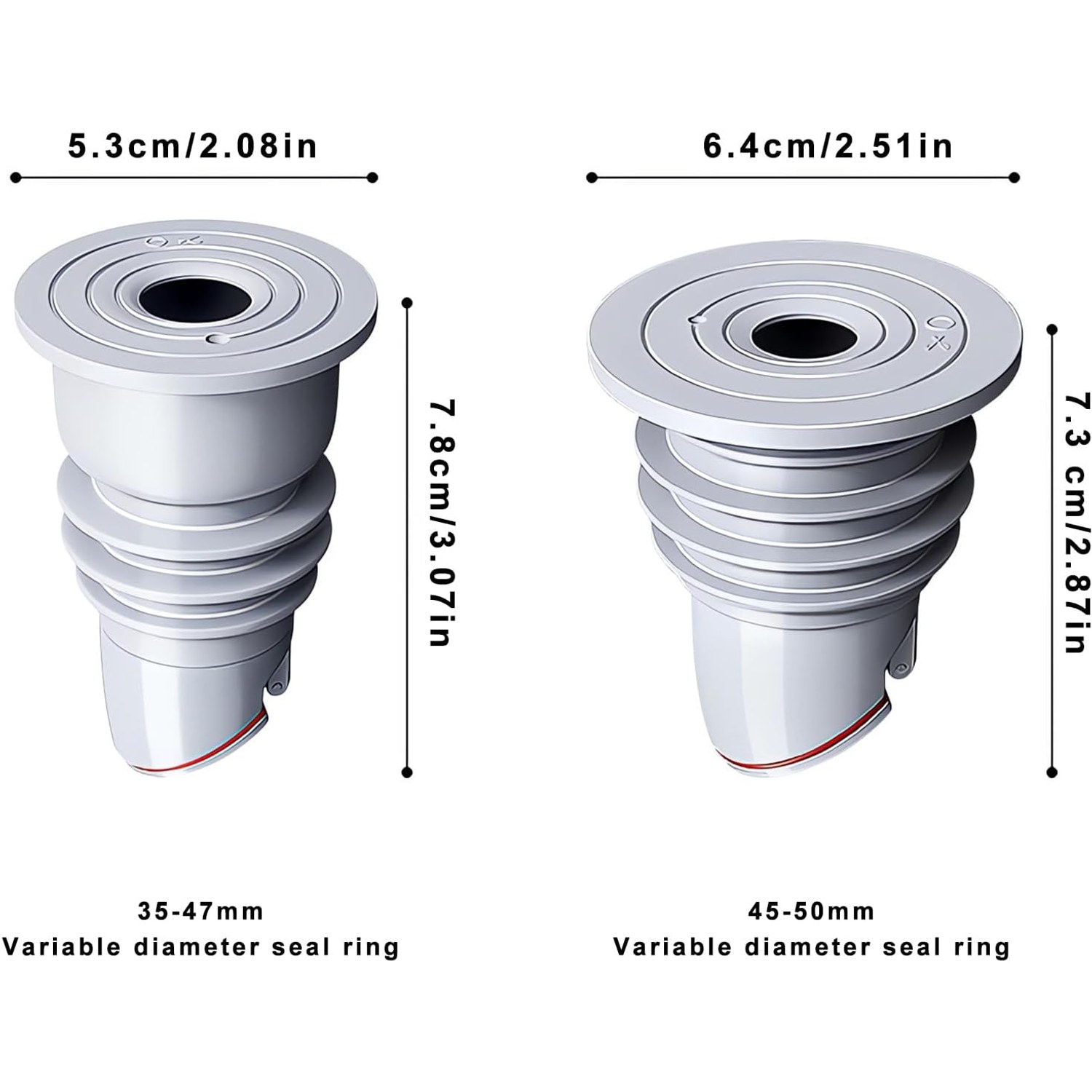
This is the one part worth slowing down for. These seals come in two common sizes, and the size is about your drain pipe, not about your hose.
The S size suits drain openings around 35 to 40mm. The M size, which is this one, suits 45 to 50mm. In most homes the laundry standpipe is the larger of the two, but builders are not consistent and older properties vary a lot.
To measure, pull the hose out of the drain and lay a ruler or tape straight across the opening. You want the inside diameter, the clear space the water falls through. Do not measure the outside of a plastic collar or a chrome ring sitting on top, because that will read larger than the actual pipe.
If you land right on the boundary, say 44mm or 51mm, measure again at a different angle. Pipes are not always perfectly round, especially if a previous tenant jammed something in there.
Buying the wrong size is the most common reason people say a silicone drain plug for a standpipe did not work for them. Too small and it drops through. Too big and it will not seat flush, which leaves a gap and defeats the point.
Fitting it
There is not much to this. Pull the washing machine forward enough to get your hand to the drain comfortably. Lift the hose out and set it aside.
Give the drain opening a quick clean. Lint, hair and soap scum build up around the rim, and you want the silicone pressing against pipe, not against sludge. A cloth and some warm soapy water is enough.
Push the seal into the opening until it sits flush with the floor or the lip of the pipe. You should feel it grip. If it slides in with no resistance at all, the size is wrong.
Feed the hose back down through the collar in the top. Push it in far enough that it is secure but not so far that it is jammed hard against the core. Run a short cycle and watch the drain. Water should clear at the usual speed and you should not see any pooling around the seal.
That is it. No tools, no sealant, nothing drilled or glued. If you rent, this is a meaningful point. The whole thing lifts straight out when you move and the drain goes back to exactly how you found it.
Where else it works
The laundry standpipe is the obvious job, but the same seal handles a few others.
A mop sink or utility tub often drains into a similar floor pipe with the same open gap. A bare bathroom floor drain, the kind with a loose chrome grate over an open pipe, is another common smell source, and a floor drain odour plug sitting under that grate quietly solves it. In all of these, the core still opens for water and closes afterwards.
The other thing it does is reduce backflow. When a waste line is under pressure, water can push back up through an open floor drain and onto your floor. A closed core gives that water something to work against. It is a useful layer of protection, though it does not replace fixing an actual blockage.
Keeping it working
Silicone lasts a long time, but the core needs a clear path to move.
What stops it is lint. Washing machines shed an enormous amount of fibre, particularly with towels, bedding and pet blankets. Over months, that fibre collects around the moving parts and the core starts closing less cleanly.
Every few months, lift the seal out and look at it. Rinse it under warm running water. Work around the core with an old toothbrush to shift any fibre that has wrapped itself around the edges. Mild dish soap is fine for soap film.
What to avoid is bleach soaks, strong solvents and abrasive scourers. All three will dry out and harden silicone over time, and once it goes stiff it stops gripping the pipe and stops sealing properly. Warm water and a soft brush really is all it needs.
Let it dry before you put it back. A damp seal is slippery and harder to seat evenly.
The short version
Laundry drain smell usually comes from the open gap around your hose, not from the machine. A silicone seal closes that gap, with a core that opens for draining water and shuts again afterwards.
Measure the inside of your drain first. This is the 45 to 50mm size. Fit it by hand, feed the hose through the top, run a cycle to check the flow.
Rinse it out every few months so lint does not stop the core closing. Take it with you if you move.
It is a small part doing an unglamorous job, and it fixes a problem that cleaning the washing machine never will.