
The complete guide
The Honest Guide To Cleaning Drains, Hoses And Straws With A Flexible Brush
The problem nobody sees until it smells
Drains fail slowly. Water goes down a little lazier each week, and then one morning the sink holds an inch of grey water and you notice a smell that was probably there for a while. Almost none of that happens at the plug hole. It happens a few centimetres down, on the inside wall of the pipe, where fat, hair, soap and toothpaste have been building a soft layer that narrows the channel.
That layer is the real culprit, and it is also the reason wiping the visible part of the drain never helps. You are cleaning the one section that was already clean. Everything that matters is around the bend, in the dark, in a tube you cannot get a hand or a cloth into.
The same thing happens in places that are not drains at all. Aquarium filter hoses lose flow because biofilm coats the inside. Reusable straws develop a film you can taste. Water bottle spouts hold moisture and turn stale. All of these are narrow tubes with curved interiors, and all of them need the same thing, a brush that is long, thin and flexible enough to actually get in there.
How a double ended flexible brush works
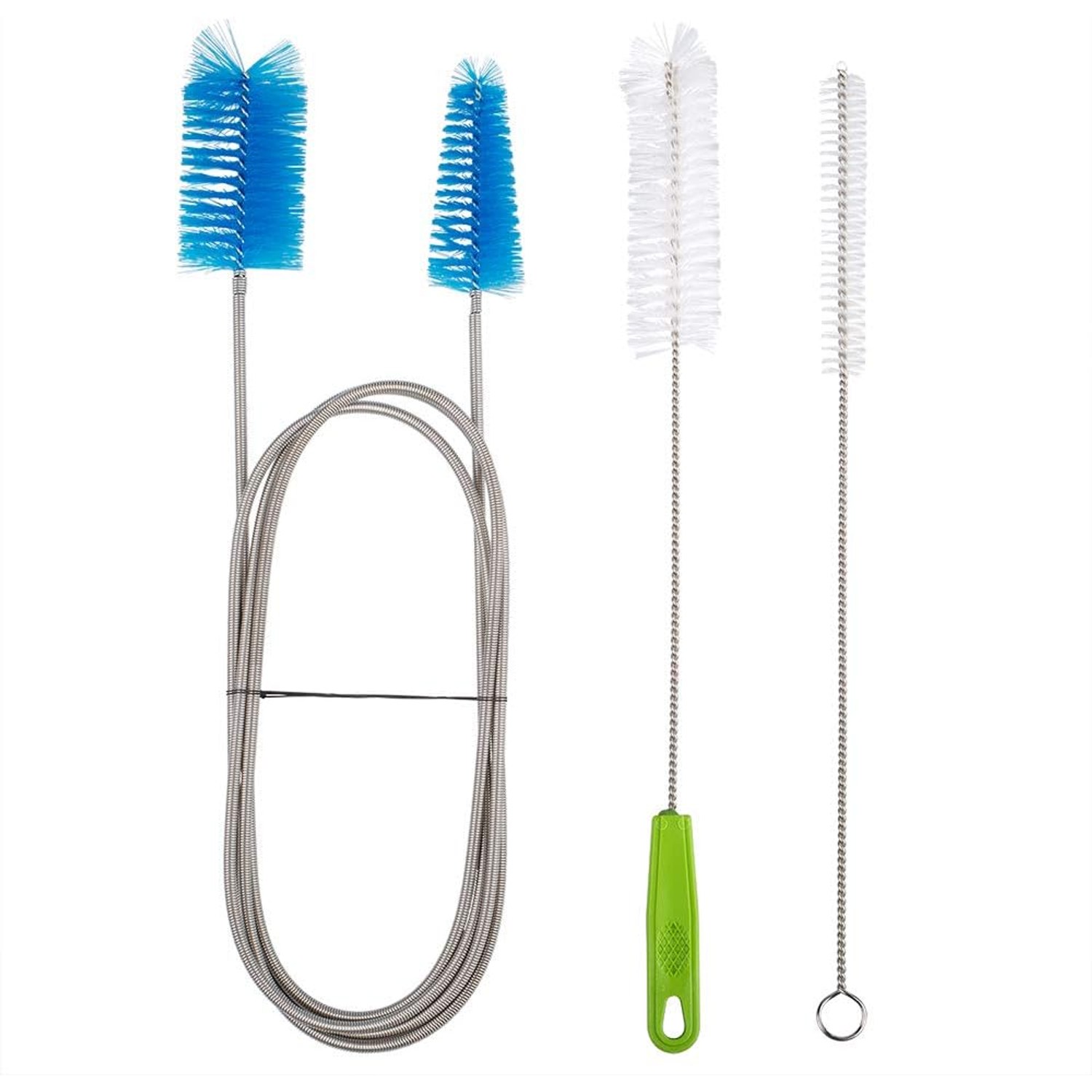
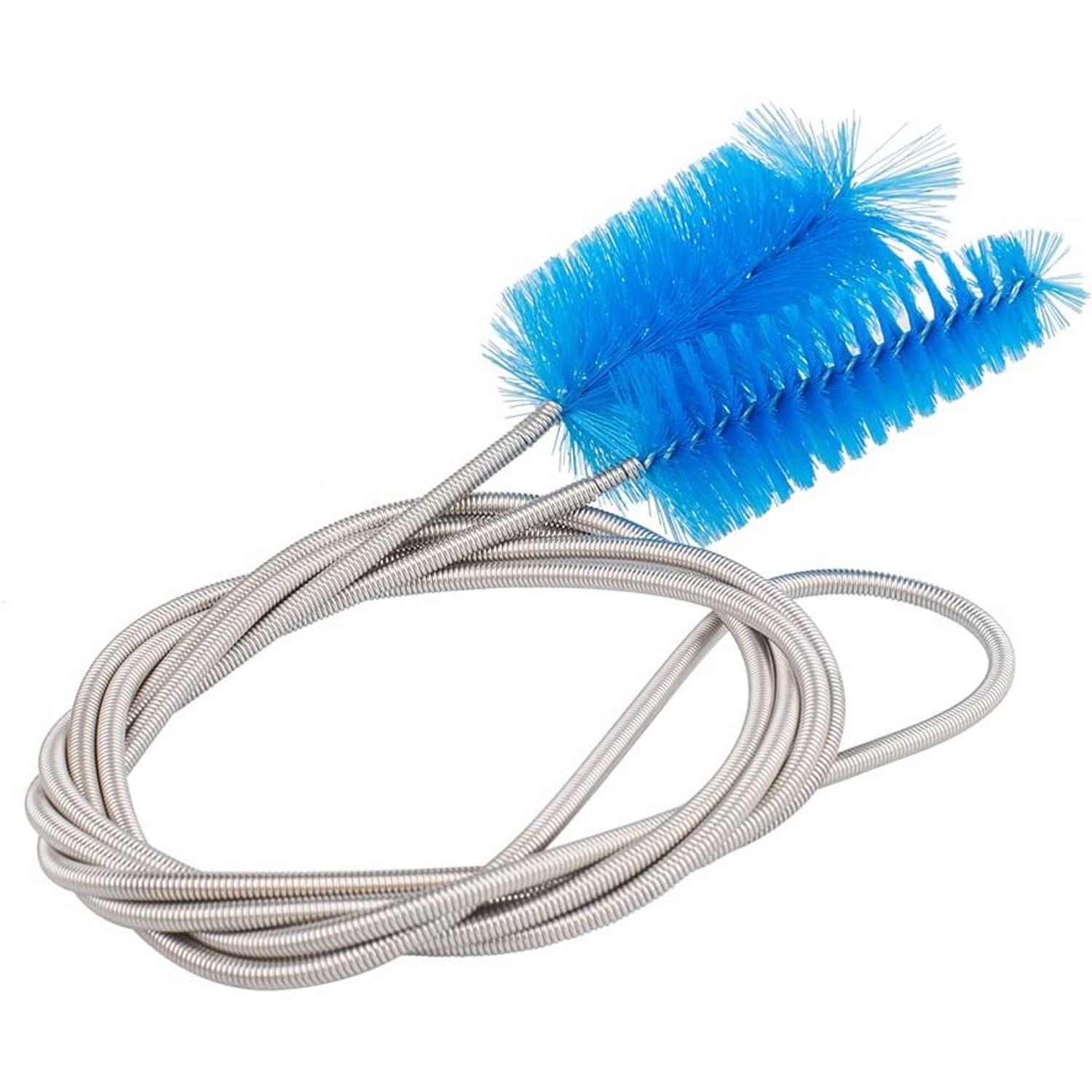
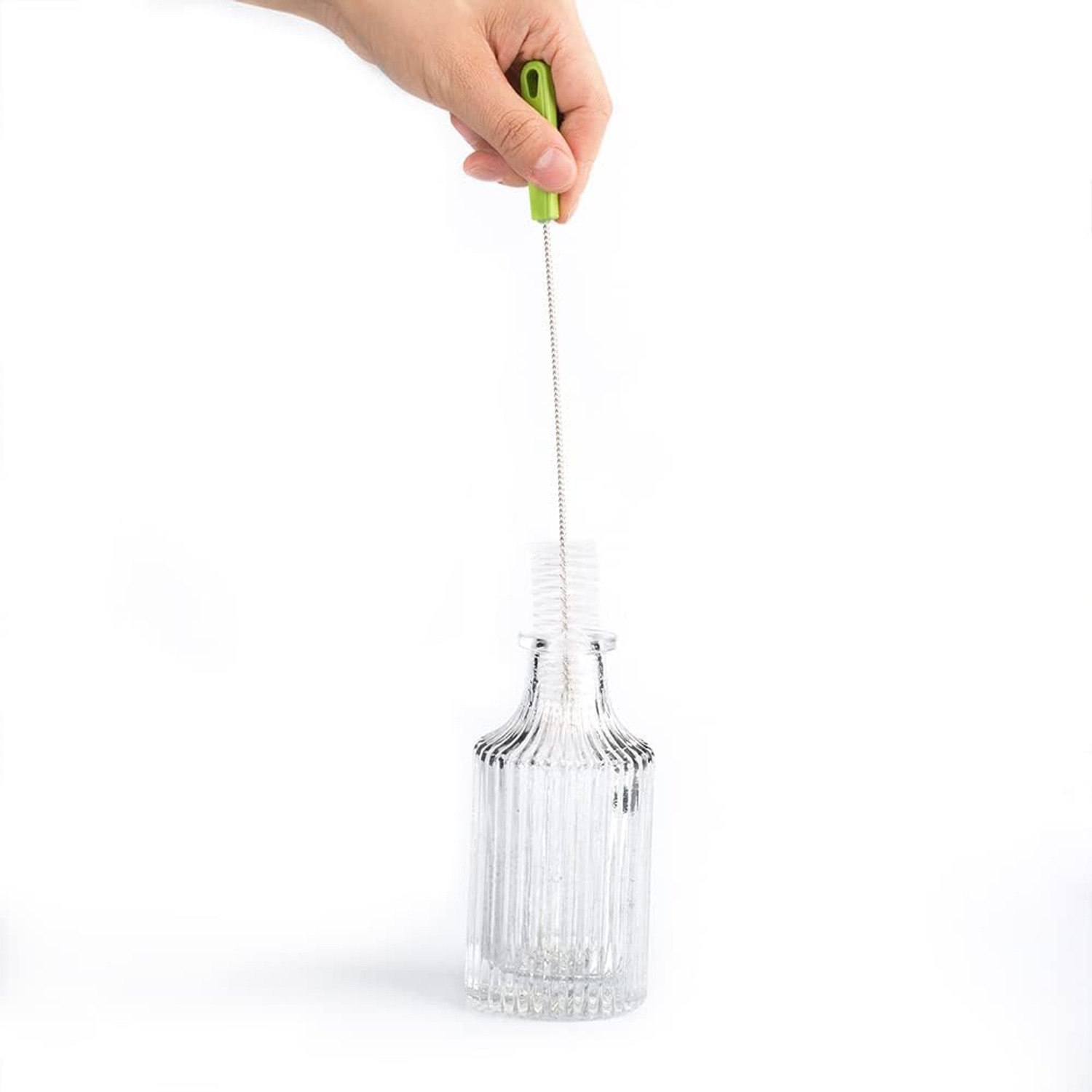
The long brush in this set has a stainless steel shaft with nylon bristles running along it. That construction is the important part. Steel gives the shaft enough backbone to push forward without folding, while the thin gauge lets it bend around a curve and spring back to shape afterwards. Push it into a trap and it follows the pipe instead of jamming at the first elbow.
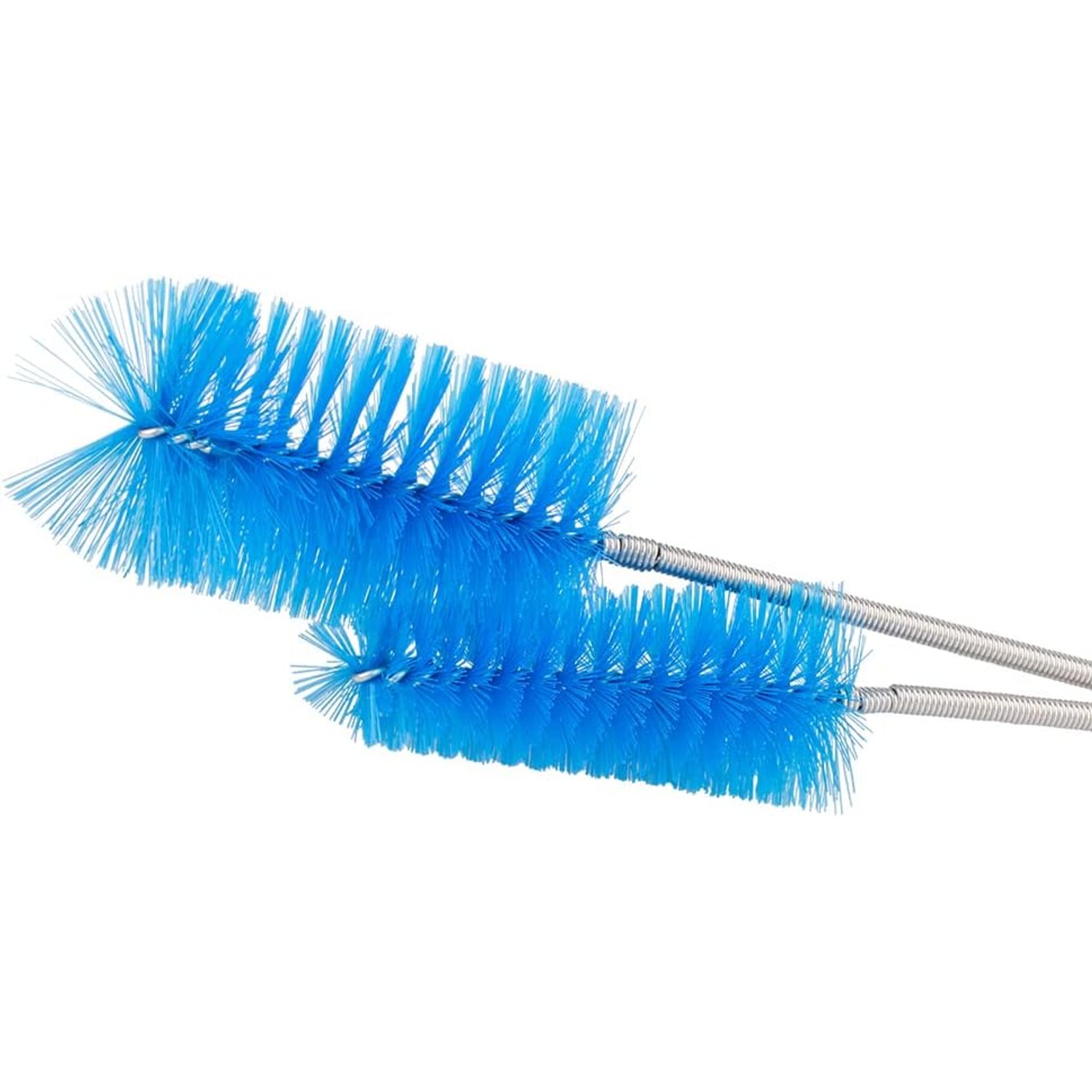
Bristles at both ends change how the job goes. A single ended brush tends to push debris ahead of it, which means you are relocating the blockage rather than removing it. With bristles front and back, the brush scrubs on the way in and then catches material on the way out. You pull, and the gunk comes up with it into the sink where you can pick it out and bin it.
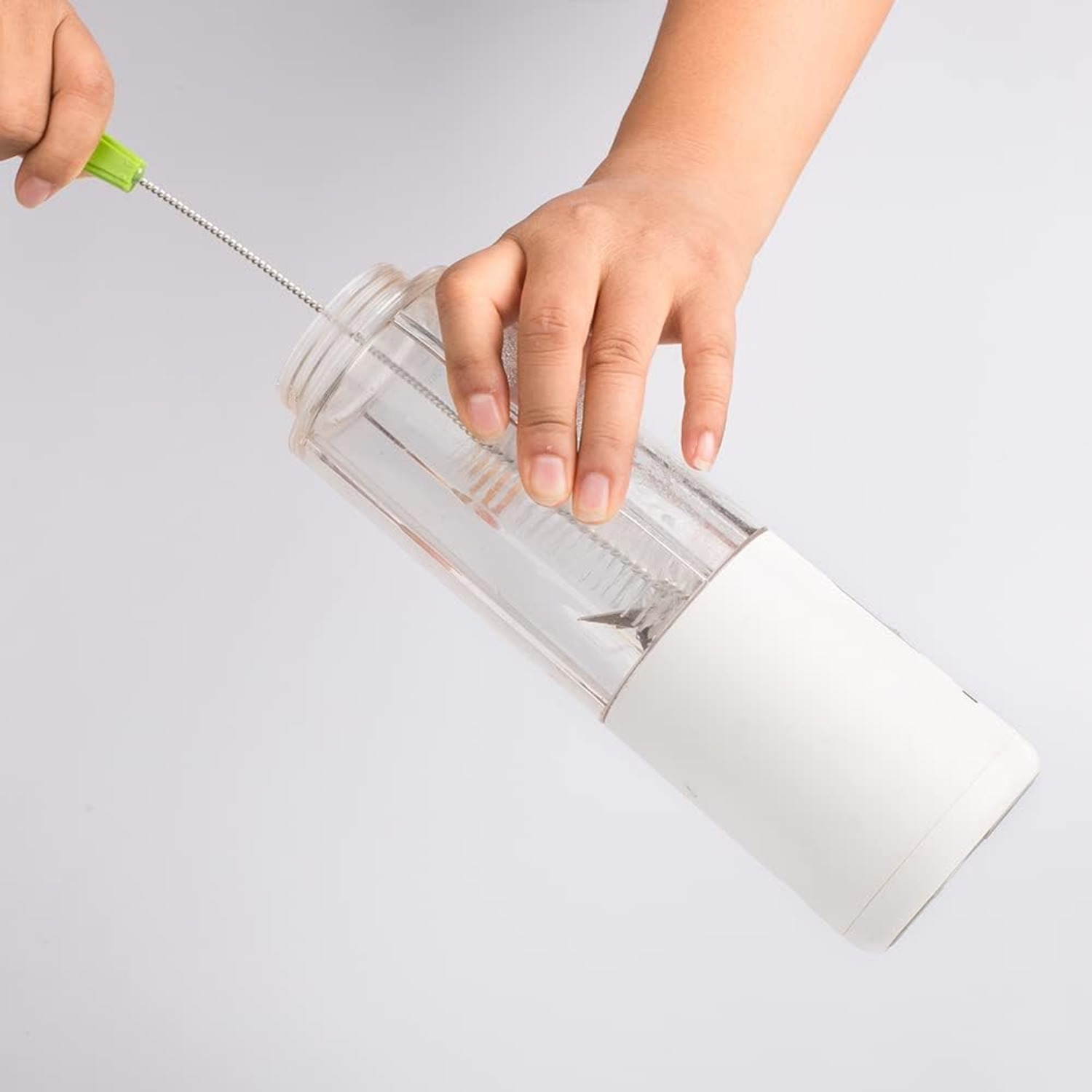
Technique matters more than force. Feed the brush in slowly, twist as you go rather than shoving, and stop when you feel firm resistance. Twisting is what does the scrubbing. Shoving just bends the shaft and risks kinking it. A couple of slow in-and-out passes with rotation will shift more than one hard push ever does.
The two short nylon brushes work on a different principle. They are stiff and sized for narrow interiors, so they make contact with the whole inside wall of a straw or a bottle neck in one pass. No flexing required, just a few firm strokes under running water.
Who gets the most out of a set like this
Households with long hair in them will use the long brush constantly. Hair binds with soap scum into a mat that sits just under the shower grate, and a brush pulls it out in one piece. A monthly pass genuinely prevents most slow-draining bathroom problems.
People who cook a lot find the kitchen sink is the worst offender. Fat cools and sticks to the pipe wall, then catches everything else that goes past. Running hot water helps for about a metre and then the fat sets again further down. Mechanical scrubbing is the only thing that reliably removes it.
Aquarium keepers are a natural fit. Filter intakes, outflow tubes, spray bars and flexible hose runs all lose performance as biofilm thickens. Pulling a brush through a hose restores flow without chemicals, which matters a great deal when there are fish involved. A lot of hobbyists end up treating this as the best u-bend cleaning tool in their kit simply because the flexible shaft handles curved tubing better than anything rigid.
Anyone using reusable drinkware needs the short brushes. Metal and glass straws are hard to inspect and easy to neglect. The same goes for sports bottle caps, pet water bottles and the little silicone valves inside them.
Renters benefit too. Mechanical cleaning leaves nothing in the plumbing, which keeps everyone happy, and the set packs into a drawer when you move.
Choosing the right brush for the job
If you are comparing options, three things decide whether a brush will actually help you.
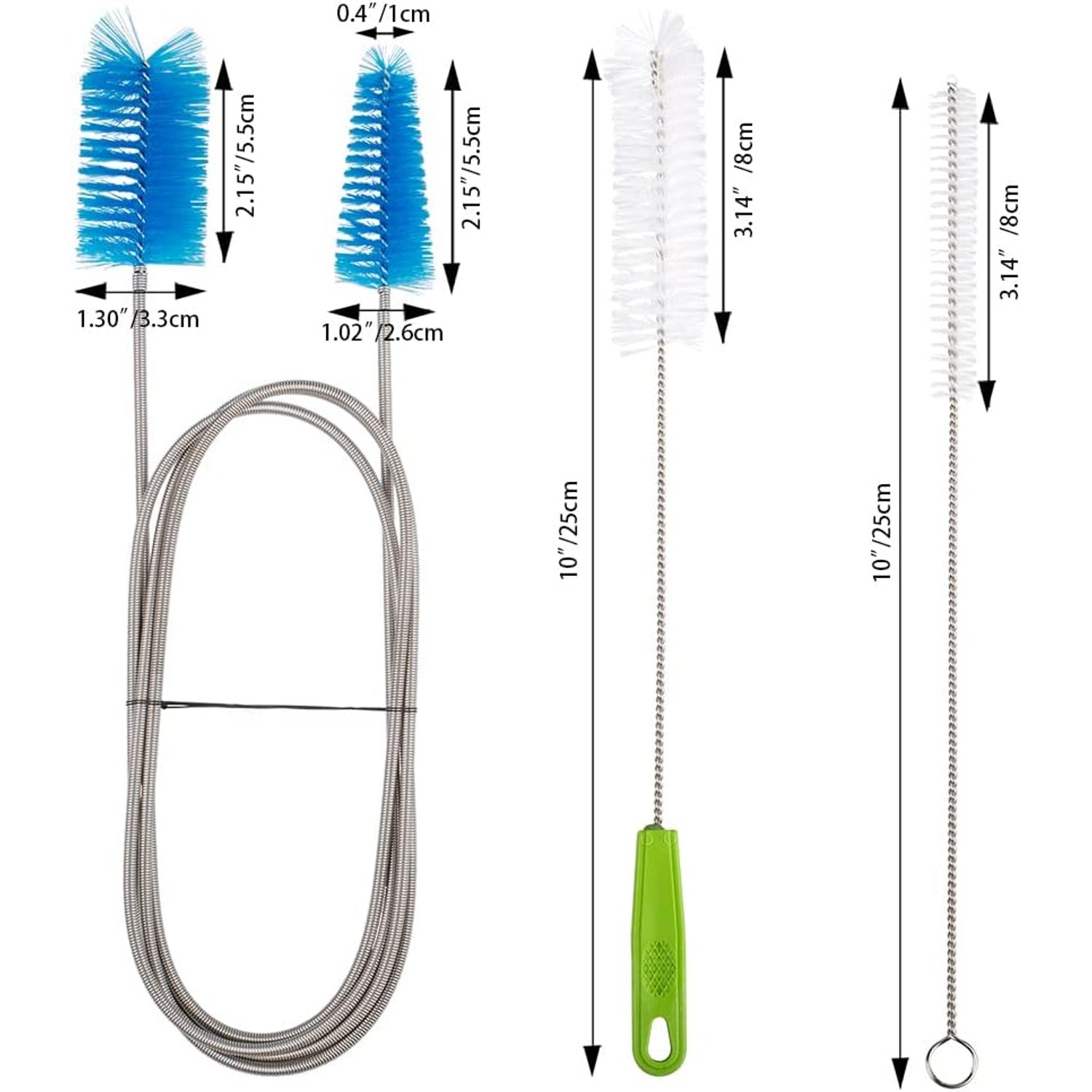
Length is the first. A short brush only cleans the section you could probably reach anyway. The point of a long flexible brush is to get past the trap, so longer is genuinely better here as long as you can store it coiled.
Flexibility is second. Too stiff and it will not follow a bend. Too floppy and it will not push forward at all. A steel core with nylon bristles sits in a useful middle ground, and the medium firmness listed for this set reflects that balance.
Bristle material is third. Nylon is the sensible choice for mixed household use because it is soft enough for glass and coated surfaces but stiff enough to scrub a slimy pipe wall. Wire brushes clean harder but will mark a basin and are overkill for a domestic drain.
Diameter matters as well, though it is easy to overlook. A brush that is too fat will not enter the pipe, and one that is too thin will slide through without touching the walls. Having a long brush plus two narrower straw brushes in one pack covers a wider range of tube sizes than a single tool ever could, which is really the argument for buying a set.
Keeping the brushes in good shape
Care is simple but worth doing. Pull the visible debris off into the bin by hand before you rinse, otherwise you are just moving hair from one drain to another. Then rinse under hot running water, with a little dish soap if the job was greasy.
Drying is the step people skip. A wet steel brush shoved into a closed drawer will eventually show rust spots at the bristle joins, and damp nylon holds smell. Use the hanging loop, or lay the brushes flat somewhere airy until they are properly dry.
Avoid sharp kinks in the flexible shaft. It is built to curve, not to fold, and a hard crease creates a weak point that will fail later. Store it coiled loosely rather than jammed under something heavy.
Finally, think about separation. Many people keep one short brush strictly for drinkware and use the other for drains and tanks. It costs nothing to do and removes any doubt about cross-contamination.
A realistic cleaning routine
Once a month per drain is enough for most homes. Pick a day, do the kitchen sink, the bathroom basin and the shower in one go, and you are done in ten minutes. If anyone in the house has long hair, or you cook with a lot of oil, move the shower and kitchen to fortnightly.
Drinkware is different. Straws and bottle spouts should get a brush after each use, or at minimum at the end of each day. They are small jobs that take seconds, and skipping them is what causes the taste problem people blame on the straw itself.
Aquarium tubing is on its own schedule, usually tied to filter maintenance. Most keepers do it when they notice flow dropping, which tends to land somewhere between monthly and quarterly depending on stocking and feeding.
The short version
Drains, hoses and straws all have the same weakness, a narrow curved interior that nothing else can reach. This set gives you one long flexible brush with a stainless steel shaft and nylon bristles at both ends for the plumbing, plus two short nylon brushes for straws, bottles and small tubing.
It weighs 45 g, it hangs up to dry, and it does not need chemicals or batteries. Use it slowly with a twist rather than force, rinse and dry it afterwards, and it will keep your drains running freely and your drinkware tasting like whatever you actually put in it.