
The complete guide
How To Choose And Use A Sink Snake Kit At Home
The slow drain problem nobody deals with early
A blocked drain almost never happens overnight. It starts as a sink that takes a little longer to empty, then a basin that holds an inch of water while you brush your teeth, then a shower that puddles around your ankles. Most of us ignore it for weeks. By the time it fully stops, the blockage has had months to compact.
What is actually in there is not mysterious. In a bathroom it is hair bound together with soap scum, which sets into a dense grey mat. In a kitchen it is cooled fat, coffee grounds, rice and small food scraps. Both form a soft plug in the first metre of pipe, usually right in the U bend under the sink where the water sits.
That location matters, because it tells you what will and will not work. Pouring something down the plug hole sends liquid over the top of a plug that water is already flowing over. A tool that physically reaches in and pulls the plug out is a different proposition entirely.
What a six piece kit actually gives you
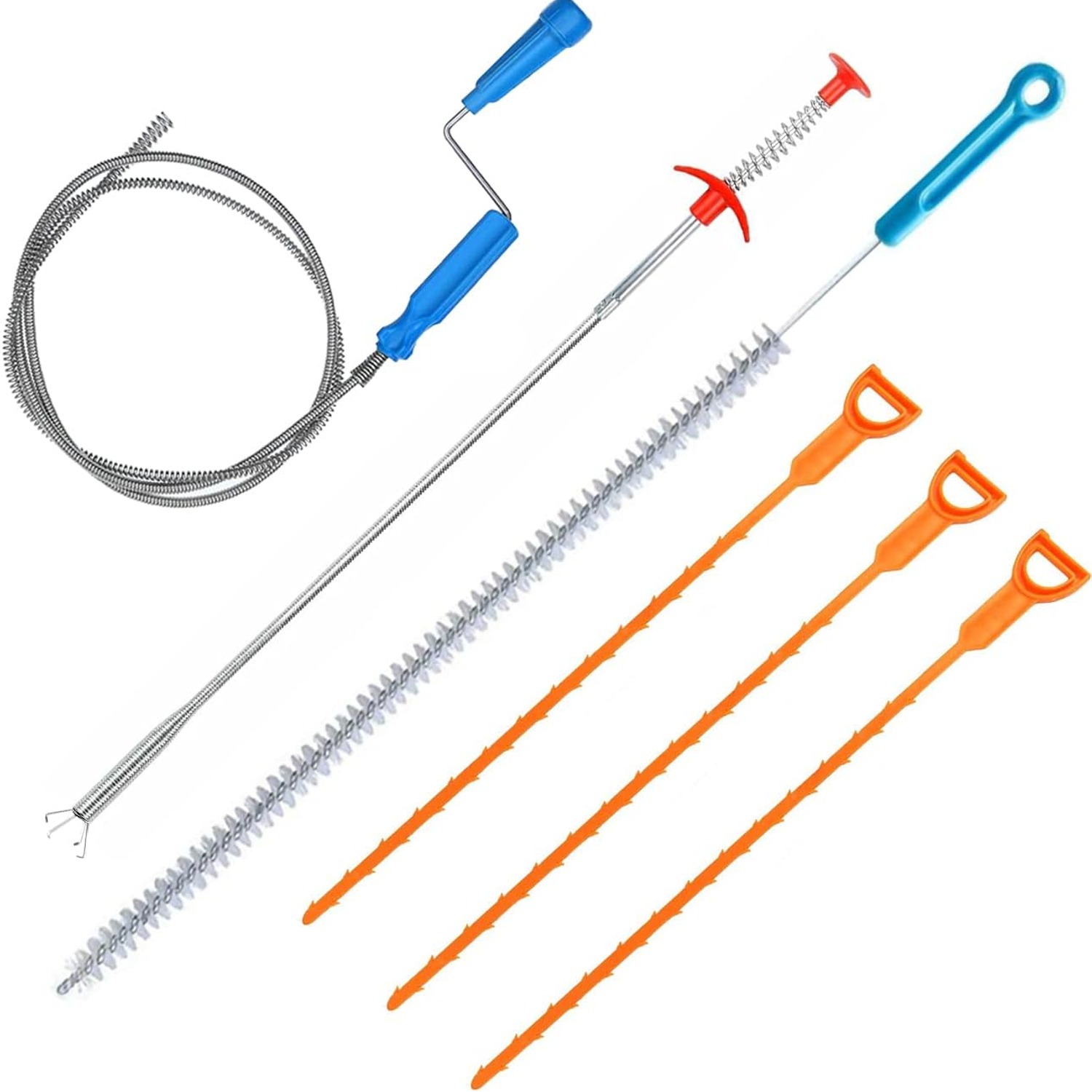
This set takes the approach of matching the tool to the job rather than giving you one device and hoping it covers everything.
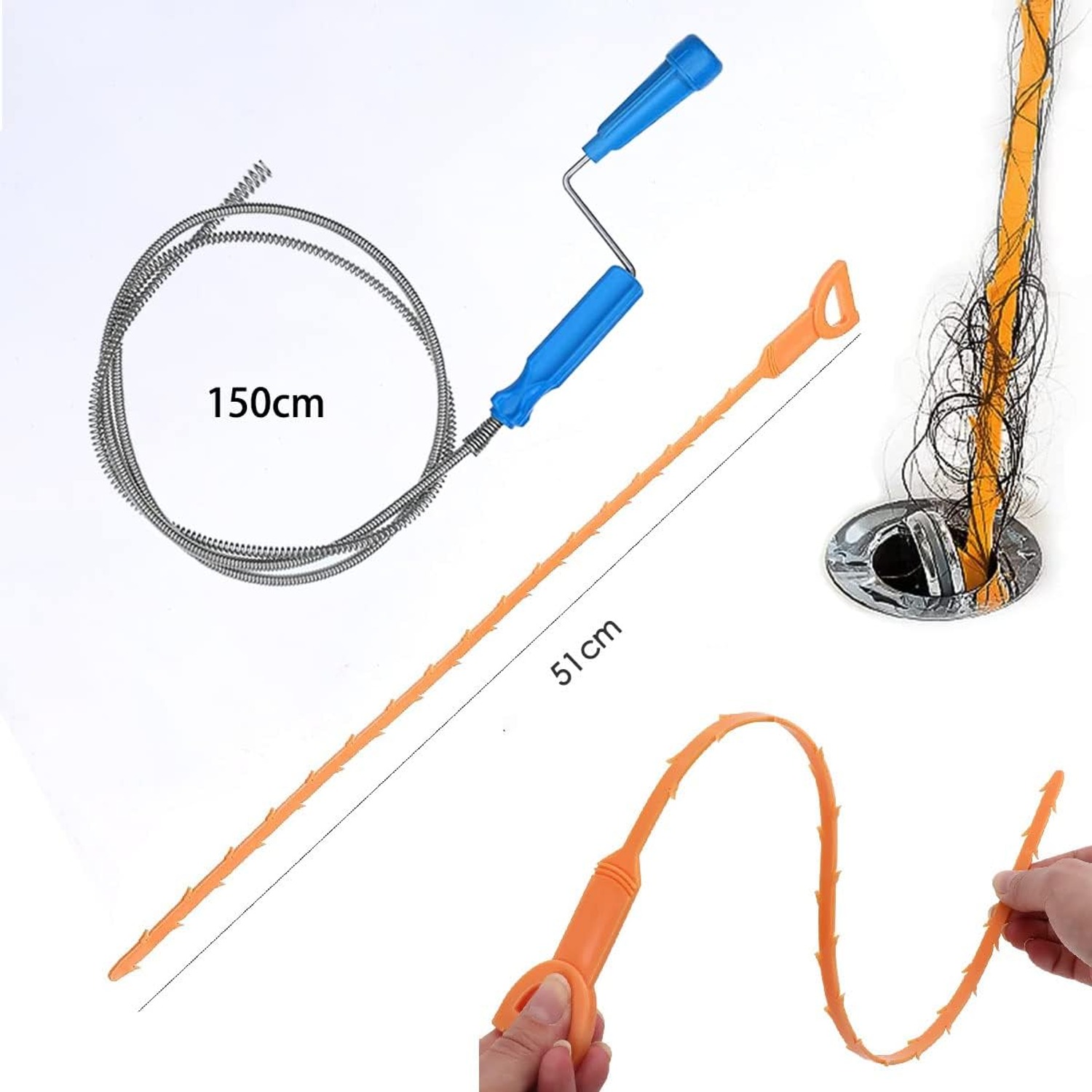
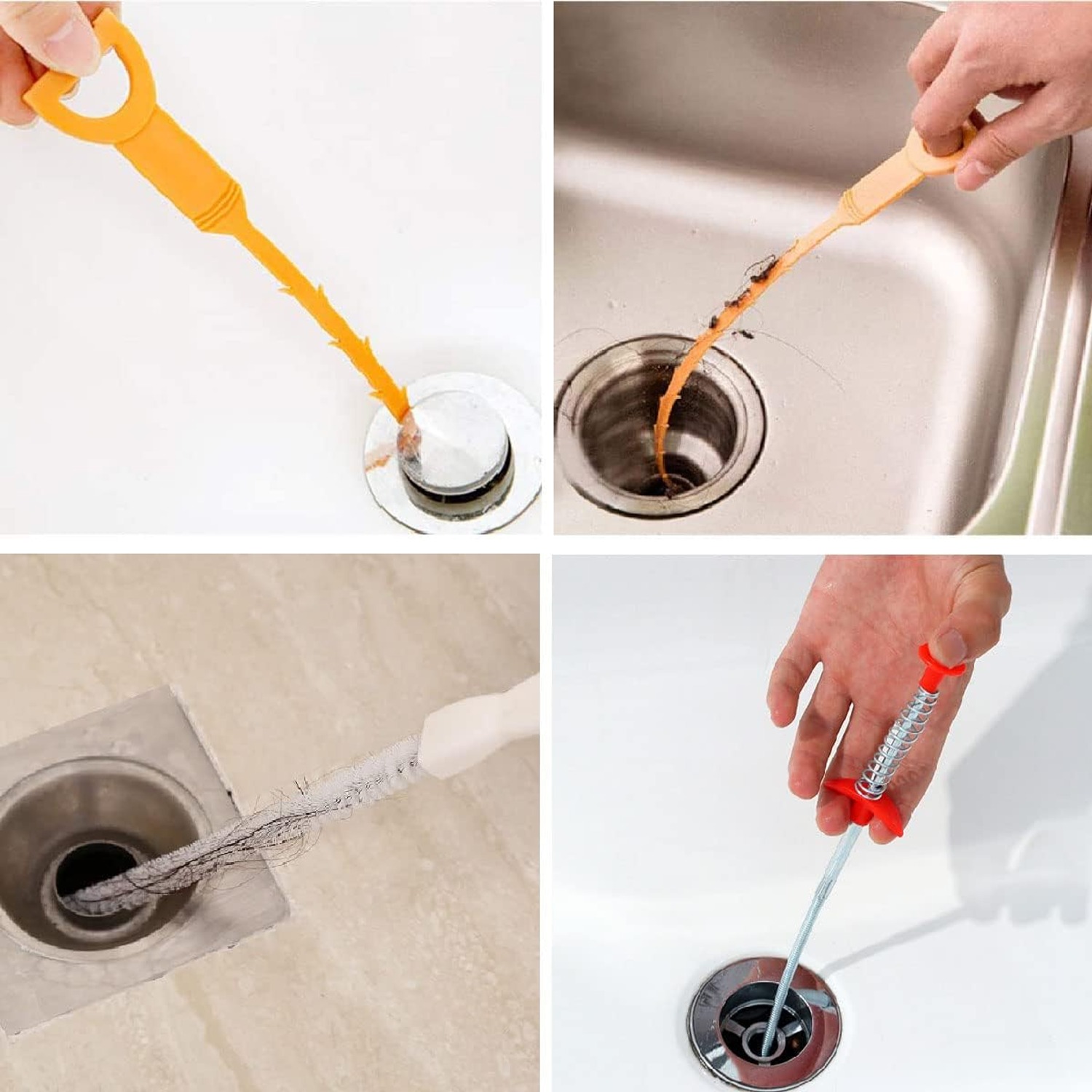
The headline item is the 150cm hand crank drain auger. It is a carbon steel spiral on a flexible shaft with a turning handle. You feed it in, crank it, and the spiral tip winds into whatever is blocking the pipe. Because the tip is a spiral rather than a flat end, it does not catch on pipe joints and it follows curves. That 150cm length is enough to pass the trap and go well into the waste pipe behind it.
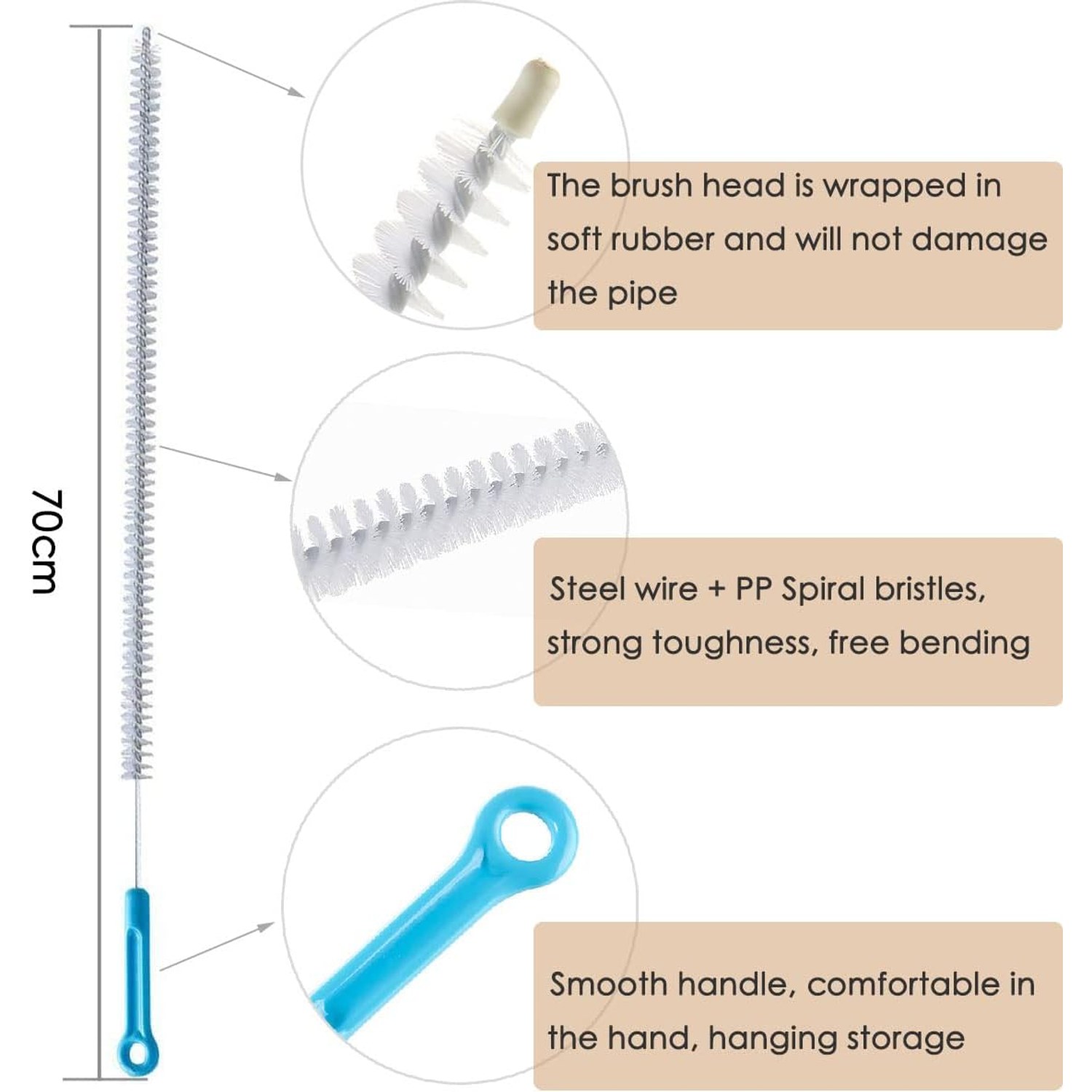
Next is the 70cm hair catcher clog remover. This is the mid range tool, longer than a simple hair strip but easier to handle than the full auger. It suits a basin or shower where the clog is a bit deeper than a quick pull can reach.
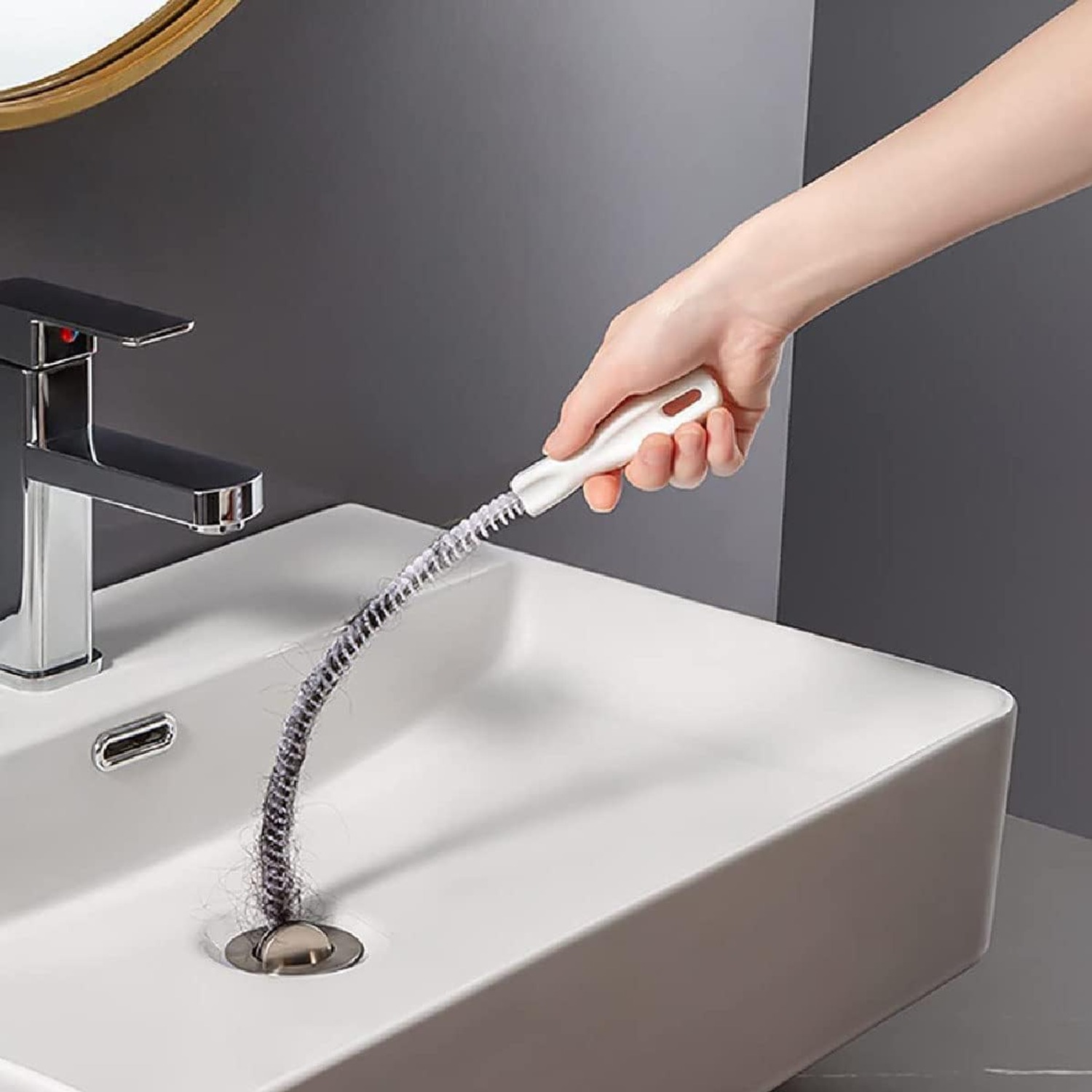
Then there are three 50cm hair remover strips. These are thin, flexible and covered in backward facing barbs. They are the fastest tool in the pack. Drop one down a shower drain, twist, pull, done. You get three of them because they are the pieces you will reach for most.
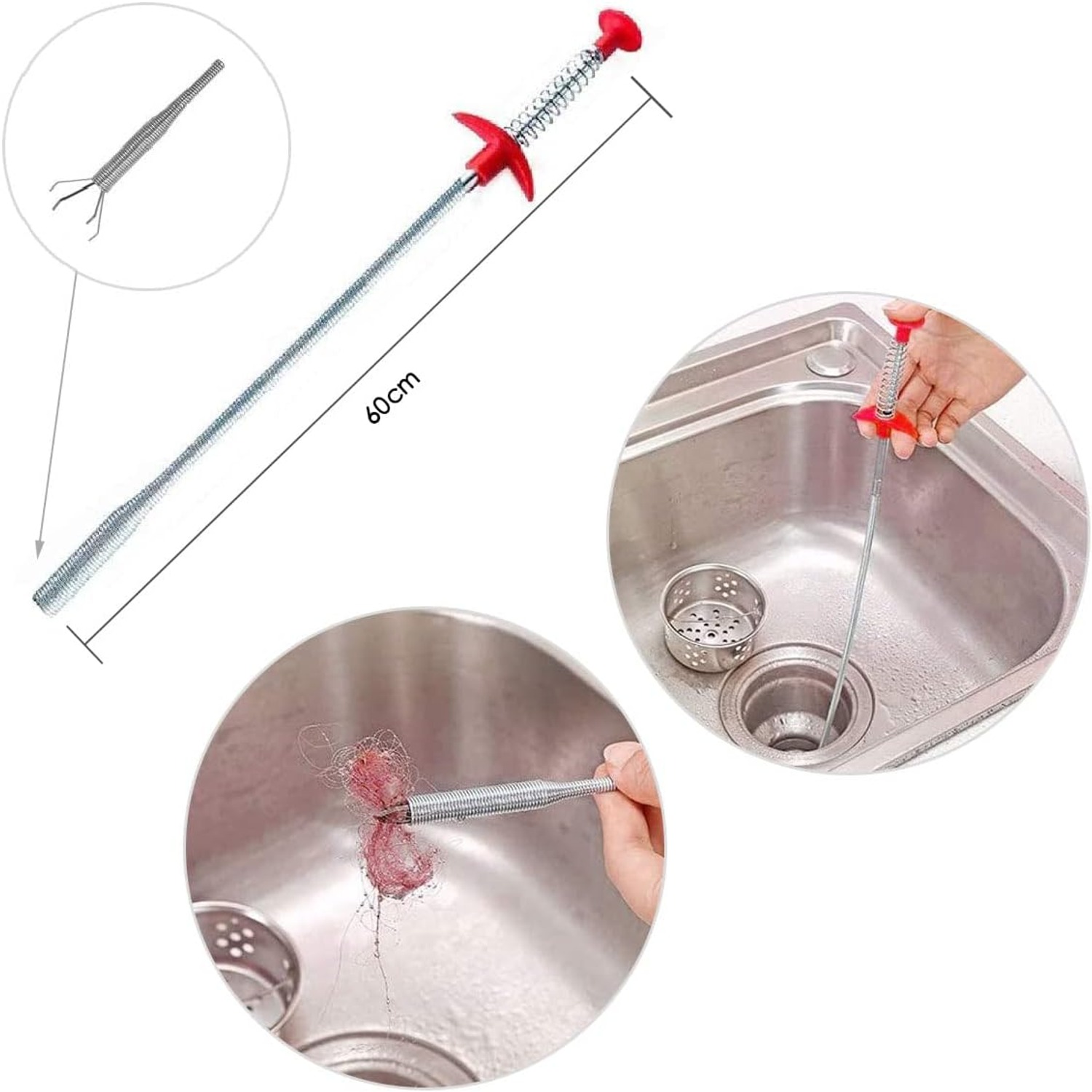
The sixth item is the 60cm claw grabber. Press the plunger and four small claws open at the far end. Release and they clamp shut. This is not really a clog tool. It is the thing you want at eleven at night when a wedding ring has just gone down the plug hole. The claws reach into narrow, curved spots and hold tight enough that you are not likely to drop the item on the way back up.
There is also a brush element built from steel wire with PP bristles, tough in the middle and scrubbing on the outside. It bends freely, which means it cleans the pipe wall rather than just poking a channel through the middle of a clog.
Choosing the right tool for your blockage
Start with the least effort and work up. This saves time and saves wear on the tools.
If the water is slow but still moving, and the drain is in a bathroom, try a hair strip first. Nine times out of ten the blockage is sitting within 20cm of the grate and the barbs will drag it straight out. This takes about sixty seconds and makes a mess you can fit in a sheet of paper towel.
If the strip comes up clean but the water is still slow, the clog is deeper. Move to the 70cm remover and repeat. Still nothing? That is when the auger earns its place.
For kitchen sinks, go straight to the auger. Kitchen clogs are grease rather than hair, so there is nothing for barbs to catch on. The spiral tip needs to bore into the fat plug and break it apart. Run very hot water for a minute afterwards to flush the loosened material through.
If an object has fallen in rather than a blockage forming, skip all of that and use the claw grabber. Do not run the tap while you are fishing, since water flow will push a small item further along.
Using the auger without making things worse
A hand crank auger is simple but there is a technique to it.
Feed the tip in slowly until you feel resistance. That resistance is usually the bend in the trap, not the clog. Keep turning the handle gently and let the spiral walk itself around the curve. Do not shove.
When you hit the actual blockage you will feel the handle load up. Keep cranking in the same direction for several turns. You are winding the hair and gunk onto the spiral like spaghetti on a fork. Then pull the whole thing back out, slowly and steadily, keeping a bucket or a bin bag handy.
If the coil binds and will not move, stop. Crank backwards two or three turns while easing it toward you. Forcing a jammed coil is how you put a permanent kink in it.
Run the tap for a minute afterward. If it still backs up, go in again. One pass does not always get everything, and a second pull often brings up more than the first.
Who this kit suits
Renters get a lot out of it. A slow basin is rarely urgent enough to justify a call out, but it is annoying every single day, and clearing it yourself takes ten minutes.
Households with long hair see the fastest payback. Shower drains in those homes block on a predictable cycle, and running a hair strip down every month or so stops the problem ever forming. It becomes a maintenance habit rather than an emergency.
Anyone who cooks a lot should keep the auger handy. Fat goes down the sink in small amounts even when you are careful about it, and it builds up quietly in the cold section of pipe.
And if you have ever dropped something small and valuable into a drain, the grabber alone will justify the purchase on the day it happens.
Care and storage
The tools are reusable, so looking after them is worth a minute of your time.
Rinse everything under hot water straight after the job, with a little dish soap on the coil to cut grease. Pull any remaining debris off with gloved hands or paper towel before it dries on.
Dry the metal parts properly before storage. Carbon steel will rust if you put it away damp, and a rusty coil is rough on the inside of pipes. Stand the auger up somewhere for an hour if you are not sure.
Keep the set together. The barbed strips will snag on cloth and other tools if they roam loose in a drawer, so the original pack or a zip bag works well. The whole kit only weighs 370 g and the box is 33 x 14.8 x 8 cm, so it tucks under a sink easily.
Finally, do not try to straighten a coil that has bent out of shape. If a tool is visibly damaged, retire it rather than pushing it down a pipe where it might break off.
The short version
Blocked drains are a physical problem and they want a physical fix. This kit gives you six tools across three sizes of job, from a sixty second hair pull to a proper 150cm bore through a greasy kitchen trap, plus a claw grabber for the day something valuable goes down the plug hole.
It needs no power, no chemicals and no plumbing knowledge. Rinse it, dry it, put it back in the cupboard. Most people use it once, realise how straightforward it is, and never pay for a call out on a slow sink again.