

The complete guide
Floor Drain Plugs: How To Stop Drain Smells In A Bathroom Or Laundry
The smell nobody can find
You walk into the laundry and something is off. Not strong, not constant, just a faint sewer note that drifts in and out. You check the bin. You check under the sink. You sniff the washing machine hose. Nothing.
Nine times out of ten the answer is the floor waste, that small grate set into the tile near the wall. It has a job to do, but most of the time it does nothing at all, and that is exactly the problem.
A floor drain is a safety feature. If your washing machine hose pops off or the shower screen leaks, the water goes somewhere instead of soaking into the subfloor. To stop sewer gas rising through that opening, the pipe underneath has a bend that holds a small amount of water. That water is the seal. Gas cannot pass through it.
But water evaporates. In a laundry that only gets used on weekends, or a guest bathroom nobody showers in, that trap dries out in a few weeks. Heating speeds it up. Once the water is gone, the pipe is just an open tube running from your floor to the sewer line, and air moves freely in both directions.
That is when the smell shows up.
How a drain plug fixes it
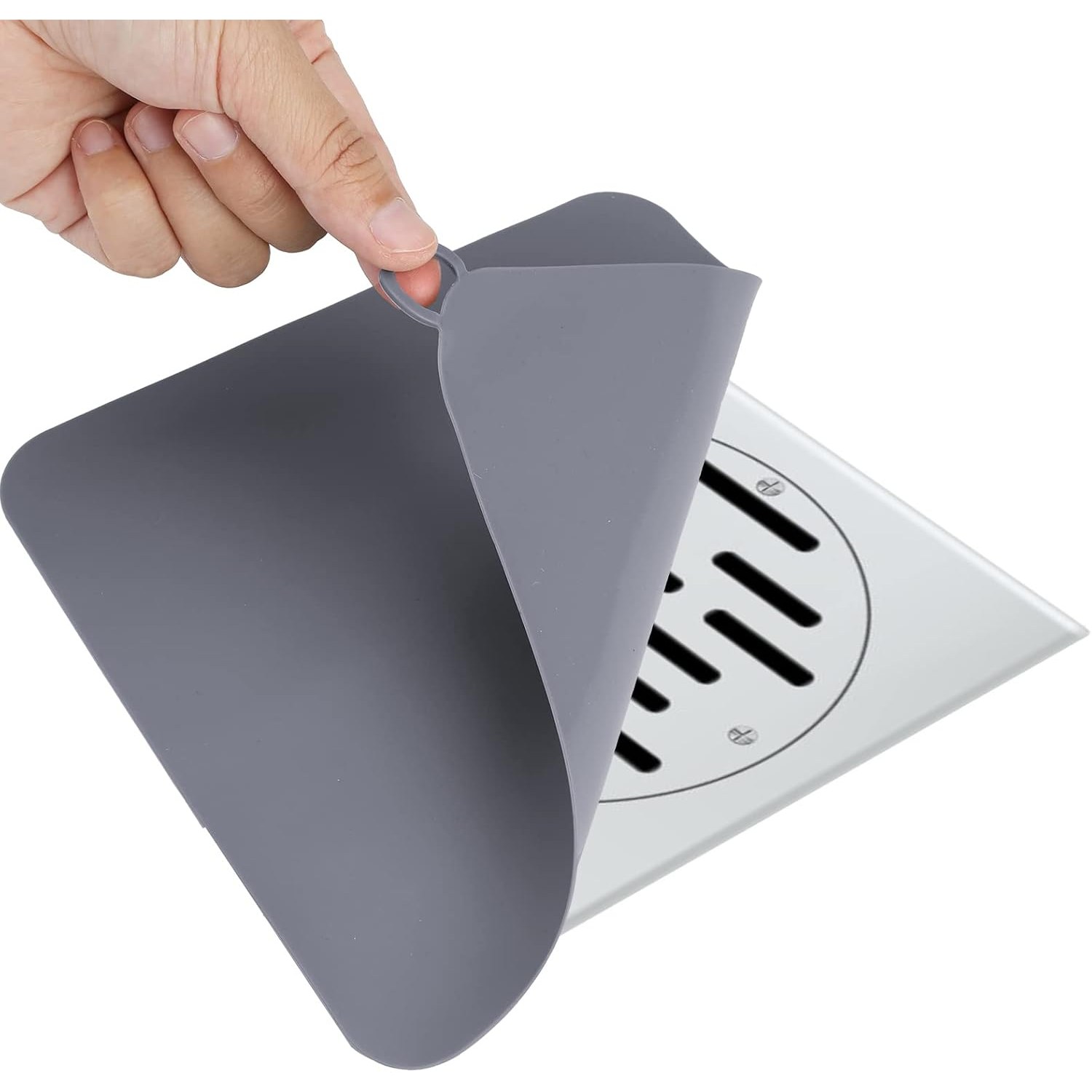
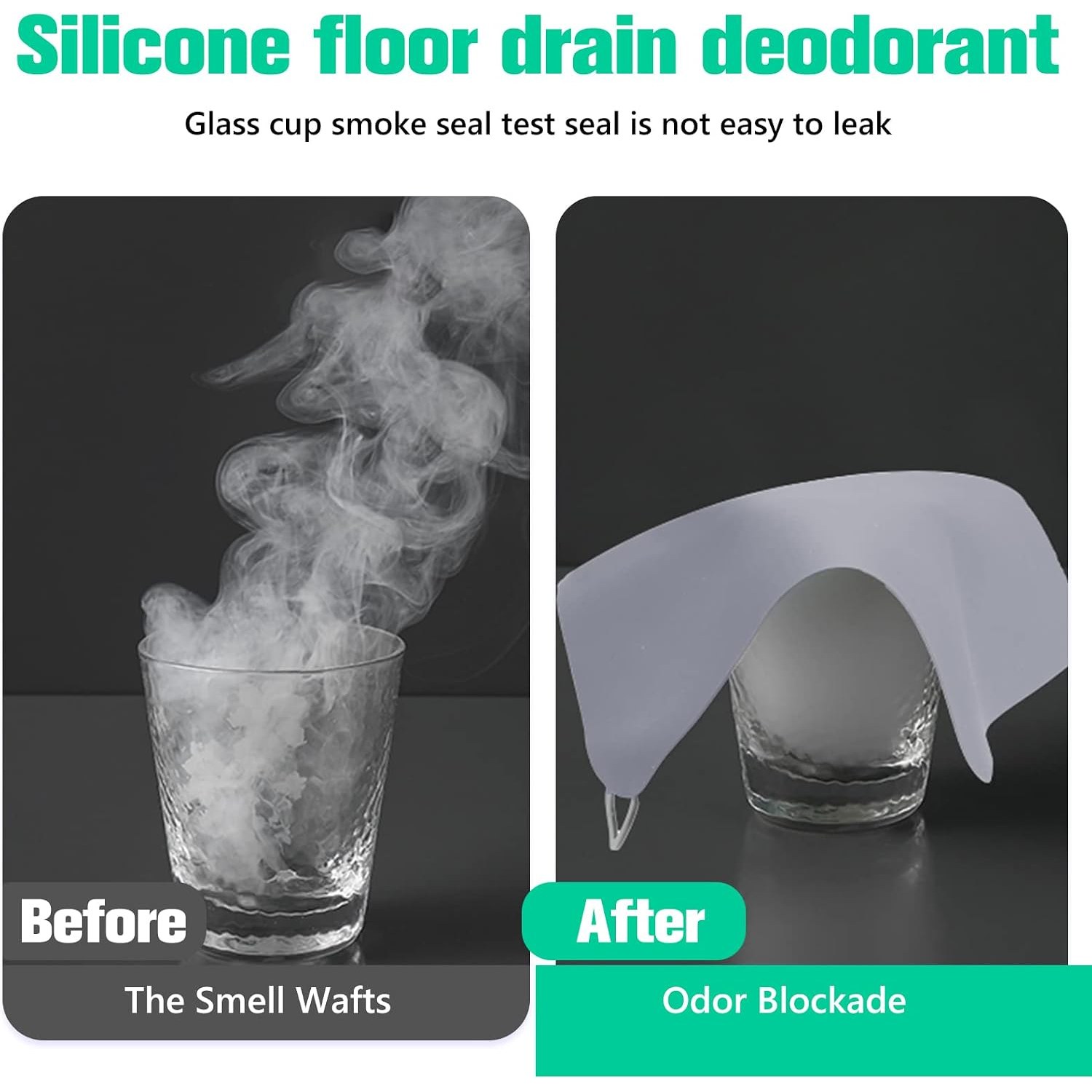
The plug is a physical barrier over the opening. It is not clever and it does not need to be. If the gas cannot get past the grate, it stays in the pipe.
What makes silicone a good material for this is the flex. A rigid plastic disc has to match the floor almost exactly or it rocks, and a rocking cover has a gap under one edge. Tiled floors are rarely flat. There are grout lines, there is a slope towards the drain, and there are often chipped edges around the grate from years of mops and cleaning. Silicone settles into all of that. It gives slightly, it sits down, and it stays where you put it.
Silicone also handles the conditions. Hot water, soap, bleach fumes from the laundry, humidity that never really goes away. It does not go chalky or brittle the way cheap plastic does after a hot summer.
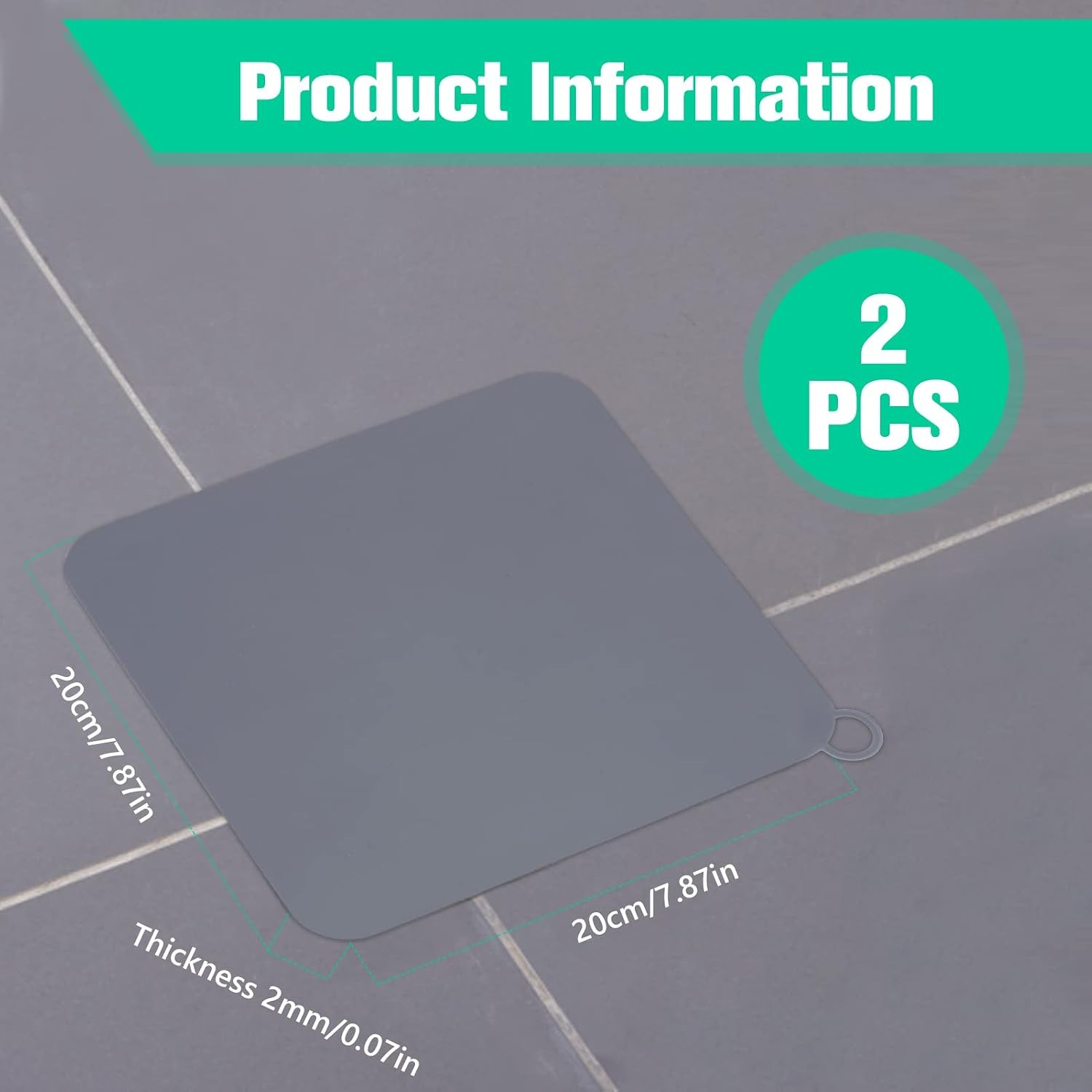
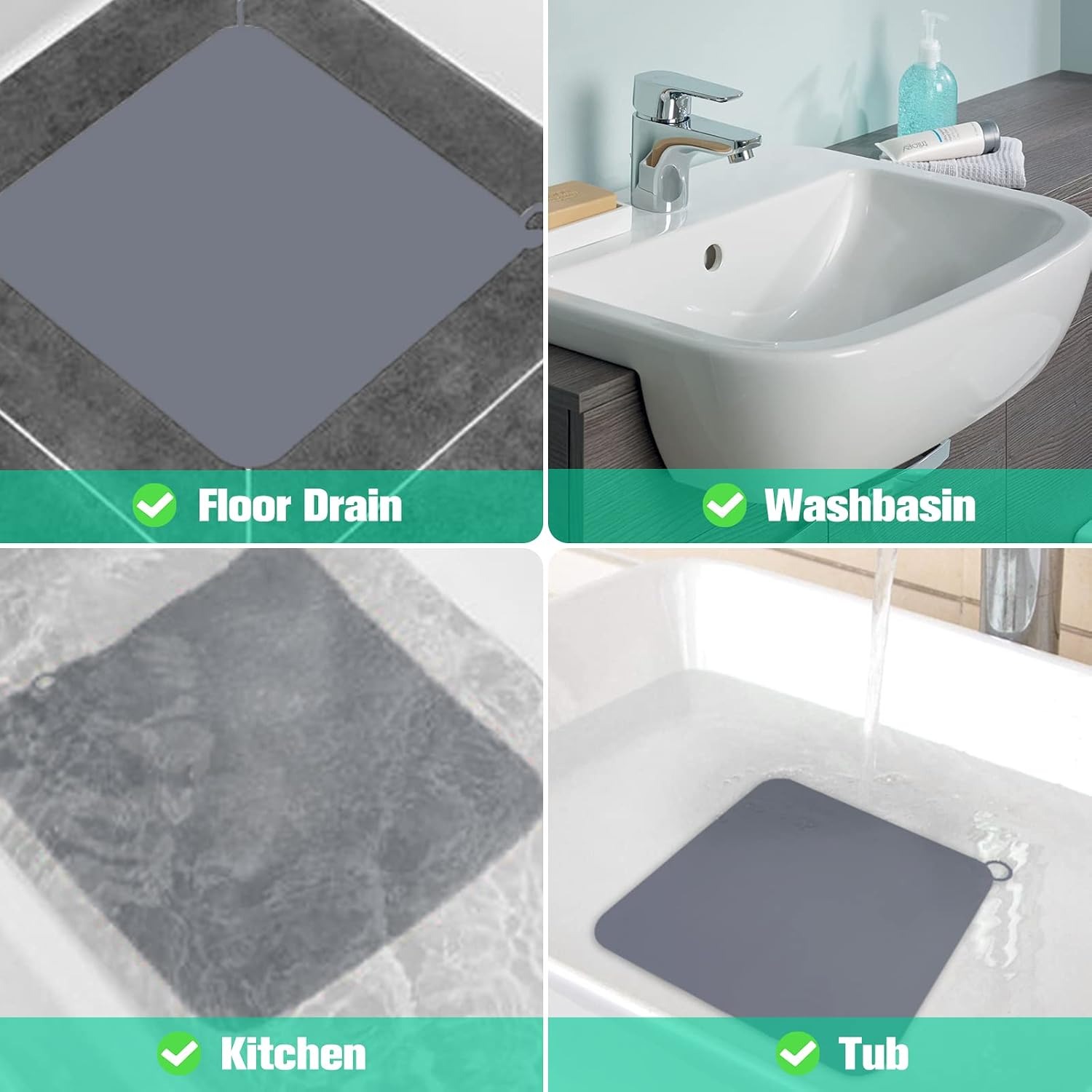
The square shape is a detail worth mentioning. Floor wastes are often installed tight against a wall or in the corner of a shower recess, because that is where water collects. A round cover in a corner leaves two awkward gaps. A square one can be pushed flush against the skirting. It also matches the shape of most modern square grates, so it looks deliberate rather than like something you improvised.
Who actually needs one
Some households need a floor waste odour stopper more than others.
If you are renting an older place, you probably need one. Older bathrooms tend to have more floor wastes, often in rooms that barely get used, and you cannot exactly start re-plumbing a rental.
If you have a laundry that only runs once or twice a week, the trap there is almost certainly dry between washes. Same goes for a second bathroom, a garage with a floor drain, or a holiday house that sits empty for months at a time. Coming back to an empty house and getting hit by drain smell at the door is a very common experience, and it is almost always the dry traps.
If you live somewhere hot and dry, evaporation happens faster across the board. And if you are on an upper floor of an apartment building, pressure changes in the stack can push air up through any opening that is not sealed.
The people who need one least are those with a busy family bathroom where the shower runs twice a day. The trap stays full on its own. Even then, a cover still keeps hair and grit out of the waste, which saves you a nasty job later.
Picking the right one
Measure first. Get a tape measure and check the outside edge of your grate, or the opening if you plan to sit the plug inside it. Write the numbers down. This takes thirty seconds and saves a return.
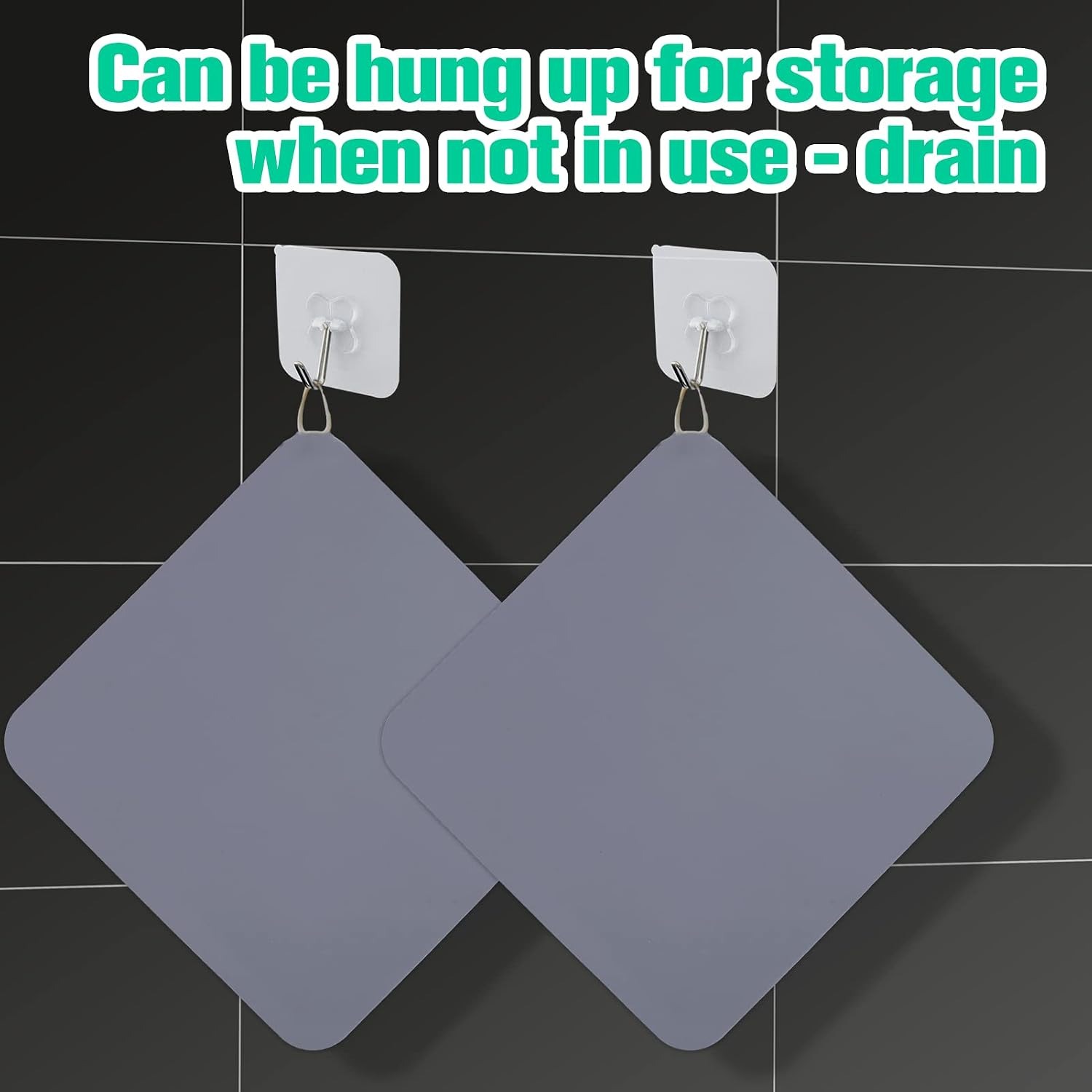
Then think about how you will use the drain. If it genuinely never drains anything, you want a plug you can leave in place and forget. If it is in a shower recess or next to a washing machine, you want something that lifts out quickly, because you will be doing that often. A plug that needs a tool or a fingernail jammed under the edge gets annoying fast.
Material matters more than price. Silicone, rubber and good quality plastic all work. Thin, hard plastic does not, because it warps. If you are comparing options, press one between your fingers. It should bend and spring back, not crease.
Finally, buy more than one. Most homes have at least two floor wastes and you will find the second one as soon as you fix the first. A two-pack covers the usual case without a second order and a second delivery wait.
Living with it
The routine is simple. Plug in place most of the time, lift it out when the floor needs to drain, put it back when the water is gone.
In a bathroom, that usually means taking it out before a shower and replacing it after. In a laundry, you can often leave it in permanently and only move it on wash day or when you mop.
Keep the water trap topped up anyway. Once a month, tip a jug of water down each floor waste in the house. It takes two minutes for the whole place and it means the plug is a second line of defence rather than the only one. If you are going away for a few weeks, do it the day before you leave.
Keeping it clean
Silicone is easy to look after, but it does need looking after. Soap scum builds up on the underside where you cannot see it, and hair collects around the grate.
Every couple of weeks, lift the plug out and rinse it under warm water. Wipe both sides with a cloth and a drop of dish soap, then rinse again. While it is out, clean the grate underneath. A toothbrush works well for the slots. Let the plug dry for a minute before putting it back so it sits flat rather than sliding on a wet film.
Skip the bleach soaks and scouring pads. Silicone does not need them and strong chemicals can dull the surface over time. Do not use a knife or screwdriver to lever the plug out either, because a nicked edge is a leak point.
If you notice staining, usually from hair dye or cleaning products, a paste of bicarb and water left on for ten minutes will lift most of it.
When a plug is not the answer
Be honest about what a cover can and cannot do.
If the smell is strong, constant and present even with the plug firmly in place, the problem is probably not the dry trap. It could be a cracked pipe, a blocked vent on the roof, or a connection that was never sealed properly. Those need a plumber. A drain pipe seal plug will mask a small problem but it will not fix a broken one.
Likewise, if water is backing up out of the drain, that is a blockage, and covering it will only move the water somewhere worse.
The honest test is this. Fill the trap with water, put the plug on, and wait a day. If the room smells normal, you found the cause. If it does not, start looking further down the line.
The short version
Floor drain smells almost always come from a dry water trap. A silicone plug over the opening blocks the gas and costs very little. Square plugs sit better against walls and corners, which is where most floor wastes live. Silicone beats hard plastic because it flexes to meet uneven tile instead of rocking.
Measure your grate before you order. Lift the plug out when water needs to drain and put it back afterwards. Rinse it every couple of weeks. Keep topping up the trap with a jug of water anyway.
Two plugs in a pack covers the bathroom and the laundry, which is where the problem usually is.