
The complete guide
Choosing a Gold Square Shower Floor Drain That Lasts
The part of the bathroom nobody plans for
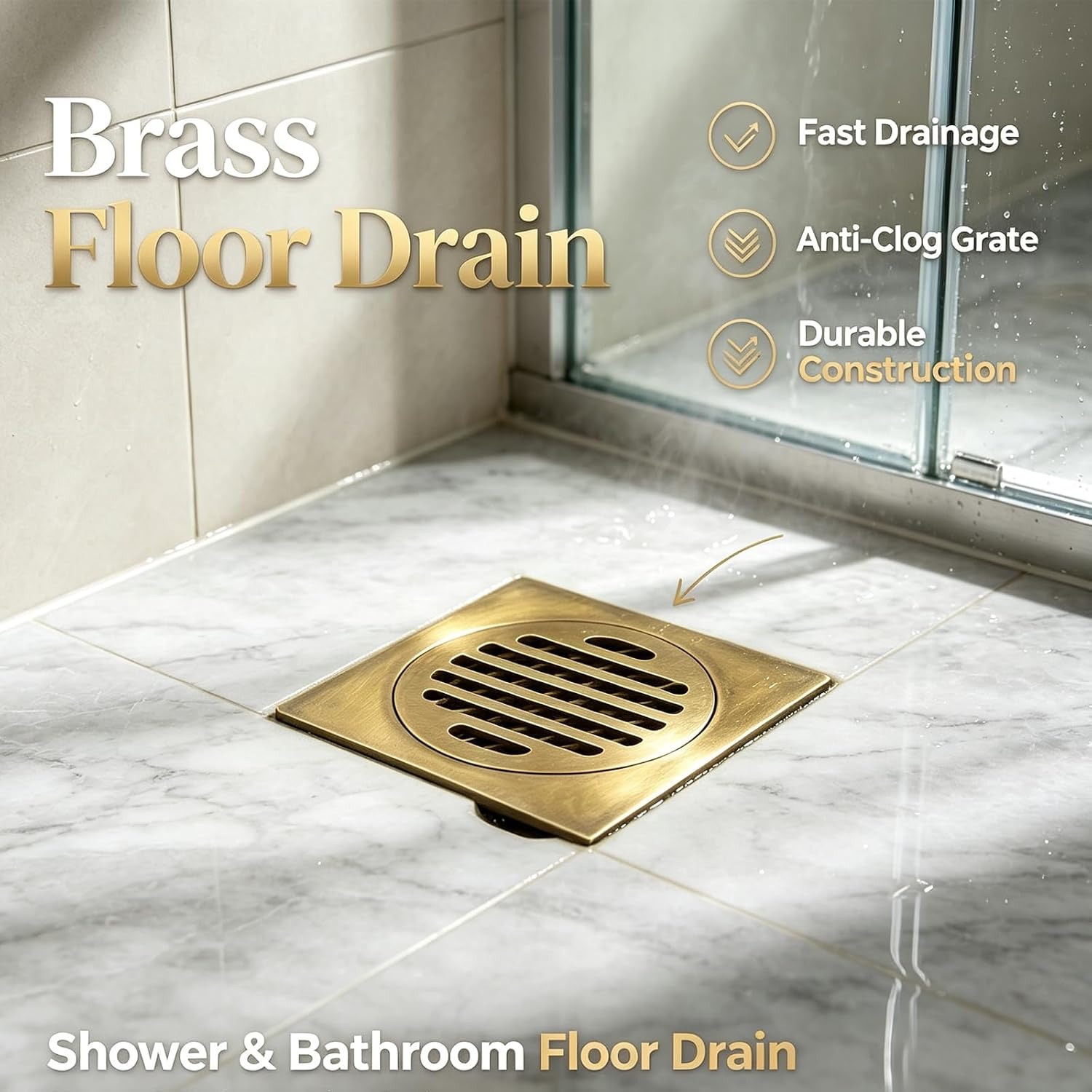
Most bathroom planning goes into the big visible things. Tiles, vanity, tapware, maybe a nice mirror. Then the floor waste gets whatever the plumber has in the van. Six months later there is a dull grey square in the middle of a warm gold and stone shower floor, and it is the first thing your eye lands on.
The second problem shows up later. Hair goes down the drain every single shower. In a house with long hair, that adds up fast. Without something catching it, the hair wraps around whatever it meets inside the pipe, grabs soap and skin cells, and builds a plug. By the time you are standing ankle deep at the end of a shower, the blockage has usually been forming for months.
A good floor drain deals with both of those at once. It finishes the floor properly and it stops hair before it ever gets into the pipe.
What this drain actually does
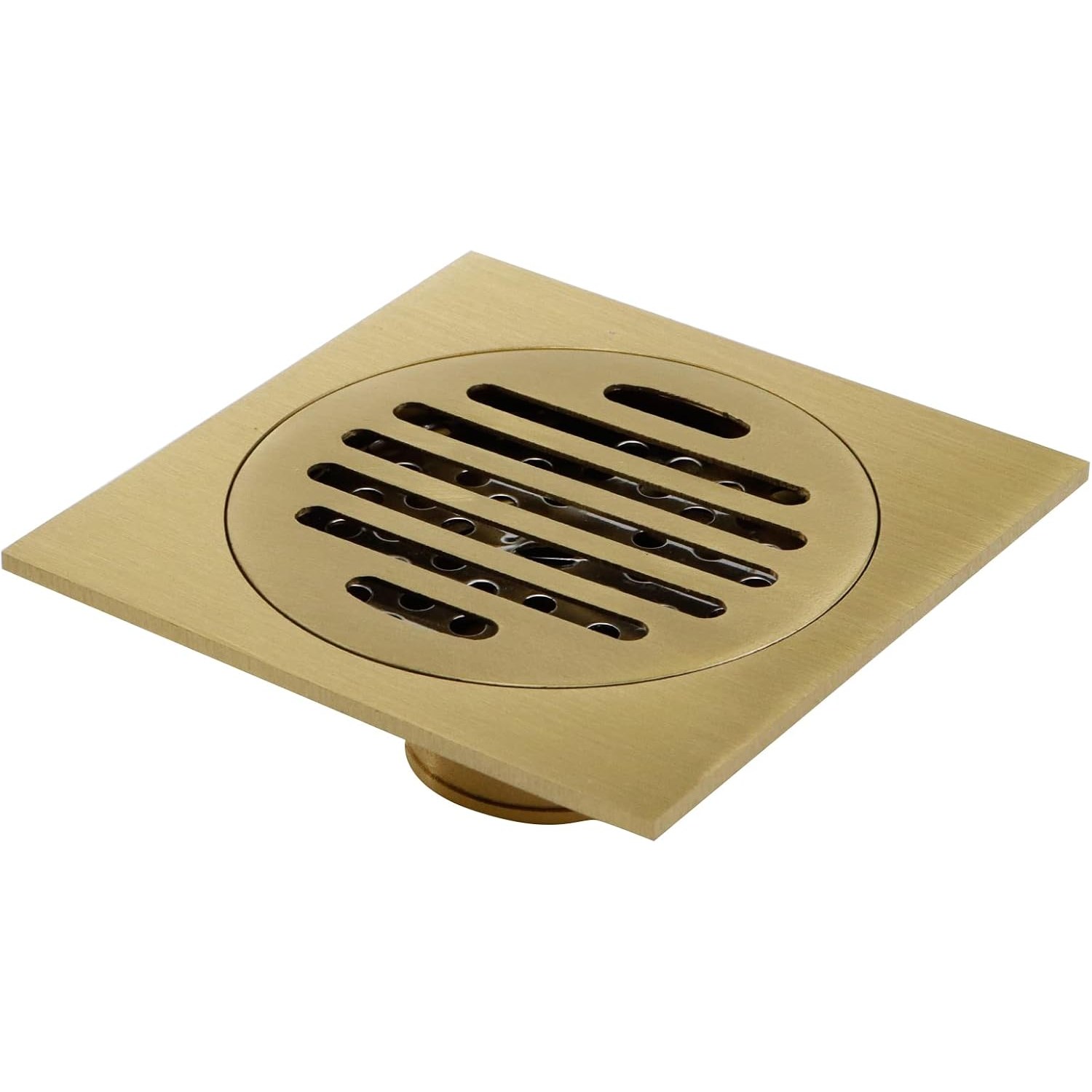
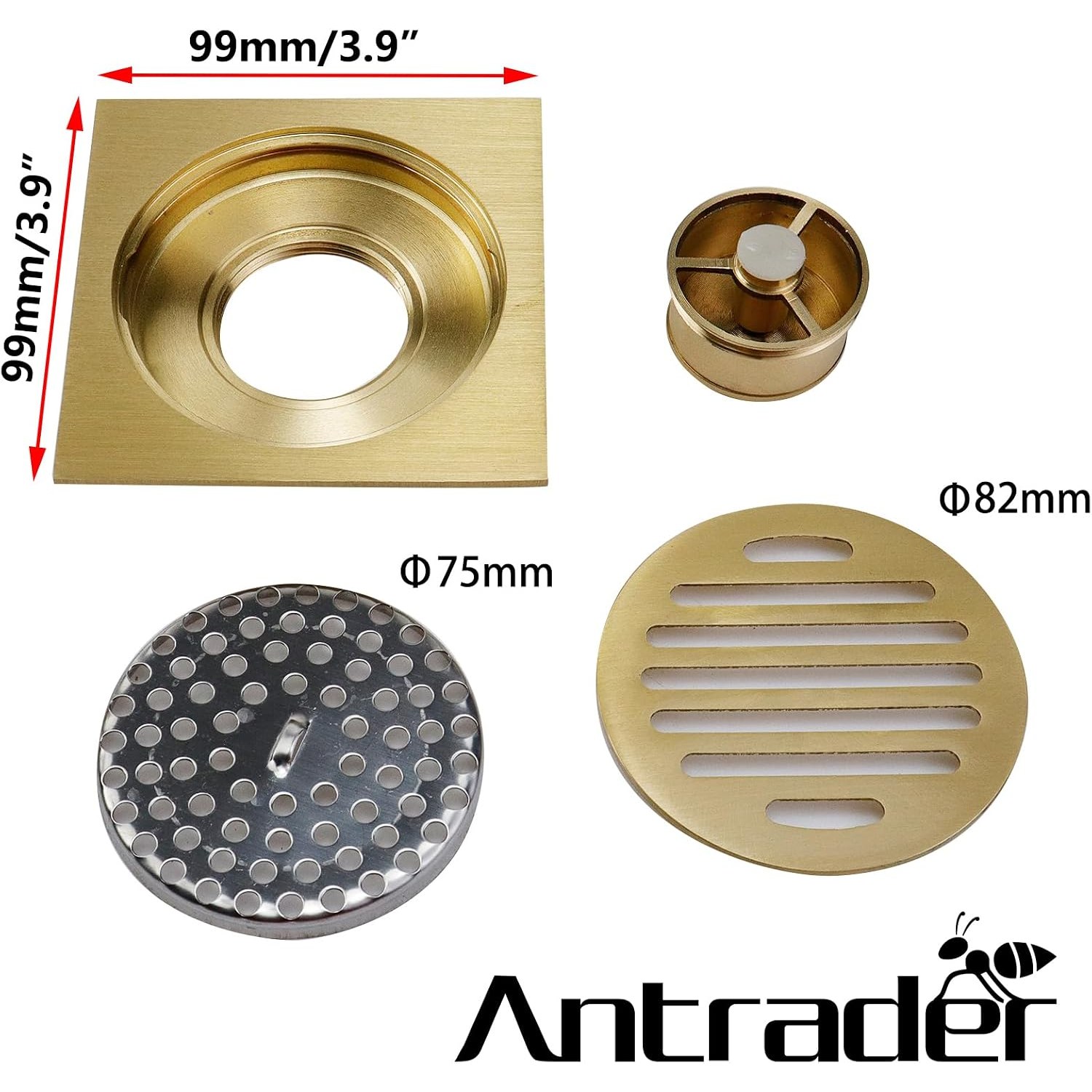
The unit is a 99mm square plate in solid brass with a polished gold finish. Under the plate there is a double-layer stainless steel strainer, and under that is a gravity spring seal.
Each part has a job. The plate is the bit you see, and it is flat and square so it sits in with tiled floors cleanly. The strainer is the working part for hair, a basket that collects everything and then lifts out so you can tip it into the bin. The gravity seal is the clever bit. Water pressure pushes it open when the shower is running, then it drops closed once the water stops.
That seal is why people who have lived with a smelly drain tend to look for a self-sealing waste the second time around. Floor wastes that sit idle for weeks often dry out and let sewer gas drift back into the room. A seal that closes by itself helps hold that back between uses.
The grate and the basket are both removable by hand. That sounds minor. It is the difference between a drain you clean weekly in under a minute and a drain you ignore until it blocks.
Why brass matters here
Floor wastes live in constant water. Thin pressed metal and plastic both struggle with that over the years. Plastic can craze and discolour. Light metal can corrode around the edges where it meets the screed.
Brass is used in plumbing for a reason. It handles wet conditions well and does not rust the way steel can. When you pick this drain up you can feel it. It has weight. The grate does not flex when you press the centre of it with a thumb.
The polished gold surface sits on top of that brass body. Keep it clean and dry and it holds its look. The things that ruin metal finishes in bathrooms are nearly always the same few culprits. Harsh drain chemicals poured straight over the plate, bleach left to sit, and scouring pads used to scrub off soap scum. None of those are necessary with a removable strainer. Warm water and a soft cloth do the job.
Who this suits
If you are building or renovating with gold or brass tapware, this is an easy decision. A matching waste is one of those small details that makes a room read as finished rather than assembled from parts.
It is also worth considering if you have a persistent hair problem. Households with two or three long-haired people go through drain blockages regularly, and a stainless steel basket you empty yourself is cheaper and less messy than a plumber visit or a bottle of caustic cleaner every few months.
Rental owners and landlords use these for a different reason. Tenants rarely call about a slow drain until it is fully blocked. A strainer that is obvious and easy to lift out gets used, which keeps the pipe clear.
It is not only a shower item. The same drain works in a laundry floor, a toilet floor waste, a garage wash area or a covered balcony. Anywhere you have a floor waste with the right pipe size is fair game.
Getting the fit right before you buy
This is where most floor waste purchases go sideways, so take a minute with it.
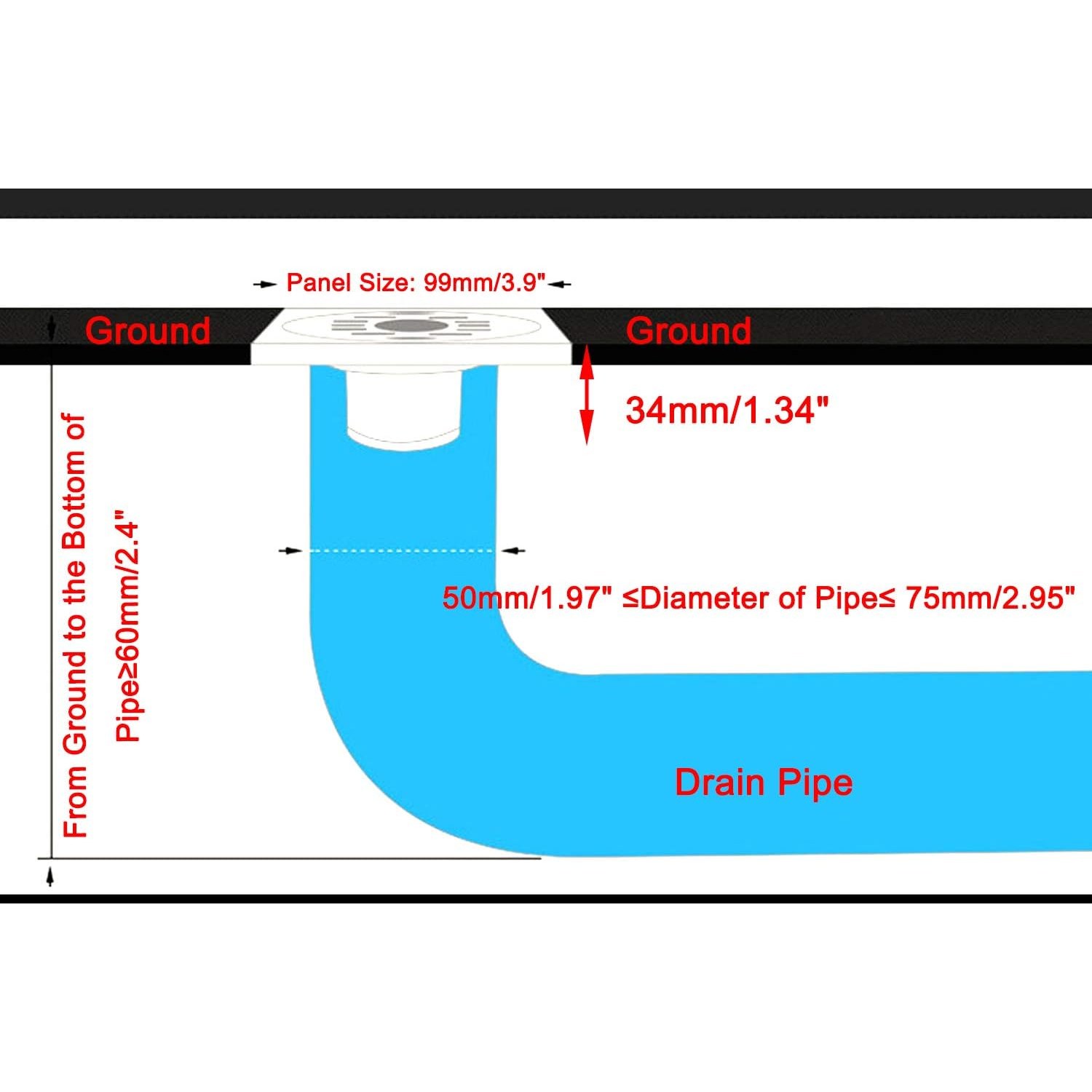
Measure the opening in your floor. You want the face of the drain, 99mm square here, to cover the hole and sit neatly on the surrounding tile. If your existing grate is 100mm square you are usually close enough, but measure rather than assume.
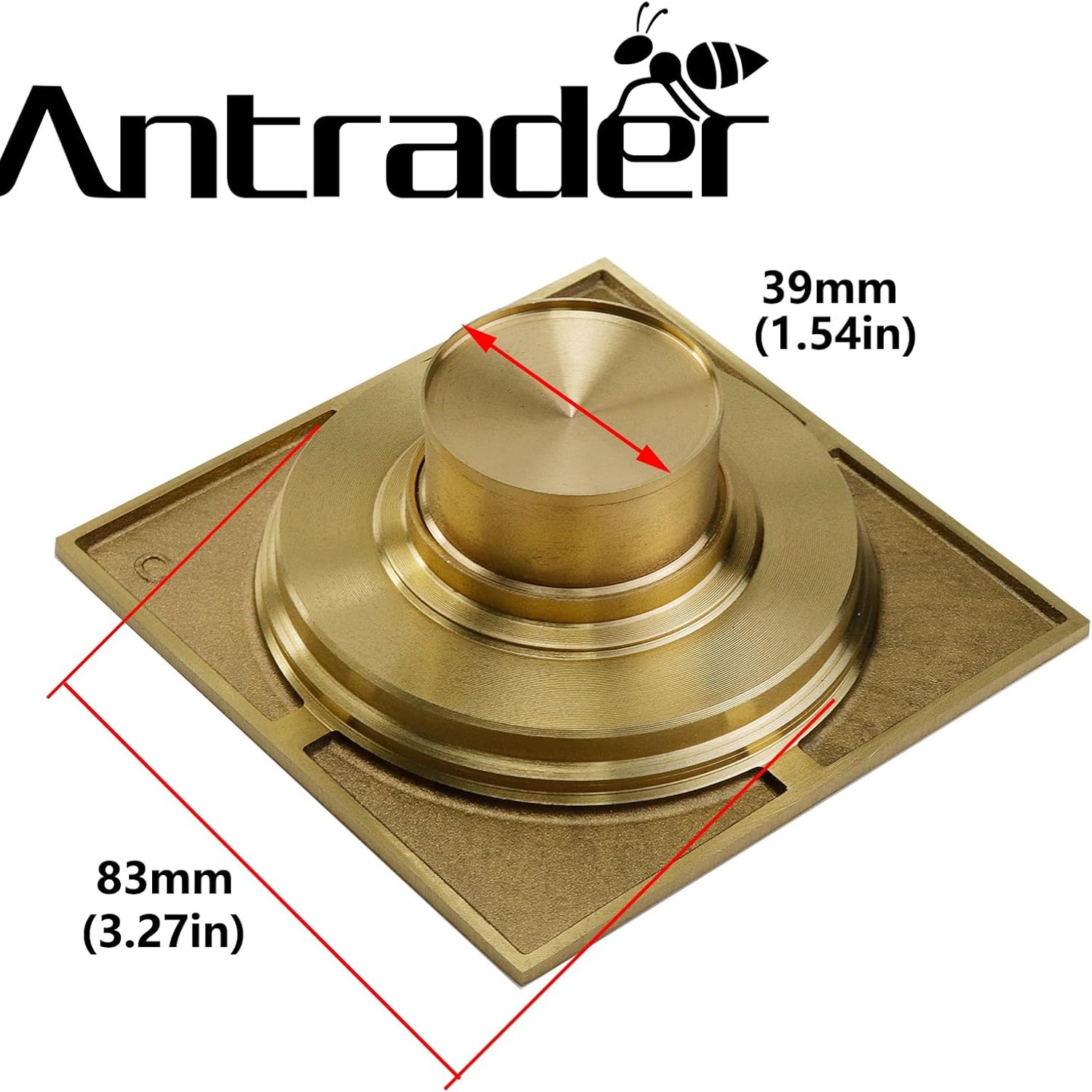
Then check your waste pipe. The listed compatible groove diameter for this drain is 1.97 inches, roughly 50mm. If your pipe is larger, this may not be the right unit.
Check your depth too. The item depth is 99mm, so you need that much room below the floor surface. In a slab floor with a shallow cavity, that is worth confirming.
One more thing, and it is important. The supplier states that this drain does not work with a shower drain base or a rubber gasket system. Some modern shower installations use those. If yours does, or you are not sure, ask a plumber to look before you order rather than after the tiles are down.
Installation in plain terms
For a like-for-like swap, the job is straightforward. Remove the old grate, clean the opening of old silicone and grime, drop the new unit in, and seal around it properly so water goes down the pipe rather than under the tile.
That sealing step is the one people rush. Water that gets under a floor waste does not announce itself. It quietly soaks into the screed and shows up months later as a damp patch in the next room. Take the time, use the right sealant, and let it cure before you use the shower.
If the opening needs cutting, the fall needs adjusting, or waterproofing is involved, get a licensed plumber. The cost of the callout is small next to the cost of a leaking shower floor.
Keeping it looking good
A simple routine covers it.
Every week or two, lift the grate, lift the strainer basket, tip the hair into the bin, rinse both under warm water and put them back. That is the whole maintenance job.
Every so often, wipe the gold plate with a soft damp cloth and dry it off. Hard water leaves spots if you let it air dry. If soap scum builds up, a drop of mild dish soap on the cloth handles it.
What to avoid, in order of how much damage they do: acidic or caustic drain cleaners, bleach, scouring powder, and steel wool. Any of those can mark a polished finish permanently.
The short version
This is a solid brass floor waste with a polished gold finish, a 99mm square face, a removable stainless steel hair strainer and a gravity seal that helps hold back drain odour. It suits showers, laundries, balconies and toilet floors, and it fits a waste pipe around 50mm.
Measure your opening, your pipe diameter and your floor depth before ordering, and confirm you are not running a shower drain base system. Get those checks right and you end up with a drain that matches your tapware, catches the hair, and asks almost nothing of you beyond a quick rinse now and then.