
The complete guide
Shower Drain Hair Catchers, A Practical Buyer's Guide
The problem nobody deals with until it is too late
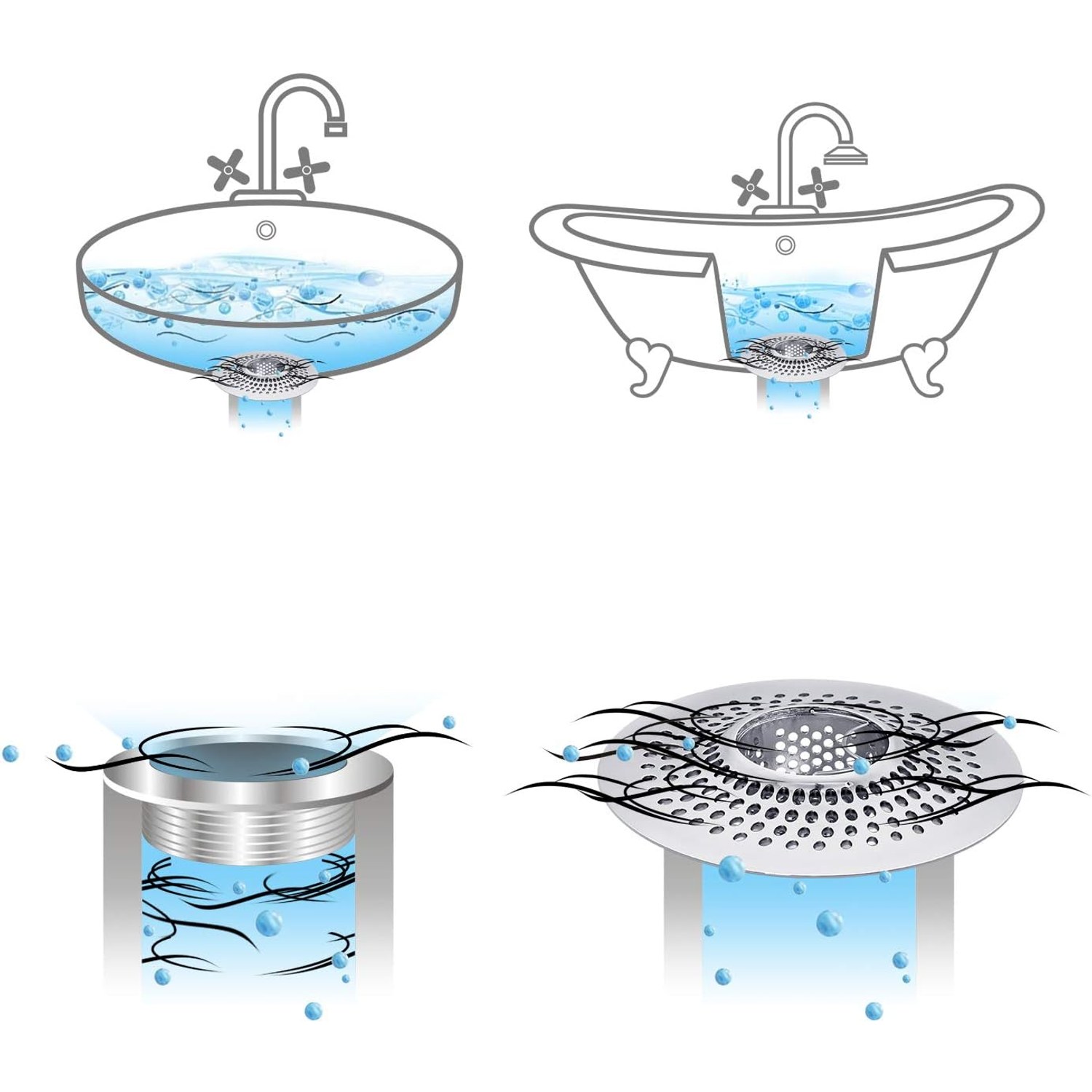
A blocked shower drain never happens overnight. It builds up slowly, strand by strand, while you are standing there thinking about your day. Hair goes down, catches on a rough edge or a pipe joint, and starts collecting soap scum and body oils around it. The mat grows. Water takes slightly longer to clear each week, and because the change is gradual, most people do not register it until they are ankle-deep halfway through a shower.
By that point the options get expensive or unpleasant. You buy caustic drain cleaner, which works sometimes and does nothing other times. You buy a plastic drain snake and pull out something you would rather not describe. Or you call a plumber, who will charge you a call-out fee for fifteen minutes of work.
A drain hair catcher sits at the opposite end of that chain. It costs a fraction of a plumber visit, takes no installation, and deals with the hair while it is still clean, dry-ish, and easy to pick up with two fingers. The best shower drain hair catcher is simply the one you will actually empty, which comes down to how easy it is to lift out and rinse.
How a drain strainer works
The idea is straightforward. A perforated basket sits over the plug hole. Water passes through the holes. Hair, which is long and tangled rather than fine and liquid, does not. It gathers on top of the mesh where you can see it.
The engineering challenge is in the hole size. Make them too big and hair slips through, which defeats the point. Make them too small and water backs up, which makes people pull the catcher out and throw it away. Getting that balance right is most of what separates a good drain strainer from a frustrating one.
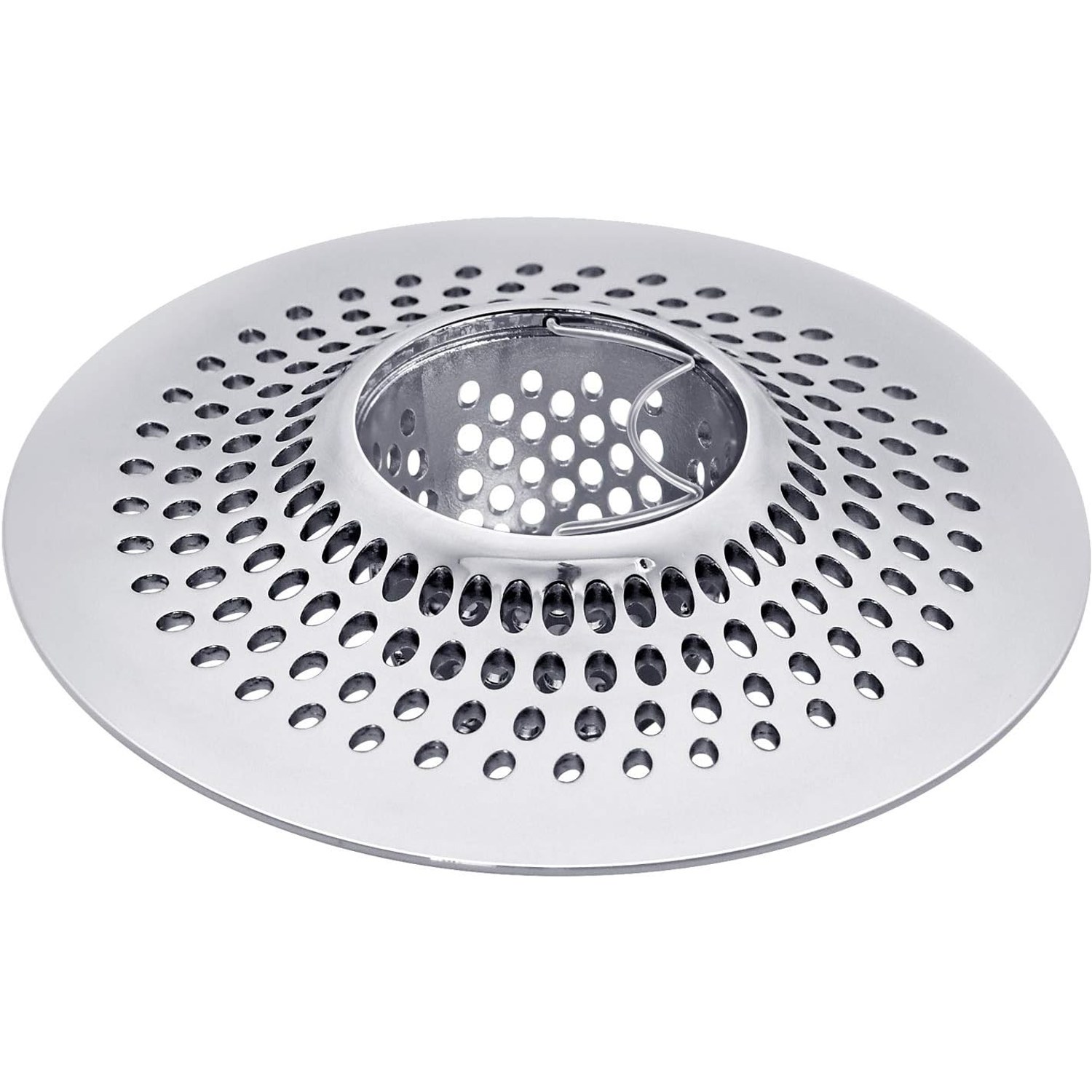
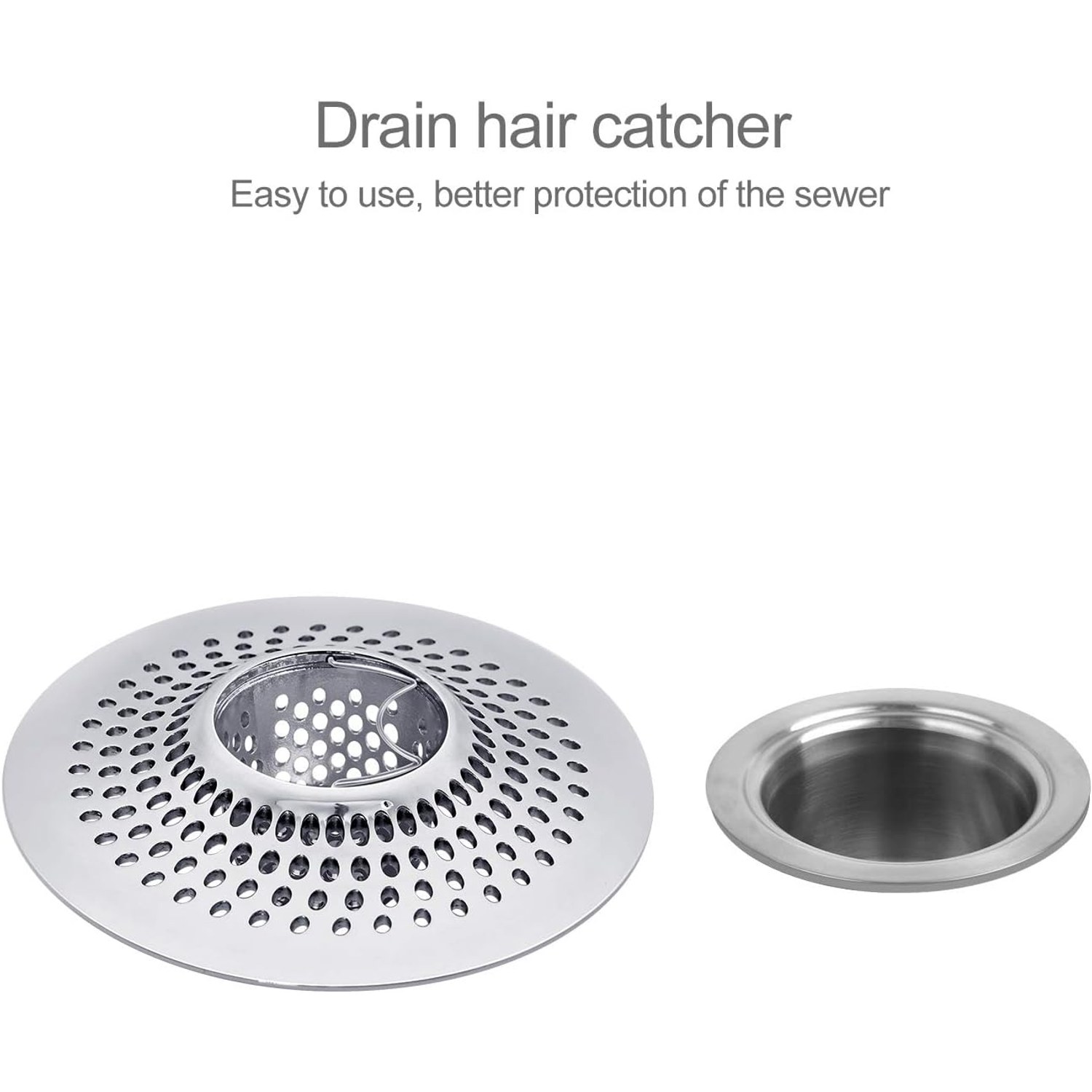
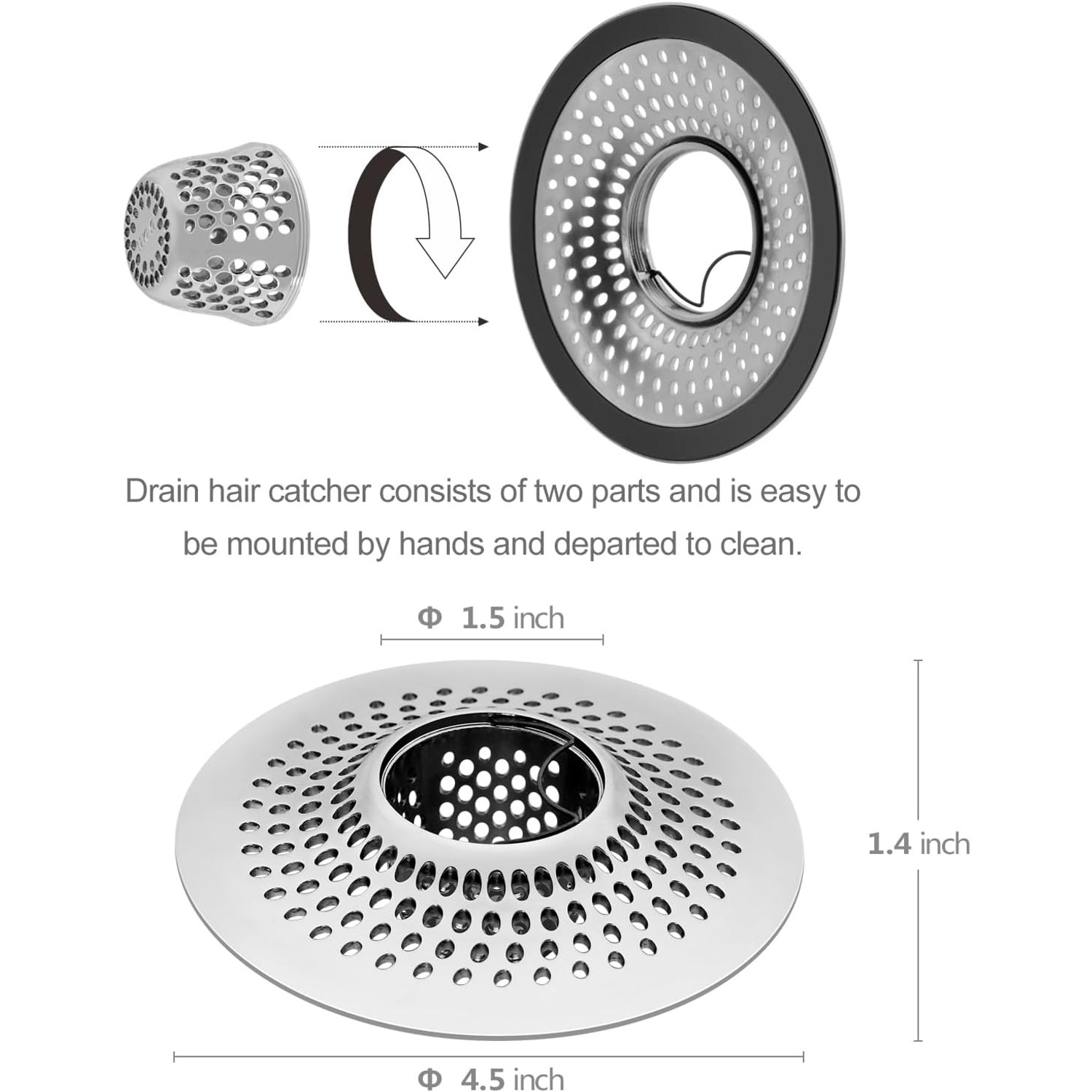
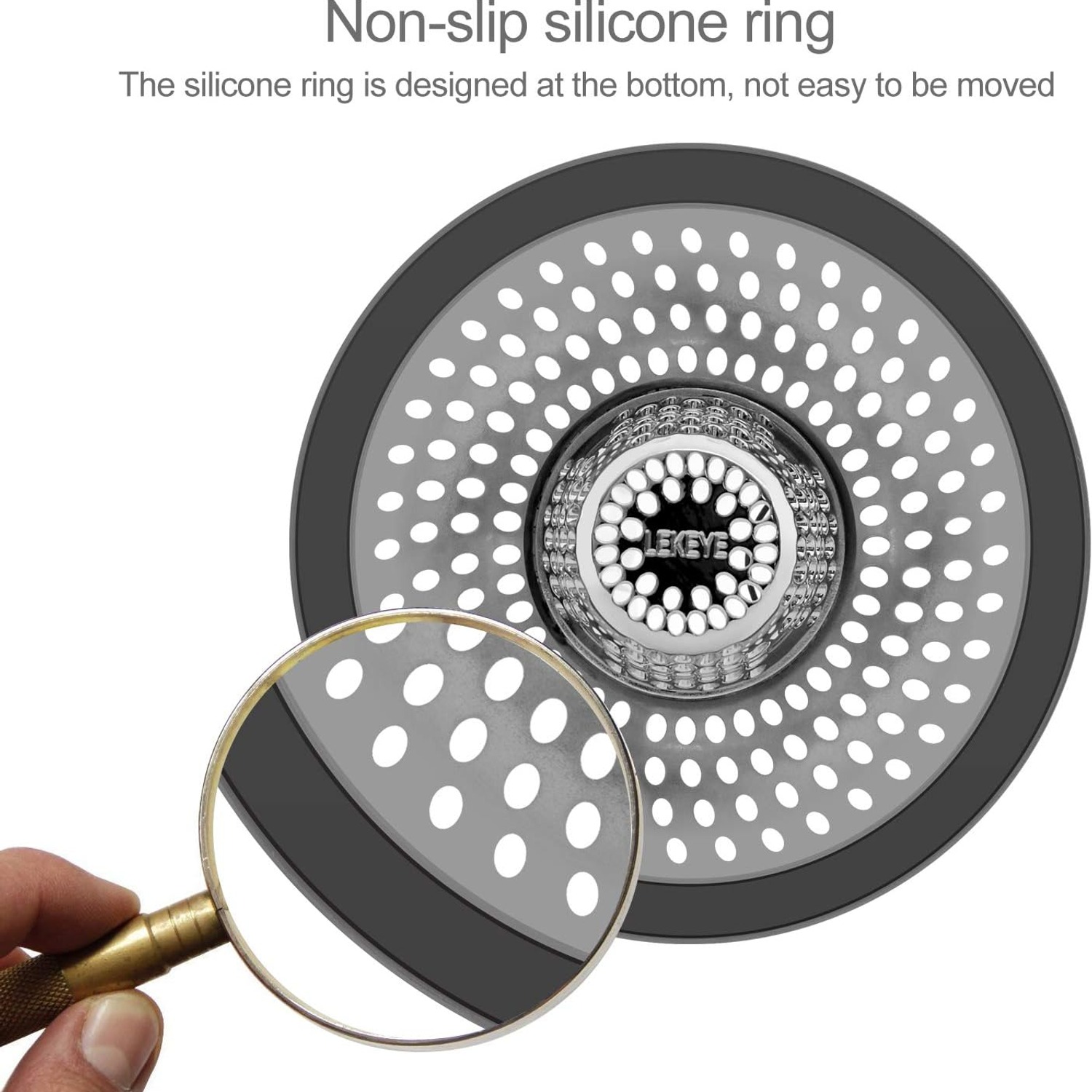
This LEKEYE model uses a fine perforated surface across a stainless steel body, 11.2 cm wide and 3.6 cm high. It is built as two parts that separate by hand. The outer section holds position over the drain opening, and the inner basket lifts out using its own handle as a finger grip.
That two-part construction matters more than it sounds. Single-piece strainers develop a grimy underside you can never properly get at. When the parts come apart, you can rinse both faces, scrub the mesh if needed, and put it back genuinely clean. A detachable drain hair catcher stays hygienic in a way a sealed one does not.
Why material choice is not a small detail
Bathrooms are hostile to cheap materials. Permanent humidity, hot water, shampoo, conditioner, and hard water minerals all work away at whatever you leave in there.
Plastic strainers are the default because they are cheap to make. They also go brittle after a year or two of hot water, stain yellow or brown from conditioner residue, and often warp just enough that they stop sitting flat on the drain. Once a strainer rocks or lifts at one edge, hair goes straight past it.
Stainless steel does not have those failure modes. It keeps its shape, does not stain from shampoo, and resists rust in a room that is wet most days. The 122 g weight is worth noting too. It is enough mass to stay seated when a full shower head is running onto it, rather than skating across the base or tipping up. A rustproof drain strainer in metal is simply a longer-lasting answer to the same problem.
The silver stainless finish also tends to disappear visually against chrome and brushed metal fittings, which most modern bathrooms use. It reads as part of the drain rather than an accessory sitting on top of it.
Who gets the most out of one
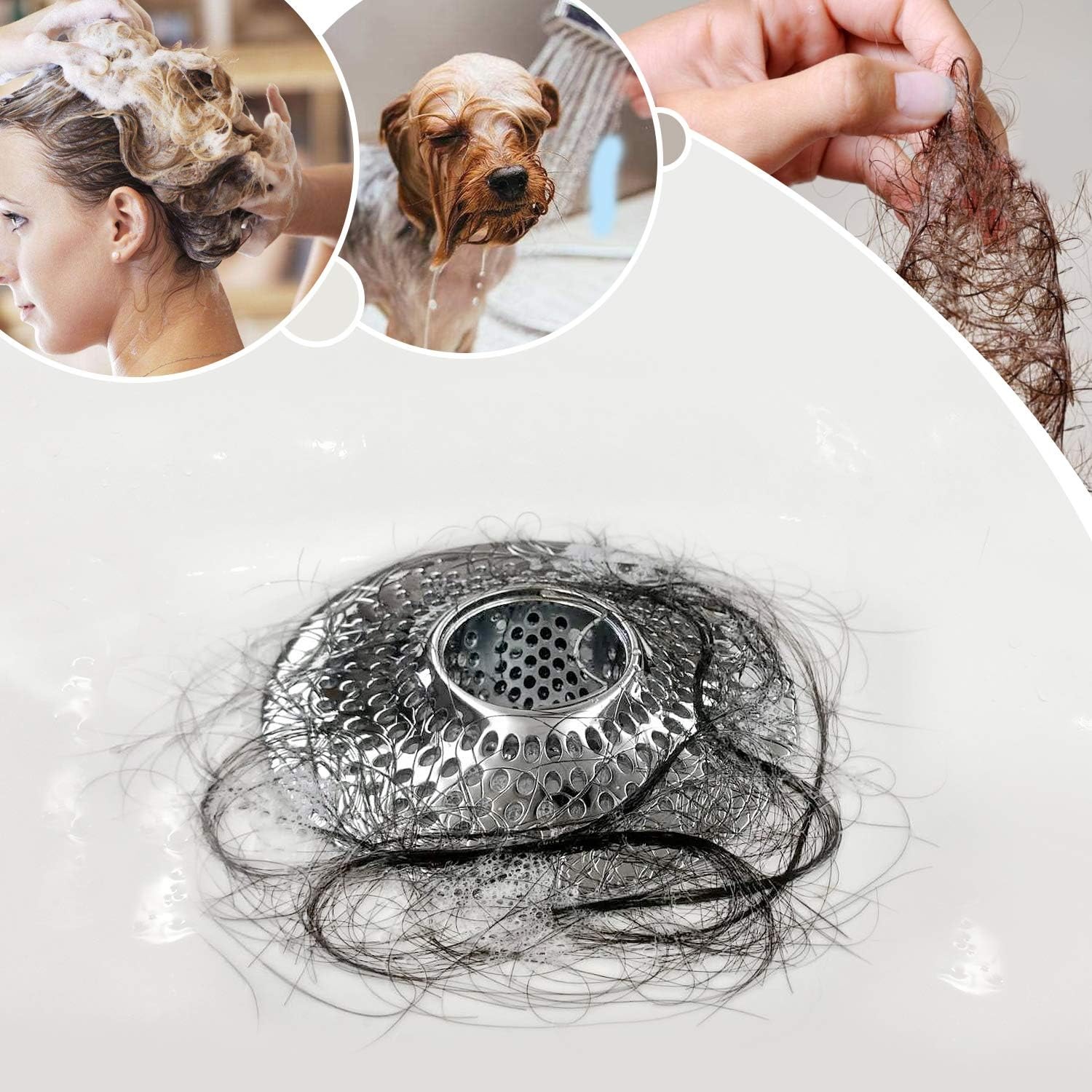
Anyone with long hair in the house, first and most obviously. Long strands are the worst offenders because they wrap around pipe joints and create an anchor point for everything that follows. If two or three people with long hair share a bathroom, a shower drain protector is close to essential.
People who shed a lot of hair for any reason, including seasonal shedding or hair loss during treatment, will see the same benefit. So will anyone who washes a dog in the bath. A pet hair drain catcher does the same job on fur, though you may need to clear it midway through a wash.
Renters have a particular reason to care. A blocked drain in a rental can turn into an argument about who caused it and who pays. A tub drain cover that costs less than a takeaway removes the question entirely, and it comes with you when you move.
It is also a sensible fitting in holiday rentals, share houses, and any bathroom used by people who will not be the ones calling the plumber.
How to choose and what to measure
Before you order anything, measure two things. First, the diameter of the drain opening itself. Second, the flat area around that opening, because a surface-sitting catcher needs somewhere level to seat.
This one is 11.2 cm across. If your drain surround is narrower than that, the catcher will sit proud and shift around. If your drain has a raised or domed cover, check how much clearance you have above it, since 3.6 cm of height needs somewhere to go.
Beyond fit, think about the lift mechanism. A bathroom drain hair stopper you have to pry out with a fingernail will not get emptied regularly, and one that is never emptied is just a decoration. The handle on this model exists for that reason, giving you a point to hook a finger under and pull.
Finally, consider whether you want it to be invisible or obvious. Some people prefer a flat screen that sits almost flush. Others prefer a visible basket, because seeing the hair collect is a useful reminder to empty it. There is no wrong answer, but it is worth deciding before you buy.
Keeping it working
Care is minimal, which is the point. Lift the basket after your shower, tip the hair into the bin while it is still together in a clump, and rinse the mesh under the tap. That takes about five seconds and is the whole routine.
Every week or two, pull the two parts apart and give them a proper wash with warm water and a little dish soap. A soft brush, including an old toothbrush, works well on the perforations if soap film has built up. Avoid scouring pads and bleach-heavy cleaners, which can dull the steel finish over time.
If you live somewhere with hard water and start seeing white mineral spots, a short soak in diluted white vinegar will clear them. Rinse thoroughly afterwards and dry it before refitting.
One habit worth building: empty it before it is full rather than after. A clear mesh drains at full speed. A loaded one starts to pool, which is when people get annoyed and remove it altogether.
The short version
Hair is what blocks shower drains, and it is far easier to catch at the surface than remove from a pipe. A stainless steel shower drain hair catcher sits over your plug hole, holds the hair where you can see it, and lets the water through.
This LEKEYE model is a two-part detachable design in stainless steel, 11.2 cm wide and 3.6 cm high, weighing 122 g, with a handle built into the basket for easy lifting. There is no installation, no tools, and no maintenance beyond a rinse.
Measure your drain opening first. If 11.2 cm sits comfortably on a flat surround, this is a small purchase that quietly saves you a much larger one.